Artwork
Two Women Bathing (Les deux baigneuses)
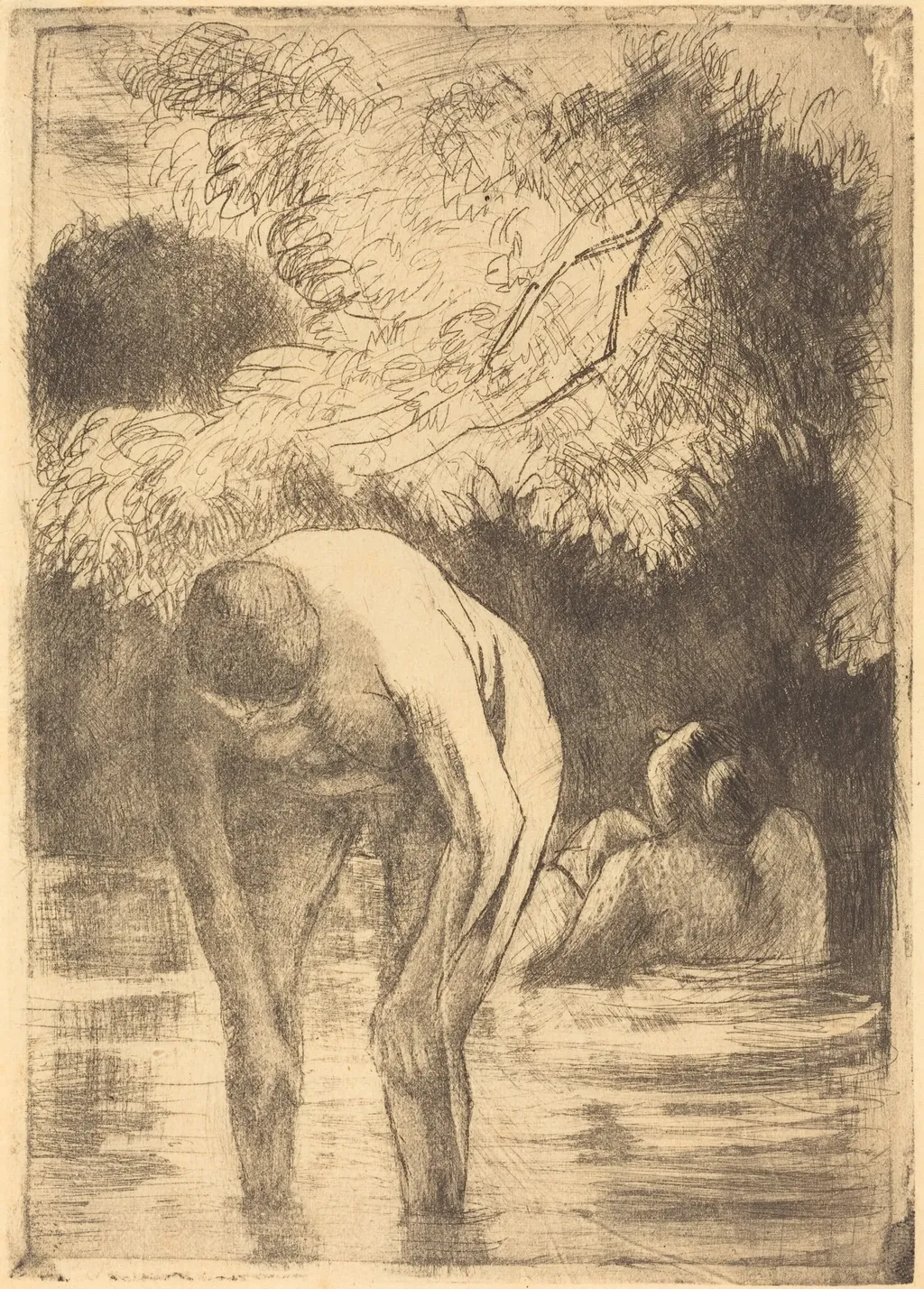
Two Women Bathing (Les deux baigneuses) is an ink print by the Impressionist artist Camille Pissarro. It dates from 1895 and is held in the collection of the National Gallery of Art.
About this work
Overview
It reflects Pissarro’s enduring interest in the rhythms of peasant life, rendered with restraint and attention to natural detail.
Created in 1895, Two Women Bathing is an etching by Camille Pissarro that captures a quiet moment of rural labor. The scene depicts two women in a shallow stream, engaged in routine tasks. Unlike his Impressionist paintings, this work relies on the precision of engraved lines to convey texture and atmosphere. It reflects Pissarro’s enduring interest in the rhythms of peasant life, rendered with restraint and attention to natural detail.
Subject & Meaning
The figures are shown in an unidealized, everyday context—washing laundry and carrying a basket on their heads. Their postures suggest physical labor rather than leisure, grounding the scene in the realities of rural existence. Pissarro avoids romanticization, presenting the women as integral to their environment. The absence of narrative drama emphasizes the dignity of routine, aligning with his broader social and artistic values.
Technique & Style
Pissarro employed fine, controlled etching lines to model form and suggest the play of light on wet skin and rippling water. Soft tonal gradations emerge through delicate cross-hatching, while sharper contours define the women’s figures and the basket. The composition’s simplicity enhances the tactile quality of the scene, balancing atmospheric depth with the clarity of individual elements without overt embellishment.
History & Provenance
The print was made during Pissarro’s later years, when he increasingly turned to printmaking as a means of exploring form and light. It was likely produced in his studio in Éragny, where he lived and worked with his family. The work entered the collection of the National Gallery of Art in Washington, D.C., through a gift, preserving its connection to Pissarro’s late-period output and his commitment to depicting ordinary life.
Context
In the 1890s, Pissarro distanced himself from the commercial pressures of the art market, focusing instead on intimate, unadorned subjects. This etching aligns with his lifelong interest in peasant labor and rural environments, a theme shared with contemporaries like Millet. Unlike the urban scenes favored by many Impressionists, Pissarro’s prints from this period reflect a deliberate return to the land and its quiet rituals.
Legacy
Two Women Bathing exemplifies Pissarro’s late commitment to printmaking as a vehicle for social observation. While less widely known than his paintings, his etchings influenced later artists interested in the expressive potential of line and tone. The work remains a quiet testament to his belief in art rooted in authentic experience, offering a restrained yet enduring vision of labor and nature.
Artist & collection


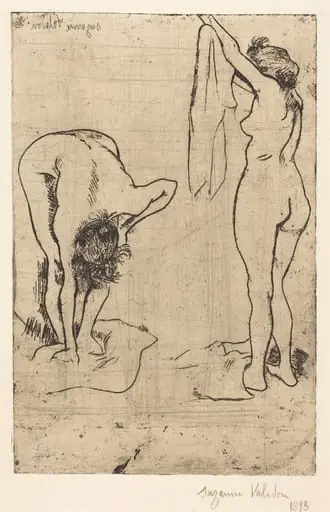 Femmes s'essuyant (Women Drying Themselves)
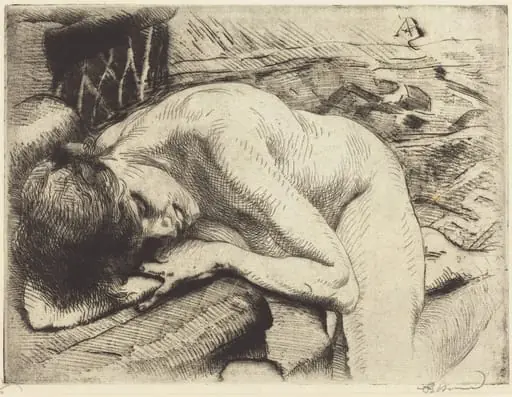 Model Asleep on the Floor (Le modèle endormi à terre)
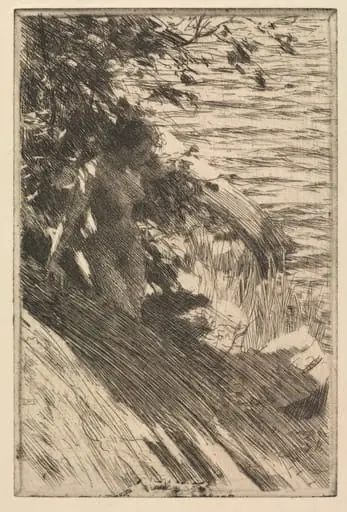 The Great Bather
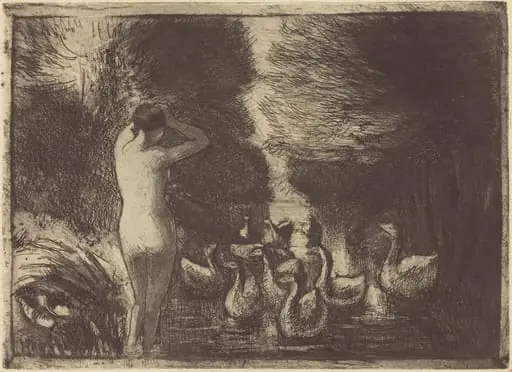 Baigneuse aux oies (Bathers with Geese)
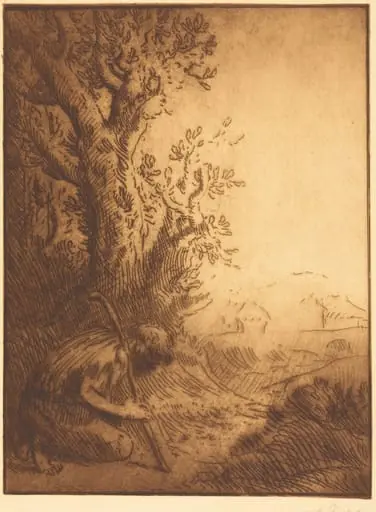 The Prodigal Son, 4th plate (L'enfant prodigue)
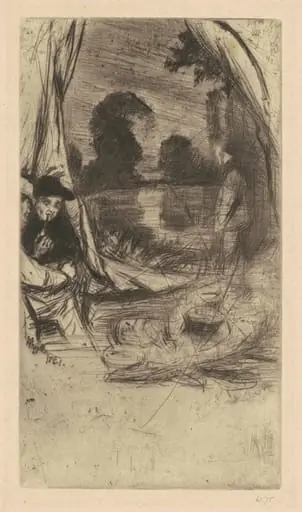 The Camp
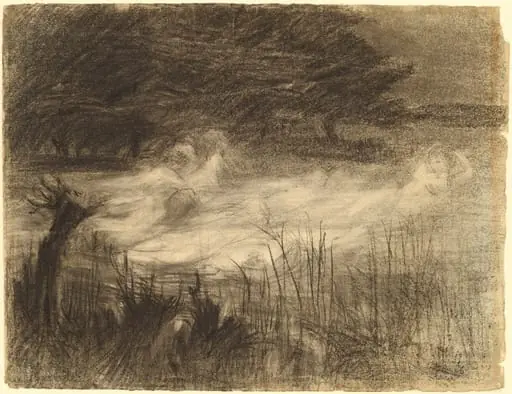 Woman Floating in a River Attended by Several Female Spirits
 The Prodigal Son, 2nd plate (L'enfant prodigue)
 Female nude in a forest landscape