Artwork
The Master Smith
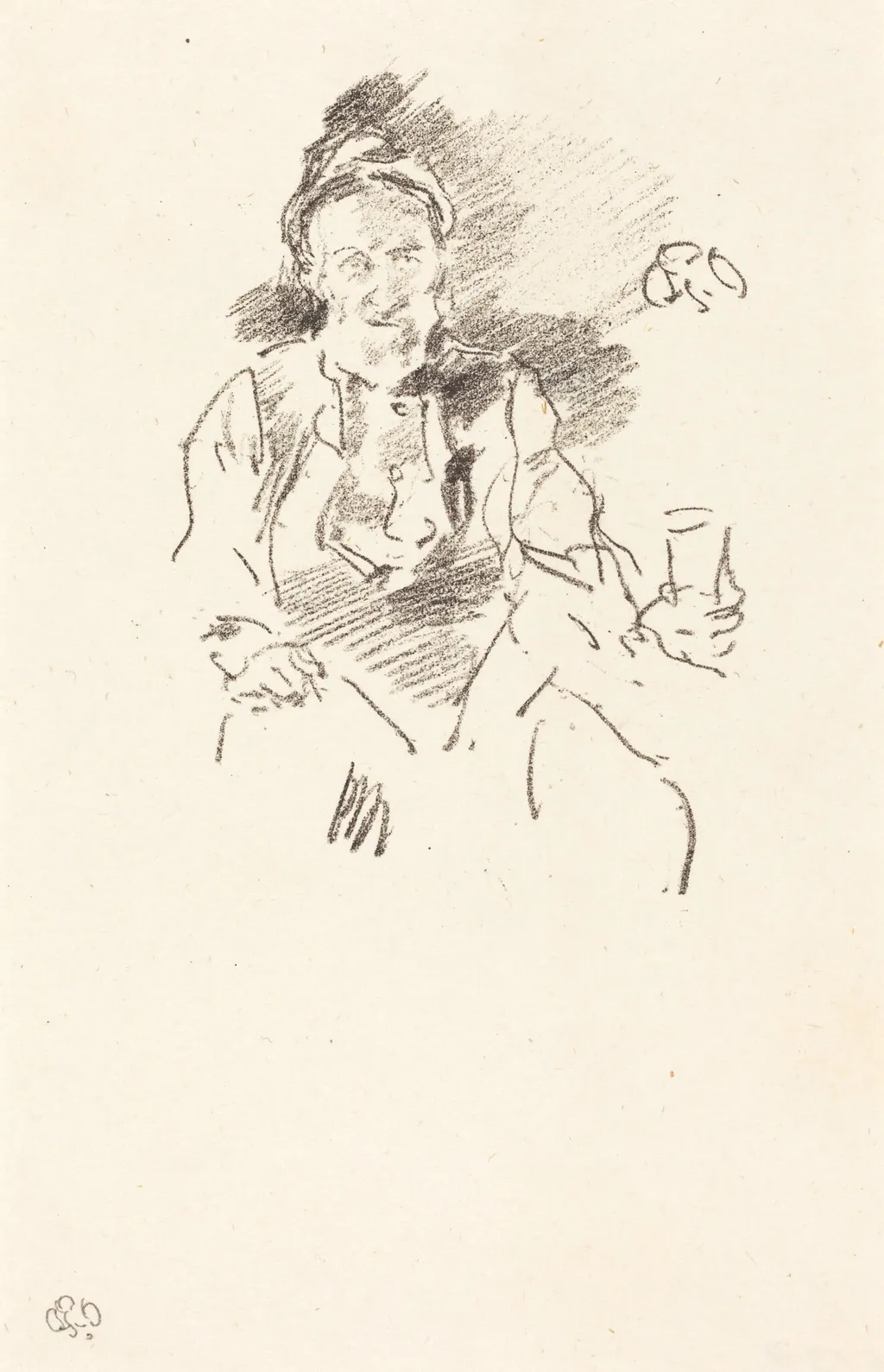
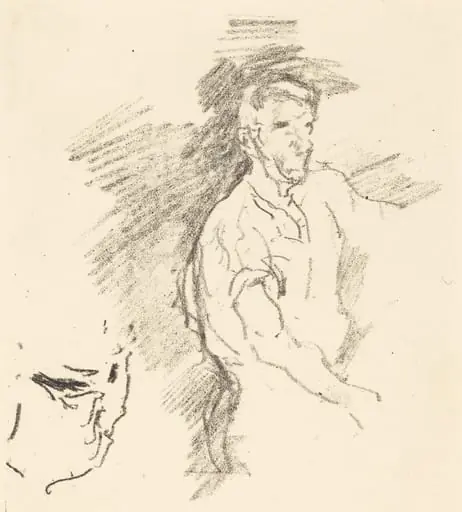
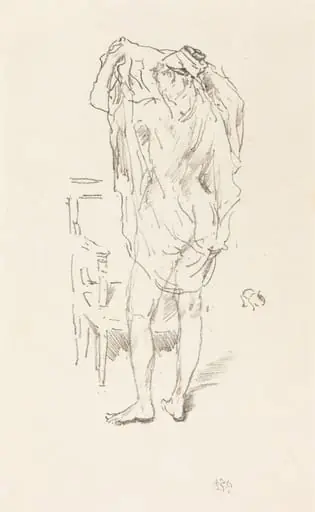
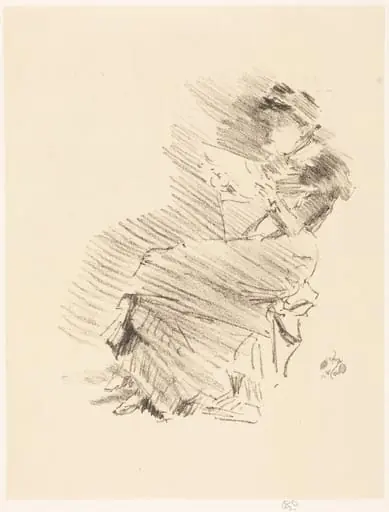
The Master Smith is an ink print by the Impressionist artist James McNeill Whistler. It dates from 1895 and is held in the collection of the National Gallery of Art.
About this work
Overview
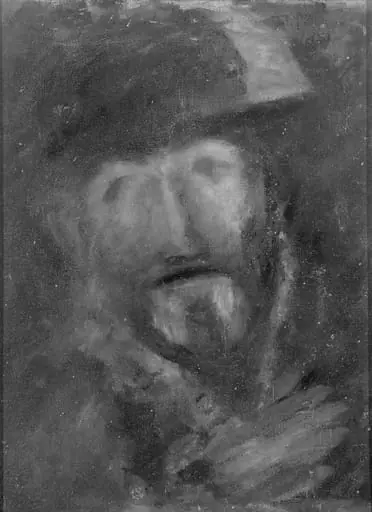
The Master Smith is a 1895 lithograph by James McNeill Whistler, executed in black on laid paper. Characteristic of Whistler's oeuvre, the work prioritizes aesthetic refinement over narrative depth.
Subject & Meaning
The print portrays a concentrated figure, likely a master smith, absorbed in metalwork. The subject's intense, serious expression and strong facial features are central to the composition, conveying deep engagement with his craft.
Technique & Style
Whistler's signature attention to composition and tonal nuance is evident. A dark background contrasts with lighter shading around the subject's head, creating depth and emphasizing the figure's concentrated expression.
History & Provenance
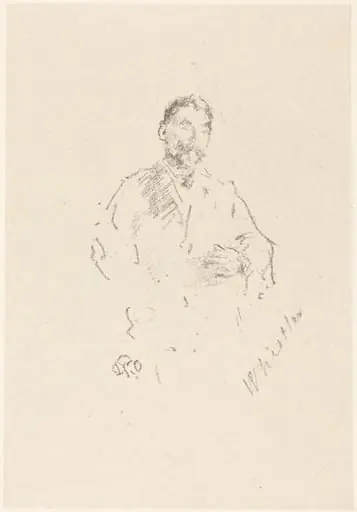
Created in 1895, during the American Gilded Age, the lithograph reflects Whistler's adherence to the 'art for art's sake' principle. It bears his distinctive butterfly signature, symbolizing both artistic delicacy and personal assertiveness.
Context
While Whistler is known for works in oils and watercolor, The Master Smith exemplifies his skill in printmaking, a medium through which he explored subtle, refined aesthetics.
Own this work as a print
Artist & collection
Artist
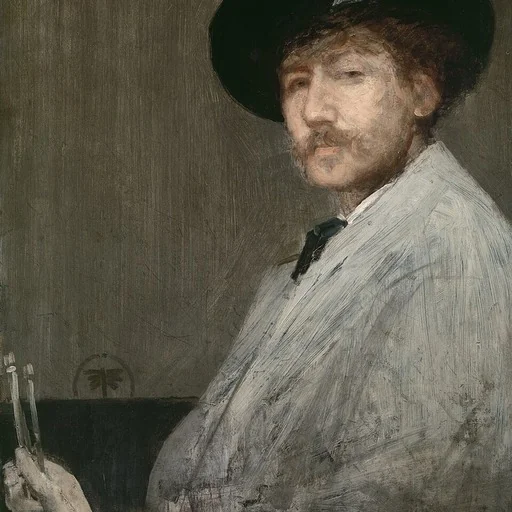
James Abbott McNeill Whistler was an American painter in oils and watercolor, and printmaker, active during the American Gilded Age and based primarily in the United Kingdom.

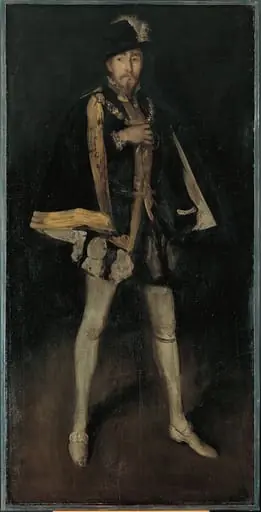 Arrangement in Black, No. 3: Sir Henry Irving as Philip II of Spain
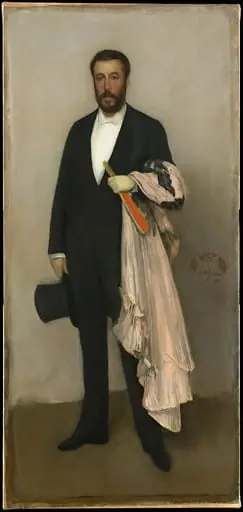 Arrangement in Flesh Colour and Black: Portrait of Theodore Duret
 Gold and Brown: Self-Portrait
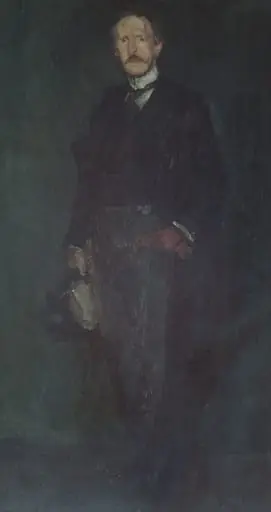 Edward Guthrie Kennedy
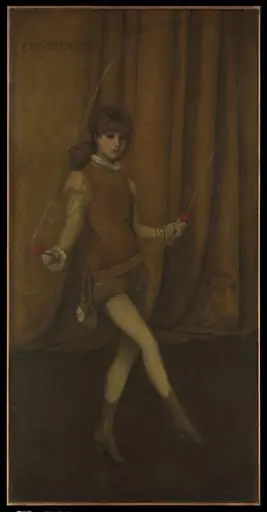 Harmony in Yellow and Gold: The Gold Girl—Connie Gilchrist
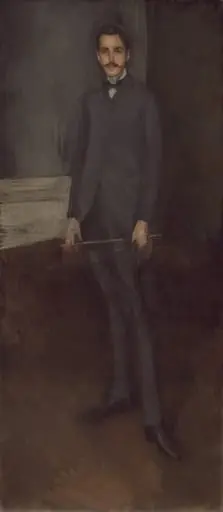 George W. Vanderbilt
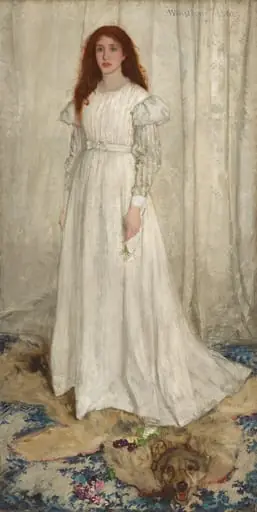 Symphony in White, No. 1: The White Girl
 Henry Irving as Philip II of Spain