Artwork
The Music-Room
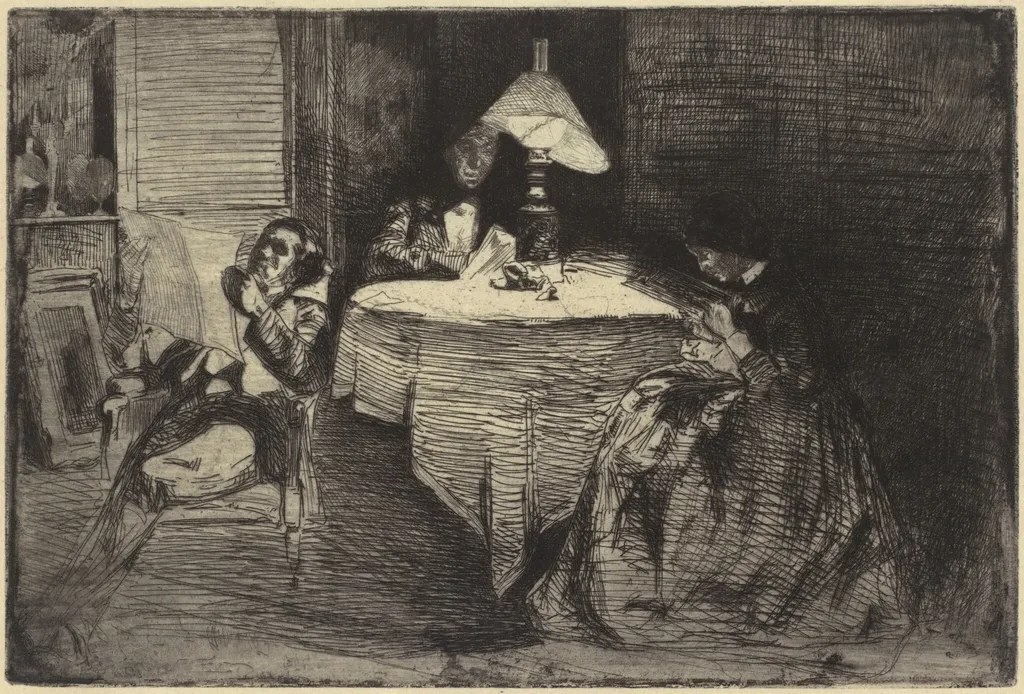
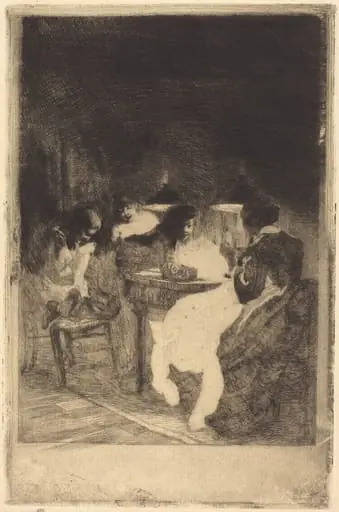
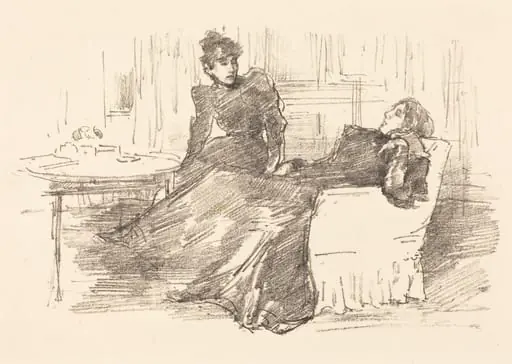
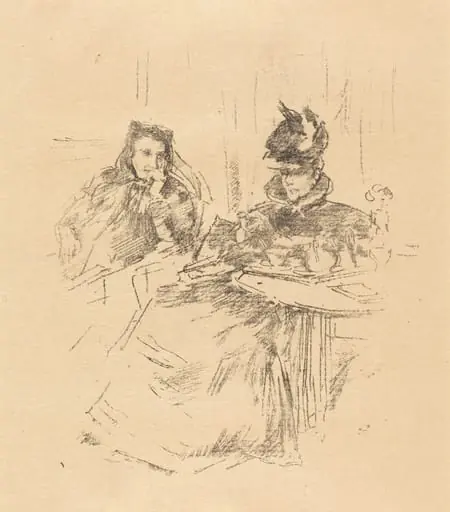
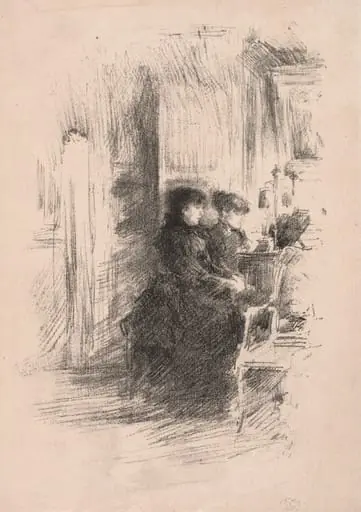
The Music-Room is an ink print by the Impressionist artist James McNeill Whistler. It dates from 1858 and is held in the collection of the National Gallery of Art.
About this work
Overview
Though American by birth, Whistler spent much of his career in Britain, where he developed a refined approach to printmaking.
Created in 1858, *The Music-Room* is an etching on Japanese paper by James McNeill Whistler. Though American by birth, Whistler spent much of his career in Britain, where he developed a refined approach to printmaking. This work exemplifies his early engagement with etching, a medium he used to explore intimate domestic scenes with subtle tonal variation and delicate line work, distinct from the more narrative-driven art of his time.
Subject & Meaning
The scene depicts two women in a quiet interior—one seated at a desk illuminated by lamplight, the other standing with sheet music. No dramatic action or moral message is implied; instead, the focus lies in the stillness of the moment. Whistler avoided storytelling, favoring atmosphere and composition. The private, unposed nature of the figures suggests an everyday ritual, rendered with restraint to emphasize mood over narrative.
Technique & Style
Whistler employed etching to achieve a sketchlike texture, scraping ink into a metal plate to create uneven, expressive lines. The use of Japanese paper enhanced the delicacy of the print, allowing fine details to emerge with softness. The rough, hatched strokes suggest light filtering through dim interiors, while the dark wood walls and worn floor ground the composition in tactile realism. The result is an image that feels both immediate and intimate.
History & Provenance
Executed in 1858, this print belongs to Whistler’s formative years as a printmaker, before he gained wider recognition. It reflects his early experiments with tonal control and domestic subjects, which later informed his more famous nocturnes. The work remained within private collections in Europe and the United States, its modest scale and medium limiting public exposure but securing its place in studies of his graphic oeuvre.
Context
In the late 1850s, Whistler was part of a broader movement rejecting Victorian moralism in art. Influenced by Japanese prints and French Realism, he pursued aesthetic harmony over didactic content. *The Music-Room* aligns with this philosophy, capturing a quiet interior without sentiment. Its emphasis on light, texture, and composition anticipated the Aesthetic Movement’s ideals, positioning Whistler as a quiet revolutionary in printmaking.
Legacy
Though less celebrated than his paintings, *The Music-Room* exemplifies Whistler’s contribution to the revival of etching as a serious artistic medium. Its restrained composition and emphasis on atmosphere influenced later printmakers who valued subtlety over spectacle. The work remains a key example of how technical precision and emotional restraint could coexist, shaping modern approaches to graphic art.
Artist & collection
Artist
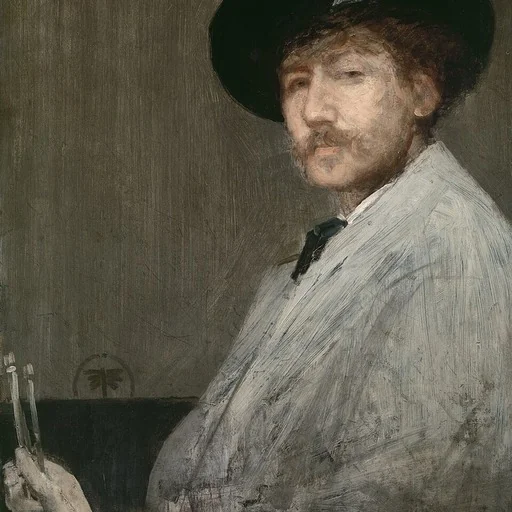
James Abbott McNeill Whistler was an American painter in oils and watercolor, and printmaker, active during the American Gilded Age and based primarily in the United Kingdom.

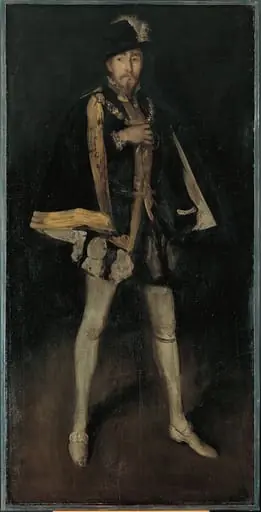 Arrangement in Black, No. 3: Sir Henry Irving as Philip II of Spain
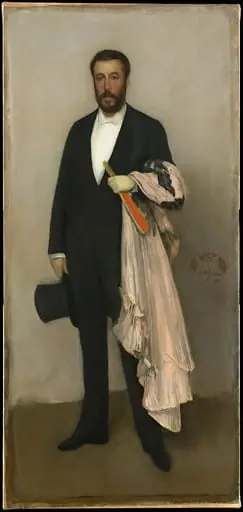 Arrangement in Flesh Colour and Black: Portrait of Theodore Duret
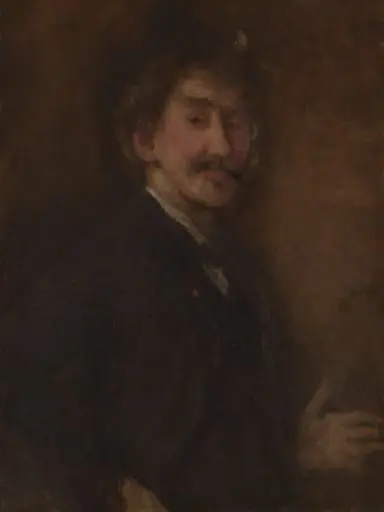 Gold and Brown: Self-Portrait
 Edward Guthrie Kennedy
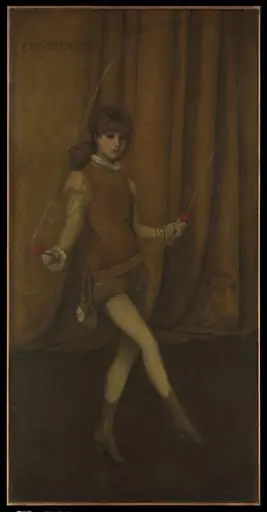 Harmony in Yellow and Gold: The Gold Girl—Connie Gilchrist
 George W. Vanderbilt
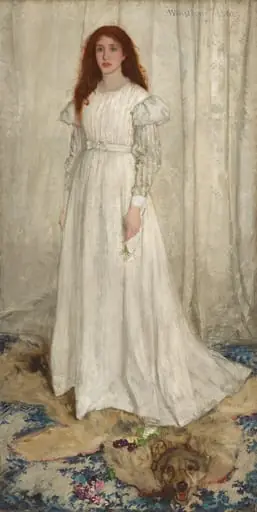 Symphony in White, No. 1: The White Girl
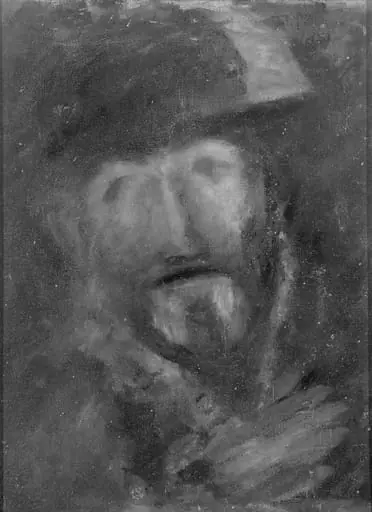 Henry Irving as Philip II of Spain