Artwork
The Broad Curtain
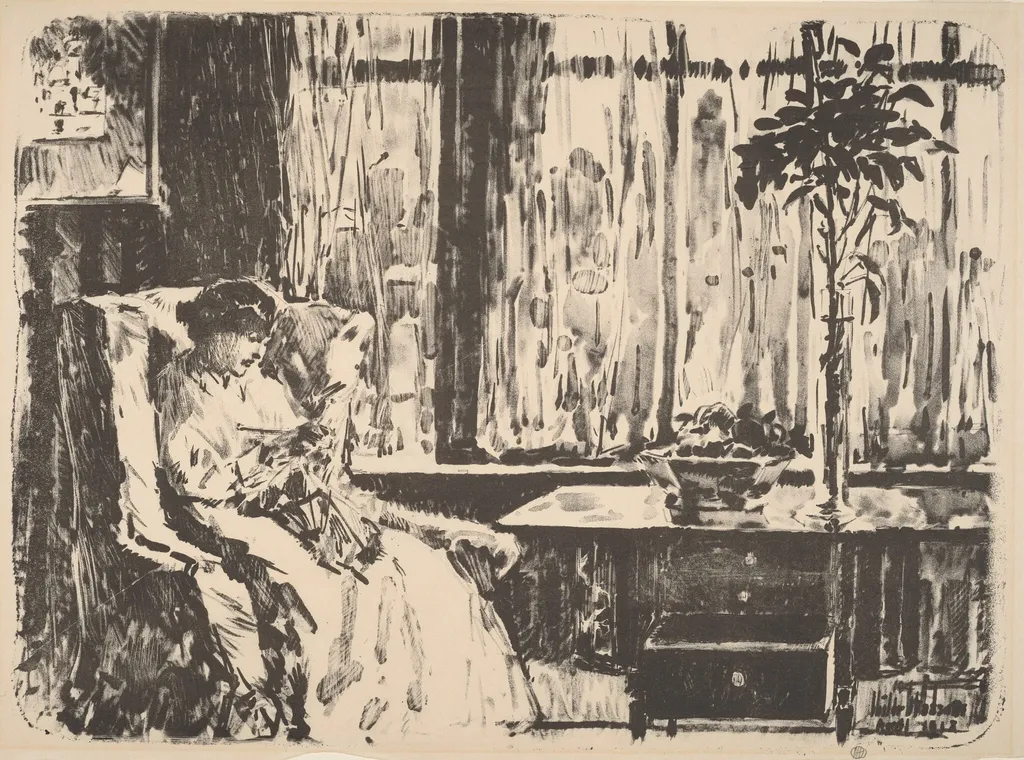
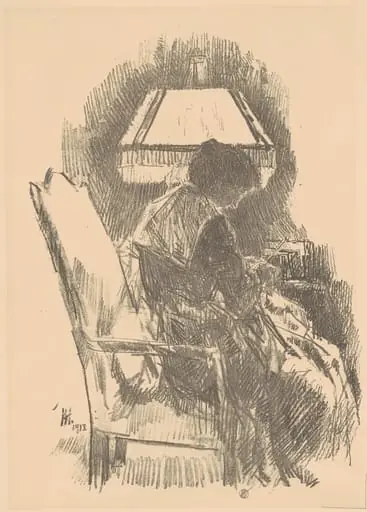
The Broad Curtain is an ink print by Childe Hassam. It dates from 1918 and is held in the collection of the National Gallery of Art.
About this work
Overview
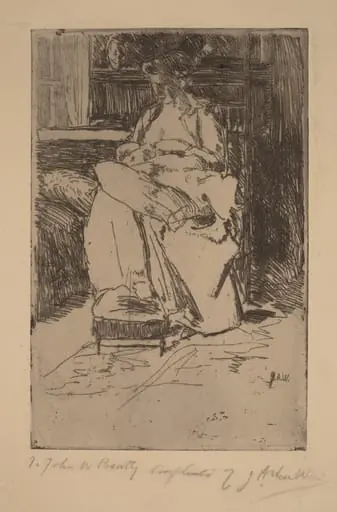
Created in 1918, *The Broad Curtain* is a black‑ink lithograph by American painter Childe Hassam. Known for his prolific output across several media, Hassam applied his Impressionist sensibility to this print, rendering a quiet interior scene with a focus on light, atmosphere, and everyday activity.
Subject & Meaning
The image centers on a solitary woman seated in a chair, absorbed in sewing. Dressed in a long‑sleeved dress with dark hair, she turns her head slightly left while her hands work the needle. A modest window admits muted daylight, illuminating a plant on the sill and a dresser, suggesting a domestic space of calm concentration.
Technique & Style
Executed as a lithograph, the work relies on the contrast of black ink against the paper to model form through tonal variation. Hassam manipulates light and shadow to suggest depth, employing the soft edges and atmospheric effects characteristic of Impressionism while adapting them to the graphic constraints of printmaking.
History & Provenance
The print reflects his ongoing exploration of contemporary techniques and contributes to the early twentieth‑century American Impressionist movement.
*The Broad Curtain* emerged during Hassam’s later career, a period when he was instrumental in bringing Impressionist ideas to American audiences alongside peers such as Mary Cassatt. The print reflects his ongoing exploration of contemporary techniques and contributes to the early twentieth‑century American Impressionist movement. Its provenance traces to Hassam’s estate, later entering public collections.
Own this work as a print
Artist & collection
Artist
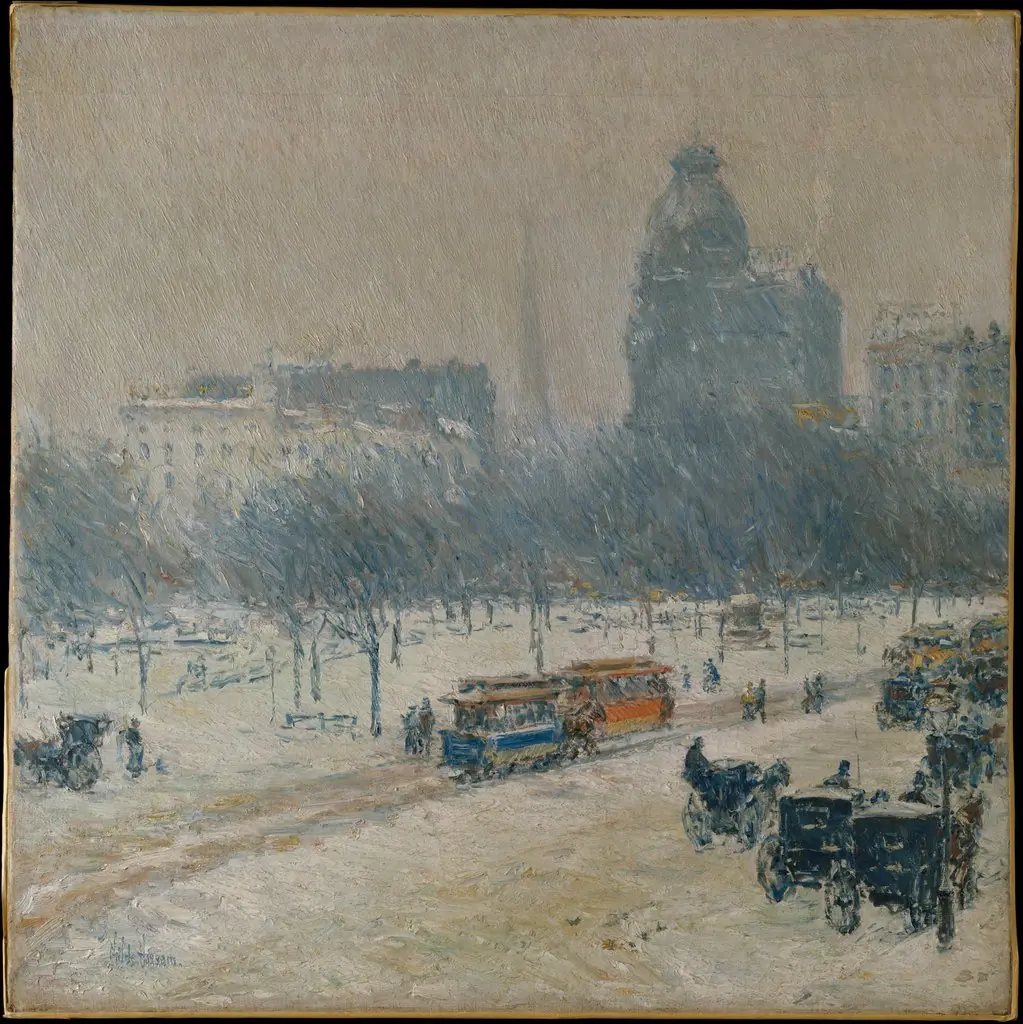
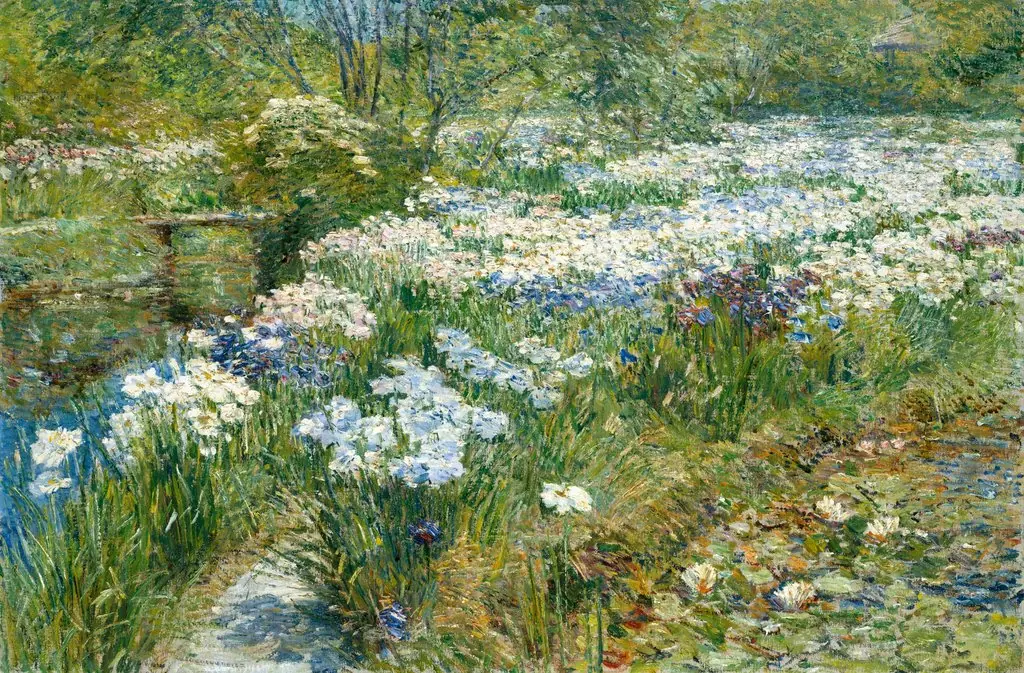
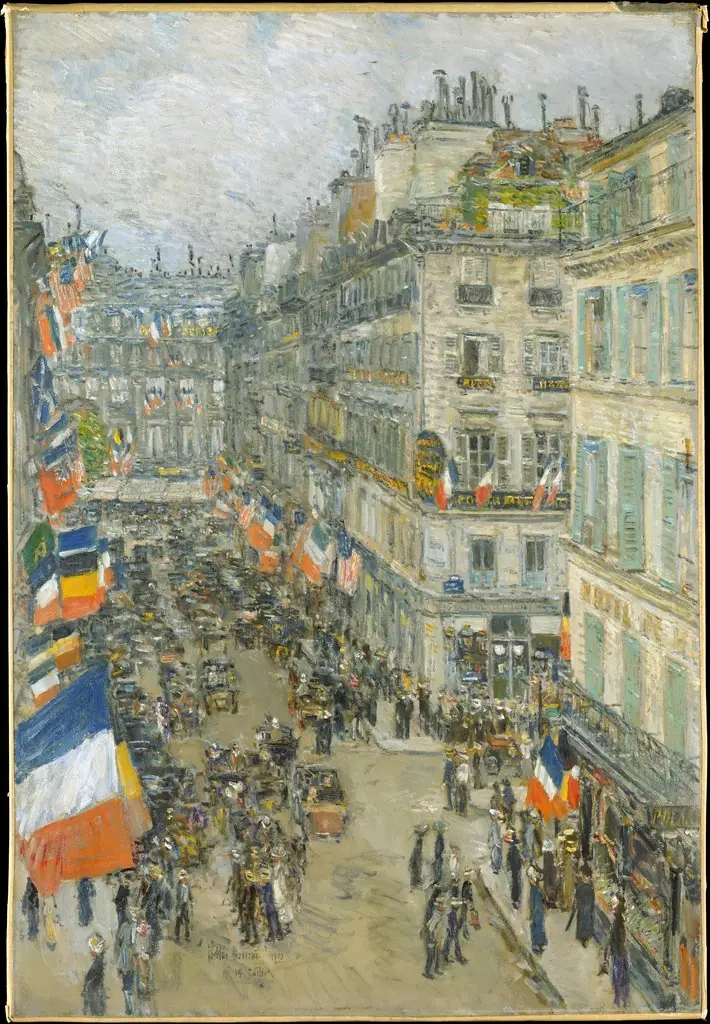
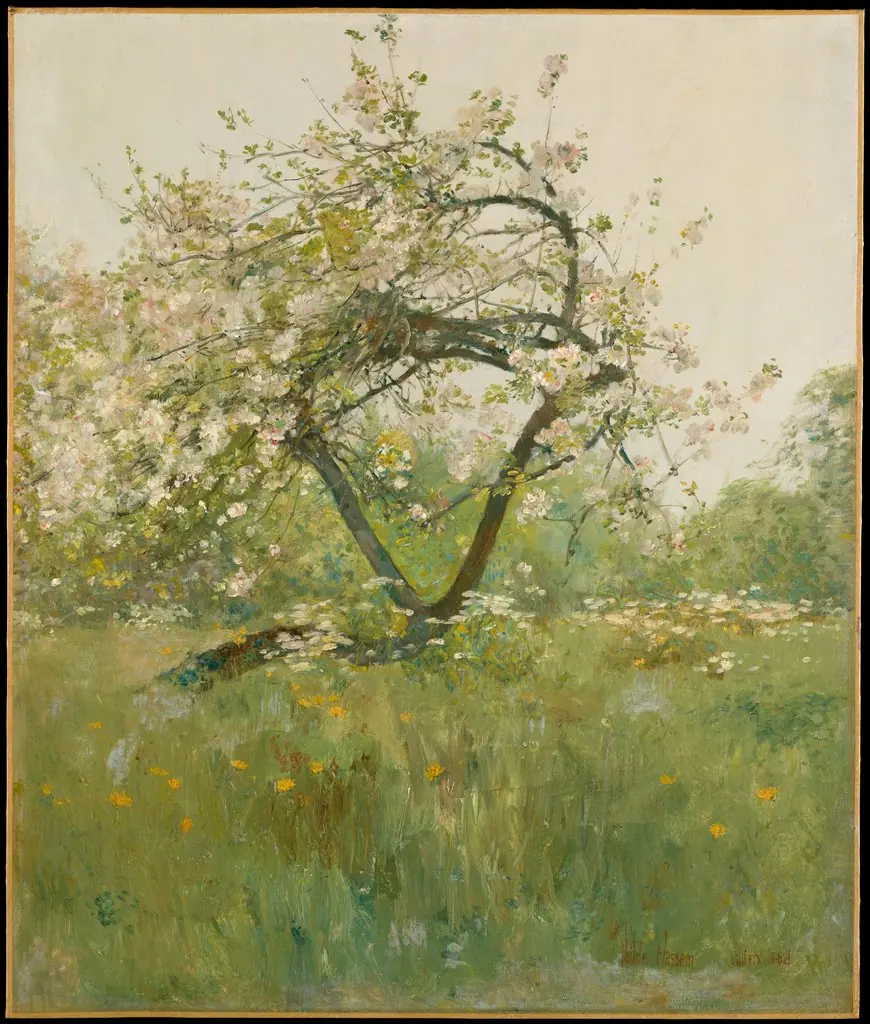
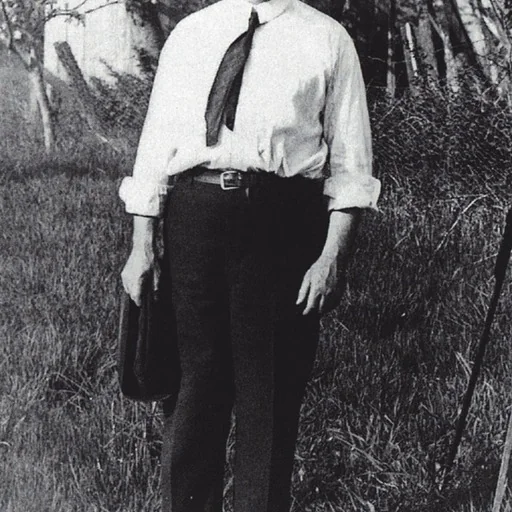
Frederick Childe Hassam was an American Impressionist painter, noted for his urban and coastal scenes.