Artwork
The Doll (La Poupée)
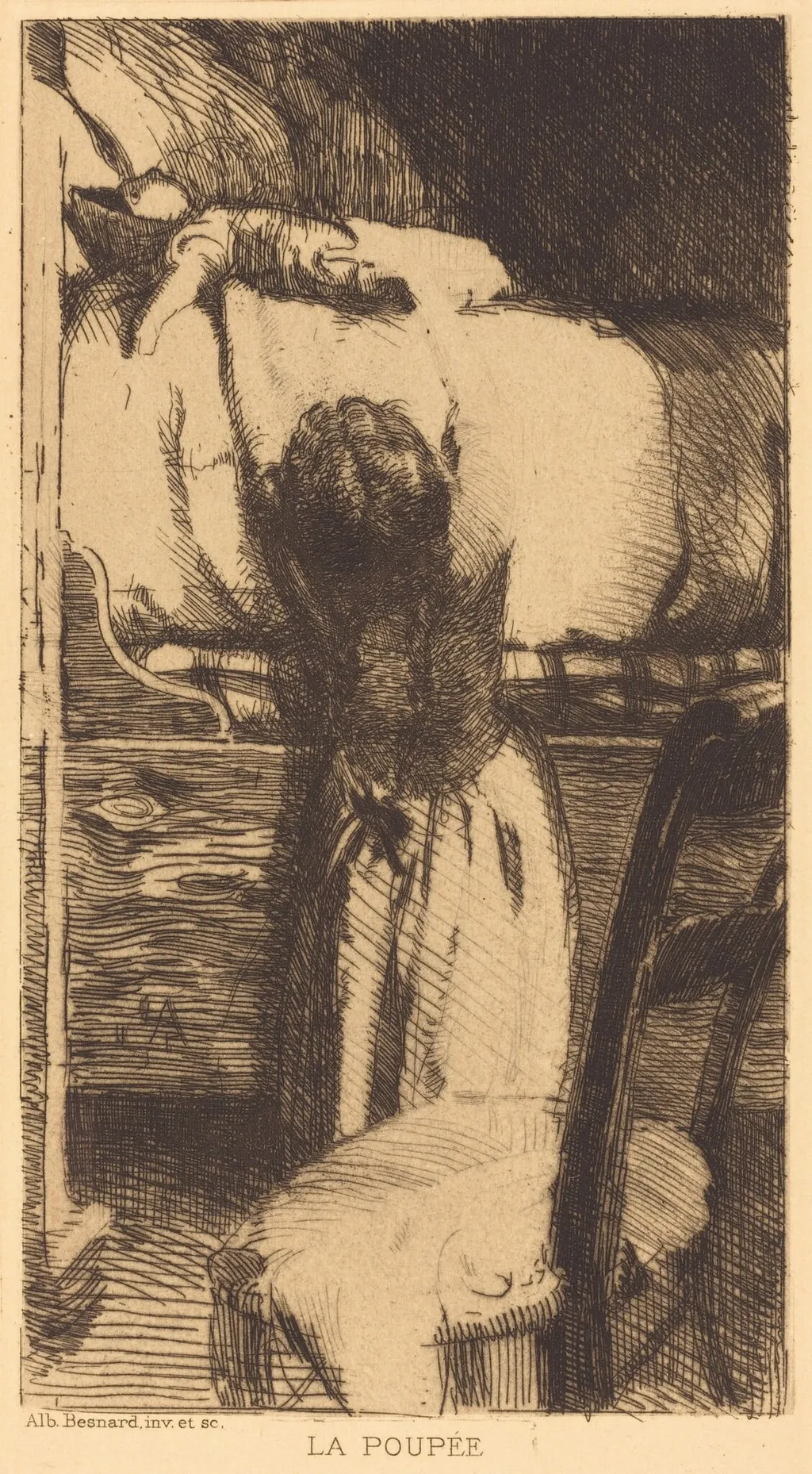
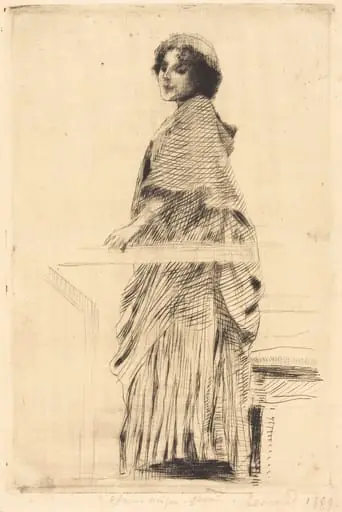
The Doll (La Poupée) is an ink print by the Impressionist artist Paul-Albert Besnard. It dates from 1888 and is held in the collection of the National Gallery of Art.
About this work
Overview
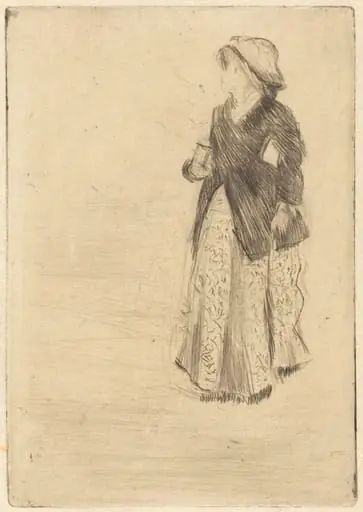
Albert Besnard created The Doll (La Poupée) in 1888 as an etching with roulette work on wove paper. Unlike his paintings, this print captures a solitary female figure in a restrained, tonal medium. The composition focuses on posture and silhouette rather than facial expression, emphasizing introspection through form and shadow rather than detail.
Subject & Meaning
The figure, seen from behind, sits with arms resting on a chair back, her head bowed and hair drawn tightly. Her loose garments suggest stillness and inward focus. The absence of the face invites interpretation—not as a portrait but as a symbol of solitude or emotional withdrawal. The title, The Doll, may allude to passivity or objectification, though the work resists clear narrative.
Technique & Style
Loose, expressive strokes define the fabric and background, while the dark, uneven ground contrasts with faint, scattered light.
Besnard employed etching and roulette to achieve varied textures and gradations of black. The roulette tool created stippled shadows, enhancing depth without linearity. Loose, expressive strokes define the fabric and background, while the dark, uneven ground contrasts with faint, scattered light. The technique prioritizes mood over precision, aligning with Symbolist tendencies in printmaking of the period.
History & Provenance
Created in 1888, the print emerged during Besnard’s engagement with printmaking as a serious artistic medium. It was likely produced in a small edition, common for etchings of the time. Early ownership records are sparse, but the work entered institutional collections in the 20th century, reflecting its recognition within French graphic art circles.
Context
In late 19th-century France, etching experienced a revival among artists seeking alternatives to academic painting. Besnard, influenced by Whistler and the Aesthetic Movement, used the medium to explore atmosphere and psychological nuance. The Doll aligns with contemporaneous works that favored quiet, introspective subjects over dramatic storytelling.
Legacy
The Doll remains a notable example of Besnard’s graphic work, illustrating his ability to convey emotional depth through minimal means. While less known than his paintings, the print influenced later artists interested in tonal etching and psychological portraiture. It is held in major print collections as a representative of French Symbolist printmaking.
Artist & collection
Artist
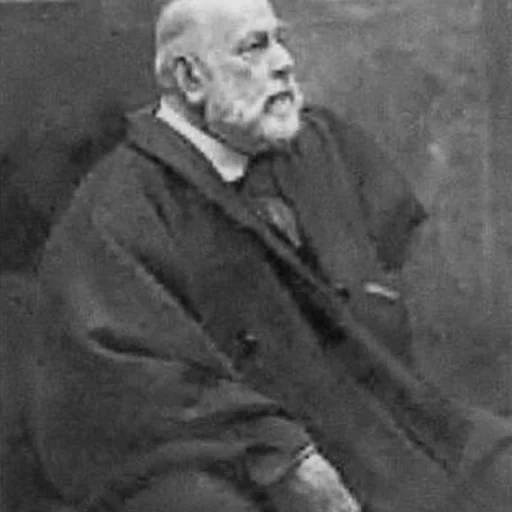
Paul-Albert Besnard (1849–1934) was a French artist, born in 7th arrondissement of Paris.

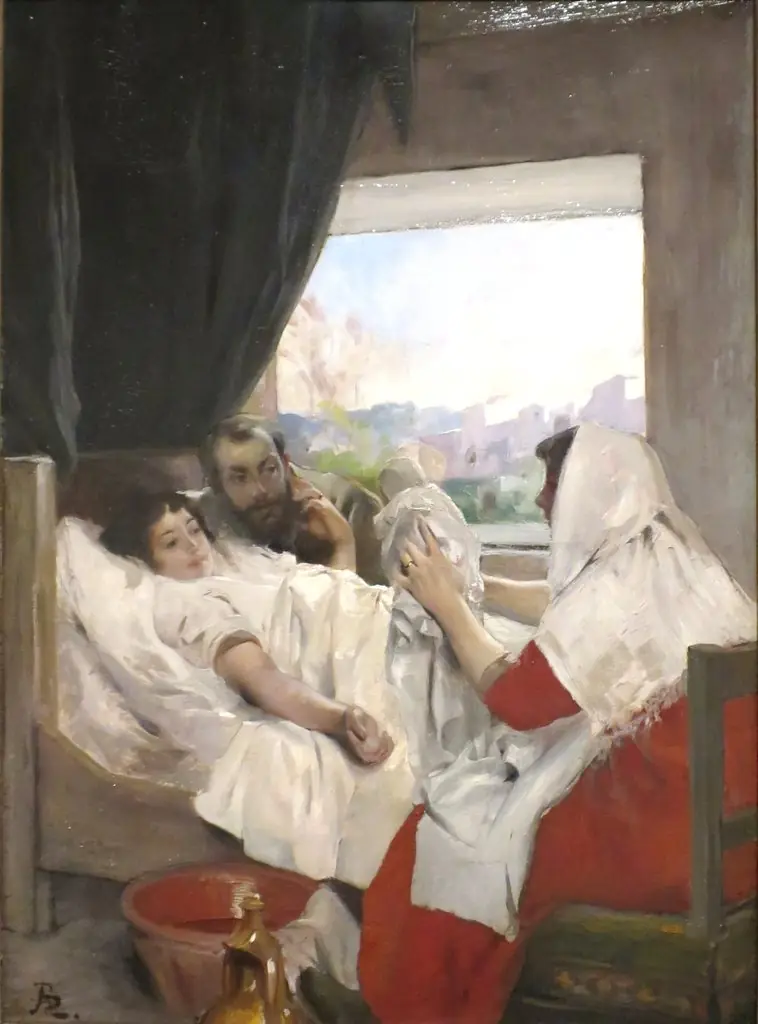
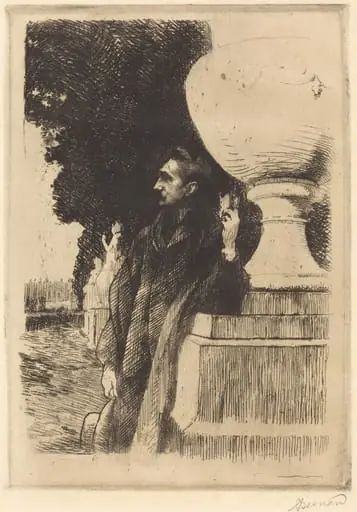
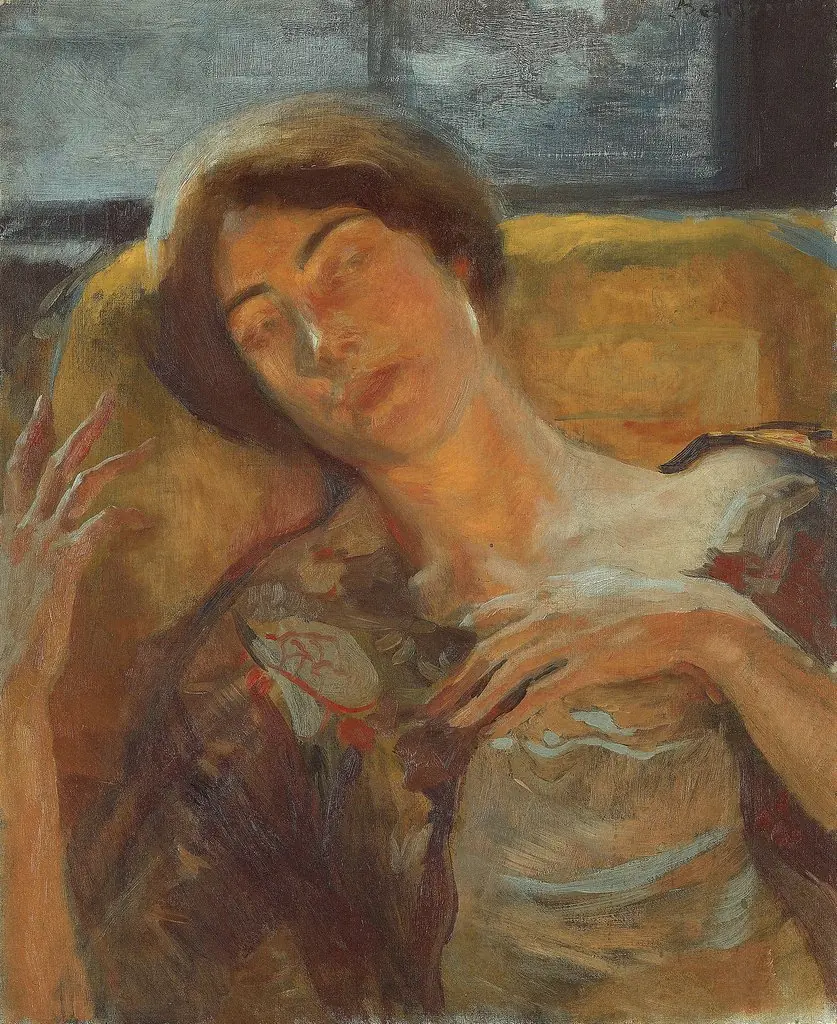
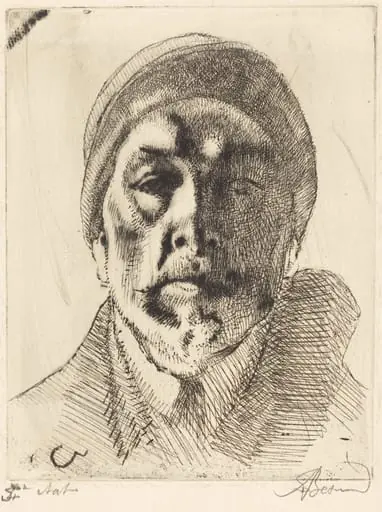
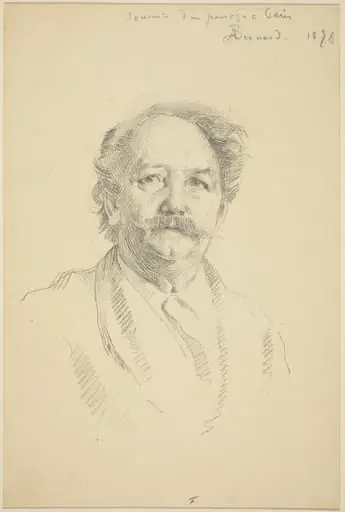
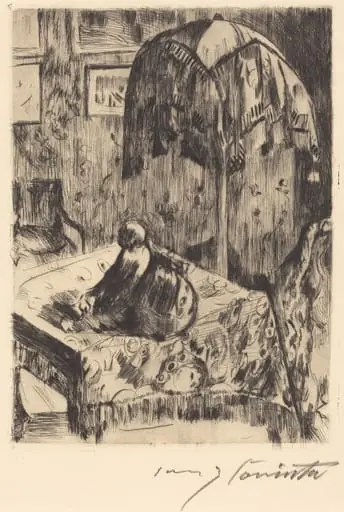 Interieur mit Stehlampe (Interior with Floor Lamp)
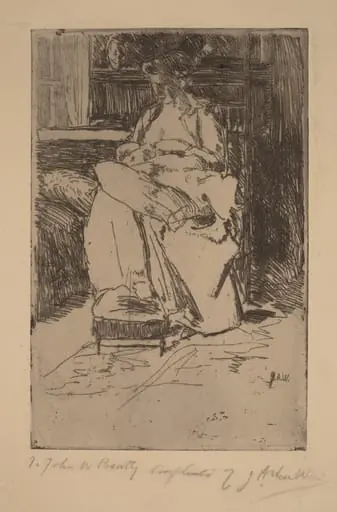 Mother and Child
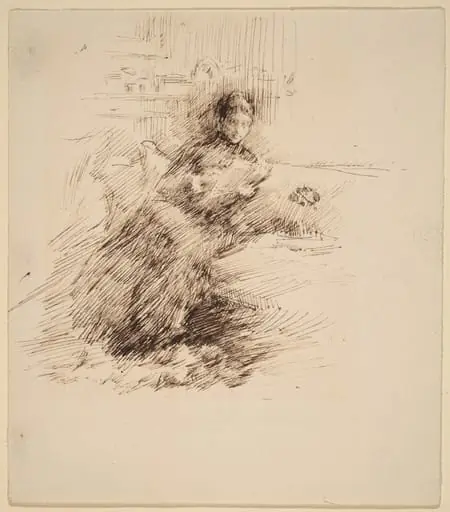 Miss Cumberlege
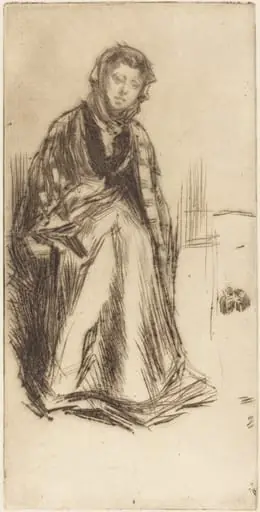 The Scotch Widow
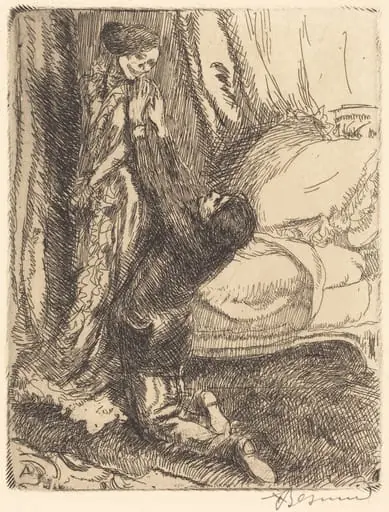 Coquette
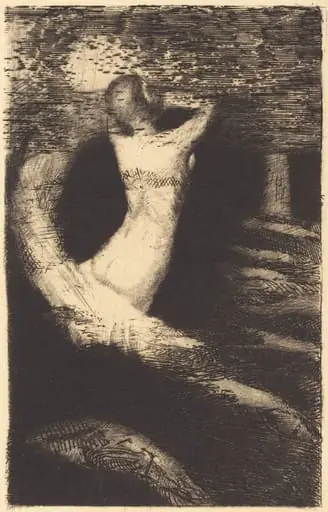 Passage d'une Ame (Passage of a Spirit)
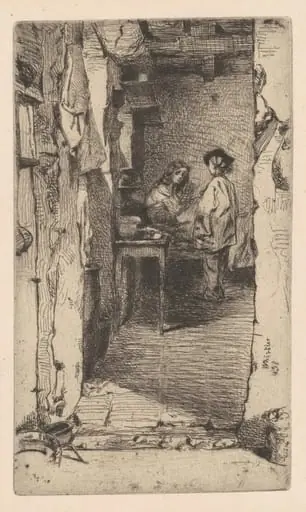 Rag Pickers, Quartier Mouffetard, Paris
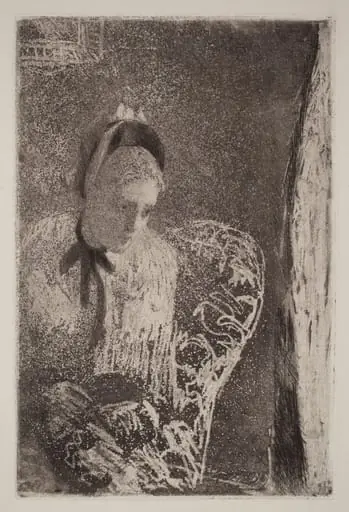 Waiting
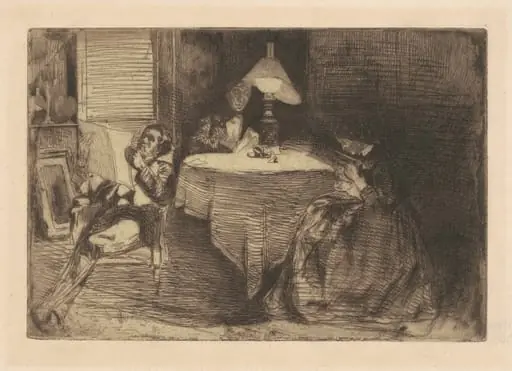 The Music Room
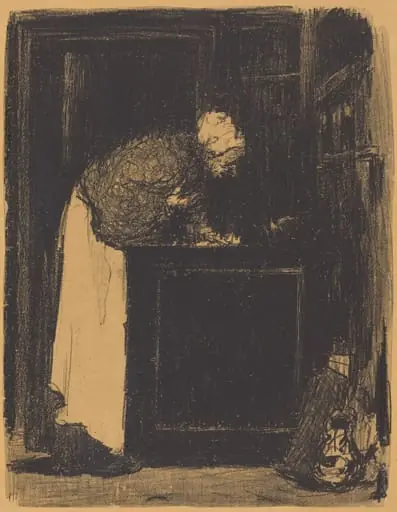 Old Woman at a Stove (Vielle Femme au Fourneau)
 The Actress Ellen Andrée
 Rag Pickers, Quartier Mouffetard, Paris