Artwork
The Shoemaker
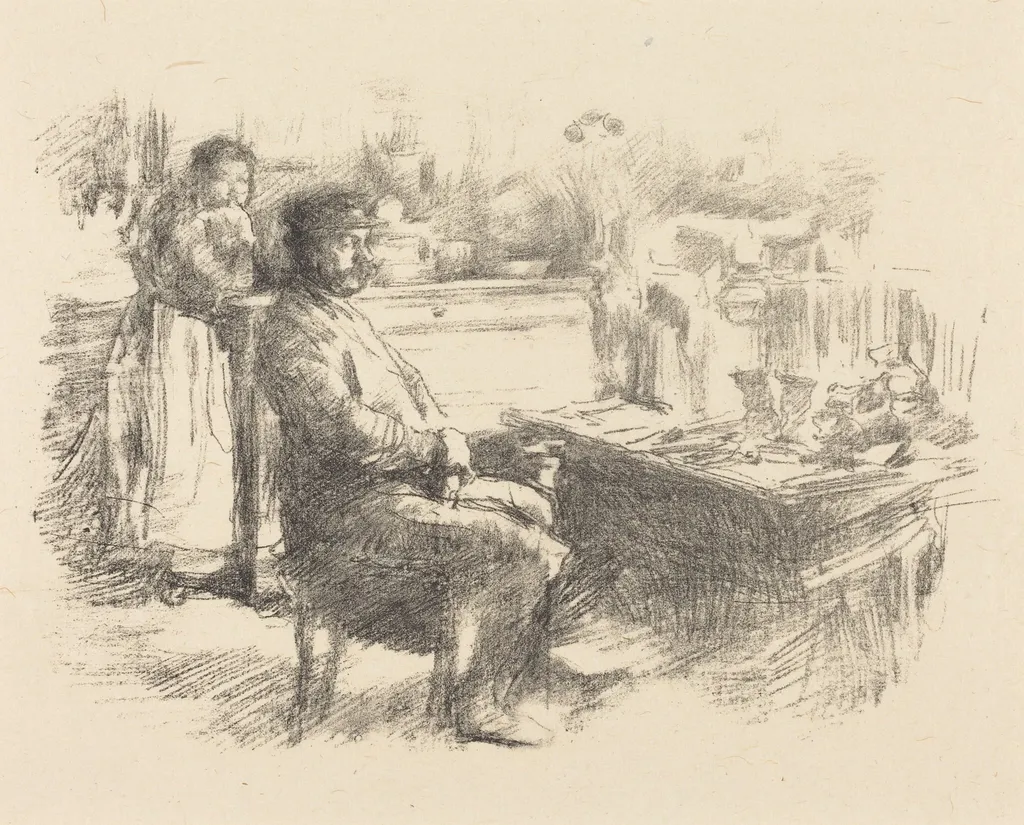
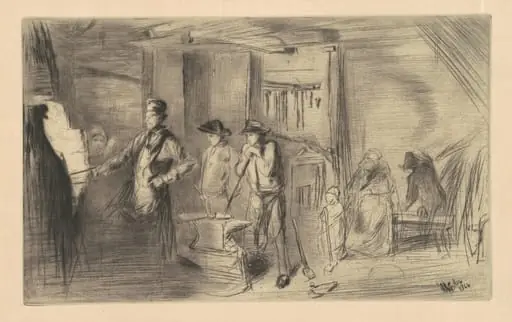
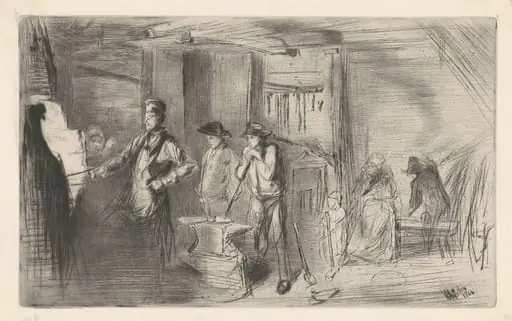
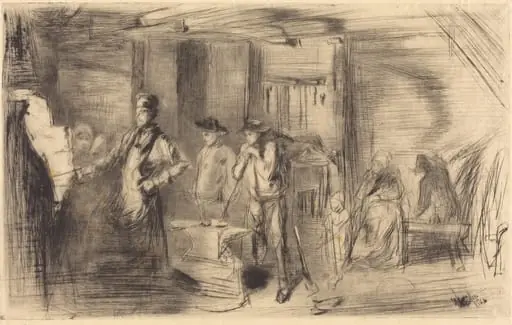
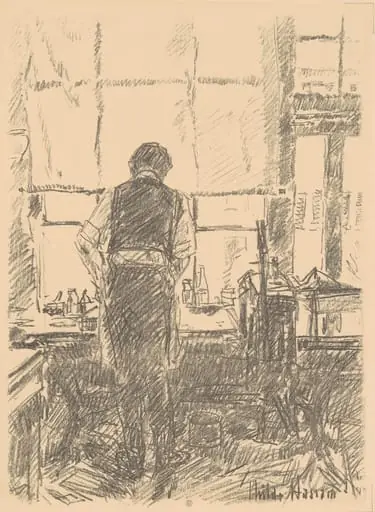
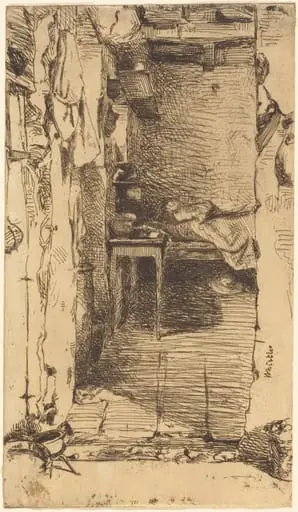
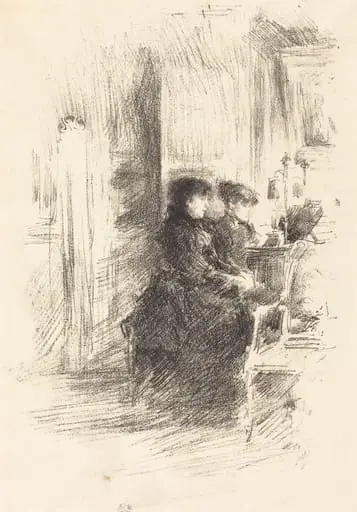
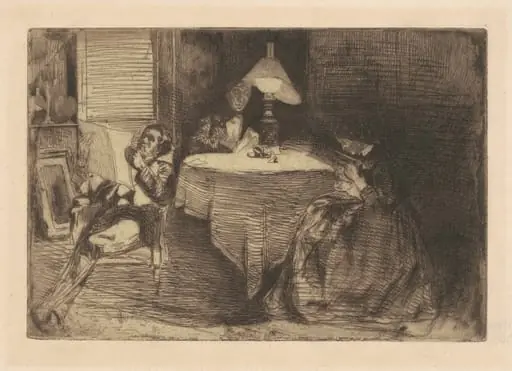
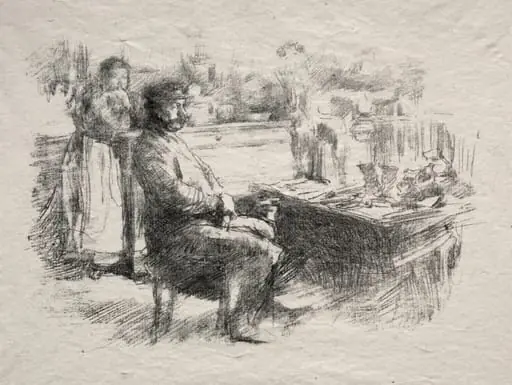
The Shoemaker is an ink print by the Impressionist artist James McNeill Whistler. It dates from 1896 and is held in the collection of the National Gallery of Art.
About this work
Overview
The work belongs to a series of prints Whistler produced during his later years, focusing on quiet, unadorned scenes of everyday labor.
Created in 1896, *The Shoemaker* is a lithograph by James Abbott McNeill Whistler, executed in black ink on wove paper. The work belongs to a series of prints Whistler produced during his later years, focusing on quiet, unadorned scenes of everyday labor. Unlike his more ornate paintings, this piece embraces simplicity and immediacy, reflecting his interest in capturing transient moments rather than grand narratives.
Subject & Meaning
The scene portrays a cobbler bent over his workbench, with another figure standing nearby, observing. The absence of overt emotion or symbolic detail shifts focus to the act of labor itself. Whistler avoids moralizing or sentimentalizing the subject, instead presenting it as a quiet, unremarkable moment in domestic life—consistent with his belief in art’s autonomy from didactic purpose.
Technique & Style
Whistler employed lithography to achieve rapid, gestural lines that suggest movement and spatial depth with minimal detail. The rough, economical strokes convey texture and light without shading, relying on contrast and negative space. The dim interior is suggested through faint outlines and sparse elements—a bed, scattered tools—creating an atmosphere of intimacy without narrative clutter.
History & Provenance
Produced during Whistler’s mature period in London, the print emerged from his ongoing exploration of printmaking after years focused on painting and etching. It was likely made for private circulation or limited publication, consistent with his preference for controlled distribution. The work bears his signature butterfly motif, a personal emblem he used across media to assert authorship and aesthetic identity.
Context
In the late 19th century, Whistler stood apart from Victorian narrative art, championing aestheticism and formal harmony. *The Shoemaker* aligns with his broader interest in urban and working-class subjects, though treated with restraint. His engagement with Japanese prints and French Realism informed his compositional economy, favoring suggestion over explicit storytelling.
Legacy
The print contributes to Whistler’s reputation as a printmaker who elevated lithography beyond illustration into a medium of subtle expression. Though less celebrated than his portraits or nocturnes, works like *The Shoemaker* demonstrate his commitment to visual purity and his influence on modern printmaking’s shift toward abstraction and mood over detail.
Artist & collection
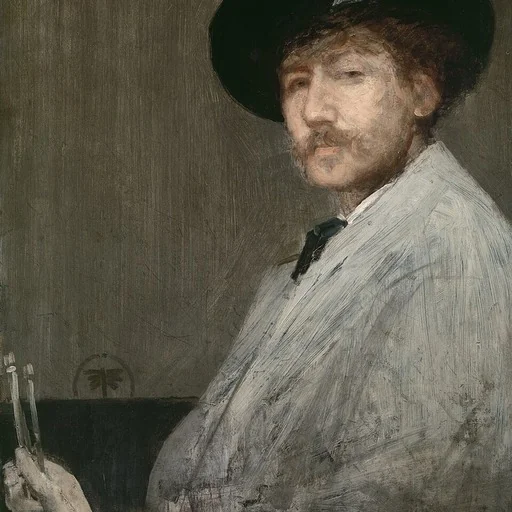
Artist
James Abbott McNeill Whistler was an American painter in oils and watercolor, and printmaker, active during the American Gilded Age and based primarily in the United Kingdom.

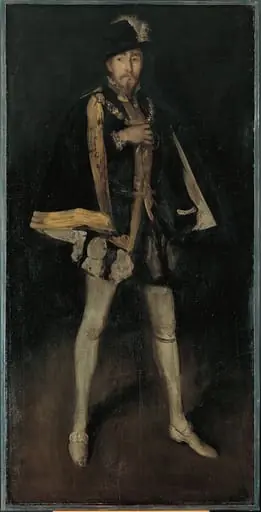 Arrangement in Black, No. 3: Sir Henry Irving as Philip II of Spain
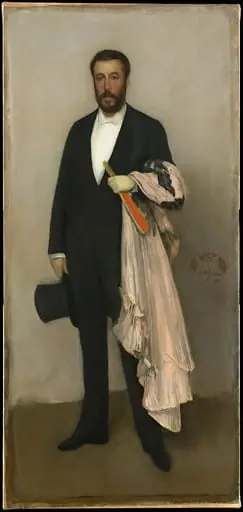 Arrangement in Flesh Colour and Black: Portrait of Theodore Duret
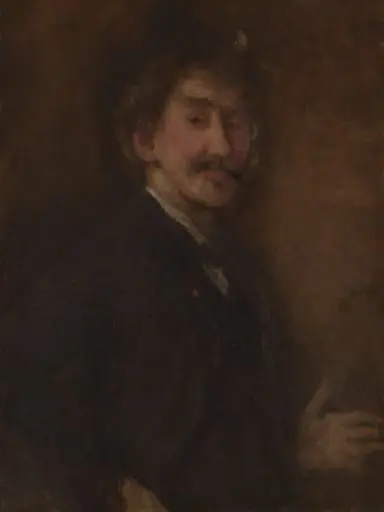 Gold and Brown: Self-Portrait
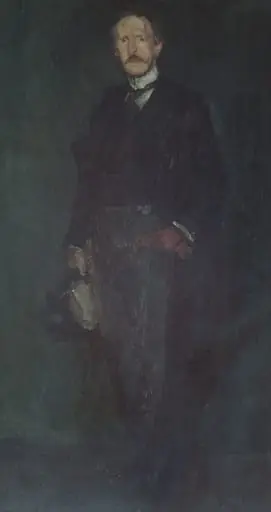 Edward Guthrie Kennedy
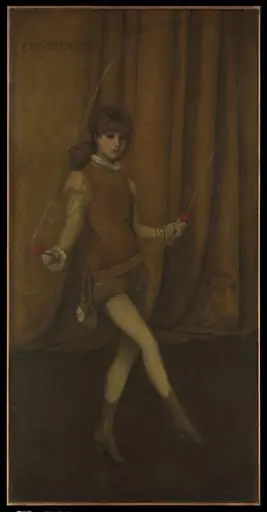 Harmony in Yellow and Gold: The Gold Girl—Connie Gilchrist
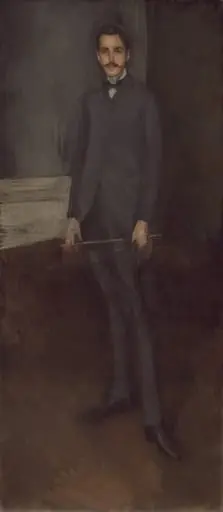 George W. Vanderbilt
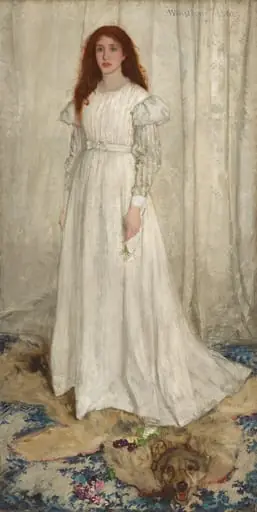 Symphony in White, No. 1: The White Girl
 Henry Irving as Philip II of Spain