Artwork
The Thames
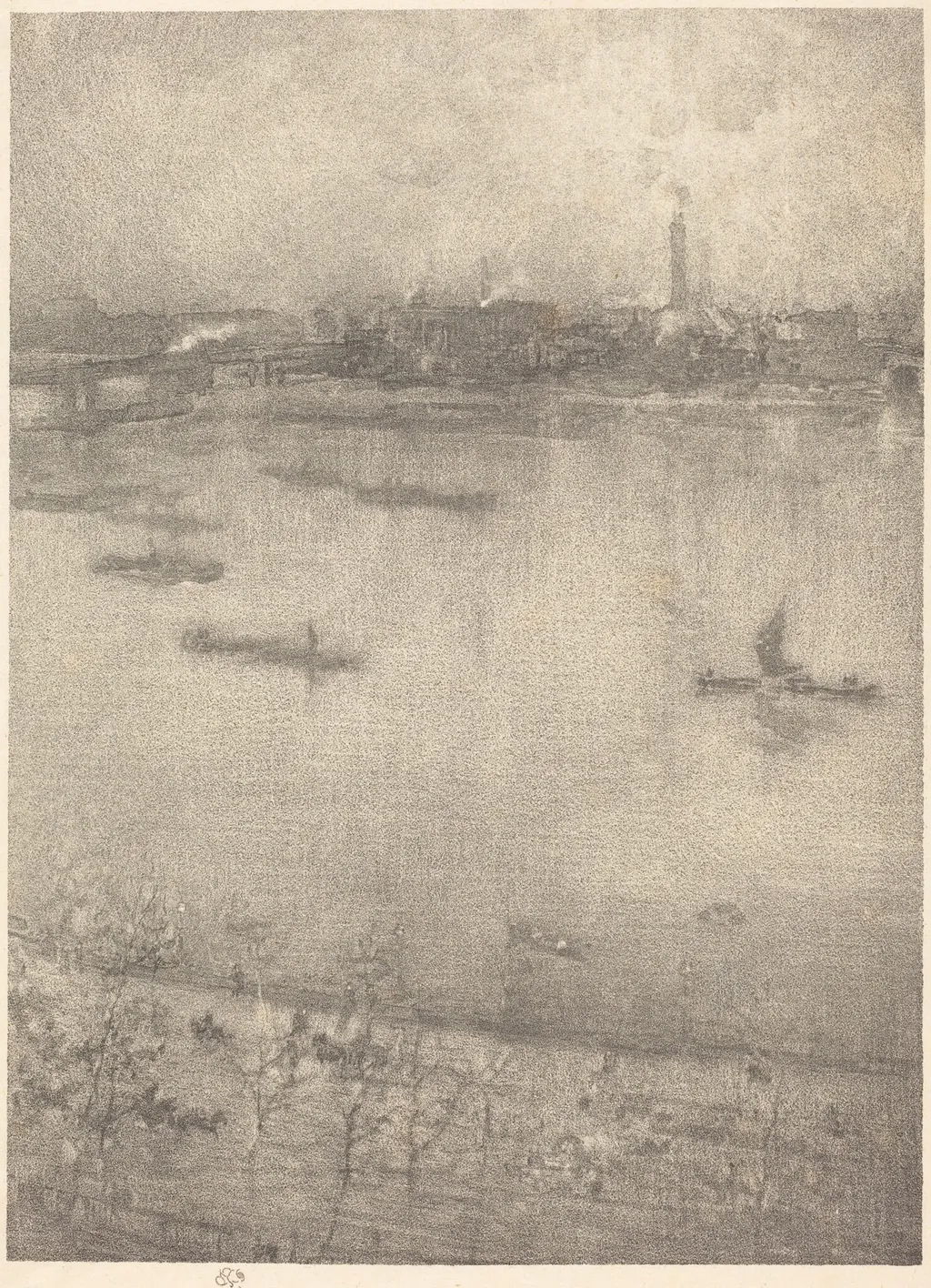
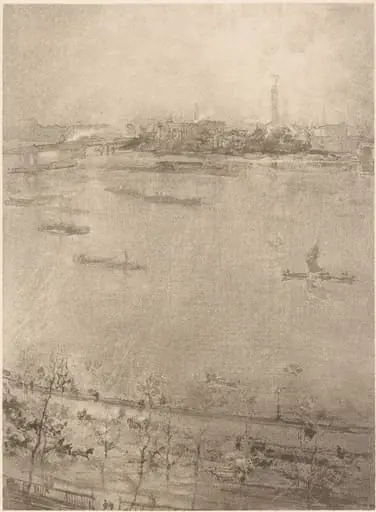
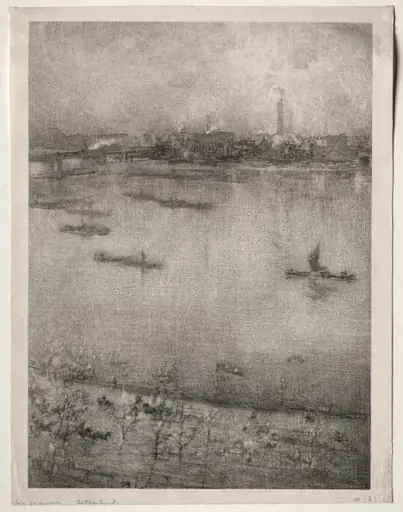
The Thames is an ink print by the Impressionist artist James McNeill Whistler. It dates from 1896 and is held in the collection of the National Gallery of Art.
About this work
Overview
James McNeill Whistler’s 1896 lithograph titled *The Thames* depicts a tranquil stretch of the river with a distant urban skyline. Rendered in black on wove paper, the image balances a calm water surface, sparse boats, and a shoreline lined with leafless trees, while a few towering structures and a church spire rise across the water.
Subject & Meaning
The composition presents an understated view of the river, emphasizing atmosphere over narrative. By omitting overt drama or moralizing details, Whistler invites contemplation of the scene’s quiet harmony, reflecting his belief that visual pleasure should arise from the arrangement of forms and tones rather than storytelling.
Technique & Style
Executed in lithography, the work relies on delicate, layered black lines that soften edges and create a misty, almost impressionistic effect. Whistler’s control of the medium yields a subtle gradation of tone, while his characteristic butterfly monogram appears discreetly, confirming authorship without disrupting the visual balance.
History & Provenance
Created during Whistler’s later period, the print forms part of his ongoing fascination with the Thames as an urban motif. Produced in the United Kingdom, it circulated among collectors of his prints and exemplifies his advocacy of “art for art’s sake,” prioritizing aesthetic cohesion over illustrative content.
Artist & collection

Artist
James Abbott McNeill Whistler was an American painter in oils and watercolor, and printmaker, active during the American Gilded Age and based primarily in the United Kingdom.

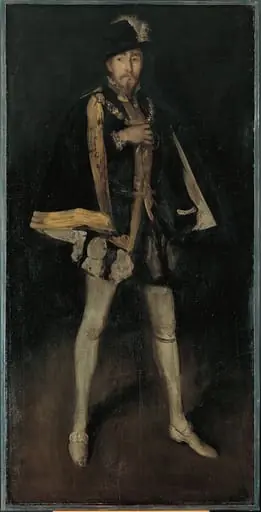 Arrangement in Black, No. 3: Sir Henry Irving as Philip II of Spain
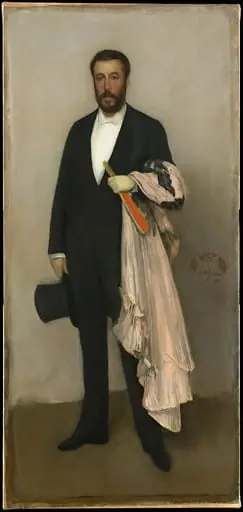 Arrangement in Flesh Colour and Black: Portrait of Theodore Duret
 Gold and Brown: Self-Portrait
 Edward Guthrie Kennedy
 Harmony in Yellow and Gold: The Gold Girl—Connie Gilchrist
 George W. Vanderbilt
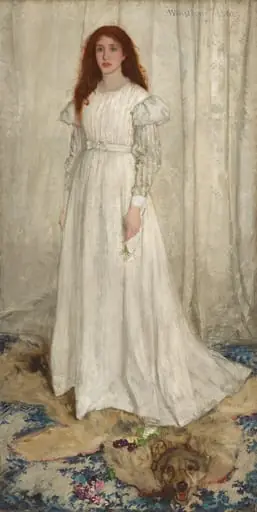 Symphony in White, No. 1: The White Girl
 Henry Irving as Philip II of Spain