Artwork
The Troubled Thames
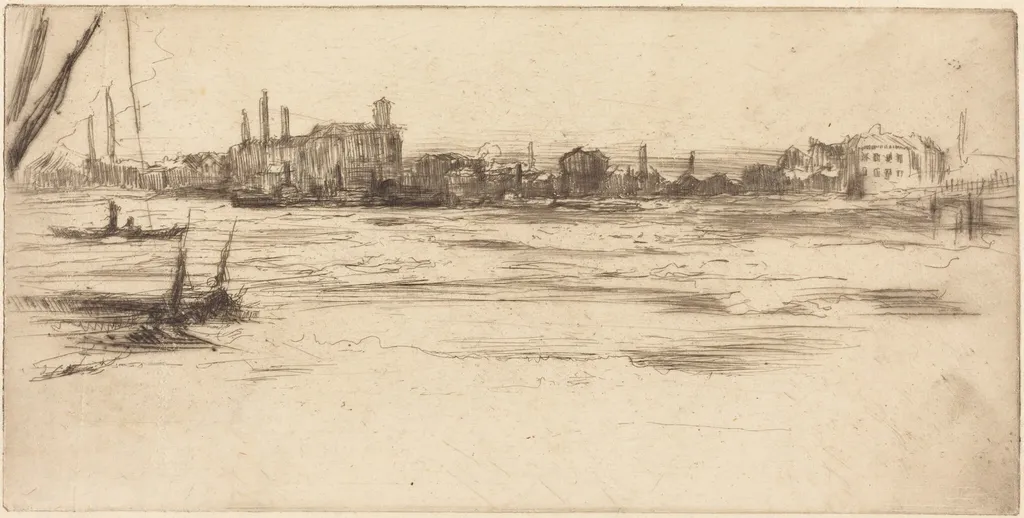
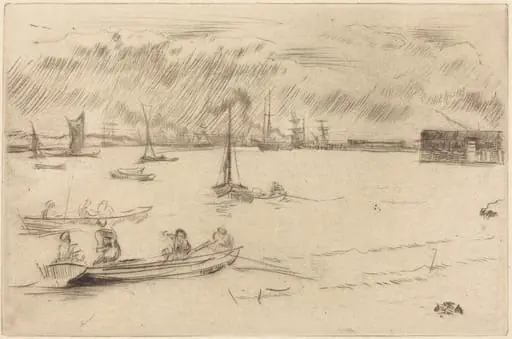
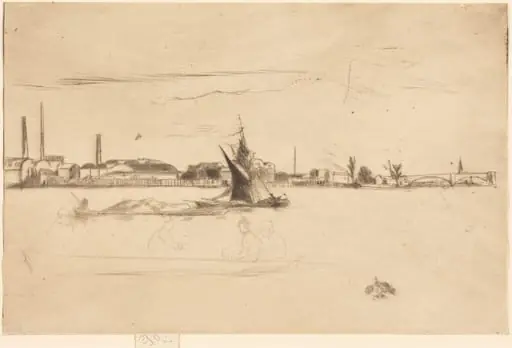
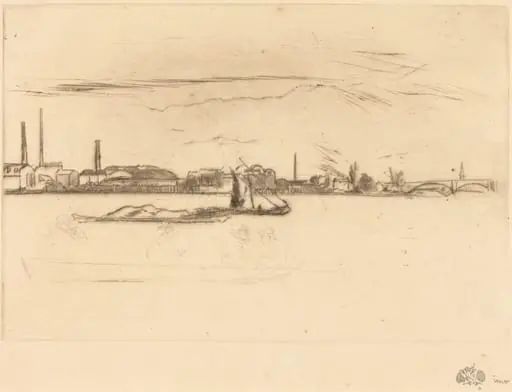
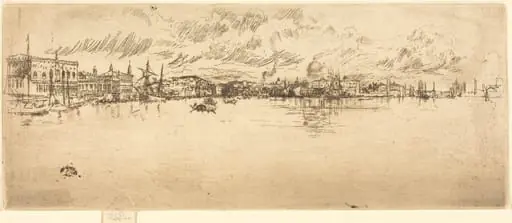
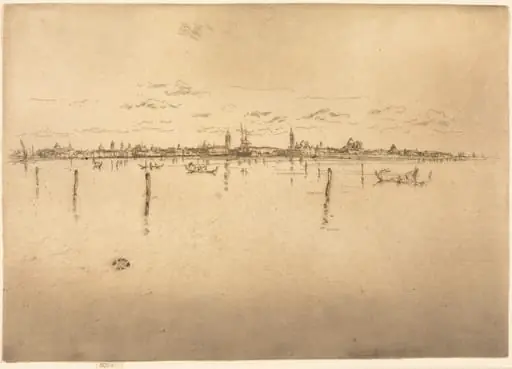
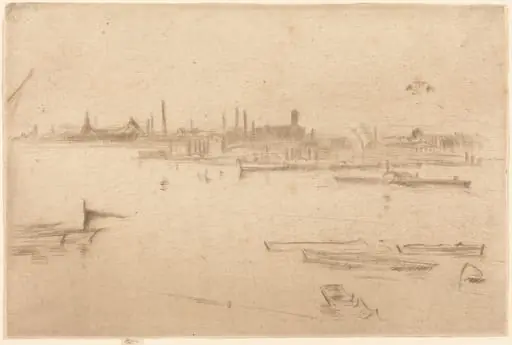
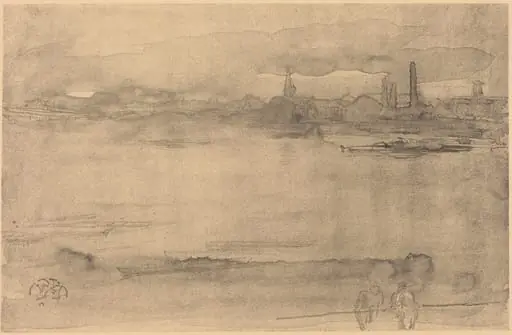
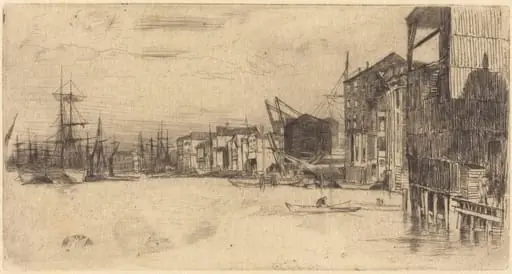
The Troubled Thames is an ink print by the Impressionist artist James McNeill Whistler. It dates from 1875 and is held in the collection of the National Gallery of Art.
About this work
Overview
This work exemplifies his focus on tonal harmony and atmospheric suggestion rather than detailed storytelling, reflecting his broader aesthetic philosophy.
Created around 1875, *The Troubled Thames* is an etching and drypoint on laid paper by James McNeill Whistler. Though American by birth, Whistler spent much of his career in London, where he turned to printmaking as a means of capturing urban landscapes with quiet precision. This work exemplifies his focus on tonal harmony and atmospheric suggestion rather than detailed storytelling, reflecting his broader aesthetic philosophy.
Subject & Meaning
The print depicts the River Thames at dusk, with a quiet cityscape along its right bank. A small rowboat floats near the foreground, while a larger vessel rests moored against the shore. No figures are present, and the scene avoids dramatic action. Instead, the composition conveys a mood of stillness and urban solitude, inviting contemplation rather than narrative interpretation — consistent with Whistler’s belief in art’s autonomy from moral or literary content.
Technique & Style
Whistler employed etching and drypoint to build layered tones, using fine lines and textured strokes to suggest the weight of buildings, the ripple of water, and the haze of twilight. The drypoint’s burr adds soft, velvety shadows, while the etched lines define structural edges with restraint. His palette is limited to grays and blacks, with the paper’s natural tone serving as the lightest highlight, enhancing the work’s atmospheric subtlety.
History & Provenance
The print was made during Whistler’s most active period in London printmaking, when he produced a series of Thames views. It was likely circulated among collectors and fellow artists, as was common with his etchings. Though not widely exhibited at the time, it entered institutional collections in the 20th century, where it is now recognized as part of his significant contribution to the revival of etching as a fine art medium.
Context
In the 1870s, Whistler aligned himself with the Aesthetic Movement, rejecting didactic art in favor of sensory experience. His Thames prints responded to industrial London’s changing skyline, yet avoided overt commentary on urbanization. Instead, they echoed Japanese woodblock prints in their cropped compositions and emphasis on mood — a style that influenced contemporaries and challenged traditional academic norms in British art.
Legacy
Whistler’s Thames etchings, including this one, helped redefine printmaking as a serious artistic pursuit in the late 19th century. His use of tone over detail, and his signature butterfly monogram, became hallmarks of his aesthetic. Later artists and printmakers studied his technical restraint and compositional economy, cementing his role in the transition from 19th-century realism to modernist abstraction in graphic arts.
Artist & collection
Artist
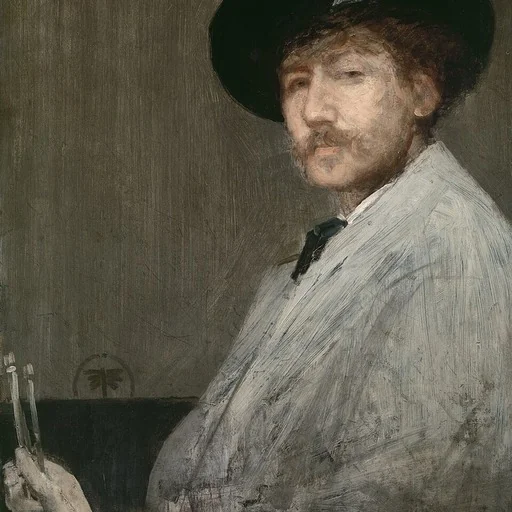
James Abbott McNeill Whistler was an American painter in oils and watercolor, and printmaker, active during the American Gilded Age and based primarily in the United Kingdom.

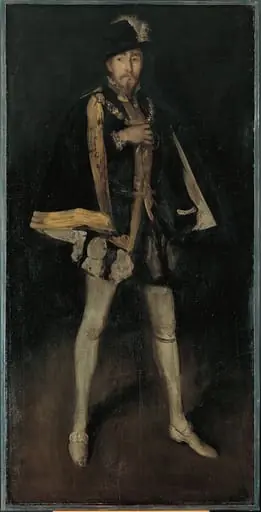 Arrangement in Black, No. 3: Sir Henry Irving as Philip II of Spain
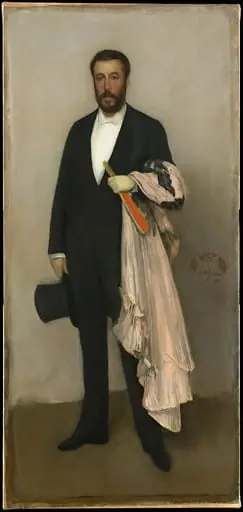 Arrangement in Flesh Colour and Black: Portrait of Theodore Duret
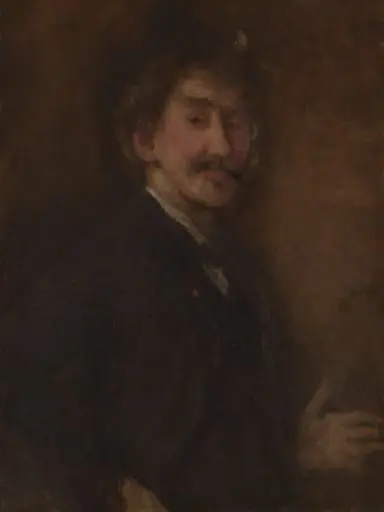 Gold and Brown: Self-Portrait
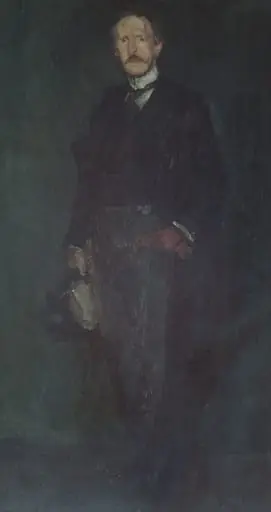 Edward Guthrie Kennedy
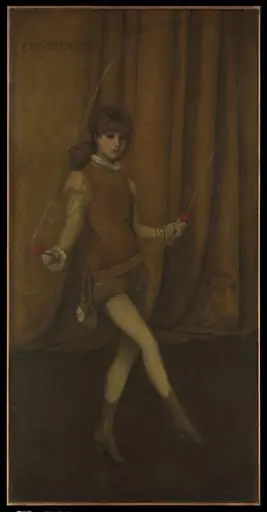 Harmony in Yellow and Gold: The Gold Girl—Connie Gilchrist
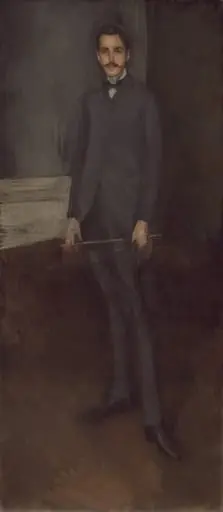 George W. Vanderbilt
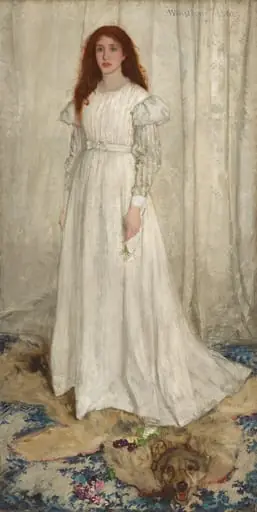 Symphony in White, No. 1: The White Girl
 Henry Irving as Philip II of Spain