Artwork
Two Doorways
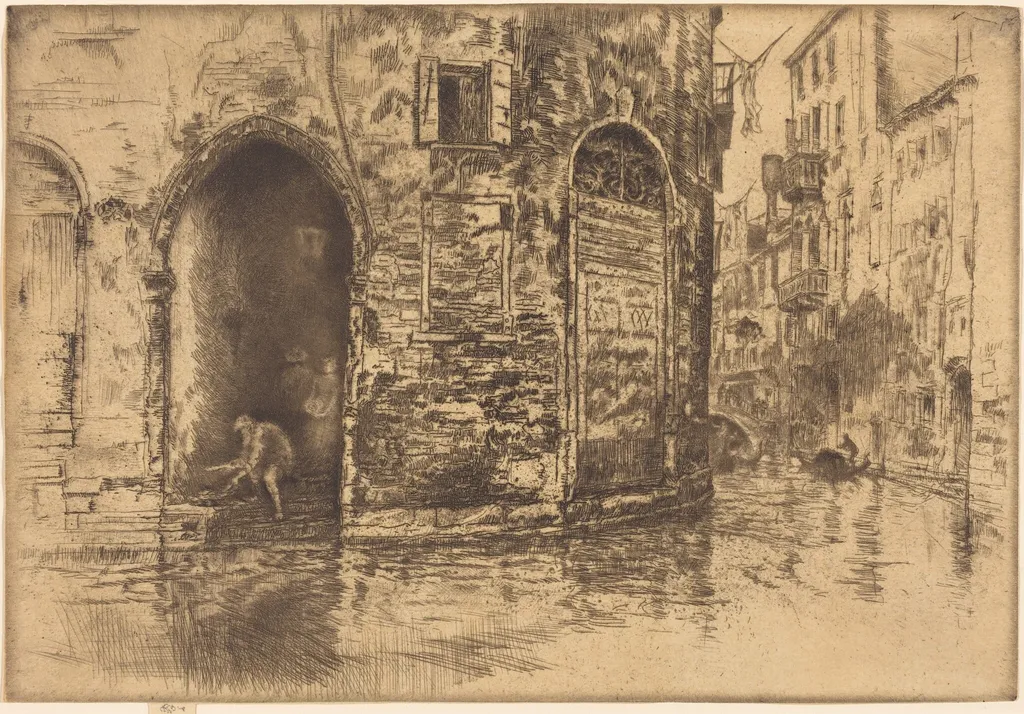
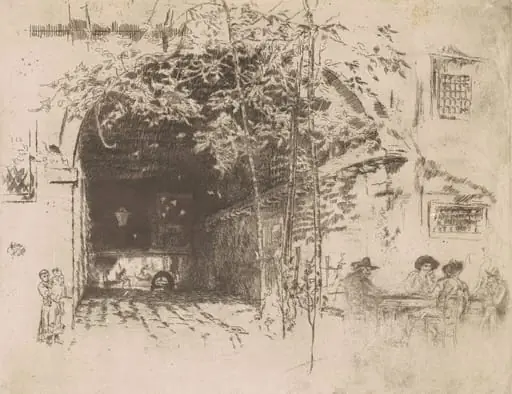
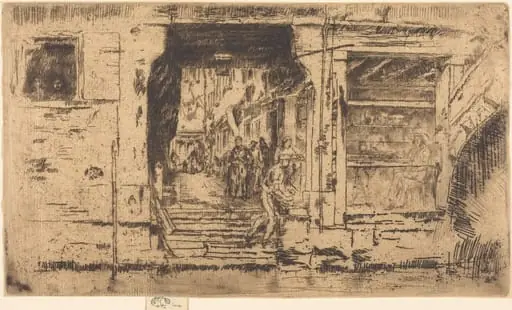
Two Doorways is an ink print by the Impressionist artist James McNeill Whistler. It dates from 1880 and is held in the collection of the National Gallery of Art.
About this work
Overview
Two Doorways is an 1880 etching and drypoint print by James McNeill Whistler, created using brownish-black ink on laid paper. Characteristic of Whistler's emphasis on formal composition, the work prioritizes aesthetic arrangement over narrative depth.
Subject & Meaning
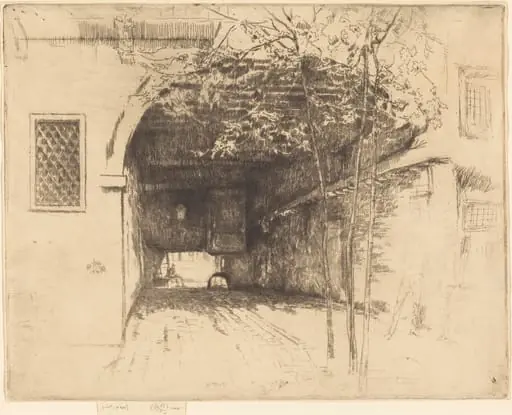
The print depicts two arched doorways in a plain, crumbling stone facade. The left doorway contains a hunched, partially lit figure on a bench, while the right doorway, though empty, suggests a seated figure in shadow. This contrast may imply themes of presence, absence, or the interplay of light and darkness.
Technique & Style
Whistler employed delicate linework and subtle tonal variations to render the scene. Rough, scratchy lines convey texture, from the stone walls to the figure's woven clothing, while the dark ink emphasizes the weight and age of the architecture.
History & Provenance
Created in 1880 by the American expatriate James McNeill Whistler, who primarily worked in Britain during the late 19th century, adhering to the 'art for art's sake' principle, rejecting sentimentality for formal beauty.
Context
Part of Whistler's broader output of prints and paintings that valued composition over narrative, Two Doorways reflects the aesthetic priorities of its time, aligning with the movement's focus on the intrinsic value of artistic form.
Legacy
As a piece by Whistler, it contributes to the broader recognition of etching and drypoint as expressive mediums in late 19th-century art, highlighting the technical and aesthetic innovations of the period.
Artist & collection
Artist
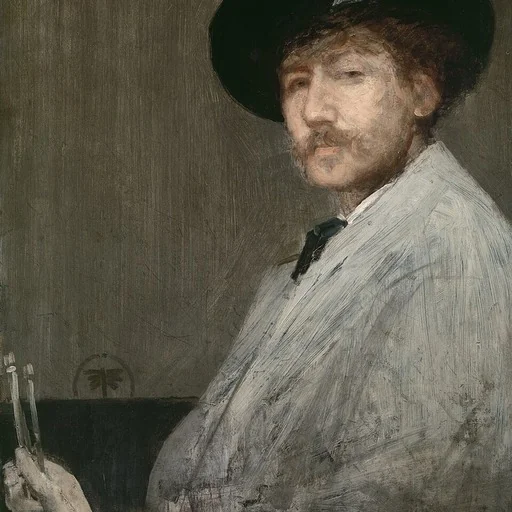
James Abbott McNeill Whistler was an American painter in oils and watercolor, and printmaker, active during the American Gilded Age and based primarily in the United Kingdom.

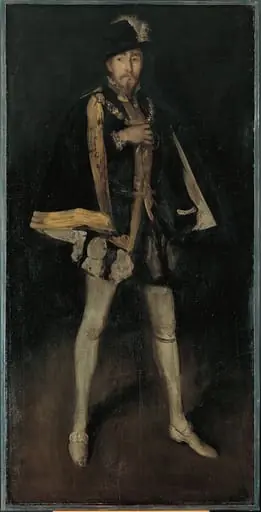 Arrangement in Black, No. 3: Sir Henry Irving as Philip II of Spain
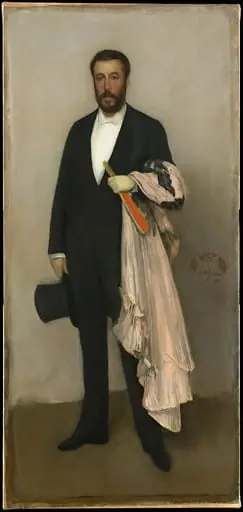 Arrangement in Flesh Colour and Black: Portrait of Theodore Duret
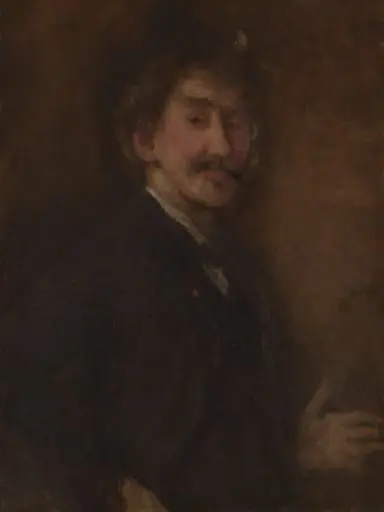 Gold and Brown: Self-Portrait
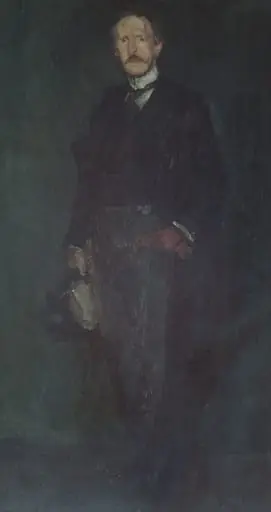 Edward Guthrie Kennedy
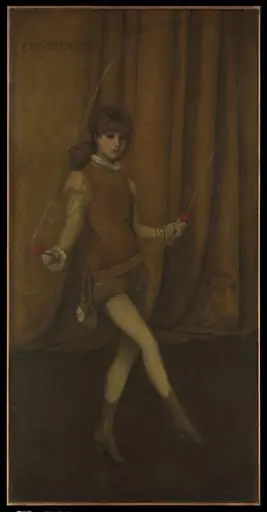 Harmony in Yellow and Gold: The Gold Girl—Connie Gilchrist
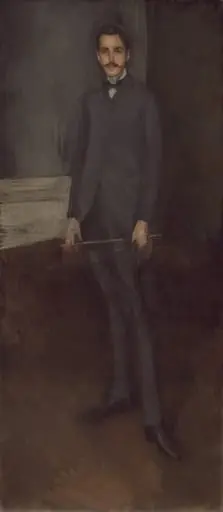 George W. Vanderbilt
 Symphony in White, No. 1: The White Girl
 Henry Irving as Philip II of Spain