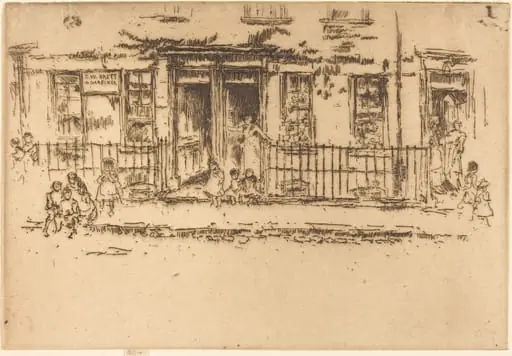
Artwork
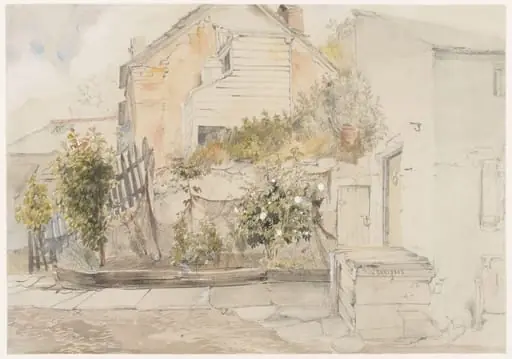
Village Shop, Chelsea
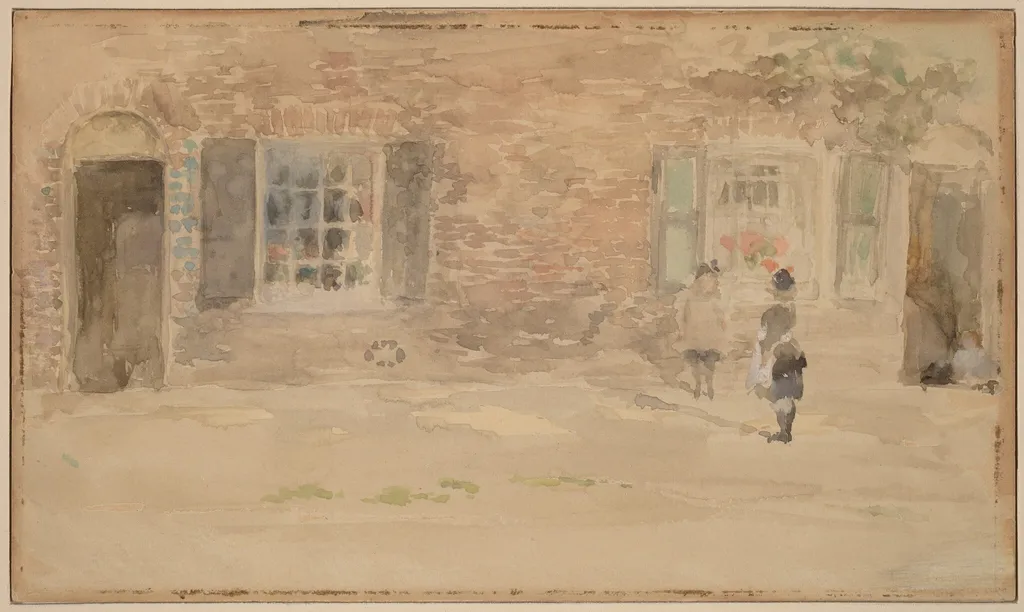
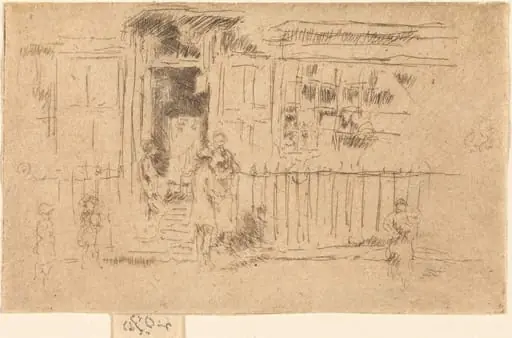
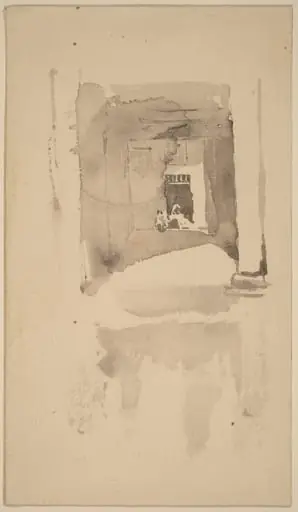
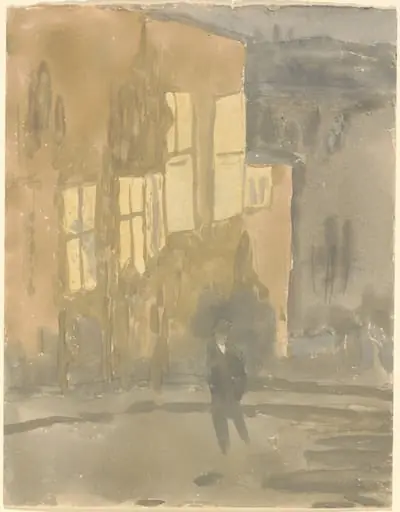
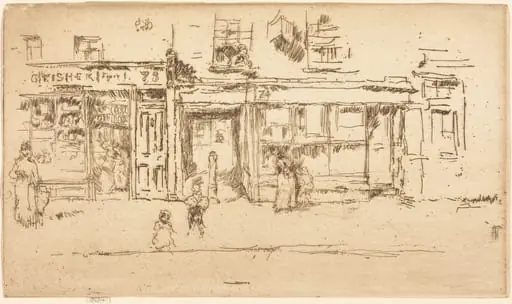
Village Shop, Chelsea is a gouache drawing by the Impressionist artist James McNeill Whistler. It dates from 1884 and is held in the collection of the National Gallery of Art.
About this work
Overview
Though best known for his oil paintings and etchings, Whistler frequently turned to water-based media for intimate, observational studies.
Created in 1884, *Village Shop, Chelsea* is a watercolor and gouache work on paperboard by James McNeill Whistler. Though best known for his oil paintings and etchings, Whistler frequently turned to water-based media for intimate, observational studies. This piece captures a quiet corner of London’s Chelsea district, reflecting his sustained interest in everyday urban scenes rendered with restraint and sensitivity.
Subject & Meaning
The painting portrays a modest brick shopfront with three windows and a single entrance, its surfaces weathered and unadorned. Two small figures stand near the doorway, one carrying a basket, suggesting ordinary daily life. Whistler avoids narrative drama, instead inviting contemplation of quiet, unremarkable moments. The absence of clear detail in the windows and the muted tones reinforce a sense of stillness and anonymity.
Technique & Style
Whistler applied watercolor and gouache with loose, rapid brushwork, creating a sense of immediacy. Layers of translucent washes build subtle tonal shifts, while opaque gouache adds faint highlights and texture to the brickwork. The composition is deliberately sparse, with no sharp outlines or focal points. Colors remain restrained—earthy browns, grays, and muted greens—emphasizing atmosphere over detail.
History & Provenance
Whistler produced this work during his later years in London, a period when he increasingly favored small-scale watercolors over large commissions. It was likely painted en plein air or from direct observation, consistent with his practice of capturing fleeting impressions. The piece remained in private hands until entering a public collection, where it now serves as an example of his late, introspective phase.
Context
In the 1880s, Whistler was deeply engaged with the Aesthetic Movement’s ideals, prioritizing formal harmony over moral or narrative content. *Village Shop, Chelsea* aligns with his broader exploration of urban quietude, paralleling his nocturnes and Thames views. Unlike contemporaries who idealized rural life, he found dignity in the unremarkable architecture and rhythms of London’s working-class neighborhoods.
Legacy
This work exemplifies Whistler’s influence on modern approaches to watercolor, demonstrating how subtle tonal variation and deliberate simplicity could convey emotional resonance. Later artists, particularly those in the American and British tonalist traditions, drew from his ability to evoke mood through restraint. The painting remains a quiet testament to his belief that art’s value lies in its formal and sensory presence, not its subject matter.
Artist & collection
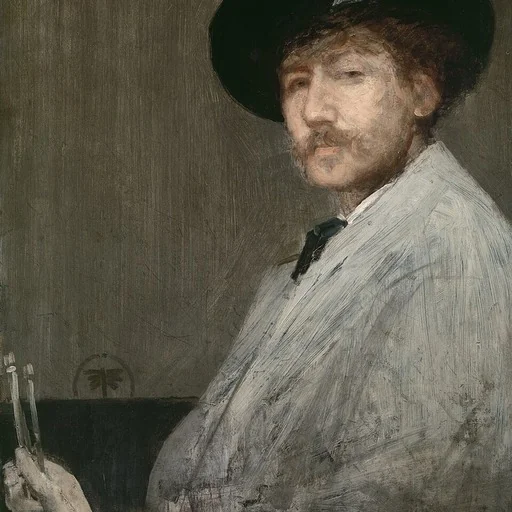
Artist
James Abbott McNeill Whistler was an American painter in oils and watercolor, and printmaker, active during the American Gilded Age and based primarily in the United Kingdom.

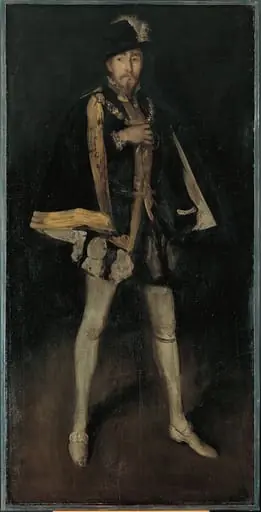 Arrangement in Black, No. 3: Sir Henry Irving as Philip II of Spain
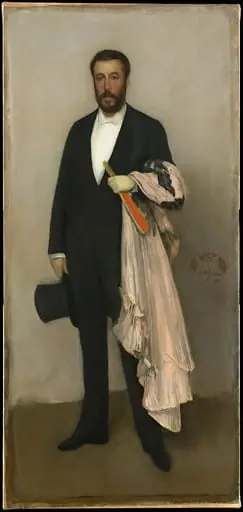 Arrangement in Flesh Colour and Black: Portrait of Theodore Duret
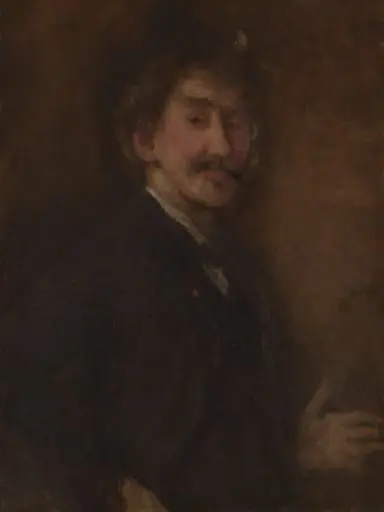 Gold and Brown: Self-Portrait
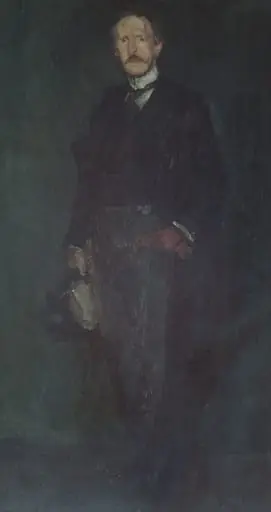 Edward Guthrie Kennedy
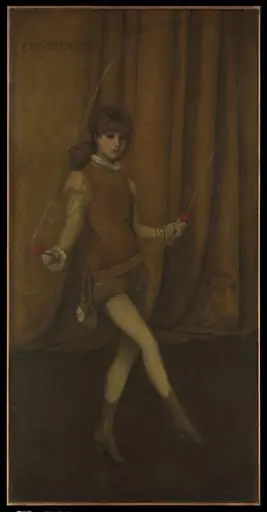 Harmony in Yellow and Gold: The Gold Girl—Connie Gilchrist
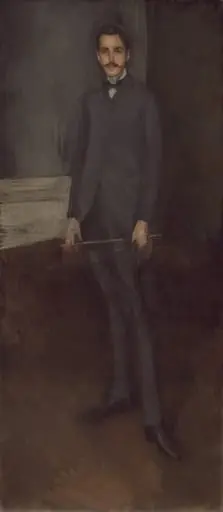 George W. Vanderbilt
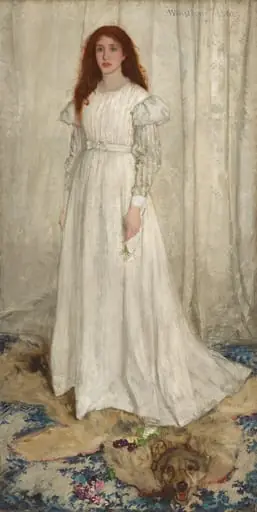 Symphony in White, No. 1: The White Girl
 Henry Irving as Philip II of Spain