Artwork
Blue Ridge Mountains
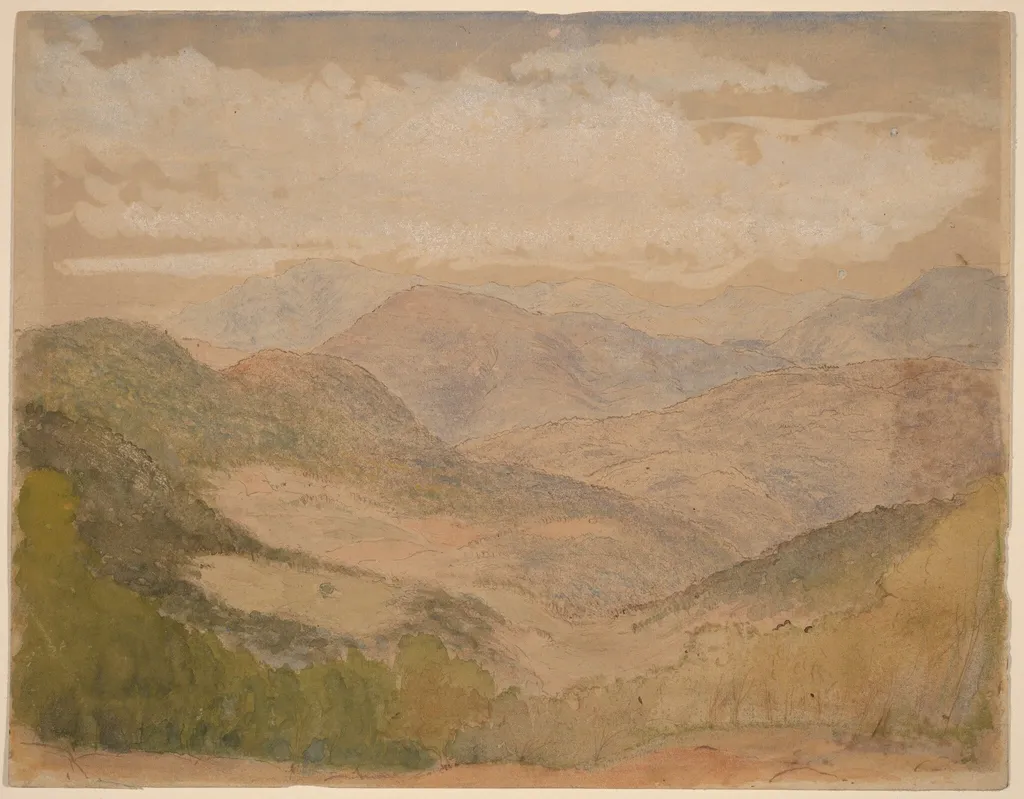
Blue Ridge Mountains is an ink drawing by the Impressionist artist Stanford White. It dates from 1898 and is held in the collection of the National Gallery of Art.
About this work
Overview
Created around 1898, this watercolor and gouache drawing by Stanford White portrays a tranquil stretch of the Blue Ridge Mountains. Rendered on wove paper with added pen and brown ink details, the work captures a serene landscape of rolling hills, a pale sky, and a modest cluster of trees in the foreground, inviting quiet contemplation.
Subject & Meaning
The composition focuses on a gentle mountain range, its softened contours and muted palette suggesting an atmosphere of calm. The foreground trees, rendered in brighter green, provide a subtle contrast that emphasizes the depth of the scene while reinforcing a sense of natural harmony and quietude.
Technique & Style
White combines watercolor’s fluid transparency with gouache’s opacity, layering washes to achieve soft, blended tones. Pen and brown ink accents delineate forms and add definition. The overall handling of light and color, along with the loose, atmospheric brushwork, aligns the piece with the aesthetic concerns of late‑19th‑century Impressionist‑influenced landscape drawing.
Context
Produced at the close of the 19th century, the work reflects a period when American artists increasingly turned to regional scenery for inspiration. The Blue Ridge Mountains, a frequent subject for painters seeking to capture the nation’s natural beauty, offered a suitable motif for White’s exploration of light, atmosphere, and landscape.
Artist & collection


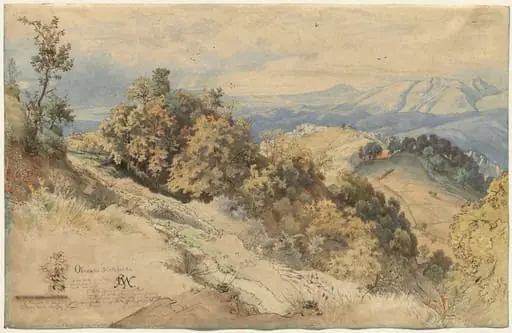 Sun and Rain in the Serpentara near Olevano
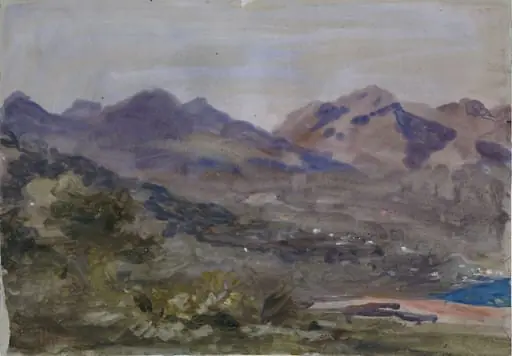 Above Mentone
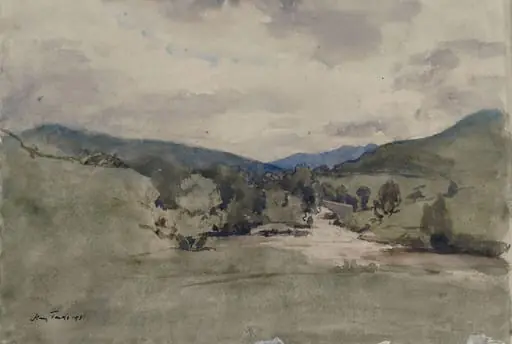 Morven
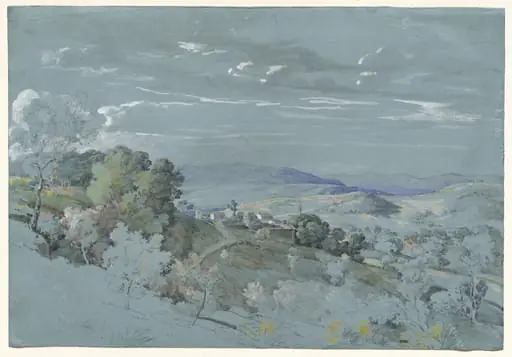 The Hills of Umbria near Perugia
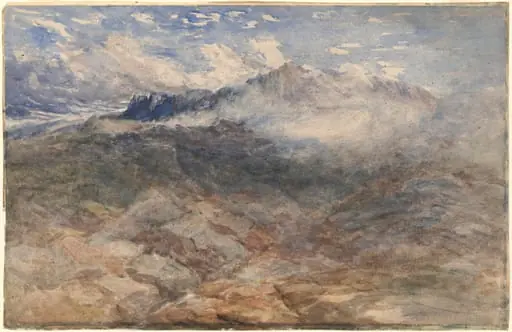 Mountain Heights, Cader Idris
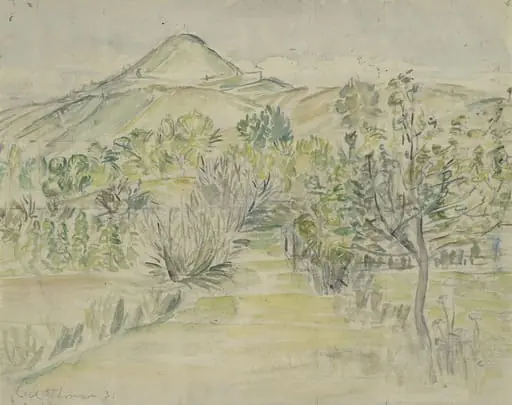 Le Puy d'Usson, Auvergne
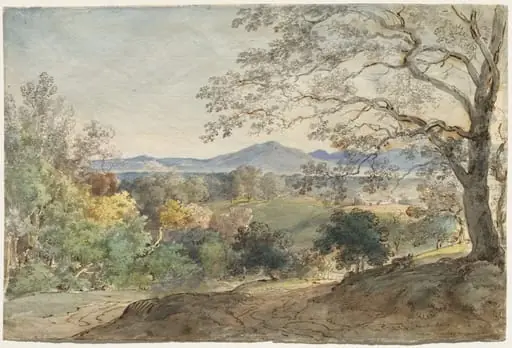 A View across the Inn Valley to the Alps and Neubeuern
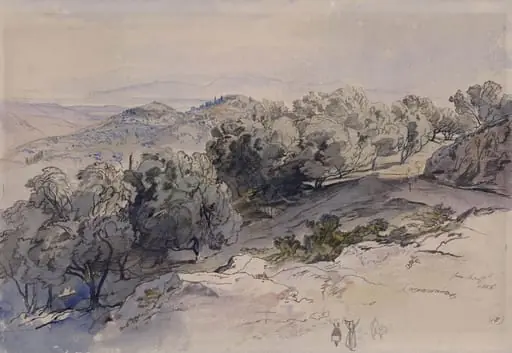 Choropiskopos, June 16th & 17th 1856
 Chorepiskopi
 Rock Cliffs along the Romanche
 Paisaje/Atardecer
 Landscape