Artwork
The Hills of Umbria near Perugia
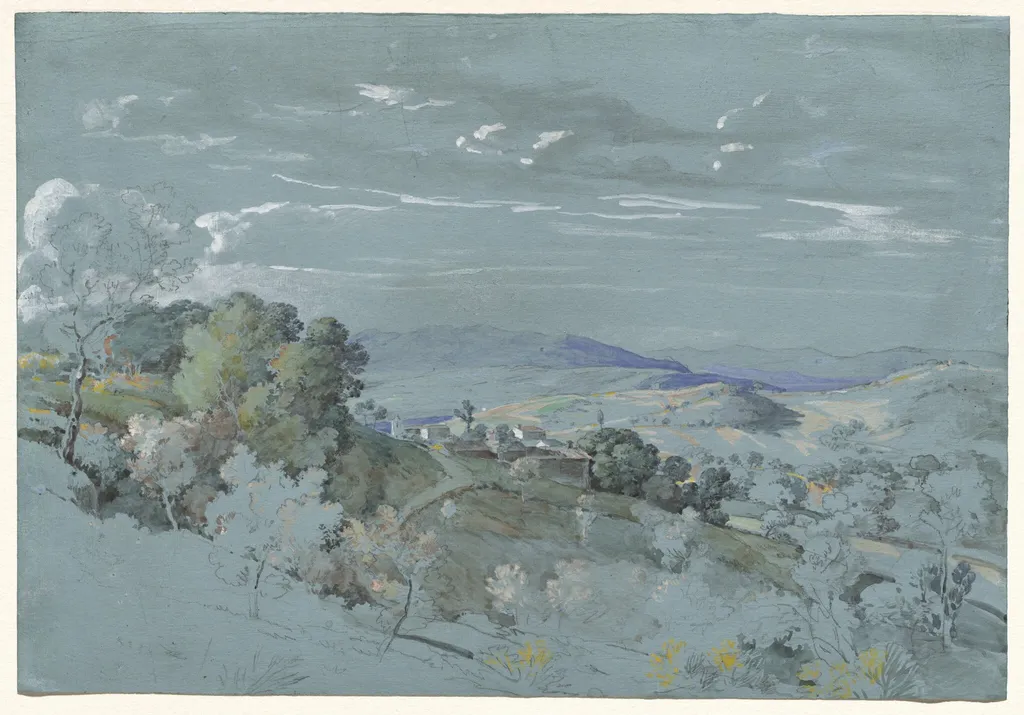
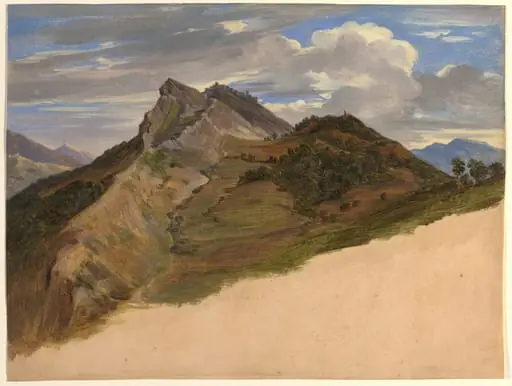
The Hills of Umbria near Perugia is a gouache drawing by the Romanticist artist Johann Georg von Dillis. It is held in the collection of the National Gallery of Art.
About this work
Overview
The medium’s transparency and opacity are balanced to suggest both depth and delicate light, characteristic of early 19th-century German landscape studies.
Created in 1831, this drawing by Johann Georg von Dillis captures the landscape near Perugia in Umbria using watercolor and gouache applied over graphite on a blue-green prepared paper. The support’s subtle tone influences the overall atmosphere, lending the scene a quiet, atmospheric quality. The medium’s transparency and opacity are balanced to suggest both depth and delicate light, characteristic of early 19th-century German landscape studies.
Subject & Meaning
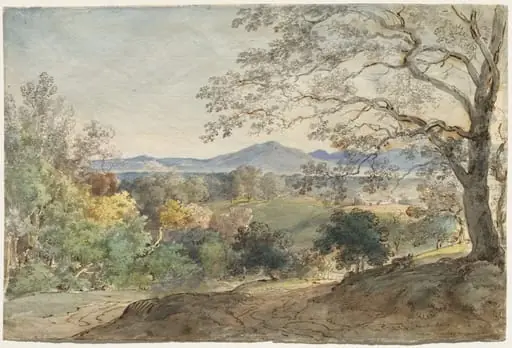
The composition presents a tranquil valley with undulating hills, scattered trees, and a modest village nestled in the distance. A winding river cuts through the lowlands, connecting the foreground to the horizon. The inclusion of small, bright floral accents draws attention to the earth’s quiet vitality. There is no human activity depicted, emphasizing solitude and the enduring rhythm of the natural world as observed by the artist.
Technique & Style
Dillis employed layered watercolor washes over a graphite underdrawing, with opaque gouache used selectively to heighten highlights and define forms. The blue-green paper functions as a mid-tone base, reducing the need for full shading and enhancing the luminosity of pale skies and distant hills. Loose brushwork and sparse detailing suggest movement and atmosphere rather than precise topography, aligning with Romantic-era sensibilities.
History & Provenance
The work was completed during Dillis’s travels in Italy, a period when German artists increasingly sought inspiration in the Italian countryside. It likely originated as a study for larger compositions or personal record, typical of his practice. The drawing remained within private collections in Germany before entering its current institutional holding, though specific ownership details prior to the 20th century are not widely documented.
Context
In the early 1830s, German artists were refining landscape drawing as a disciplined art form, moving beyond topographical recording toward emotional resonance. Dillis, trained in Munich and influenced by the Nazarenes, engaged with Italian scenery as part of a broader cultural interest in classical and pastoral ideals. This work reflects that trend, blending observed reality with a contemplative mood.
Legacy
Though not widely exhibited in his lifetime, Dillis’s Italian watercolors contributed to the development of German landscape drawing as a serious genre. His use of colored paper and restrained palette influenced later artists seeking atmospheric effects without heavy pigment. This piece remains a quiet example of how travel and observation shaped 19th-century European art beyond grand historical narratives.
Own this work as a print
Artist & collection


 Sun and Rain in the Serpentara near Olevano
 Choropiskopos, June 16th & 17th 1856
 Landscape near Boulogne
 Civitella Seen from the North
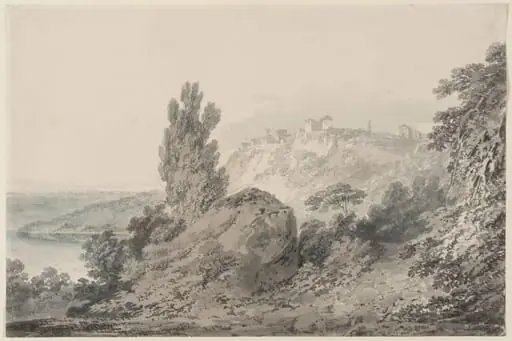 Lake and Town of Nemi
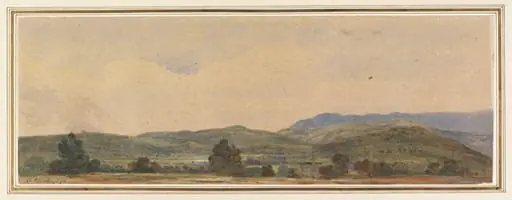 At Azizieh, Lydia
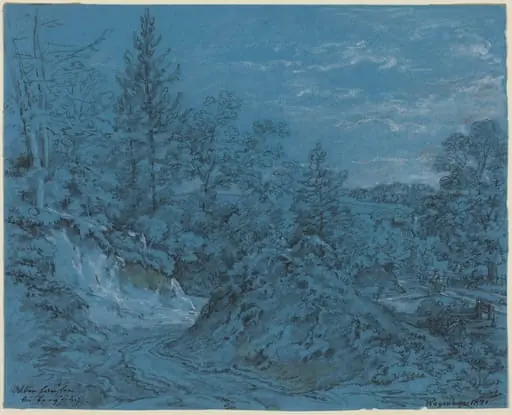 Altenhausen bei Freysing
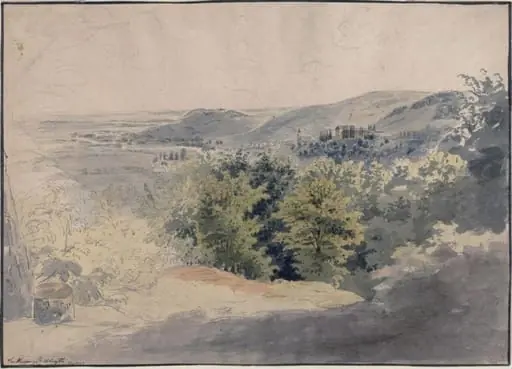 Landscape with hills in the background
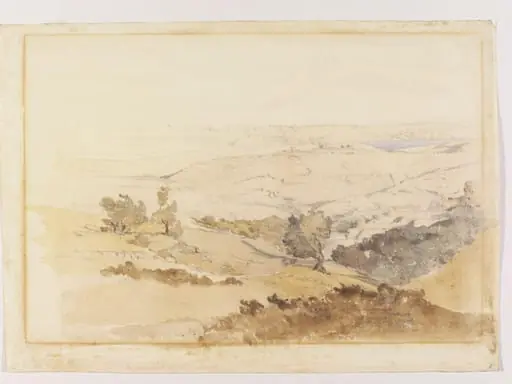 The Sea of Galilee from the heights of Safad
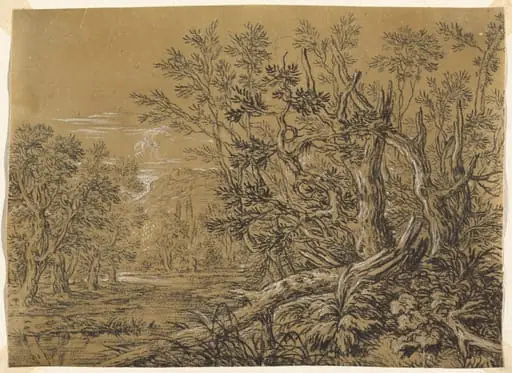 Stream through an Ancient Forest
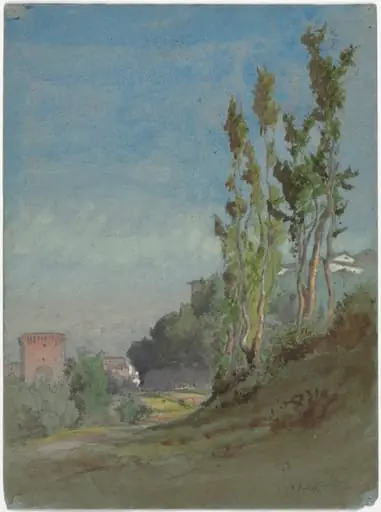 Albano, Italy