Artwork
Herringbone Floor
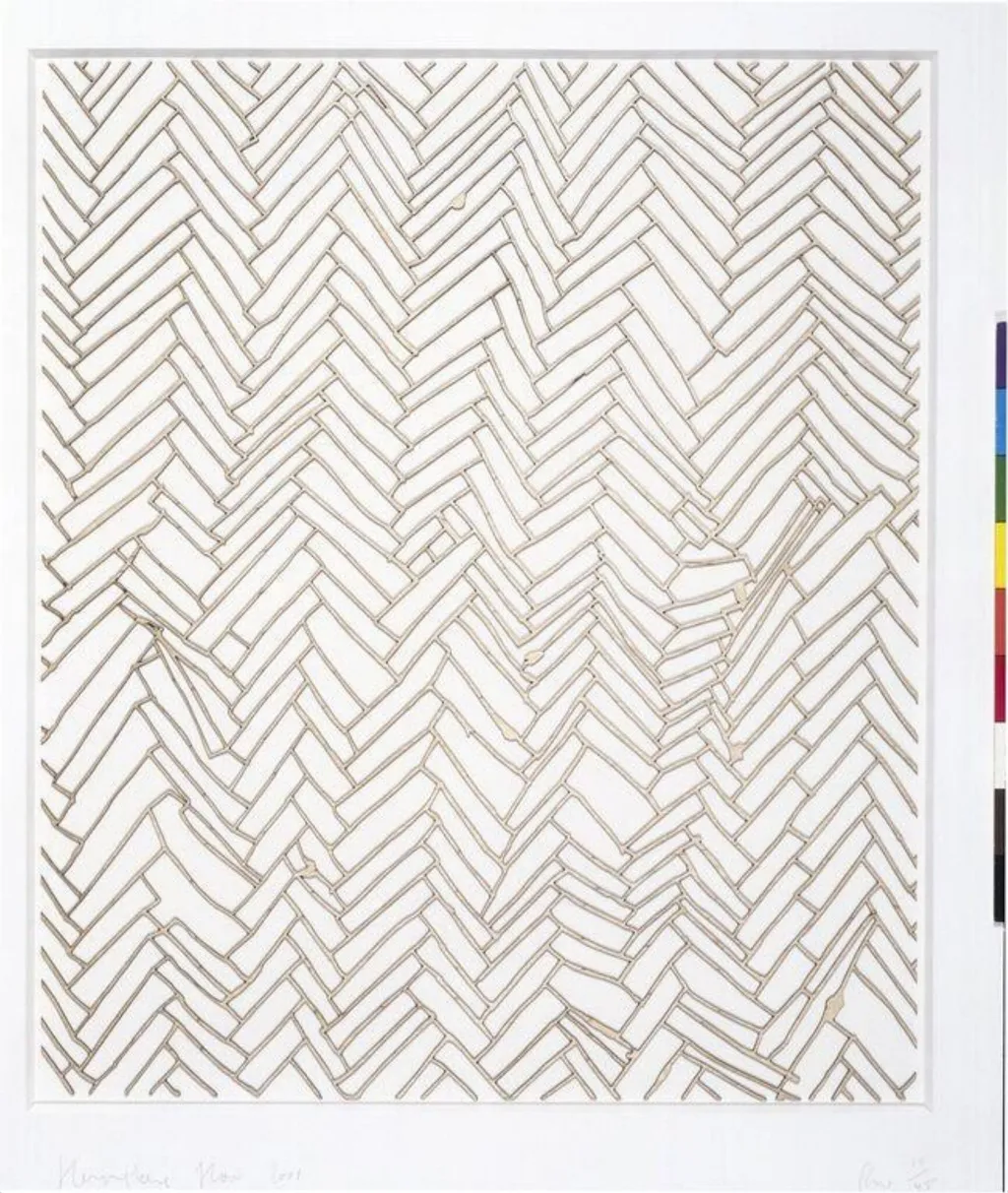
Herringbone Floor is a print by Rachel Whiteread. It dates from 2001 and is held in the collection of the Victoria and Albert Museum.
About this work
Overview
The work’s modest size contrasts with her large-scale sculptures, yet it carries the same conceptual weight: an exploration of absence as a presence.
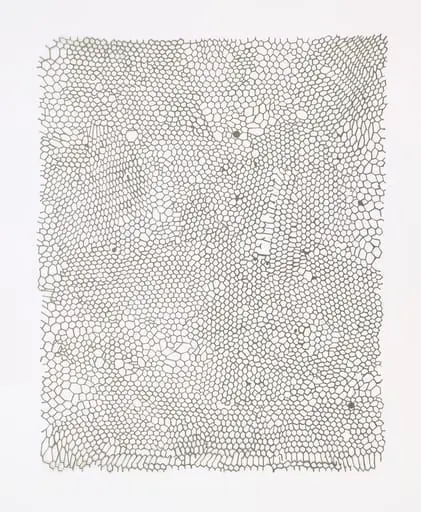
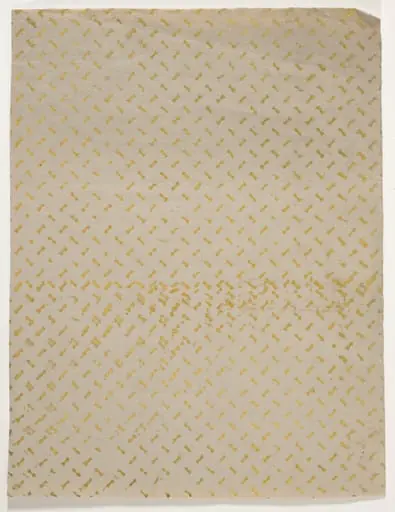
Rachel Whiteread’s Herringbone Floor is a print that translates the negative space of a wooden floor pattern into a tangible form. Unlike traditional depictions of flooring, it focuses on the gaps between the wooden blocks rather than the blocks themselves. The work’s modest size contrasts with her large-scale sculptures, yet it carries the same conceptual weight: an exploration of absence as a presence.
Subject & Meaning
The piece centers on the voids left by the arrangement of floorboards, transforming an ordinary architectural detail into a meditation on memory and erasure. By casting the spaces between the blocks, Whiteread gives form to what is typically overlooked—empty areas shaped by human movement and time. The result is a quiet testament to the lives that have passed over such surfaces, making absence palpable.
Technique & Style
Whiteread employs a printmaking process to replicate the negative impressions of a herringbone floor, capturing the recessed contours where wood meets wood. The technique mirrors her sculptural method of casting voids, adapted here to a two-dimensional plane. The resulting image is precise and muted, emphasizing texture and pattern over color, reinforcing the work’s contemplative tone.
History & Provenance
Created after her Turner Prize-winning cast of a terraced house in East London, Herringbone Floor reflects Whiteread’s ongoing interest in domestic architecture and its hidden histories. While not as monumental as her earlier works, this print emerged from the same artistic inquiry—using everyday structures to evoke the unseen traces of human existence. Its production aligns with her broader practice of translating interior spaces into tangible forms.
Context
In the early 1990s, Whiteread’s work emerged within a broader British art movement focused on material memory and the politics of space. Her focus on domestic interiors—floors, rooms, furniture—challenged traditional sculpture by privileging emptiness over solidity. Herringbone Floor fits within this context, offering a scaled-down yet conceptually rich extension of her exploration of domestic archaeology.
Legacy
The print endures as a subtle but persistent example of Whiteread’s ability to elevate the mundane into something resonant. It demonstrates how her approach to negative space influenced subsequent generations of artists working with memory, architecture, and absence. Though small, the work remains a quiet anchor in her oeuvre, reinforcing the idea that what is missing can hold as much meaning as what remains.
Artist & collection
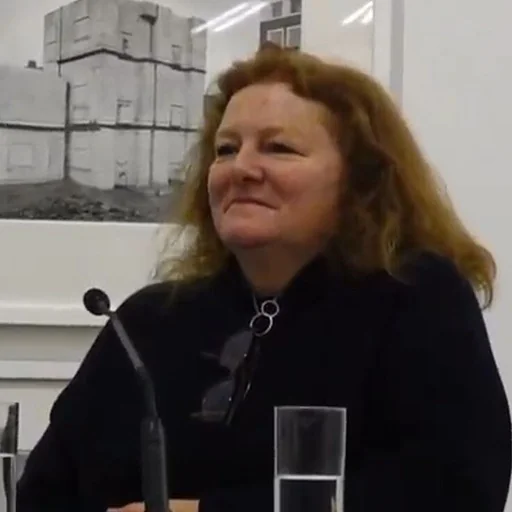
Artist
Dame Rachel Whiteread (born 20 April 1963) is an English artist who primarily produces sculptures, which typically take the form of casts.