Artwork
Endpaper
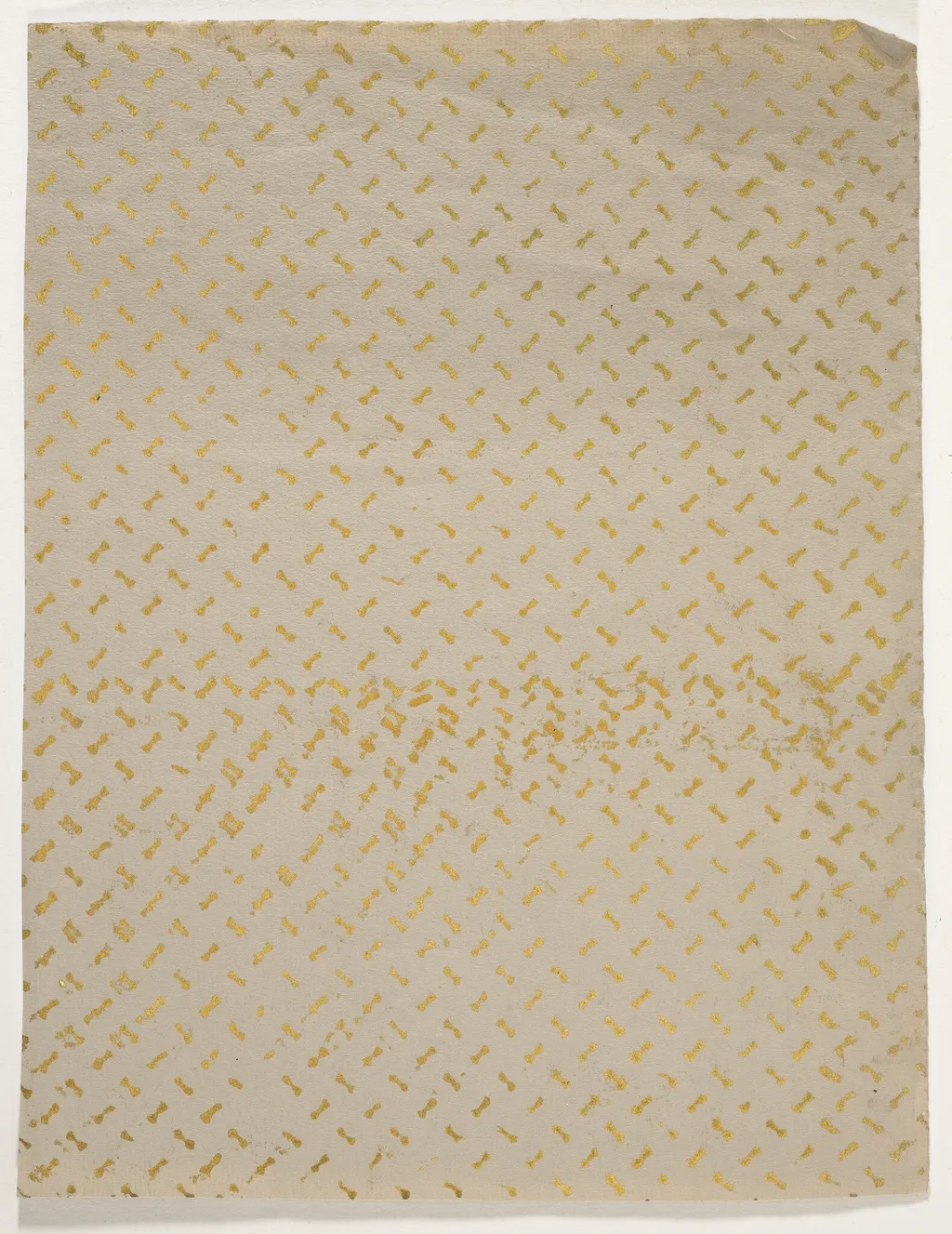
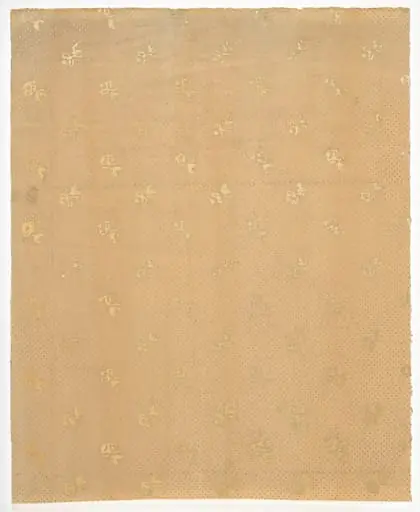
Endpaper is an ink print by the Romanticist artist German 19th Century. It dates from 1850 and is held in the collection of the National Gallery of Art.
About this work
The artist's use of a simple, repetitive pattern creates a sense of calm and serenity, making this piece a great example of Romanticism.
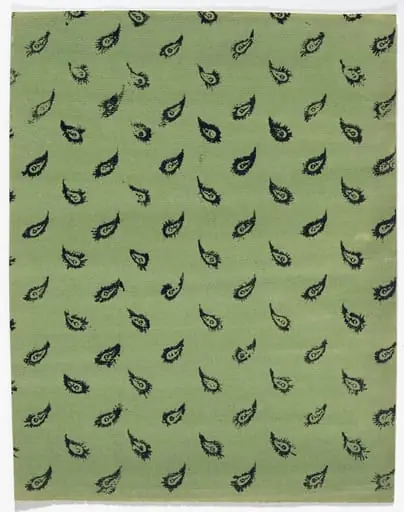
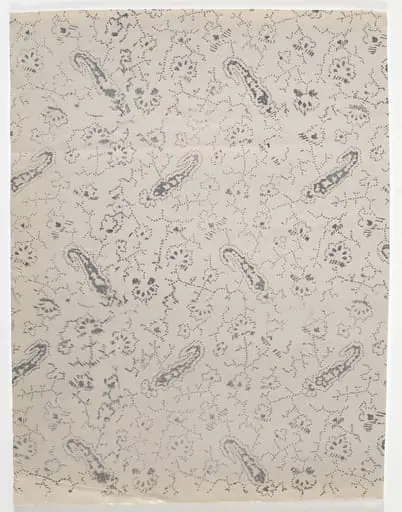
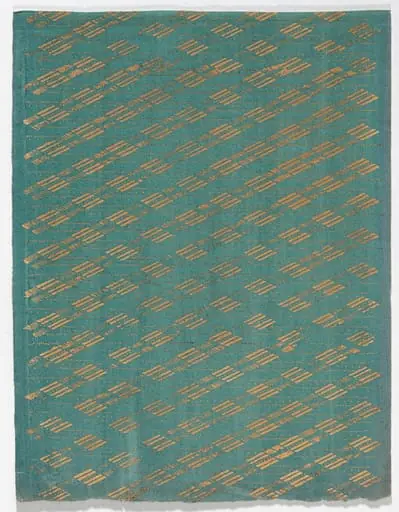
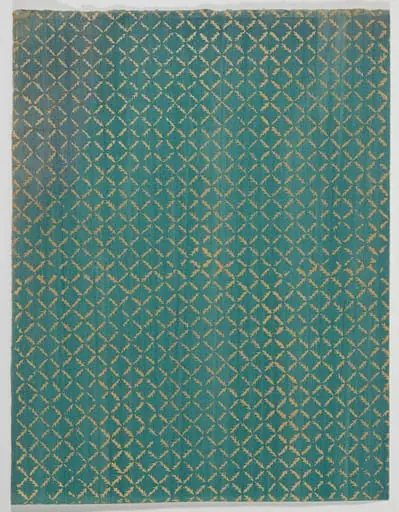
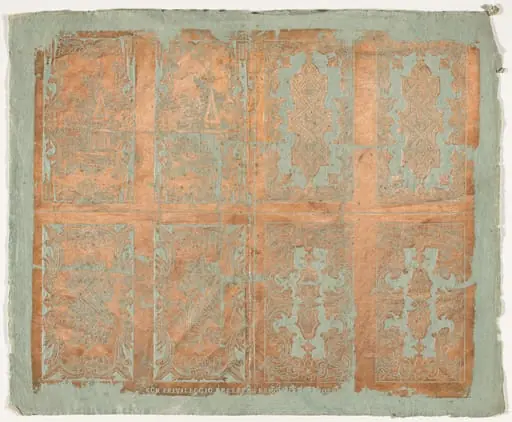
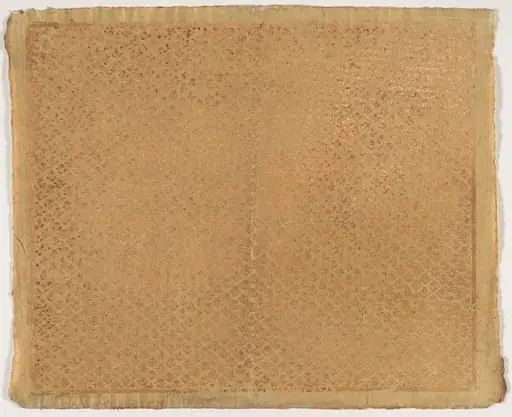
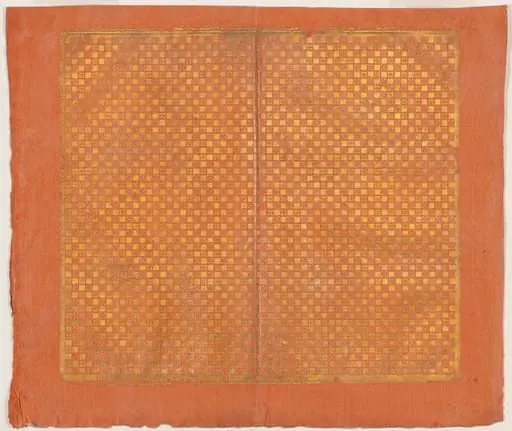
This painting is a simple, yet elegant piece. It features a light tan background with a pattern of small, gold-colored marks scattered across it. The marks are arranged in a seemingly random pattern, giving the piece a sense of movement and energy.
Upon closer inspection, the marks appear to be made up of short, curved lines that are connected at their ends. This creates a sense of continuity and flow throughout the piece. The use of gold ink on the tan paper adds a touch of luxury and sophistication to the overall effect.
The artist's use of a simple, repetitive pattern creates a sense of calm and serenity, making this piece a great example of Romanticism. If you like this piece, you might also want to check out other works by German 19th Century.
Overview
Endpaper is a modestly scaled print executed on tan paper, employing gold pigment applied through a woodcut technique. The work presents a uniform background of light brown tone over which a dispersed arrangement of golden marks creates a subtle visual rhythm. The overall effect is restrained yet purposeful, emphasizing surface and material.
Subject & Meaning
The composition consists solely of a field of small, gold-colored elements that appear to be short, curved strokes linked at their termini. Their seemingly random distribution suggests movement and a gentle flow across the paper, inviting contemplation of pattern, continuity, and the interplay between order and chance.
Technique & Style
The artist employed a woodcut process, carving the design into a block and printing it with gold ink onto the paper. The use of metallic pigment against a muted tan ground highlights the contrast between the reflective surface and the matte support, while the repetitive, curvilinear motifs reflect a minimalist aesthetic rather than overt narrative content.
History & Provenance
The work is catalogued simply as a print titled Endpaper, with no documented exhibition history or ownership record provided. Its materiality—gold on paper—places it within a tradition of limited-edition prints where the choice of precious pigment underscores the object's tactile and visual qualities.
Context
Endpaper aligns with a broader 19th‑century interest in decorative surface treatments and the exploration of pattern as a primary visual concern. While not overtly narrative, its emphasis on repeated forms and subtle tonal contrast resonates with contemporary movements that valued abstraction of decorative motifs.
Legacy
Although modest in scale, the piece exemplifies the potential of printmaking to achieve refined visual effects through limited means. Its restrained design continues to inform discussions of how simple repetitive gestures can generate a sense of movement and calm within a compact format.
Artist & collection

Artist
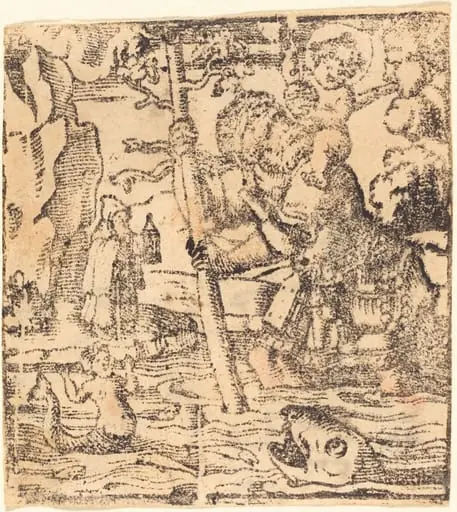
This artist left only tiny, perfect fragments—endpapers and saints, no bigger than a postcard.