Artwork
The Pool
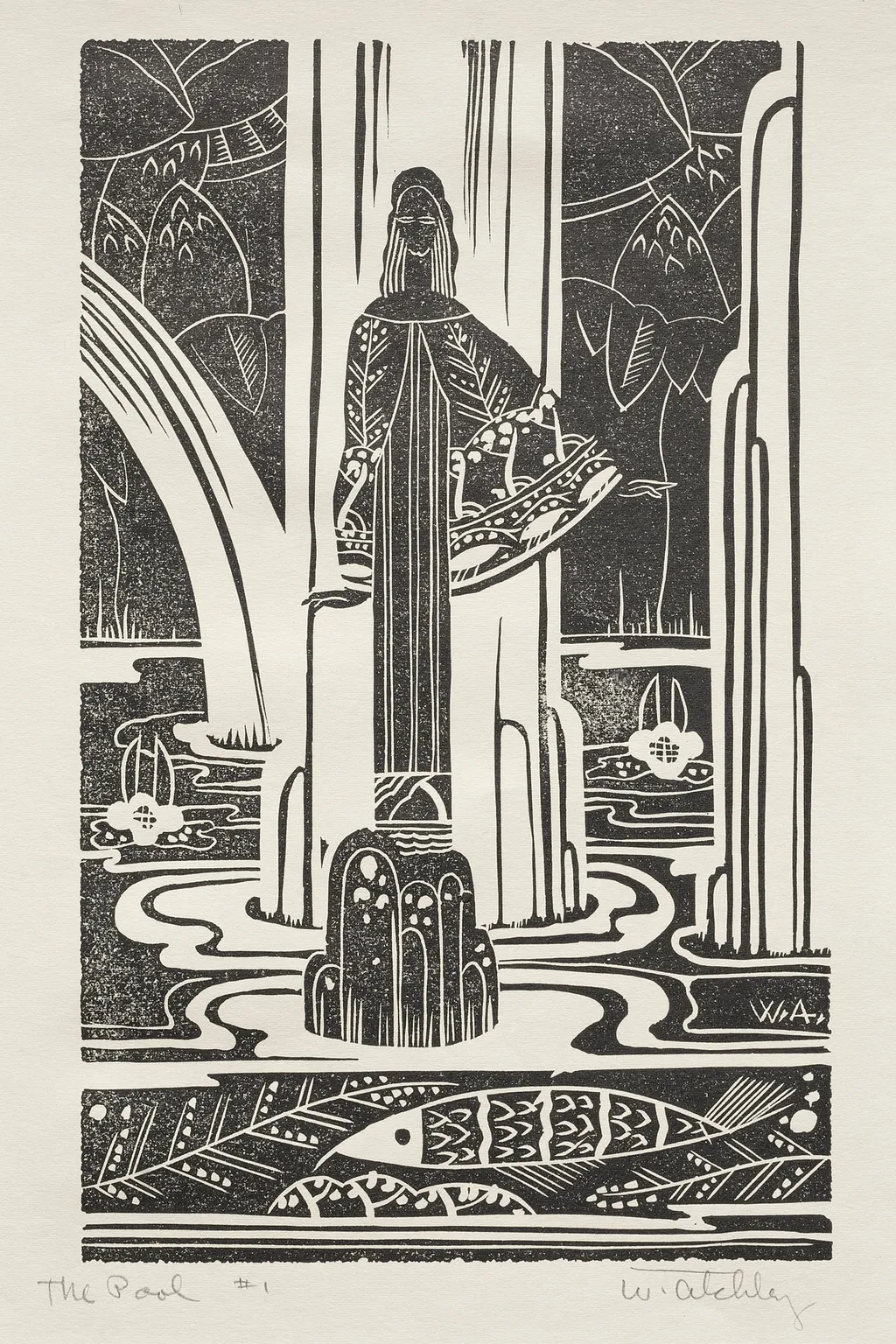
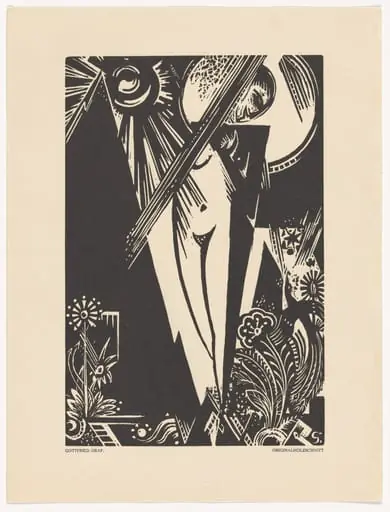
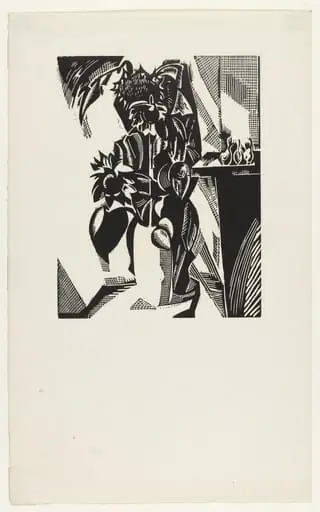
The Pool is a print by Whitney Atchley. It dates from 1930 and is held in the collection of the Cleveland Museum of Art.
About this work
Overview
The figure’s obscured face and elongated posture contribute to an enigmatic presence, anchoring the scene in quiet contemplation.
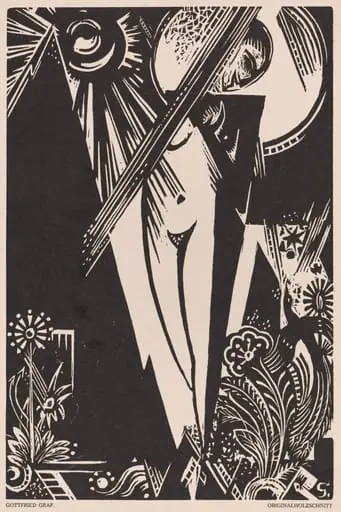
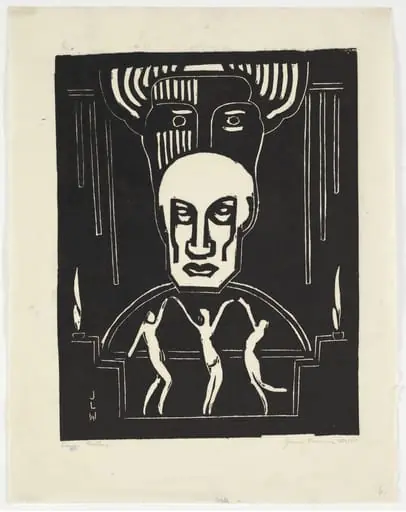
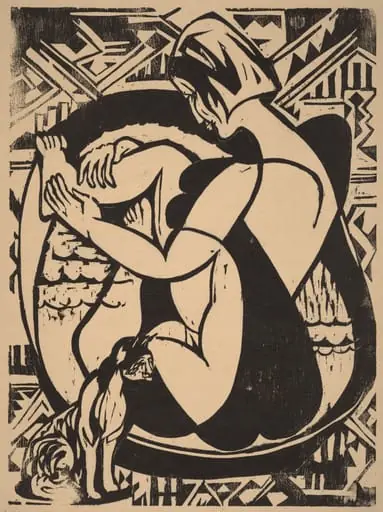
The Pool is a 1930 black-and-white print by Whitney Atchley, currently in the collection of The Cleveland Museum of Art. It presents a solitary, robed figure positioned before an abstracted urban landscape. The composition relies on stark tonal contrasts and simplified forms to evoke atmosphere rather than literal representation. The figure’s obscured face and elongated posture contribute to an enigmatic presence, anchoring the scene in quiet contemplation.
Subject & Meaning
The central figure, cloaked in a robe adorned with geometric motifs and holding a curved object, remains anonymous, its identity deliberately withheld. The hooded form may suggest a traveler, guardian, or spiritual presence, standing apart from the stylized city behind. The ambiguous object in hand—possibly a staff or vessel—invites multiple interpretations, reinforcing the work’s introspective tone and resistance to singular narrative.
Technique & Style
Atchley employed bold chiaroscuro and sharp linear abstraction to construct the scene. Buildings and trees are reduced to angular, flat planes, while the wavy horizon suggests movement or water. The contrast between dense blacks and open whites creates spatial depth without perspective. The print’s graphic economy reflects an interest in modernist simplification, aligning with early 20th-century trends in printmaking that favored symbolic form over realism.
History & Provenance
Created in 1930, The Pool entered the collection of The Cleveland Museum of Art at an early stage, likely through acquisition or donation soon after its making. Little public documentation exists regarding its exhibition history or the artist’s intentions at the time of production. Its preservation within a major institution underscores its recognition as a significant example of American printmaking from the interwar period.
Context
Produced during a time of rapid urbanization and artistic experimentation, The Pool reflects broader trends in American modernism that sought to distill the essence of the built environment. Atchley’s approach echoes contemporaries who used abstraction to convey emotional or psychological states rather than physical accuracy. The work aligns with regional printmaking circles in the Midwest, where artists explored personal symbolism within industrial landscapes.
Legacy
Though not widely reproduced or studied, The Pool remains a quiet example of early 20th-century American printmaking that prioritizes mood over narrative. Its presence in The Cleveland Museum of Art’s collection ensures continued access for scholars and viewers interested in the evolution of graphic abstraction. The work contributes to a lesser-known but vital strand of modernist art that valued ambiguity and formal restraint.
Own this work as a print
Artist & collection