Artwork
The Egyptian Sacred Ibis
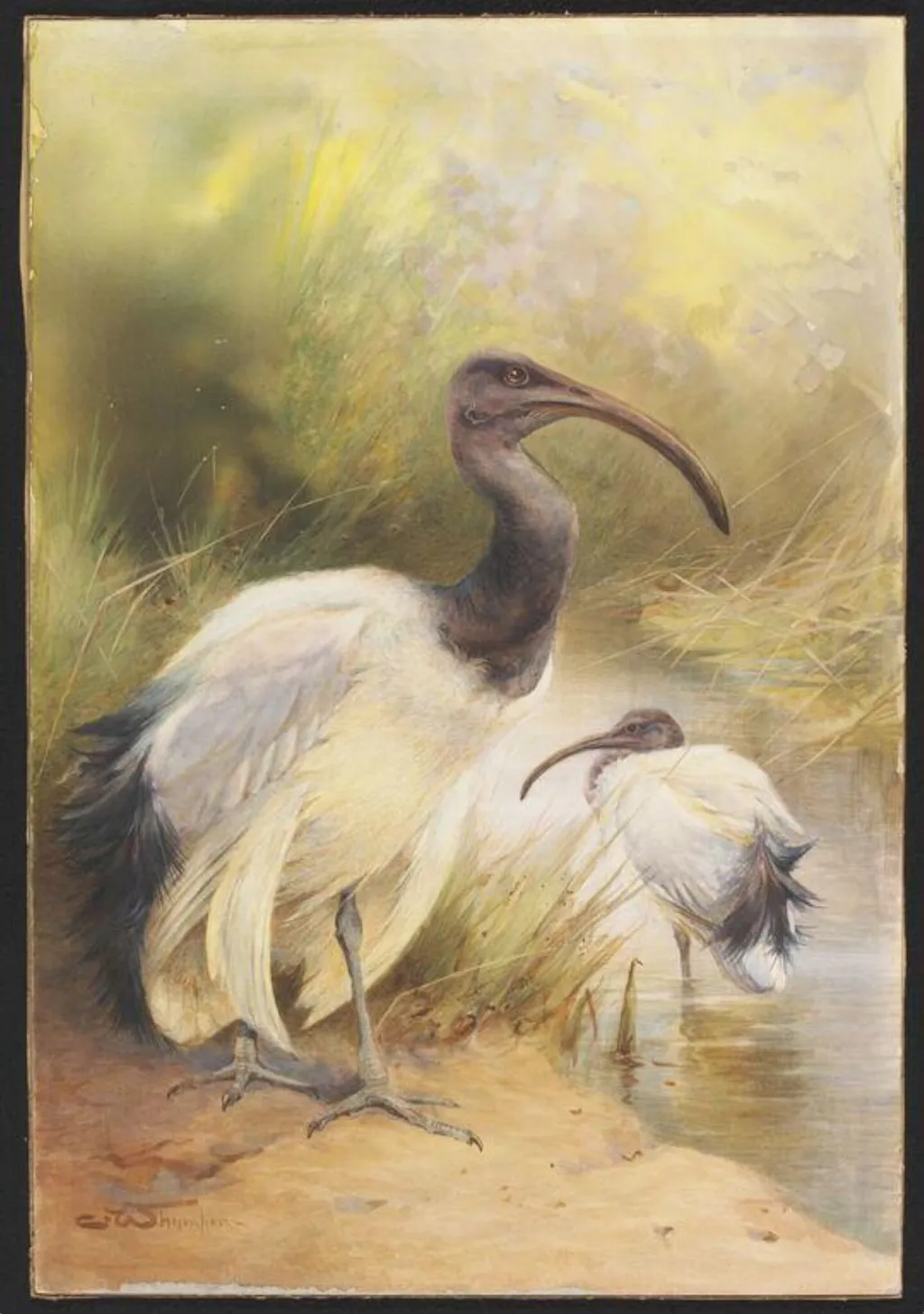
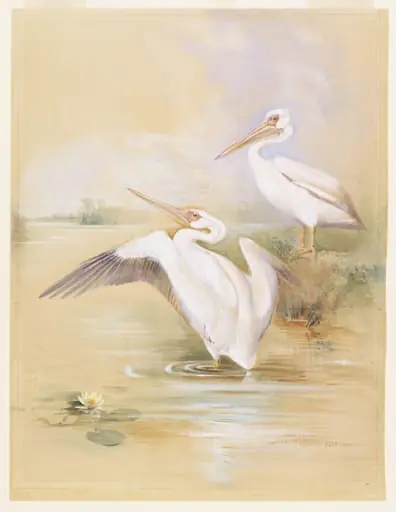
The Egyptian Sacred Ibis is a watercolor work on paper by the Art Nouveau artist Charles Whymper. It dates from 1904 and is held in the collection of the Victoria and Albert Museum.
About this work
Overview
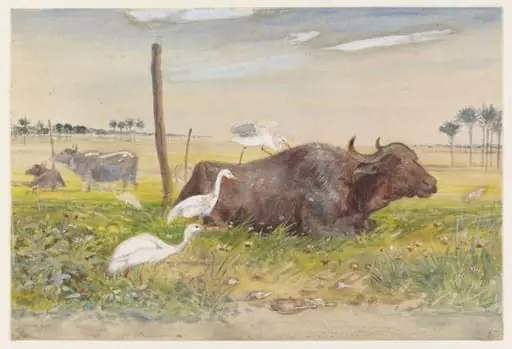
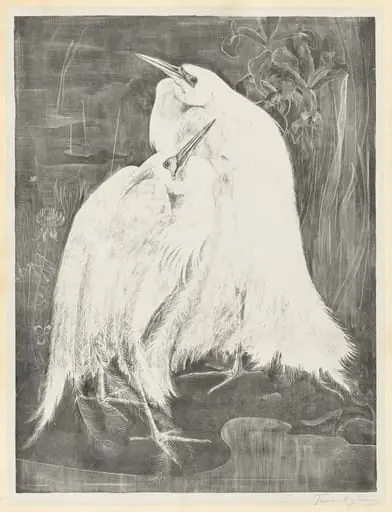
Charles Whymper’s 1904 watercolour entitled *The Egyptian Sacred Ibis* presents a pair of large birds amid reeds and shallow water. The composition centres on the birds’ bodies, rendered in muted whites and stark black, set against a softly blended backdrop of yellow‑green tones that suggest a tranquil wetland.
Subject & Meaning
The work portrays the sacred ibis, a species once common along the Nile but increasingly scarce in Egypt by the nineteenth century. By placing the birds in a natural setting, Whymper emphasizes their connection to the landscape, hinting at the bird’s historic religious significance while foregrounding its dwindling presence in the region.
Technique & Style
Whymper employs a naturalistic approach, using delicate washes to capture the play of light across the birds’ plumage. Fine brushwork defines the texture of feathers, while broader, translucent strokes suggest the wet ground and tall grasses, giving the scene a subtle three‑dimensional quality and a quiet, atmospheric mood.
History & Provenance
The watercolour is believed to have been in the collection of the 5th Earl of Carnarvon before entering the market. It later appeared at a Sotheby’s auction, where it fetched £55, indicating modest collector interest despite the artist’s broader reputation for detailed natural studies.
Context
Created during a period when European naturalists were documenting exotic fauna, the painting reflects contemporary scientific interest in Egyptian wildlife. Whymper’s choice of the sacred ibis aligns with the era’s fascination with both the bird’s mythological associations and its status as a subject of zoological observation.
Artist & collection
Artist
Charles Whymper spent years sketching birds in the Nile Delta, often with a sketchbook in one hand and a cigarette in the other.