Artwork
In the Wharfe Valley
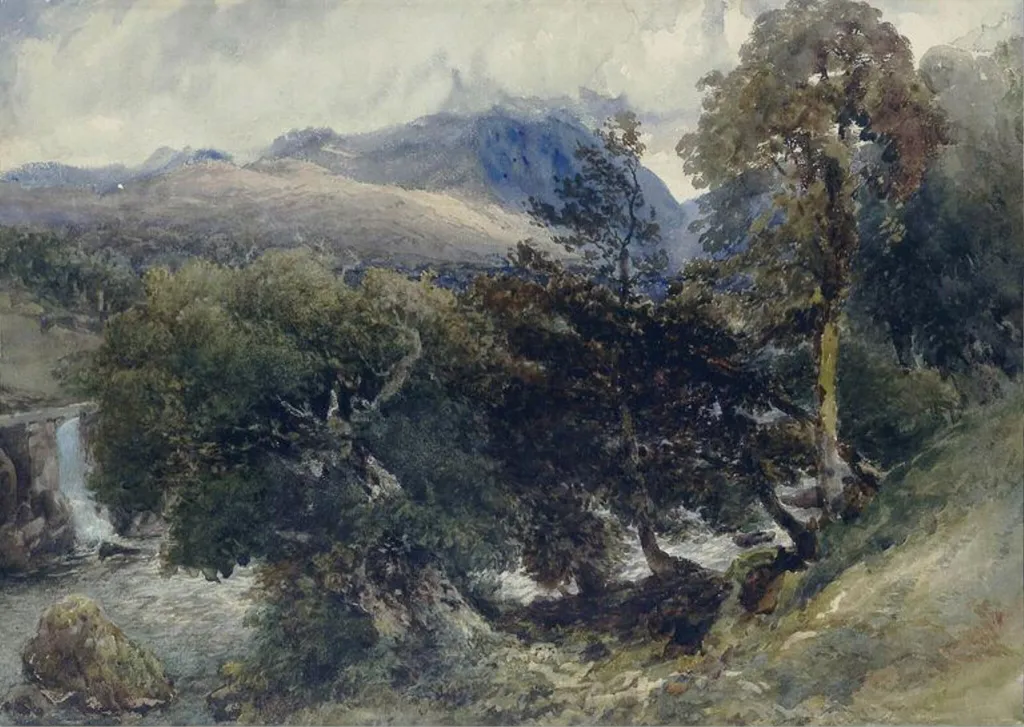
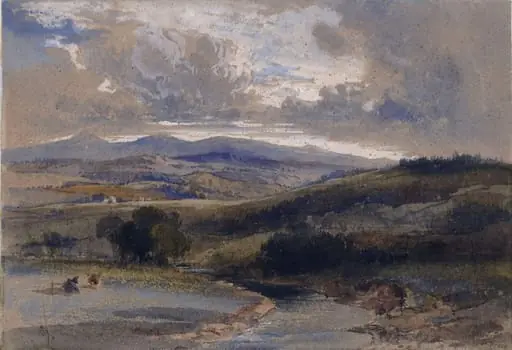
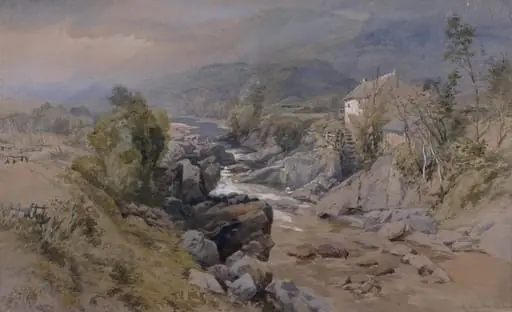
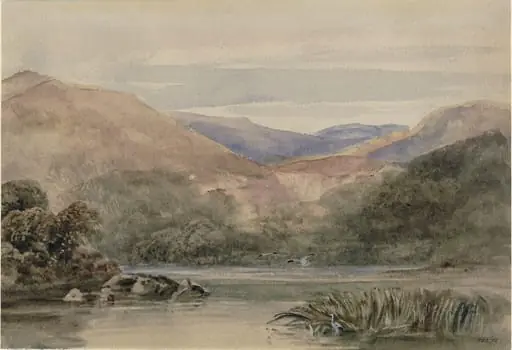
In the Wharfe Valley is a watercolor work on paper by whymper. It dates from 1850 and is held in the collection of the Victoria and Albert Museum.
About this work
Overview
Created around 1850, In the Wharfe Valley is a watercolour by Edward Whymper depicting a quiet stretch of the River Wharfe in northern England.
Created around 1850, In the Wharfe Valley is a watercolour by Edward Whymper depicting a quiet stretch of the River Wharfe in northern England. The work is part of the Victoria and Albert Museum’s collection, where it represents Whymper’s early engagement with landscape observation. Executed in transparent washes, the piece reflects a sensitivity to atmospheric conditions and natural form rather than topographic precision.
Subject & Meaning
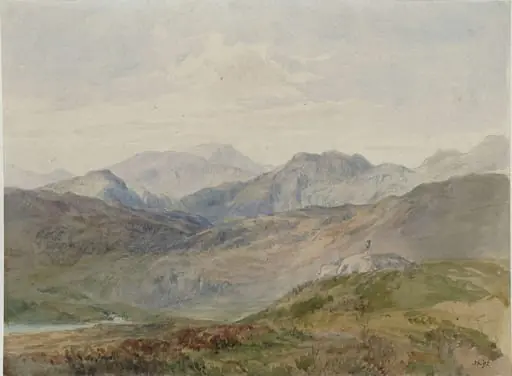
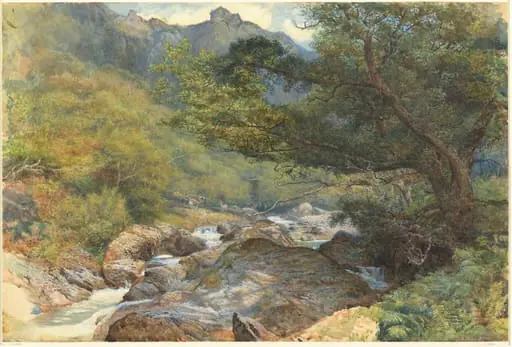
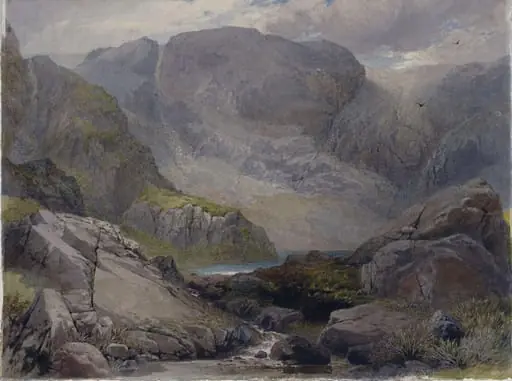
The painting portrays a mist-laden valley with gentle hills receding into the distance, a winding river, and scattered trees and rocks framing the water’s edge. There is no human presence, emphasizing solitude and the quiet rhythm of the natural world. The subdued palette and hazy light suggest a moment of transition—perhaps dawn or dusk—inviting contemplation over narrative.
Technique & Style
Whymper employed loose, rapid brushwork and diluted watercolour to suggest texture without detail. The river’s surface is rendered with fluid strokes, while foliage and rock are hinted at through layered washes of green and ochre. The mist is achieved by leaving areas of paper bare and softening edges, creating a sense of depth and atmospheric moisture characteristic of early Victorian landscape watercolours.
History & Provenance
The painting entered the Victoria and Albert Museum’s collection in the 19th century, likely through acquisition or donation linked to Whymper’s growing reputation as a topographical artist. Before his later fame as an alpinist, Whymper produced numerous sketches and watercolours of British landscapes, many of which were circulated among artistic and scientific circles of the time.
Context
In the Wharfe Valley aligns with mid-19th-century British watercolour traditions that valued lyrical observation over grandeur. Artists like J.M.W. Turner and David Cox influenced this approach, prioritizing mood and light. Whymper’s work reflects a broader cultural interest in documenting regional scenery, often for personal study or as preparatory material for later publications.
Legacy
Though Whymper is better known for his Himalayan and Alpine expeditions, this early watercolour reveals his foundational skill in capturing landscape essence. The work remains a quiet example of how amateur and professional artists contributed to the visual record of Britain’s countryside, influencing later generations interested in environmental observation through direct sketching.
Own this work as a print
Artist & collection