Artwork
Rosy Evening, Whitby
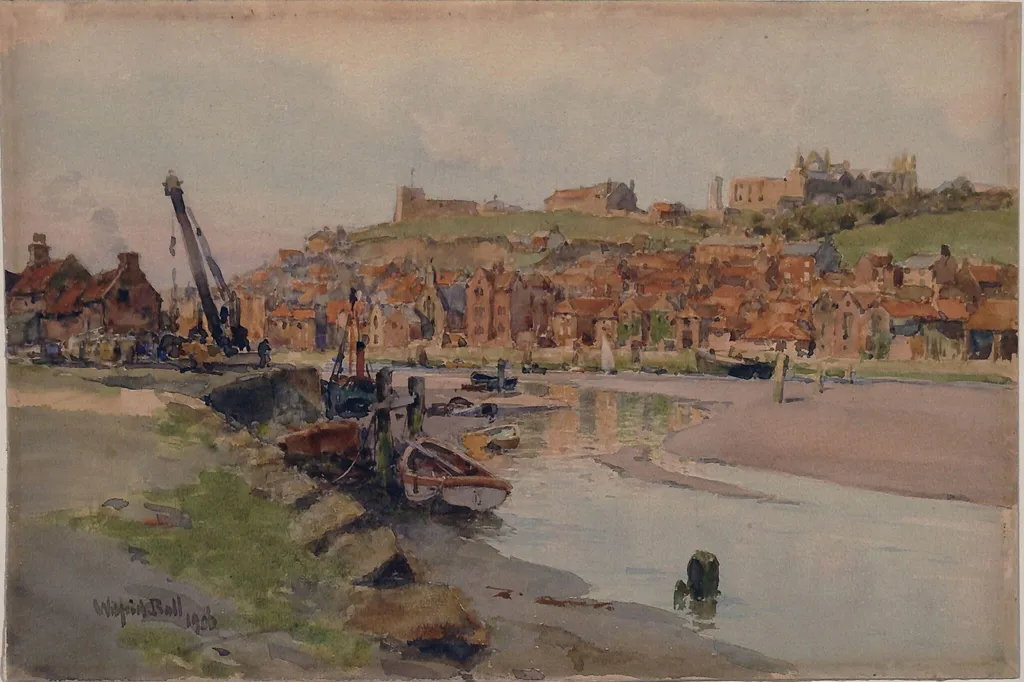
Rosy Evening, Whitby is a watercolor work on paper by the Impressionist artist Wilfrid Williams Ball. It dates from 1906 and is held in the collection of the Victoria and Albert Museum.
About this work
Overview
Its modest scale and intimate subject align with the British watercolour tradition of recording landscape moments with sensitivity and restraint.
Created in 1906, *Rosy Evening, Whitby* is a watercolour by Wilfrid Williams Ball that captures the quiet transition from day to night along the North Yorkshire coast. The work is signed and dated by the artist, reflecting his attention to transient natural effects. Its modest scale and intimate subject align with the British watercolour tradition of recording landscape moments with sensitivity and restraint.
Subject & Meaning
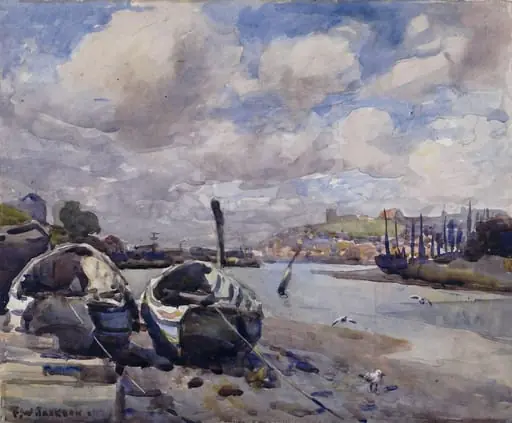
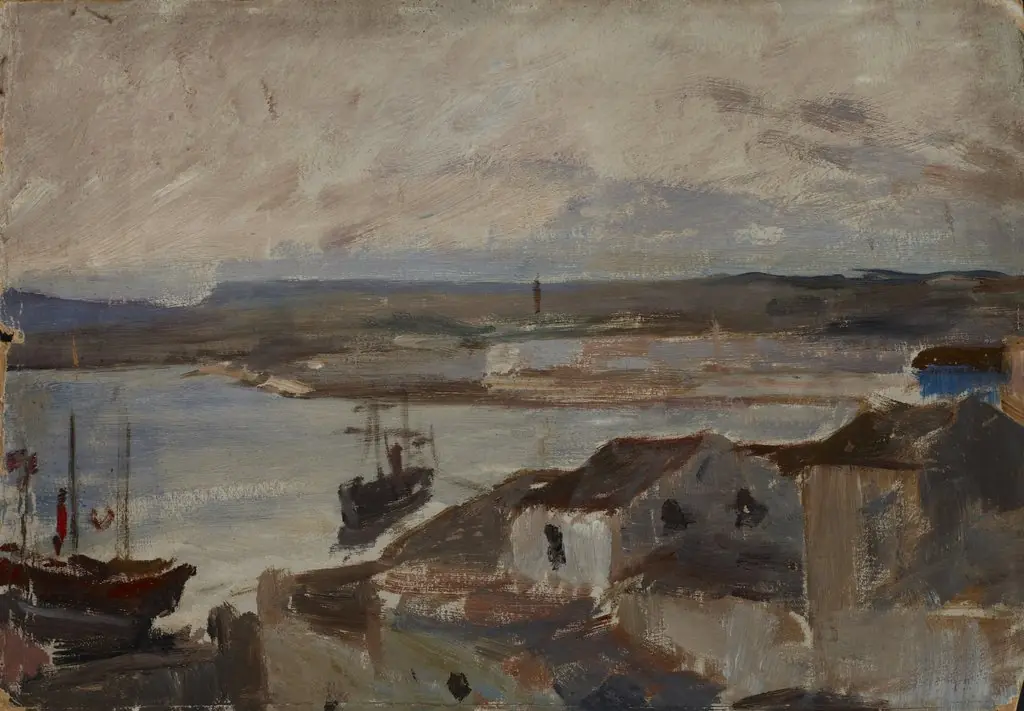
The scene portrays Whitby’s harbour at twilight, devoid of human figures, emphasizing solitude and stillness. Dark-roofed cottages cling to the hillside, while a solitary crane near the water suggests quiet industry. Calm waters mirror the fading sky, reinforcing a sense of suspended time. The absence of activity invites contemplation, framing the landscape not as a place of action but of quiet endurance.
Technique & Style
Ball employed loose, fluid brushwork to suggest light rather than define form. Washes of pale rose and amber soften the horizon, while darker tones outline buildings and the crane with minimal detail. The watercolour’s transparency allows the paper’s white to suggest reflected light on water and stone. The technique prioritizes atmosphere over precision, characteristic of late 19th-century British watercolour practice.
History & Provenance
The work was completed during a period when Ball frequently sketched coastal towns in northern England. It remained in private hands until acquired by the Victoria and Albert Museum, where it is held as part of a broader collection of British watercolours from the era. Its preservation reflects institutional interest in everyday landscape studies of the period.
Context
In early 20th-century Britain, watercolour was widely used for topographical and leisurely landscape studies. Artists like Ball responded to the growing popularity of seaside resorts and the aesthetic appeal of twilight effects. *Rosy Evening, Whitby* fits within this trend, offering a personal, unidealized view of a working port rather than a romanticized vista.
Legacy
Though not widely exhibited, the painting contributes to an understudied body of work documenting Britain’s coastal communities at the turn of the century. Its quiet observation of light and place continues to resonate within collections focused on British watercolour, serving as a quiet example of how ordinary moments were rendered with deliberate calm.
Own this work as a print
Artist & collection