Artwork
View from a Window, Rye
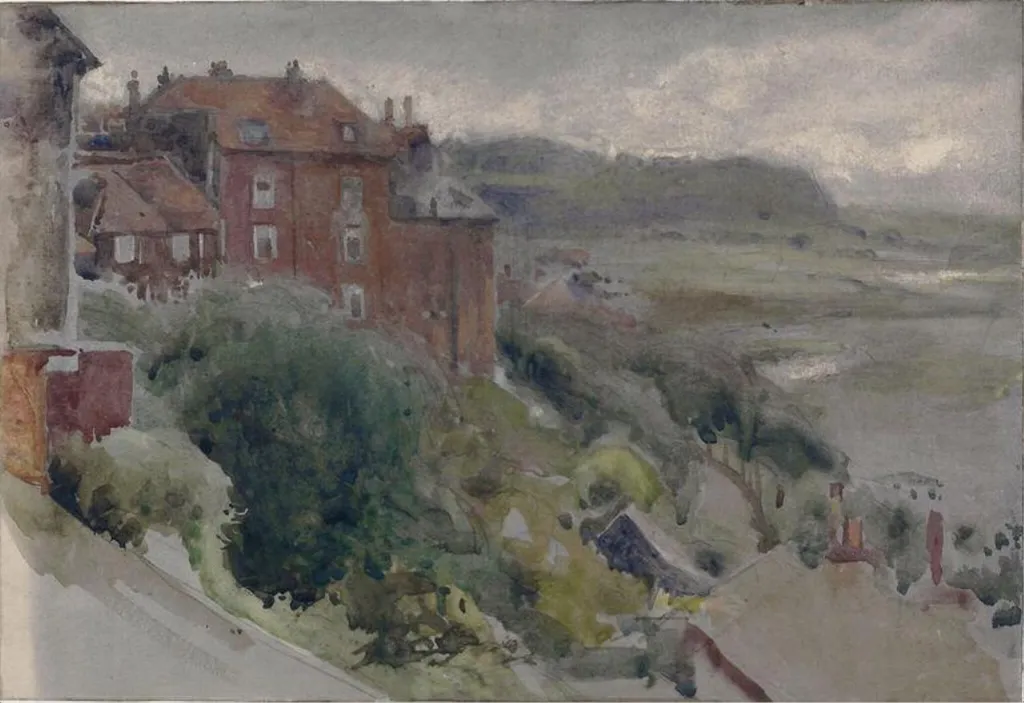
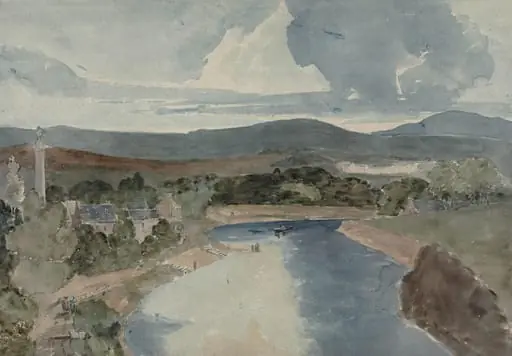
View from a Window, Rye is a watercolor work on paper by the Impressionist artist Charles Gogin. It dates from 1880 and is held in the collection of the Victoria and Albert Museum.
About this work
Overview
Painted in 1880, this watercolour by Charles Gogin captures a quiet rural view from a window in Rye. The composition is framed by the implied presence of an interior space, directing attention outward to a modest hillside dwelling. Soft washes of muted green, brown, and gray dominate the palette, creating a subdued, atmospheric tone that suggests early morning or overcast light.
Subject & Meaning
The scene depicts a simple red-brick house perched on a gentle slope, with a sloped roof and small windows, set against a backdrop of hazy distant hills.
The scene depicts a simple red-brick house perched on a gentle slope, with a sloped roof and small windows, set against a backdrop of hazy distant hills. A narrow road winds below, hinting at human presence without showing figures. The absence of activity and the quiet isolation of the structure suggest a contemplative moment, emphasizing solitude and the unremarkable beauty of everyday landscapes.
Technique & Style
Gogin employs loose, fluid brushwork typical of watercolour sketching, allowing pigment to bleed and blend naturally on the paper. The lack of sharp detail and the soft edges of forms reflect an interest in capturing transient light and mood rather than architectural precision. This approach aligns with broader 19th-century tendencies toward immediacy and observation, though it remains distinct from formal Impressionist practice.
History & Provenance
Created during Gogin’s time in Rye, the work reflects his engagement with the Sussex countryside. Little is documented about its early ownership, but it has remained within private collections since its creation. Its survival as a modest watercolour underscores its role as a personal record rather than a commissioned piece, offering insight into the artist’s daily visual habits.
Context
In the late 19th century, British artists increasingly turned to domestic landscapes as subjects, moving away from grand historical or romanticized scenes. Gogin’s work fits within this trend, echoing the quiet realism of contemporaries who valued direct observation. Watercolour, widely used for travel sketches, became a medium for recording the subtle shifts of light and terrain in everyday settings.
Legacy
Though not widely exhibited or reproduced, this watercolour contributes to the understanding of Gogin’s artistic practice and the broader culture of amateur and professional landscape sketching in Victorian England. Its unassuming nature reflects a quiet, persistent interest in the ordinary, preserving a moment of rural life without embellishment or narrative.
Artist & collection

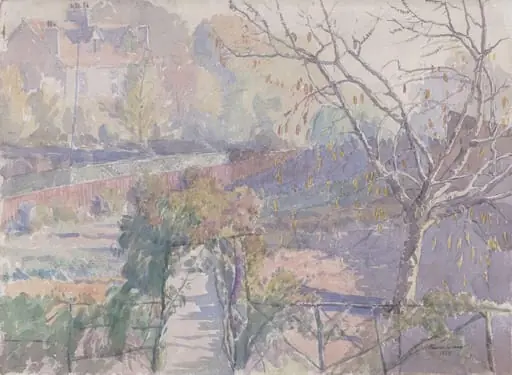 The Back Garden
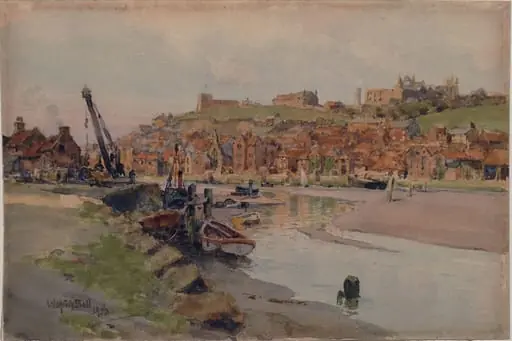 Rosy Evening, Whitby
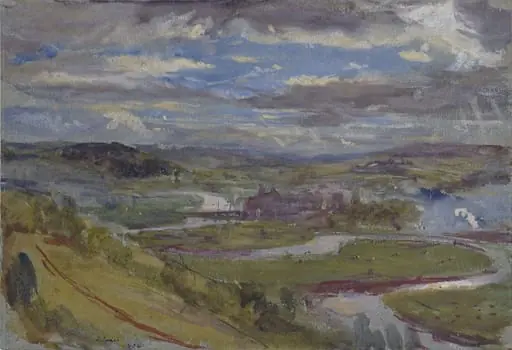 View over a wide landscape
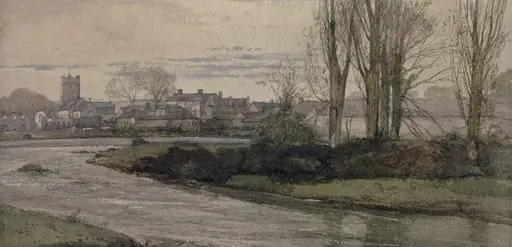 Leixlip on the Liffey
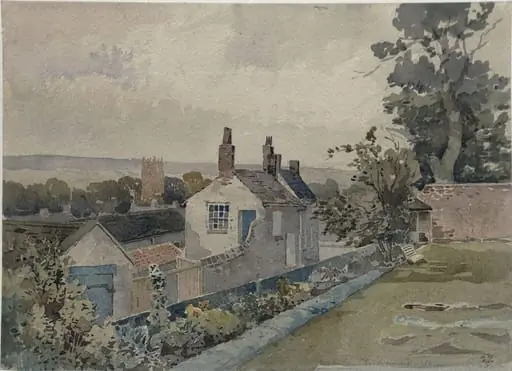 At Richmond, Yorkshire
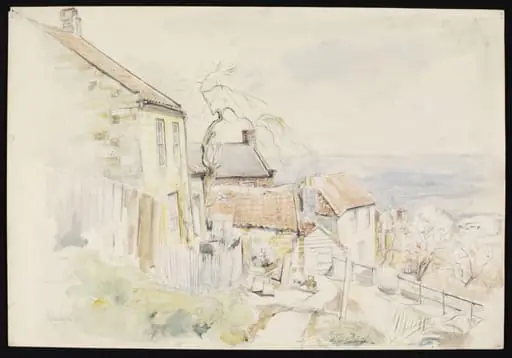 View down the Flags, Runswick Bay
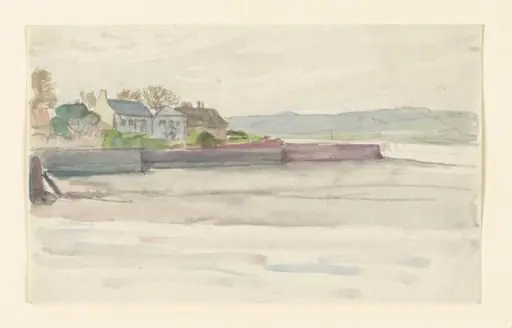 Shaldon, near Teignmouth
 Stanfield House, Hampstead
 Goathland Village
 Landscape with cottages and trees
 Landscape
 From Renton, near Dumbarton, with the pillar to Smollett