Artwork
Sleeping Savoyard Boy
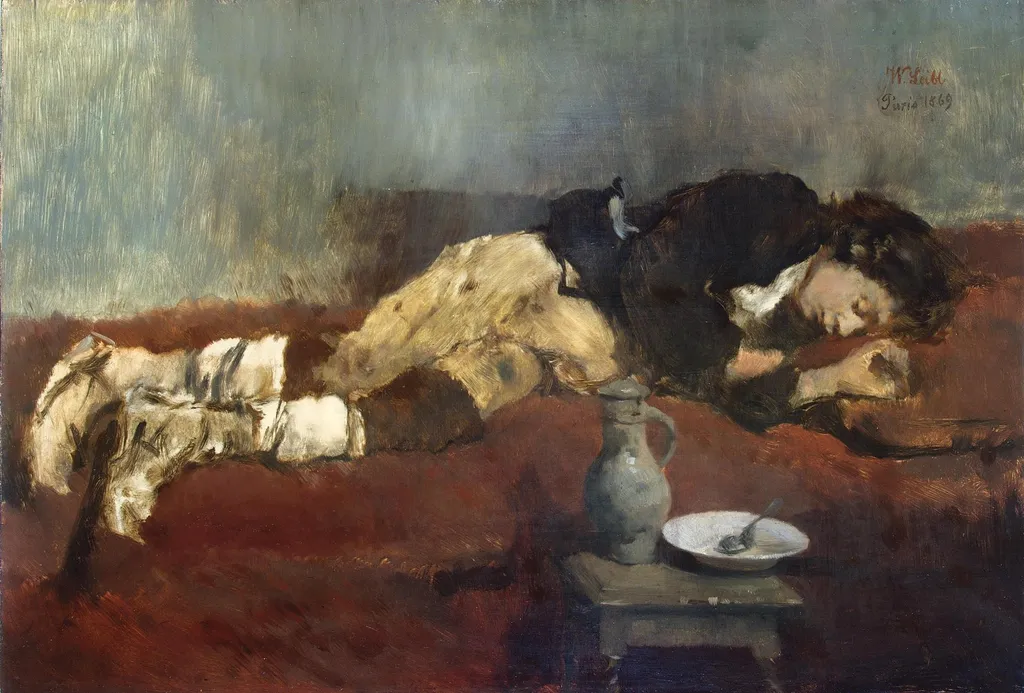
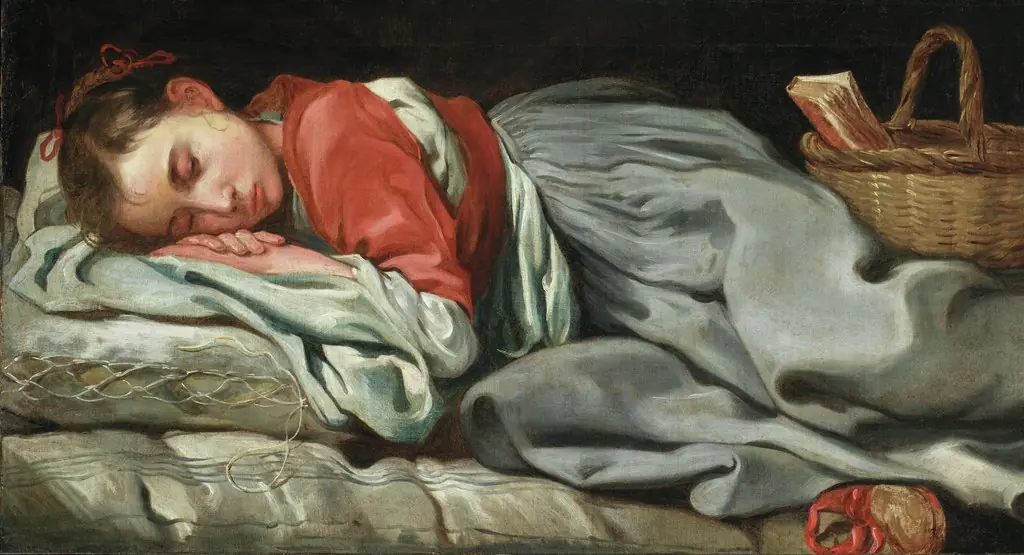
Sleeping Savoyard Boy is an oil painting by the Realist artist Wilhelm Leibl. It dates from 1869 and is held in the collection of the Hermitage Museum.
About this work
Overview
Sleeping Savoyard Boy is an 1869 oil painting by Wilhelm Leibl, a German realist. The work depicts a serene scene of a young boy asleep, characterized by warm colors and soft brushwork, evoking a sense of cozy tranquility.
Subject & Meaning
The painting focuses on a moment of everyday life, portraying a sleeping boy in humble attire. His peaceful expression and relaxed pose convey deep sleep, inviting the viewer to appreciate the beauty in simple, quiet moments.
Technique & Style
Leibl employed warm colors and soft brushstrokes to create a cozy atmosphere, drawing attention to the boy's serene state. The style aligns with the realism movement, emphasizing realistic depiction over idealization.
History & Provenance
Created in 1869, the painting is part of the State Hermitage Museum's collection. It reflects Leibl's interest in portraying peasant life and ordinary subjects.
Context
As a realist work, Sleeping Savoyard Boy contrasts with the more romanticized or idealized subjects common in mid-19th-century art, instead highlighting the dignity of everyday life.
Legacy
While not widely known outside art historical contexts, the painting contributes to Leibl's reputation for capturing the simplicity and dignity of common life, influencing subsequent realist and naturalist movements.
Own this work as a print
Artist & collection
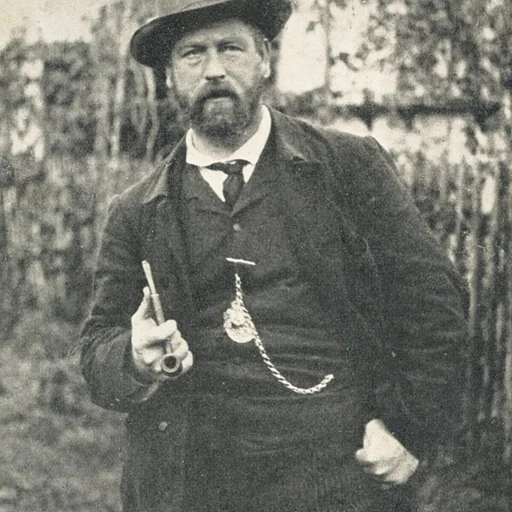
Artist
Wilhelm Maria Hubertus Leibl (October 23, 1844 – December 4, 1900) was a German realist painter. He became famous for his portraits and depictions of scenes of peasant life.