Artwork
Dromerij, Arabisch meisje
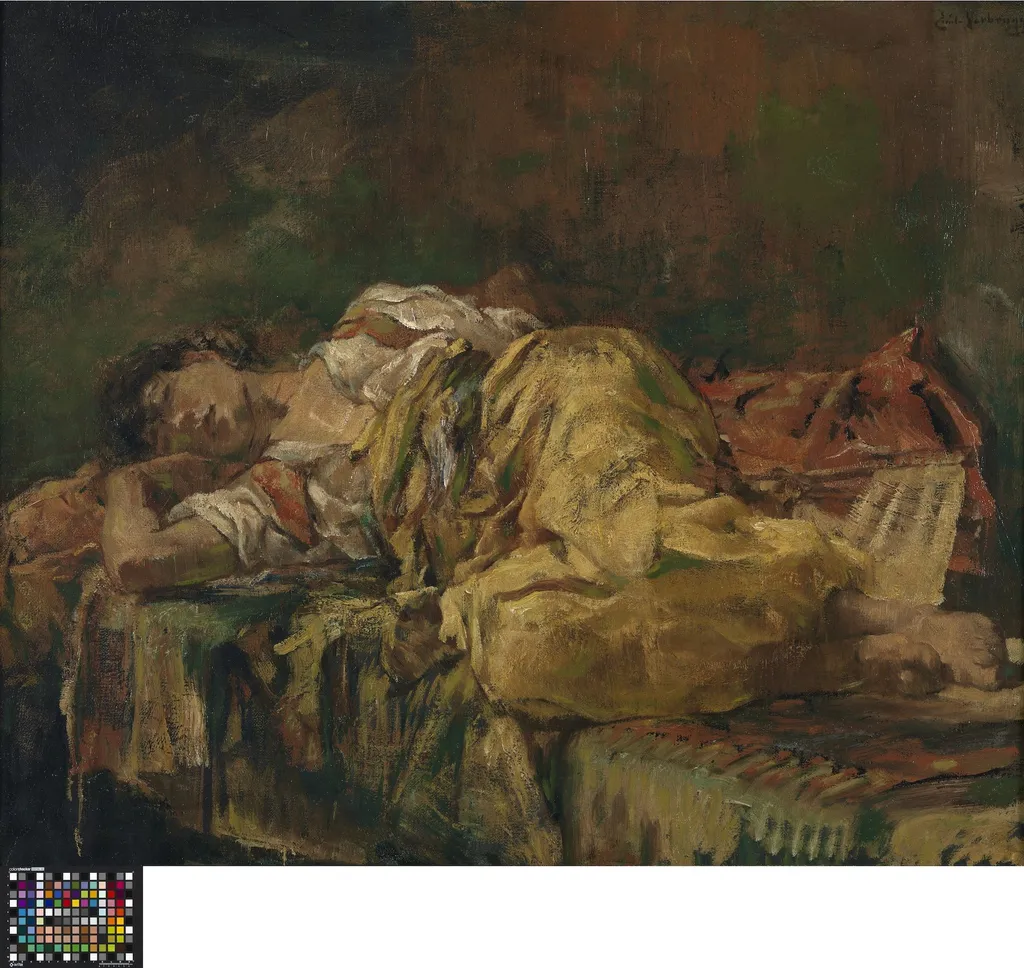
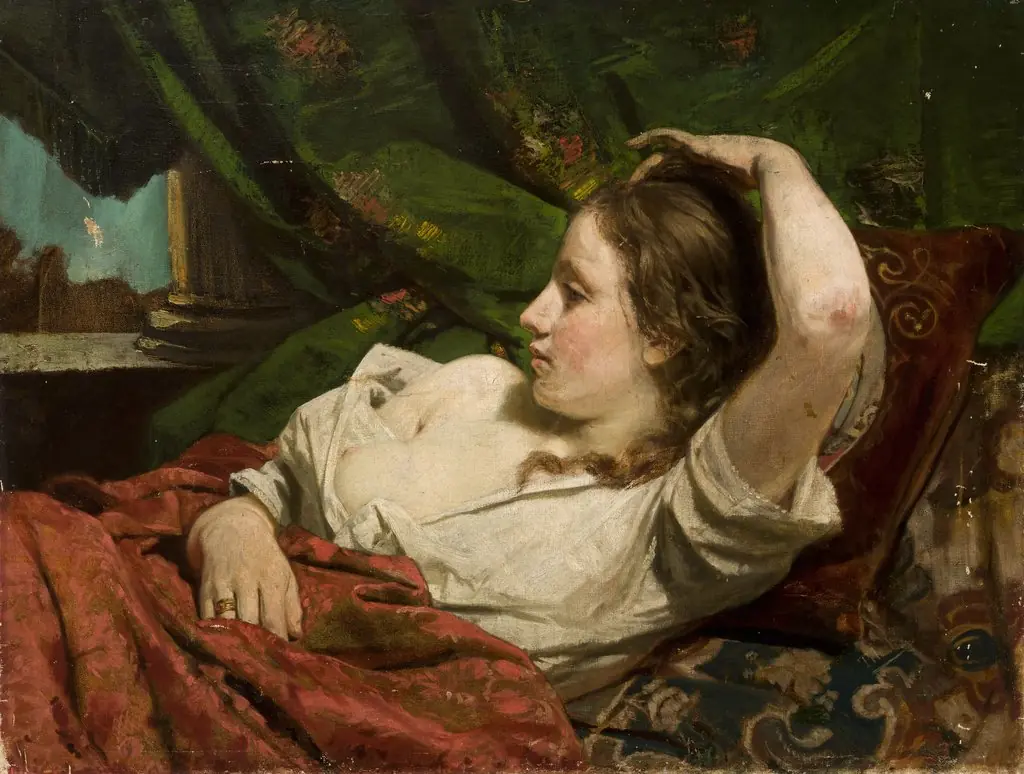
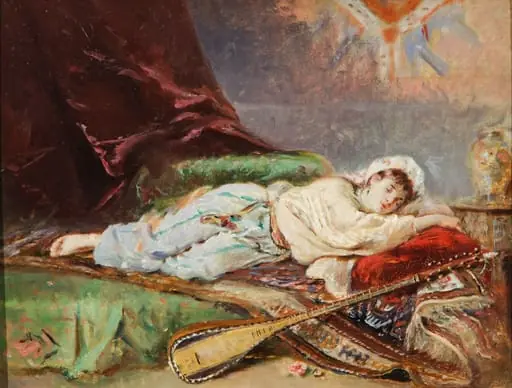
Dromerij, Arabisch meisje is an oil painting by the Realist artist Emile Verbrugge. It dates from 1856 and is held in the collection of the Groeningemuseum.
About this work
Overview
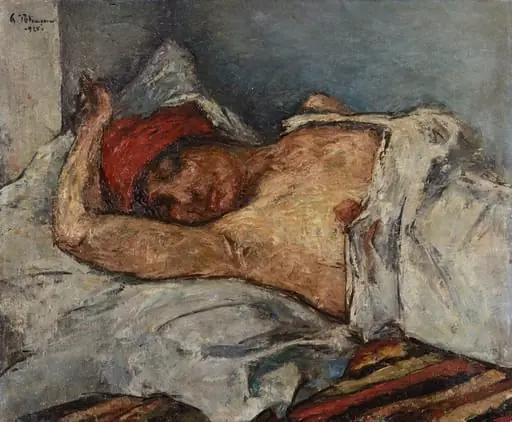
Dromerij, Arabisch meisje is an 1856 oil painting by Belgian artist Emile Verbrugge. It portrays a young woman in a moment of quiet repose, lying on a bed within a dimly lit interior. The work is part of the permanent collection at the Groeningemuseum in Bruges, where it is displayed as an example of 19th-century figurative painting with orientalist influences.
Subject & Meaning
Her reclining posture, closed eyes, and draped blanket suggest sleep or deep relaxation.
The painting depicts a young woman, identified as Arab, in a state of rest. Her reclining posture, closed eyes, and draped blanket suggest sleep or deep relaxation. The title, meaning 'Daydream' in Dutch, implies an inner world beyond the visible scene. The figure’s identity and setting reflect 19th-century European fascination with the Orient, though the emotional tone remains introspective rather than exoticized.
Technique & Style
Verbrugge employs chiaroscuro to model the figure against a darkened room, enhancing the three-dimensionality of the form. Warm tones in the bedding and skin contrast with the deep shadows, drawing focus to the sleeper’s stillness. Brushwork is restrained, favoring smooth transitions and subtle gradations of light. The composition is intimate, with minimal detail in the background to isolate the figure’s solitude.
History & Provenance
Painted in 1856, the work entered the collection of the Groeningemuseum in the late 19th or early 20th century. Its acquisition aligns with the museum’s broader effort to document Flemish and Belgian artistic production of the period. No significant changes in ownership are documented, and the painting has remained in public care since its inclusion in the museum’s holdings.
Context
Created during a period when European artists frequently depicted North African and Middle Eastern subjects, the painting reflects orientalist trends in 19th-century art. Yet unlike more theatrical orientalist works, Verbrugge’s focus on quietude and domestic intimacy suggests a more personal, less stereotypical approach. The scene may have been inspired by travel accounts or studio studies rather than direct observation.
Legacy
Dromerij, Arabisch meisje remains a quiet example of Belgian academic painting with orientalist leanings. It is not widely reproduced or studied outside regional art historical circles, but it contributes to understanding how everyday moments of rest were rendered within the constraints of 19th-century genre conventions. Its endurance in the Groeningemuseum underscores its value as a modest yet evocative record of its time.
Own this work as a print
Artist & collection