Artwork
Ulysses at the Palace of Circe
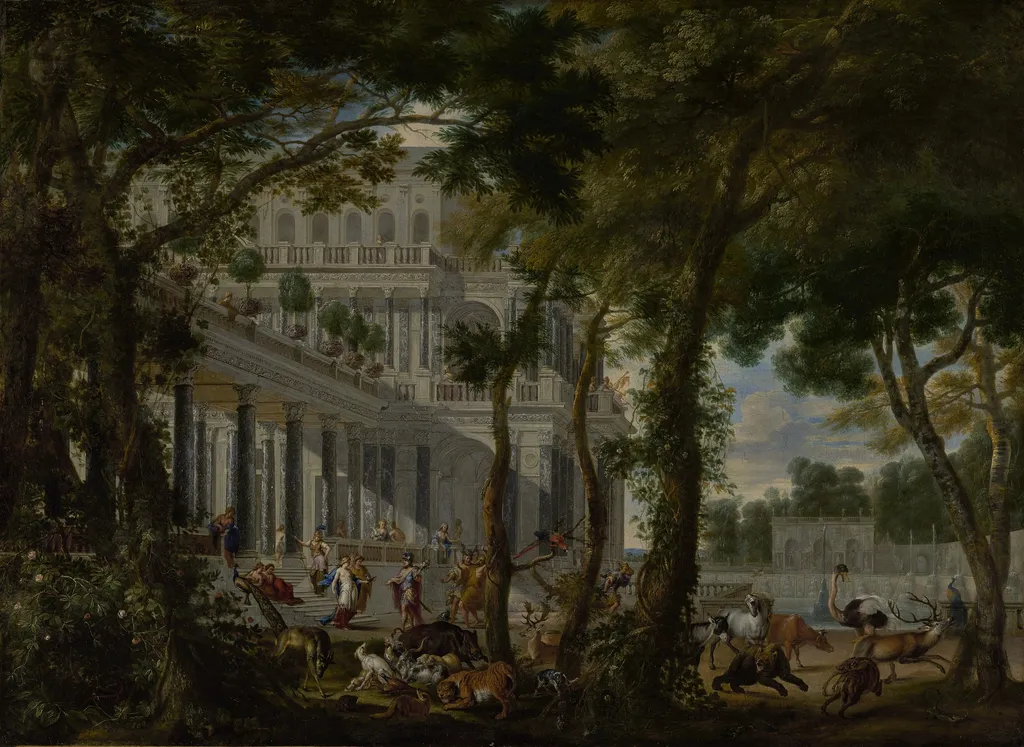
Ulysses at the Palace of Circe is an oil painting by the Flemish Baroque painting artist Wilhelm Schubert van Ehrenberg. It dates from 1667 and is held in the collection of the J. Paul Getty Museum.
About this work
Overview
Created in 1667 by the Antwerp‑based painter Wilhelm Schubert van Ehrenberg, this oil on canvas presents a mythological tableau titled Ulysses at the Palace of Circe. Executed within the Flemish Baroque idiom, the work combines the artist’s specialty in architectural interiors with a narrative drawn from Greek legend, and it now belongs to the J. Paul Getty Museum’s collection.
Subject & Meaning
The composition captures the moment when Odysseus confronts the enchantress Circe inside her opulent palace. In the foreground a menagerie of deer, dogs and a lion suggests the transformative powers attributed to the sorceress, while figures gather on the palace’s steps and balconies, hinting at the broader story of temptation and redemption that underpins the episode.
Technique & Style
Van Ehrenberg employs a pronounced chiaroscuro, using strong contrasts of light and shadow to model the architectural space and to guide the eye toward the central figures. Warm, earthy hues dominate the palette, reinforcing a sense of antiquity and grandeur, while the careful rendering of perspective creates depth that draws the viewer into the scene’s layered setting.
History & Provenance
The painting was produced during the height of the Flemish Baroque period, a time when Antwerp artists frequently merged grand architectural settings with mythological content. After remaining in private hands for several centuries, the work entered the J. Paul Getty Museum, where it is displayed as part of the museum’s European Baroque holdings.
Context
In the mid‑17th century, van Ehrenberg was renowned for his detailed cityscapes and interior vistas. This piece marks a rare foray into narrative painting, reflecting contemporary interest in classical literature and the moralizing potential of myth. The inclusion of exotic animals aligns with the period’s fascination with the natural world and its symbolic associations.
Own this work as a print
Artist & collection
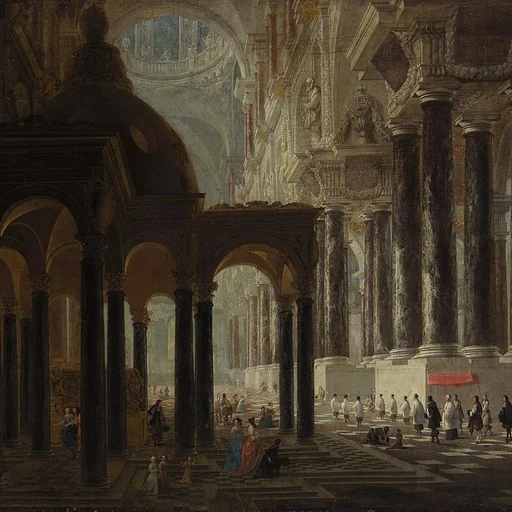
Artist
Wilhelm Schubert van Ehrenberg
Wilhelm Schubert van Ehrenberg or Willem Schubart van Ehrenberg (also: Wilhem Schubert von Ehrenberg or Wilhem Schubert van Ehrenberg (Antwerp, 1630 or 1637– Antwerp, c.

 Landscape with a genre scene
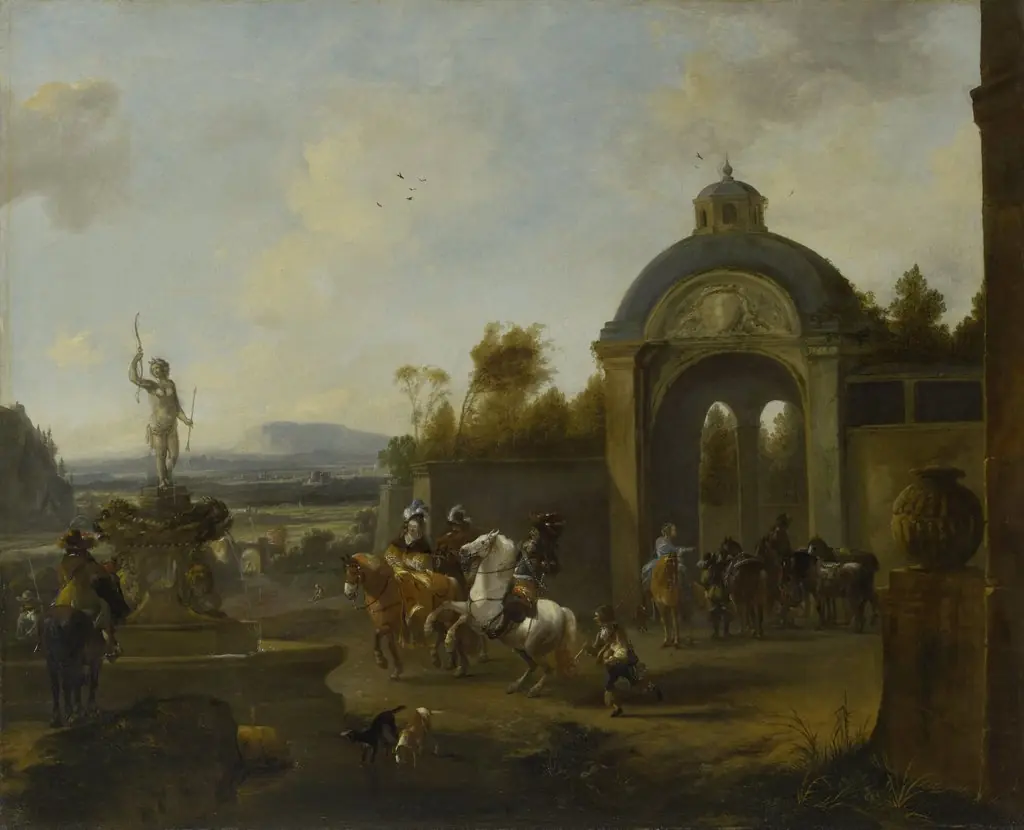 Hunting party at a fountain
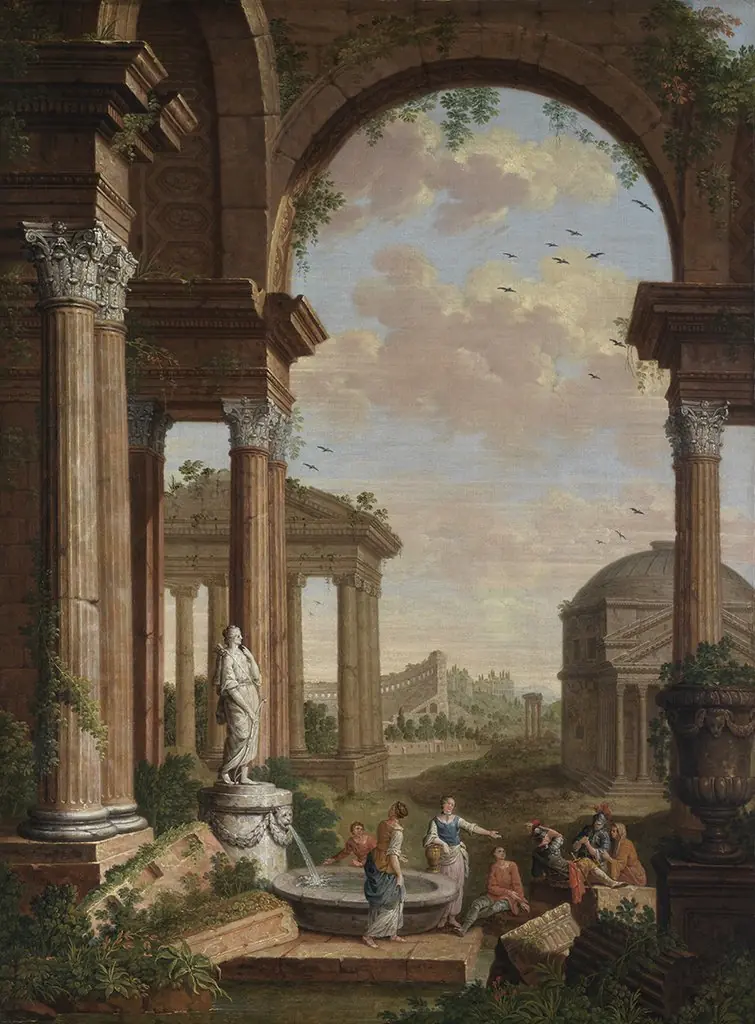 Landscape with Roman Ruins
 Hunting Party at a Fountain
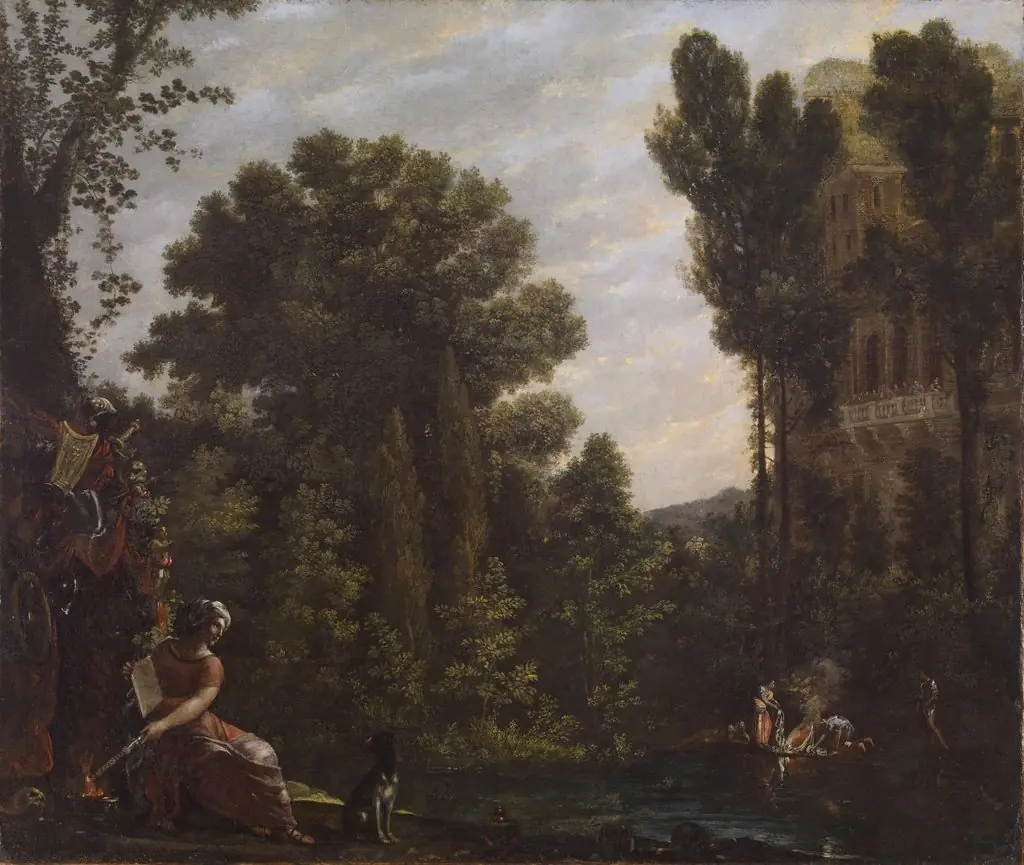 Landscape with a Scene of Witchcraft
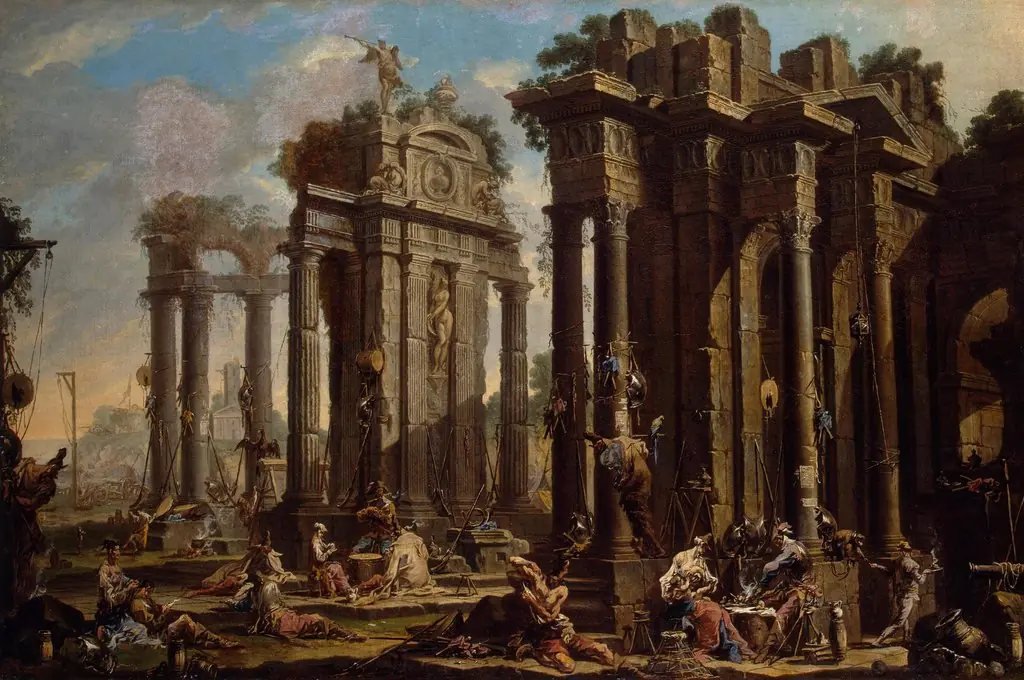 Halt of the Brigands
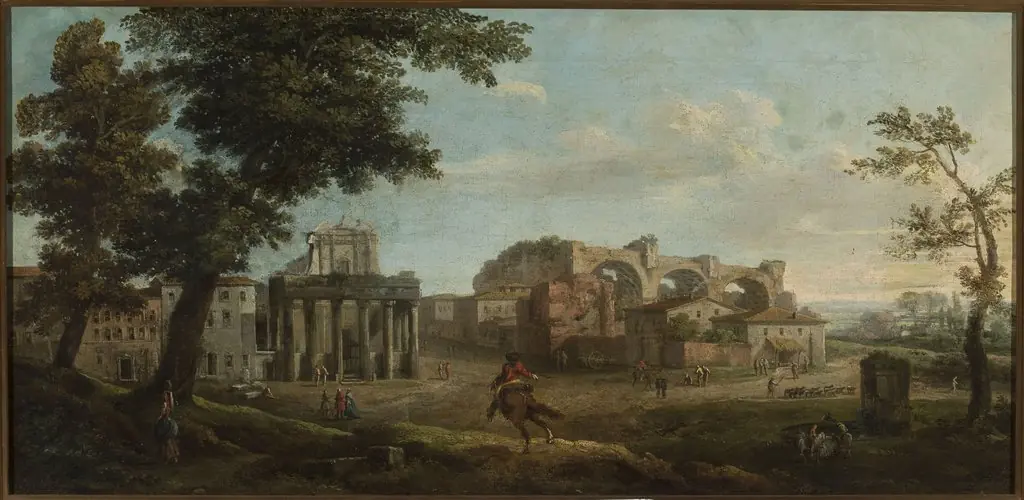 View of Rome
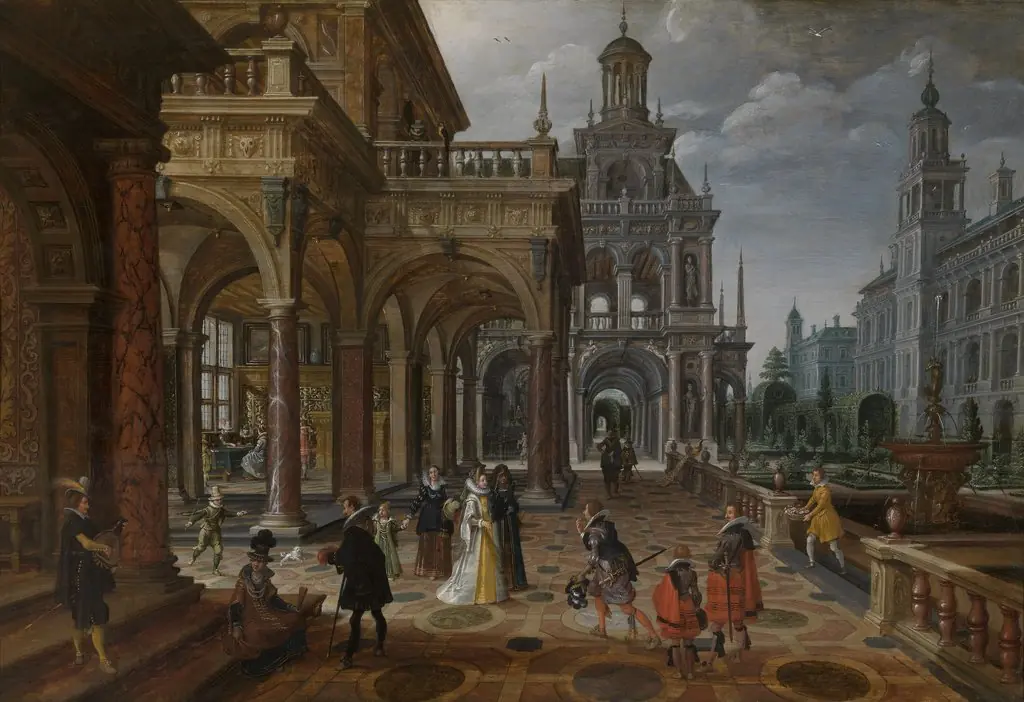 Palaces
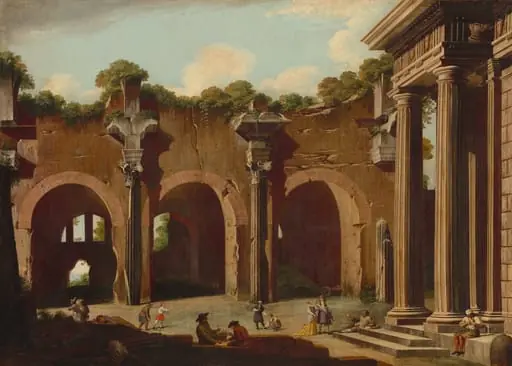 The Basilica of Constantine with a Doric Colonnade
 Italian landscape with ancient ruins and peasants
 Un puerto
 Army Advancing among Roman Ruins