Artwork
H Beard Print Collection
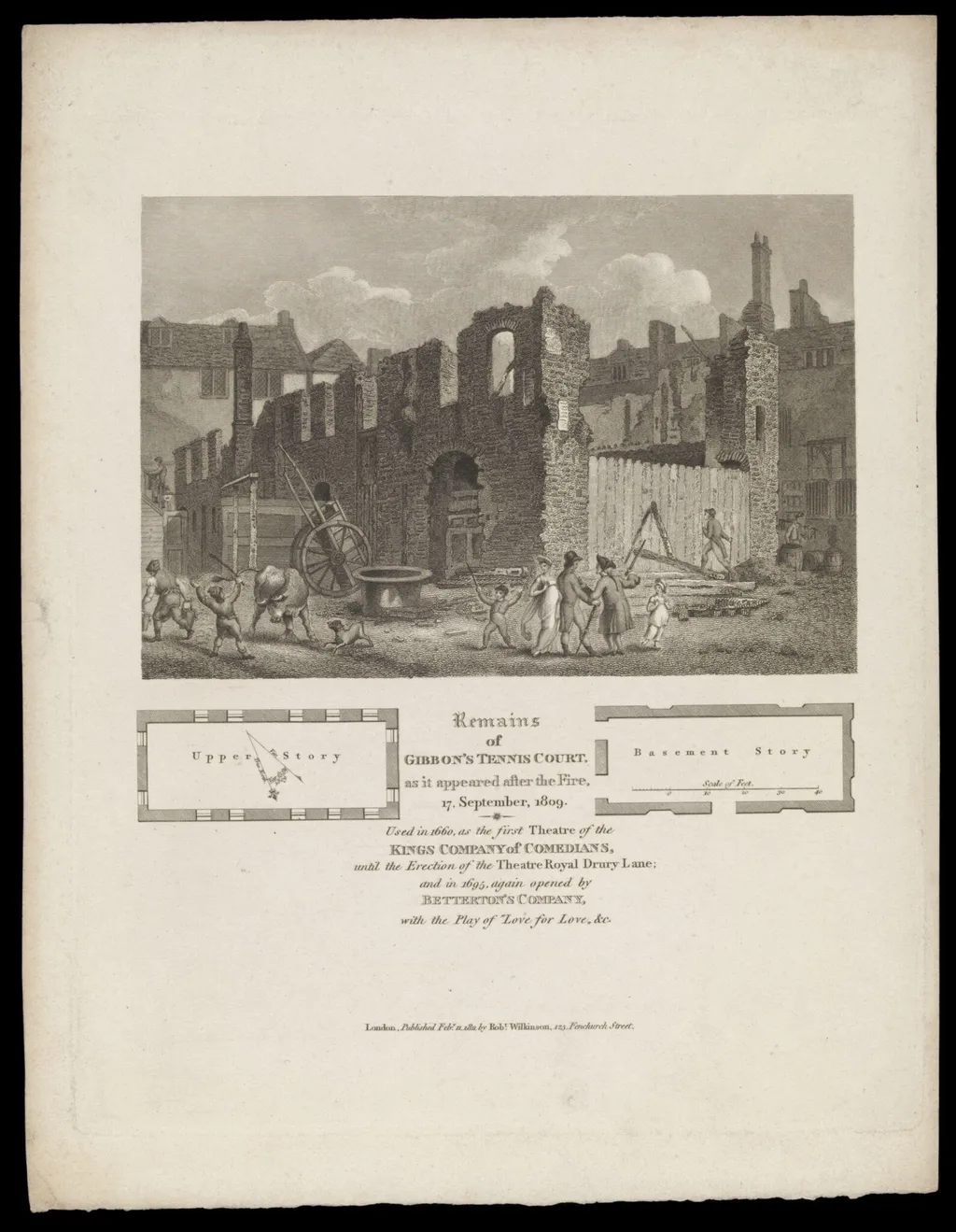
H Beard Print Collection is a print by the Romanticist artist Robert Wilkinson. It dates from 11 and is held in the collection of the Victoria and Albert Museum.
About this work
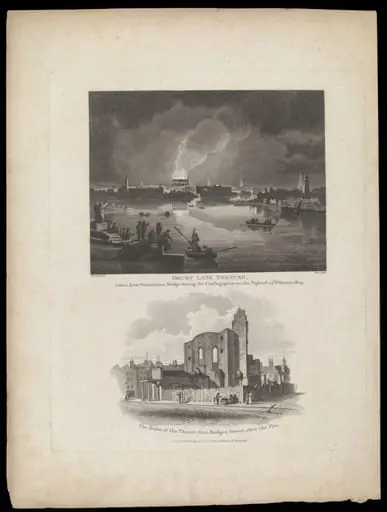
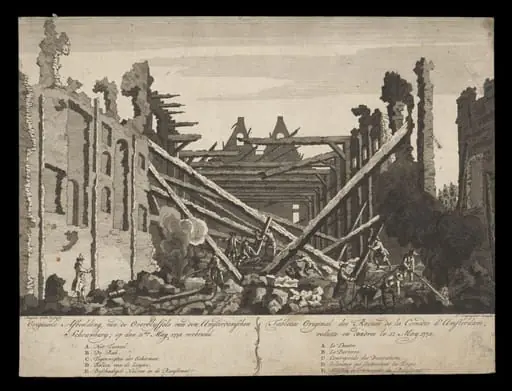
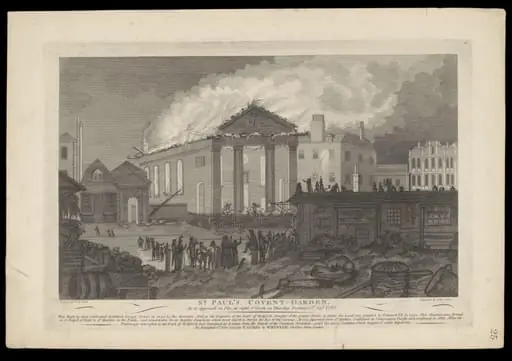
This print shows what’s left of a tennis court after a big fire. The scene is honest and shows ruins, not pretty details. The artist printed it in 1811 to mark the damage.
Wilkinson made this print right after the fire in 1809. It’s one of many maps and views he sold in London.
Look up the Victoria and Albert Museum to see more prints like this one.
Overview
Published shortly after the event, it belongs to a series of urban views Wilkinson produced for a public interested in contemporary London’s changing landscape.
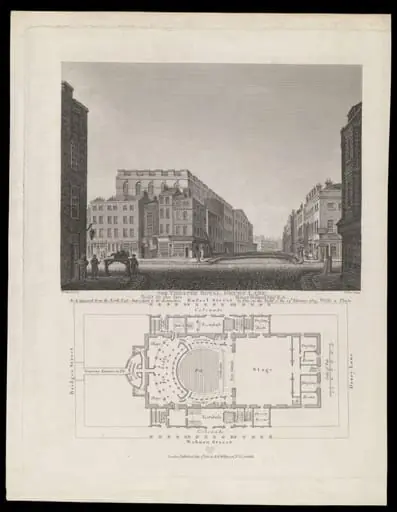
This 1811 print by Robert Wilkinson documents the aftermath of a fire that destroyed Gibbon's Tennis Court in London in 1809. Rendered as a topographical record rather than an idealized scene, it captures the charred remains of the structure with clinical precision. Published shortly after the event, it belongs to a series of urban views Wilkinson produced for a public interested in contemporary London’s changing landscape.
Subject & Meaning
The print focuses on the skeletal remains of a once-functional tennis court, emphasizing decay over grandeur. No figures or embellishments distract from the ruin; the composition conveys loss through absence. Its purpose was documentary—to preserve a moment of urban transformation. The absence of romanticization suggests a shift toward recording real, unvarnished change in the city’s built environment.
Technique & Style
Executed in a clear, linear style typical of early 19th-century topographical prints, the image relies on precise outlines and muted tonal contrasts. No shading or dramatic lighting is used to evoke emotion. The composition is straightforward, with architectural fragments arranged to convey scale and damage. The technique prioritizes accuracy over artistic flourish, aligning with the era’s growing demand for factual visual records.
History & Provenance
Robert Wilkinson, a London-based publisher and engraver, issued this print in 1811 as part of a commercial series documenting local events and landmarks. The fire of 1809, which consumed the tennis court, was a notable incident in the city’s social history. Wilkinson’s prints were widely distributed, often sold as souvenirs or reference material. The print is now held in collections such as the Victoria and Albert Museum, alongside similar urban records.
Context
In the early 1800s, London experienced rapid urban development and frequent fires due to dense wooden structures and inadequate fire services. Prints like this one served both as news and as historical archives, reflecting public interest in the city’s physical transformations. The destruction of recreational spaces like tennis courts signaled broader shifts in urban use and infrastructure during the period.
Legacy
This print contributes to a broader visual archive of London’s impermanent architecture. It exemplifies how print culture in the early 19th century democratized access to images of urban change, moving beyond elite patronage to serve a wider audience. Its enduring presence in museum collections underscores its value as a primary source for understanding the material history of London’s lost spaces.
Artist & collection
Artist
Robert Wilkinson made crisp, finely detailed prints of London life in the early 1800s.