Artwork
N.W. View of the Fair on the River Thames during the Great Frost 1683/4 from an Original Drawing by Wyke in the British Museum. Taken near Temple Stairs
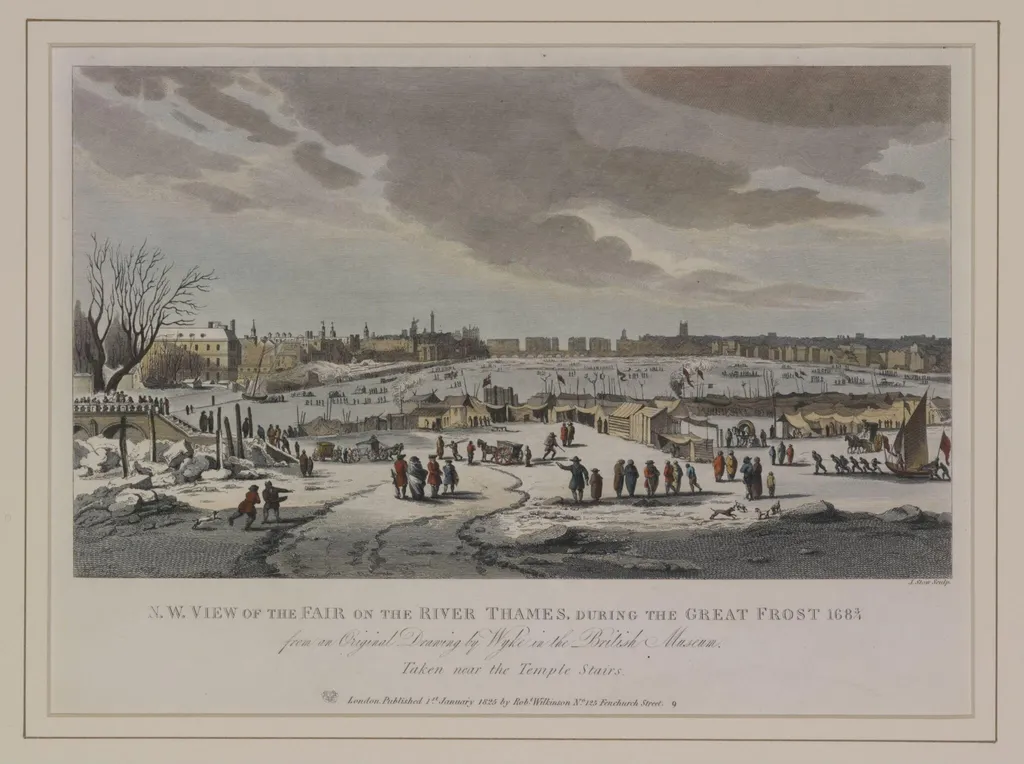
N.W. View of the Fair on the River Thames during the Great Frost 1683/4 from an Original Drawing by Wyke in the British Museum. Taken near Temple Stairs is a print by the Romanticist artist Robert Wilkinson. It dates from 1 and is held in the collection of the Victoria and Albert Museum.
About this work
It’s based on an earlier drawing of a Frost Fair, when the river froze hard enough for streets of booths and fires on the ice.
This print shows Londoners skating on the frozen River Thames in 1683/4. It’s based on an earlier drawing of a Frost Fair, when the river froze hard enough for streets of booths and fires on the ice.
The old London Bridge helped trap icy water upstream, making these fairs possible. People partied for weeks—skating, trading, and even roasting meat on the ice.
Look up the Victoria and Albert Museum to see this print in person.
Overview
This print depicts the River Thames frozen solid during the severe winter of 1683–84, when Londoners transformed the ice into a temporary marketplace and entertainment ground. Based on a drawing by Wyke held in the British Museum, the image captures the unusual spectacle of booths, carts, and pedestrians on the frozen river near Temple Stairs. The scene reflects a rare natural phenomenon made possible by the city’s older bridge structure and unusually cold weather.
Subject & Meaning
The scene portrays a bustling winter fair on the ice, with vendors selling food, goods, and printed souvenirs. People skate, socialize, and conduct business as if on solid ground. The presence of a printing press, which produced personalized keepsakes for visitors, reveals how the event blended commerce with communal celebration. It reflects a moment when nature disrupted urban life, creating an improvised public space outside normal social order.
Technique & Style
The print is a detailed engraving derived from a preparatory drawing, rendered with fine lines to suggest texture and movement across the ice. Figures are arranged in loose clusters, conveying activity without strict perspective. Architectural elements like the old London Bridge are simplified but recognizable, anchoring the scene in a real location. The composition emphasizes density and scale, reinforcing the sense of a temporary city emerging from the frozen river.
History & Provenance
The image originates from a drawing by Wyke, now in the British Museum, and was later reproduced as a print. Contemporary accounts, including those by diarist John Evelyn, confirm the scale and duration of the 1683–84 fair, which lasted over six weeks. The print likely circulated as a record of the event, appealing to those who witnessed it and those who heard of its novelty. Its survival reflects the cultural significance of the frost fair as a documented historical anomaly.
Context
Frost fairs occurred intermittently between the 17th and early 19th centuries due to a combination of climatic conditions and the design of old London Bridge, which slowed river flow and trapped ice upstream. These events were rare but recurrent, tied to the Little Ice Age. As urban development and bridge reconstruction altered the river’s behavior, such freezes became impossible, making these fairs a fading memory of a colder, less engineered London.
Legacy
The print serves as a visual archive of a phenomenon no longer possible, preserving the texture of daily life during an extreme winter. It contributes to historical understanding of how pre-industrial communities adapted to environmental extremes. Though the fair itself was ephemeral, its representation in print ensured its place in the collective memory of London’s past, offering insight into public behavior under unusual circumstances.
Artist & collection
Artist
Robert Wilkinson made crisp, finely detailed prints of London life in the early 1800s.

 Print Collection
 London from Greenwich
 Liber Studiorum: London from Greenwich
 Benares
 London from Greenwich
 View of London Bridge and Tower
 Winter
 Sir Richd. Steele's Cottage. Hampstead Road
 Sir Richd. Steele's Cottage, Hampstead Road
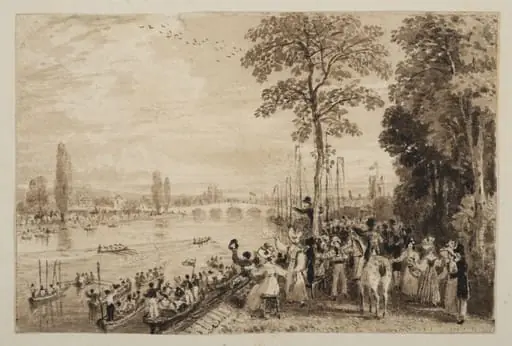 The Oxford and Cambridge Rowing Match at Henley-on-Thames
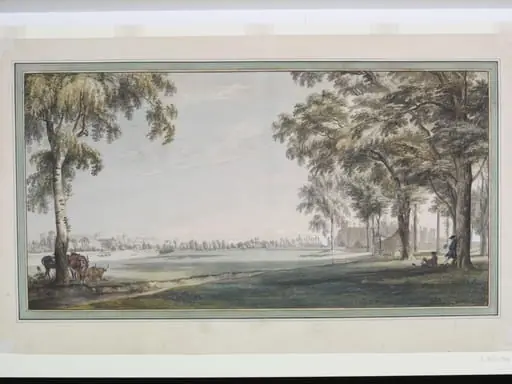 Eton College and Windsor from the Playing Fields
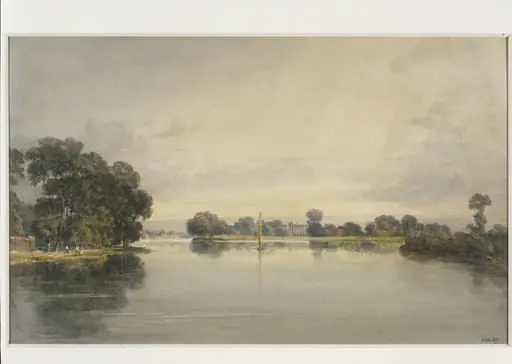 On the Thames