Artwork
Eton College and Windsor from the Playing Fields
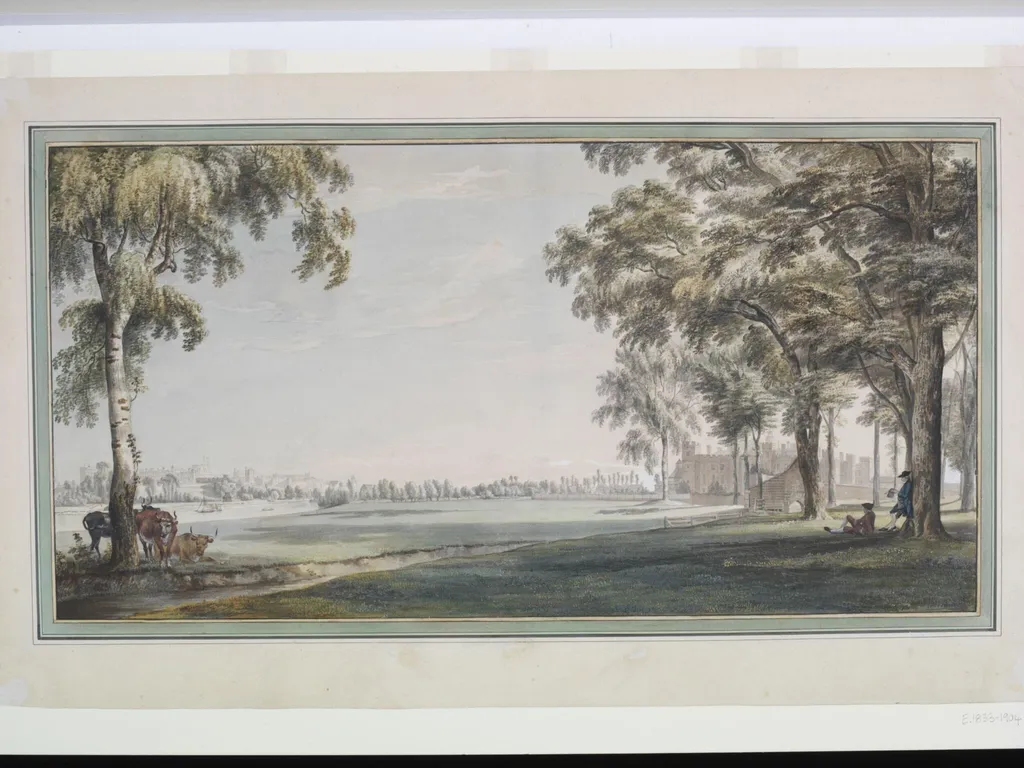
Eton College and Windsor from the Playing Fields is a watercolor work on paper by the Rococo painting artist Paul Sandby. It dates from 1770 and is held in the collection of the Victoria and Albert Museum.
About this work
Overview
Executed in delicate washes, the work reflects Sandby’s mastery of the medium and his interest in topographical accuracy combined with atmospheric harmony.
Painted in 1770, this watercolour by Paul Sandby captures a tranquil vista of Eton College and Windsor Castle as seen from the school’s playing fields. Executed in delicate washes, the work reflects Sandby’s mastery of the medium and his interest in topographical accuracy combined with atmospheric harmony. It belongs to a body of work that helped define English landscape watercolour as a distinct artistic tradition.
Subject & Meaning
The scene presents a quiet, unidealized view of institutional and royal architecture nestled within the English countryside. Eton College and Windsor Castle appear in the distance, framed by natural elements rather than dominating them. The presence of grazing cattle and solitary figures suggests daily rural life, grounding the composition in observation rather than grandeur, reflecting an emerging appreciation for the ordinary landscape.
Technique & Style
Sandby employed transparent watercolour washes to build subtle tonal gradations, avoiding heavy outlines. The foliage is rendered with fine, precise brushwork, particularly in the detailed branching of trees, while the river and sky are softened with diluted pigments. This restrained palette and careful layering create a sense of calm luminosity, characteristic of his approach to topographical watercolour.
History & Provenance
Created during Sandby’s most active period as a landscape artist, the work predates his formal role at the Royal Academy, which he co-founded in 1768. It likely originated as a personal study or commission tied to his interest in documenting English sites. The painting entered the Victoria and Albert Museum’s collection through established channels of 19th-century British art acquisition.
Context
In the late 18th century, watercolour was gaining legitimacy as a medium for serious landscape depiction, moving beyond mere sketching. Sandby’s work contributed to this shift, aligning with a broader cultural interest in the English countryside and institutional heritage. His approach contrasted with the theatricality of continental Rococo, favoring quiet observation over ornamentation.
Legacy
Sandby’s precise yet lyrical watercolours influenced later generations of British landscape artists, helping establish watercolour as a respected medium. This work exemplifies his role in bridging cartographic precision with aesthetic sensitivity, laying groundwork for the Romantic landscape tradition that followed. His emphasis on everyday scenery became a lasting feature of English art.
Artist & collection
Artist
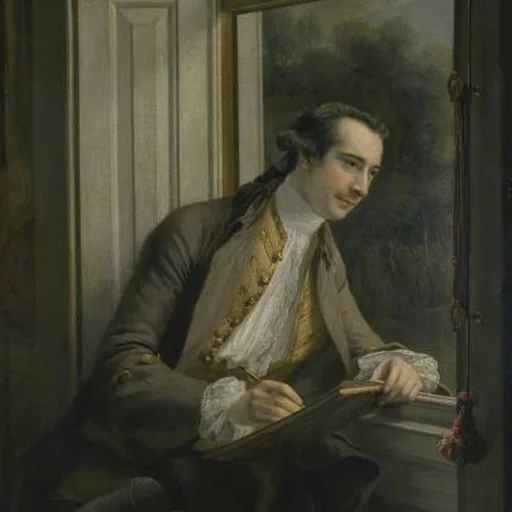
Paul Sandby, (1731 – 7 November 1809) was an English mapmaker and painter who specialised in landscape art. Along with his older brother Thomas Sandby, he was one of the founding members of the Royal Academy in 1768.

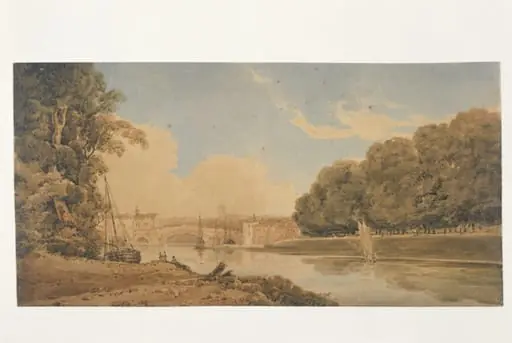 The Mayor's Walk on the Banks of the Ouse, Yorkshire
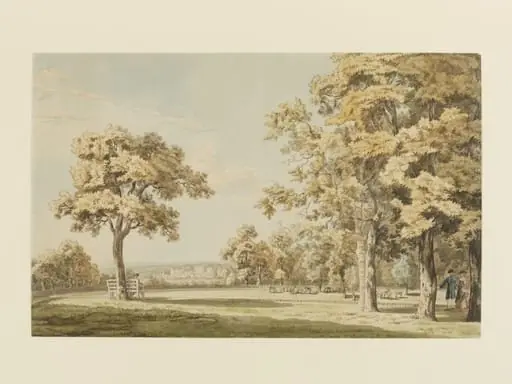 Windsor Castle from the Great Park, near the End of the Long Walk
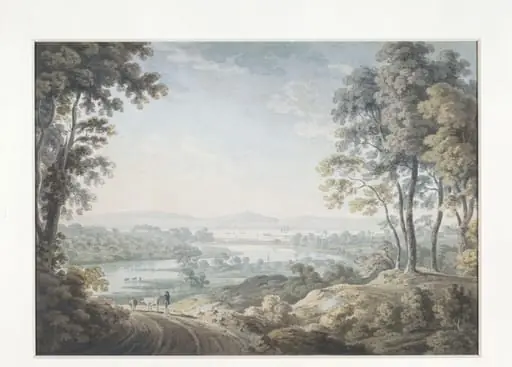 Lymington River, with the Isle of Wight in the distance
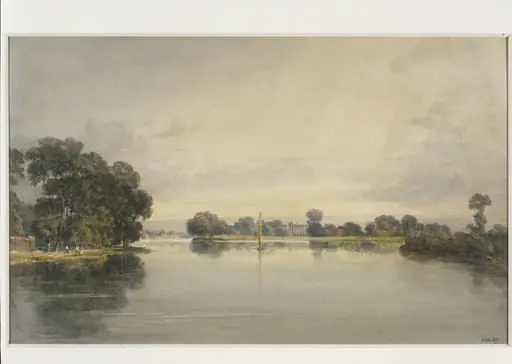 On the Thames
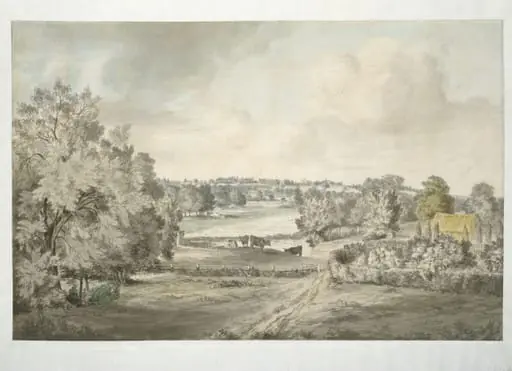 The valley of the Stour, looking towards East Bergholt
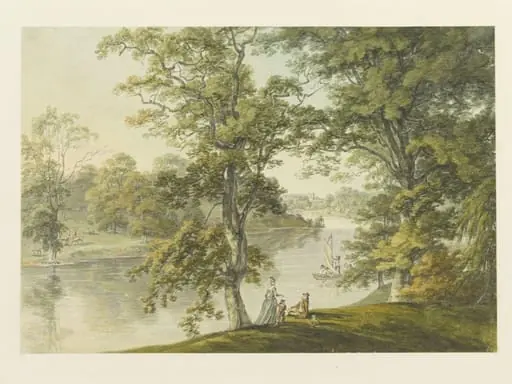 Wynnstay Park, Derbyshire
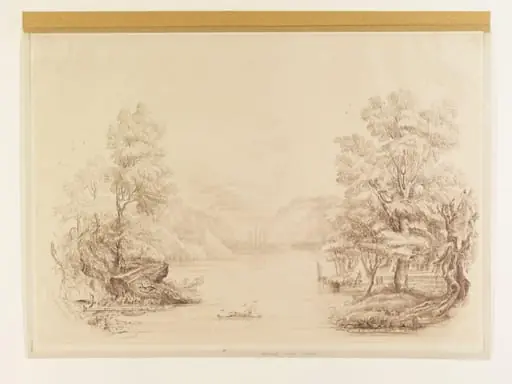 The Xanthus River
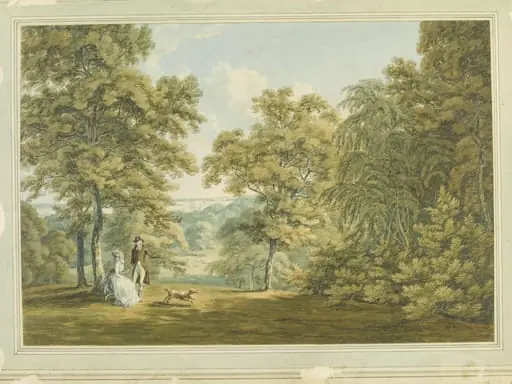 Greenwich Park
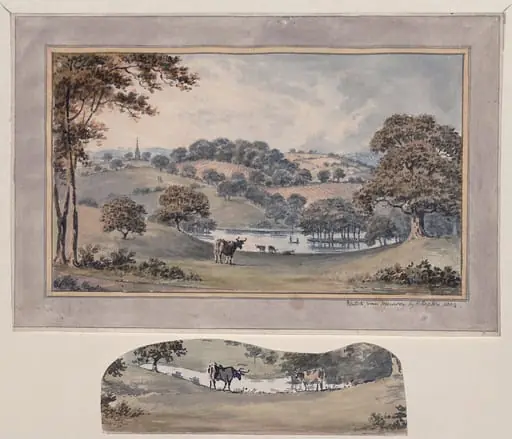 View from the West Front of the Rectory House, Withyham Sussex
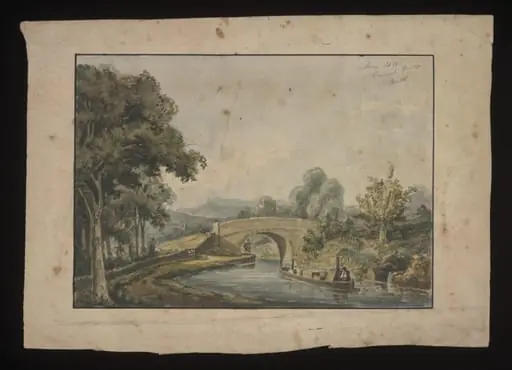 Watercolour drawing by the Grieve family, probably by John Henderson Grieve, showing a canal bridge near Bath
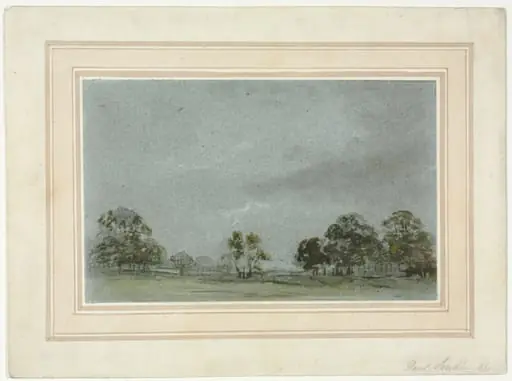 Landscape
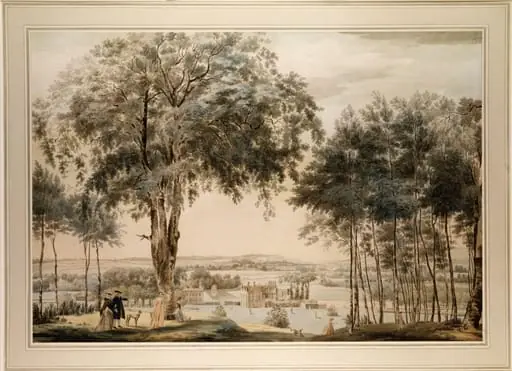 Purley Hall, Berkshire