Artwork
A wedding feast, traditionally called 'The wedding of Adriaen Ploos van Amstel and Agnes van Bijler', 1616
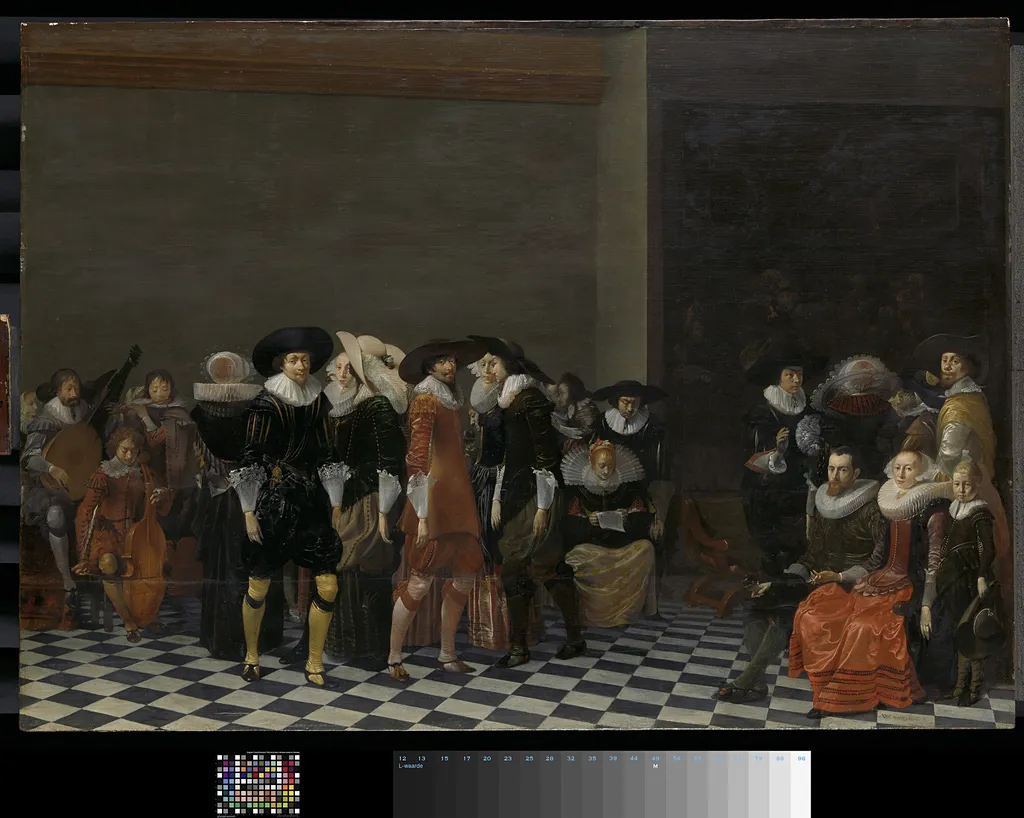
A wedding feast, traditionally called 'The wedding of Adriaen Ploos van Amstel and Agnes van Bijler', 1616 is an oil painting by the Dutch Golden Age artist Willem Cornelisz Duyster. It dates from 1625 and is held in the collection of the Rijksmuseum.
About this work
Overview
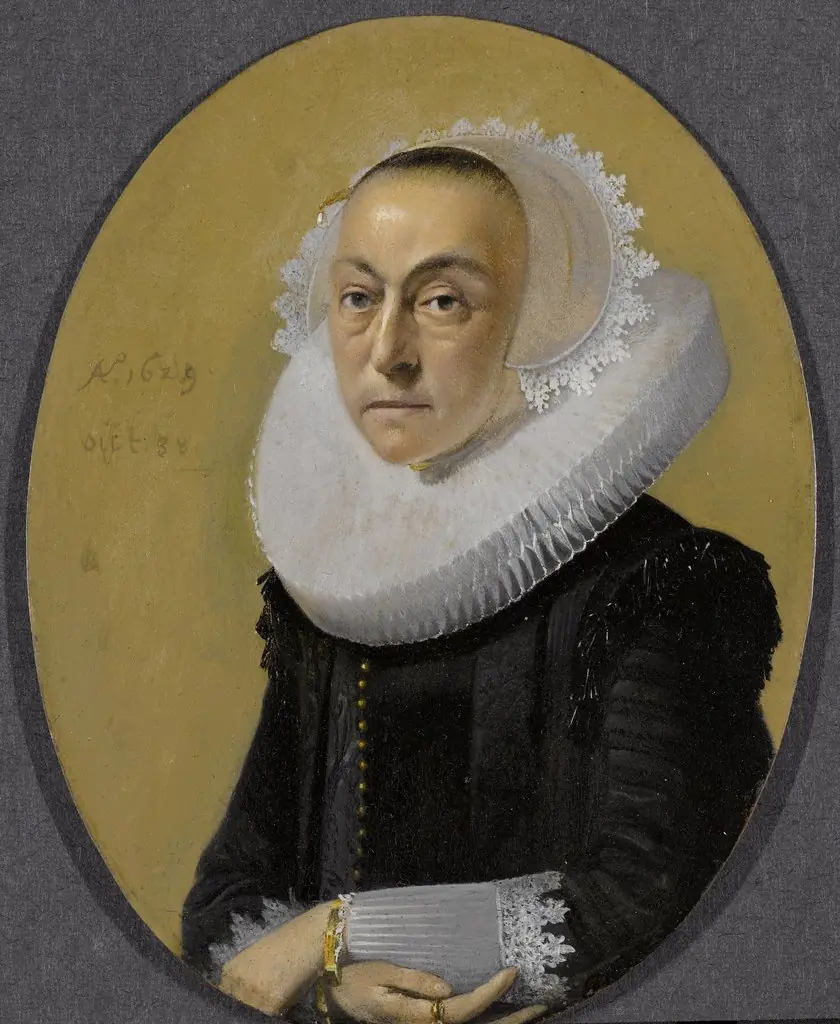
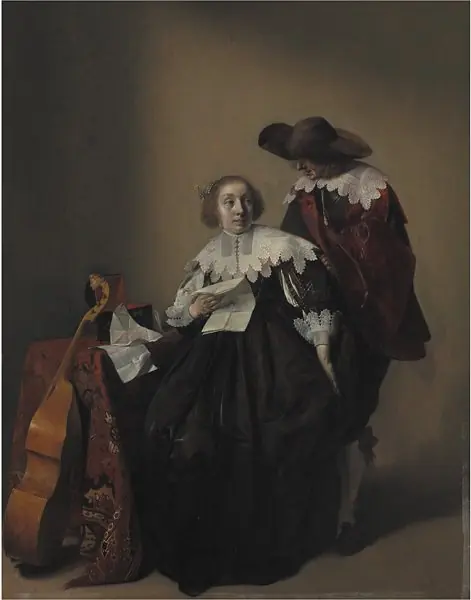
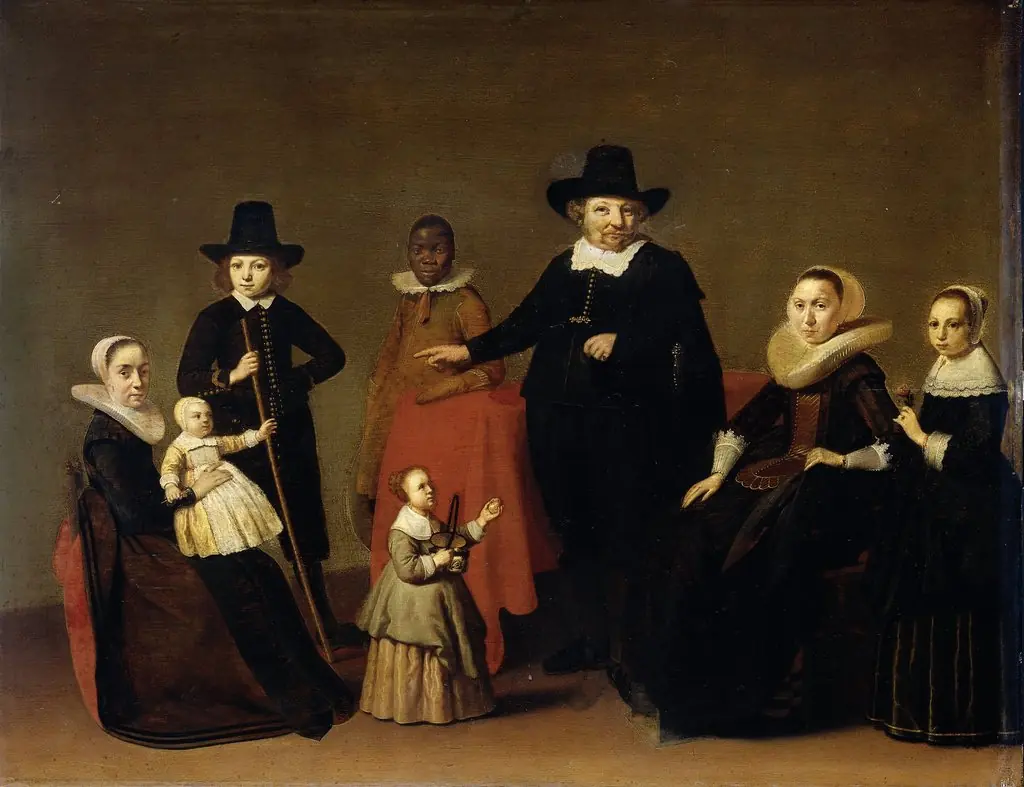
Willem Cornelisz Duyster, an Amsterdam painter active during the Dutch Golden Age, produced an oil on canvas titled *A wedding feast, traditionally called ‘The wedding of Adriaen Ploos van Amstel and Agnes van Bijler’* in the mid‑1620s. The composition gathers a sizable group of elegantly dressed figures within an interior space, rendered with the quiet realism typical of Dutch genre painting.
Subject & Meaning
The work records a celebratory domestic scene, presumably the marriage of the merchant Adriaen Ploos van Amstel and Agnes van Bijler. By placing the couple among relatives and friends, Duyster emphasizes the social function of marriage as a communal event, while the varied gestures—papers, fans, a seated figure—suggest the exchange of contracts, toasts, and genteel conversation.
Technique & Style
Duyster employs a restrained chiaroscuro, allowing illuminated faces to emerge from a darker background and thereby creating spatial depth.
Duyster employs a restrained chiaroscuro, allowing illuminated faces to emerge from a darker background and thereby creating spatial depth. The checkered floor recedes toward a dim doorway, while the crisp rendering of ruffled collars, lace cuffs, and polished fabrics demonstrates his attention to material detail. The overall palette is muted, punctuated by the red chair that anchors the composition.
History & Provenance
Since its creation, the painting has remained in Dutch collections, ultimately entering the Rijksmuseum’s holdings, where it is displayed as part of the museum’s representation of early‑17th‑century genre works. Documentation traces its ownership through several private hands before its acquisition by the national institution in the 20th century.
Context
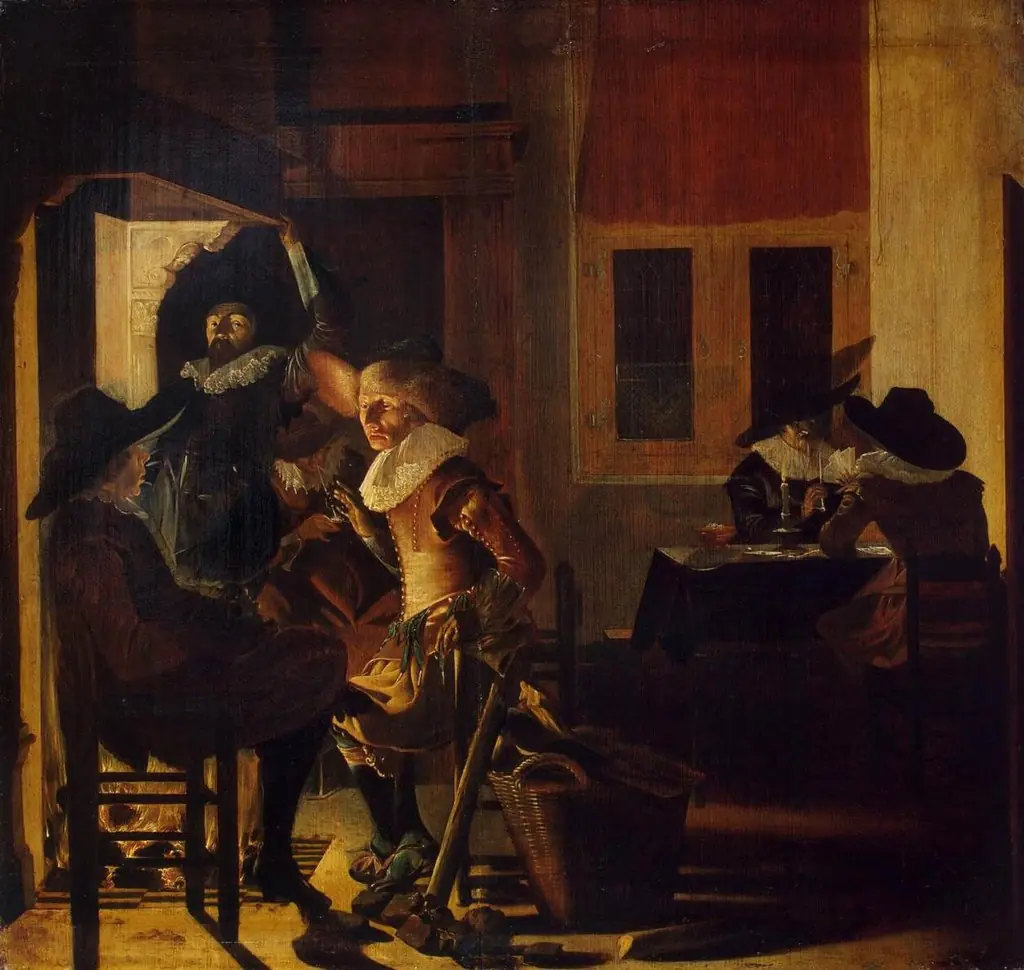
Duyster is better known for scenes of soldiers and tavern life; this domestic celebration offers a rare glimpse into his treatment of civilian rituals. Produced during a period when Dutch artists increasingly documented everyday events, the painting reflects contemporary interest in middle‑class customs, civic identity, and the visual recording of personal milestones.
Artist & collection
Artist
Willem Cornelisz Duyster (1599–1635) was a Dutch Golden Age painter from Amsterdam, best known for his "guardroom scenes" (cortegaarddje), genre paintings showing the military life.