Artwork
Family group with a black man
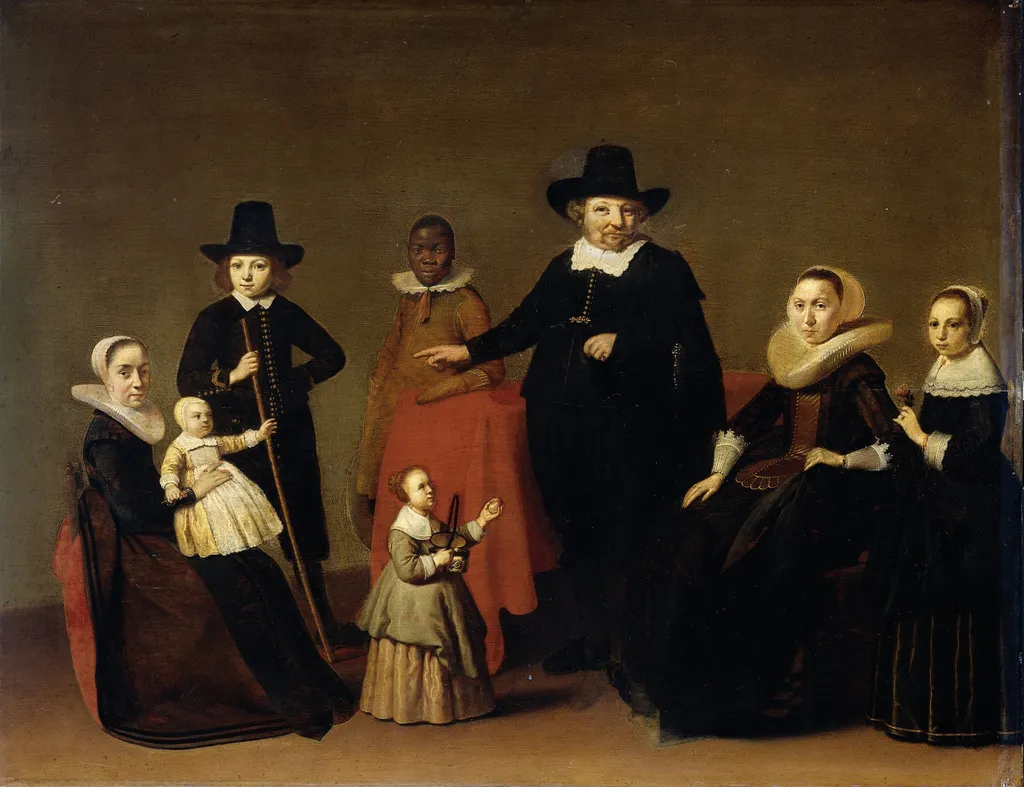
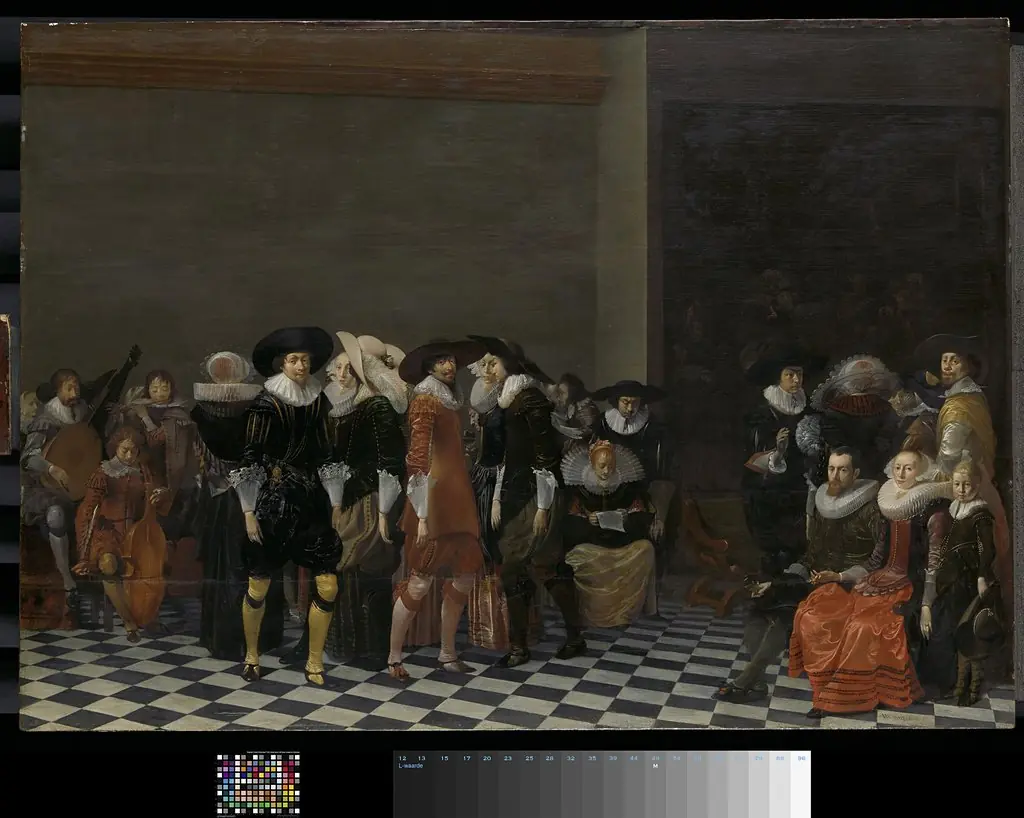
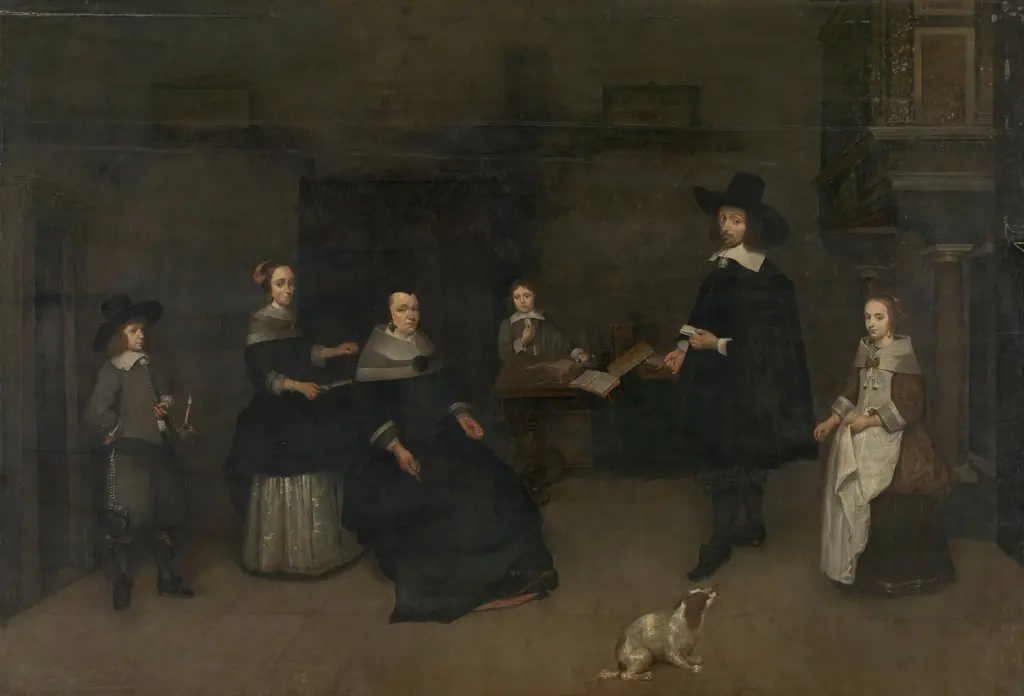
Family group with a black man is an oil painting by the Dutch Golden Age artist Willem Cornelisz Duyster. It dates from 1631 and is held in the collection of the Rijksmuseum.
About this work
Overview
Willem Cornelisz Duyster, an Amsterdam‑born painter active during the Dutch Golden Age, completed the oil on canvas titled *Family group with a black man* in 1631. The work is part of the Rijksmuseum’s collection and exemplifies the artist’s occasional turn from his usual guardroom subjects to domestic portraiture.
Subject & Meaning
The composition presents a household of seven figures gathered in a modest interior.
The composition presents a household of seven figures gathered in a modest interior. Central to the scene is a man in dark attire, hand‑in‑hand with a woman in a red dress, while a young boy with a violin and a clutching infant add generational depth. A Black individual, positioned beside the family, is integrated into the group rather than relegated to a peripheral role, suggesting a nuanced social relationship.
Technique & Style
Duyster employs a restrained palette of deep browns and muted light‑colored collars, creating contrast against the vivid red of the woman’s dress. The figures are rendered with a tight, almost sculptural modeling, and the interior’s dim lighting emphasizes texture in the fabrics and the subtle play of light on faces.
History & Provenance
Since its creation, the painting has remained in Dutch collections, eventually entering the Rijksmuseum’s holdings where it is displayed as part of the museum’s Dutch Golden Age assemblage. Documentation traces its ownership through several 18th‑century Dutch estates before its acquisition by the museum.
Context
At the time of its execution, depictions of Black individuals in Dutch art were rare, and they often appeared as servants or exotic figures. Duyster’s decision to place the Black figure within a family group marks an early instance of such representation, offering insight into the complex social fabric of 17th‑century Amsterdam.
Legacy
The painting is frequently cited in scholarly discussions of race and representation in early modern Europe. Its presence in a major national collection has prompted comparative studies with later Dutch portraits that include Black figures, highlighting evolving attitudes toward inclusion and identity.
Own this work as a print
Artist & collection
Artist
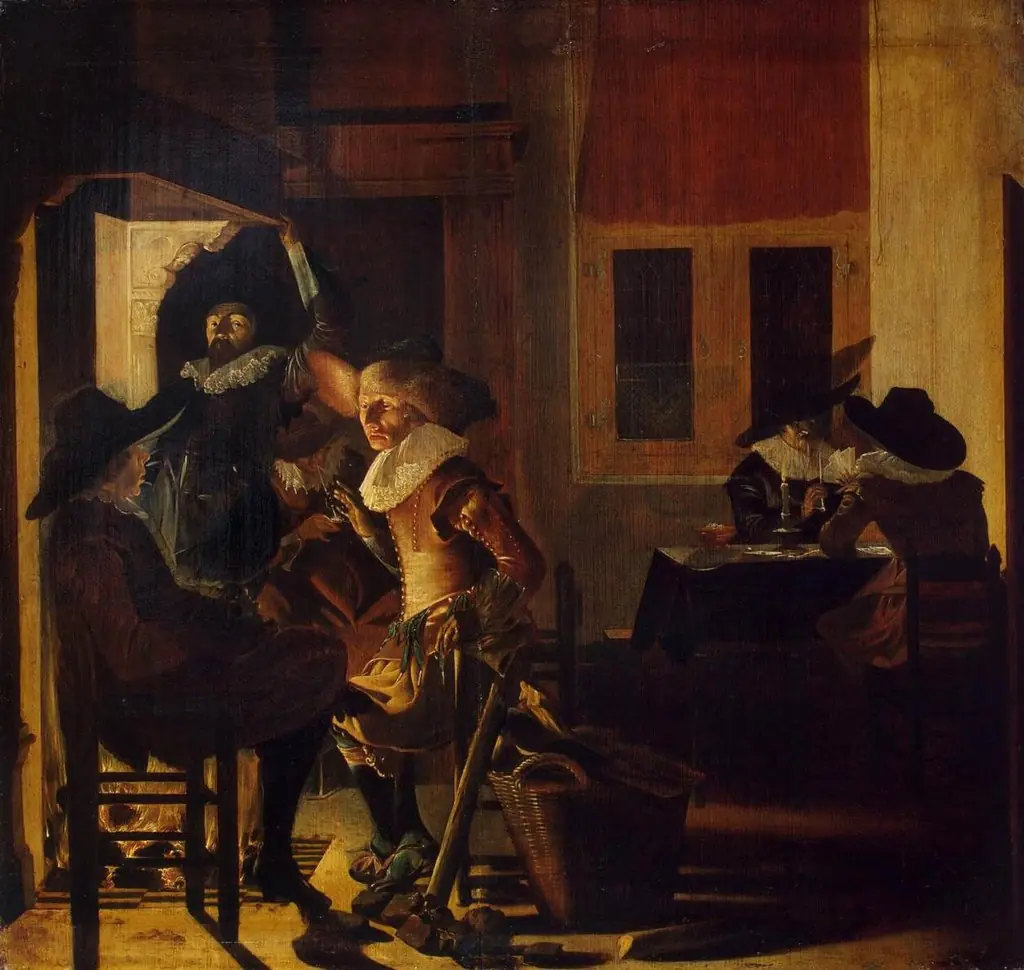
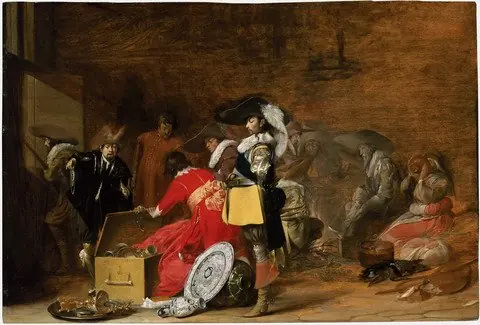
Willem Cornelisz Duyster (1599–1635) was a Dutch Golden Age painter from Amsterdam, best known for his "guardroom scenes" (cortegaarddje), genre paintings showing the military life.