Artwork
the Diederichs family
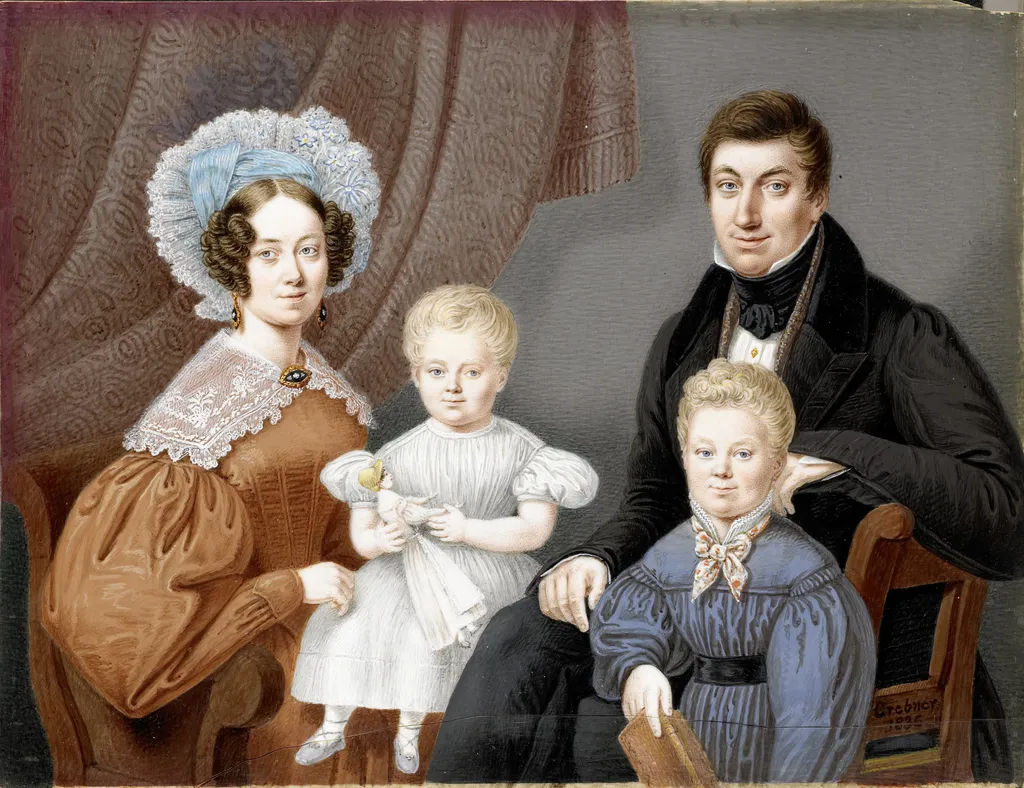
the Diederichs family is an ivory painting by the Biedermeier artist Willem Grebner. It dates from 1836 and is held in the collection of the Rijksmuseum.
About this work
Overview
The Diederichs family portrait, painted by Willem Grebner in 1836, is a rare example of a work executed on ivory. The piece depicts a family of four in a composed setting, currently housed at the Rijksmuseum.
Subject & Meaning
The portrait showcases a serene family scene with a woman, two children, and a man. The woman wears a brown dress with lace collar and a prominent white hat, while the children are dressed in white and dark blue with a bow, respectively. The man, in a black suit, stands behind. The arrangement emphasizes familial unity.
Technique & Style
Grebner utilized the challenging medium of ivory, akin to carving on bone, to create a detailed portrait. The background is simplified to a patterned wall, directing focus towards the sitters. The style bears resemblance to chiaroscuro, though this specific influence is not explicitly confirmed in the artwork's context.
History & Provenance
Created in 1836 by Willem Grebner, the portrait is part of the Rijksmuseum's collection. Specific details about its commission, the sitters' identities beyond their family name, and its history before entering the museum are not provided.
Context
Painting on ivory was an uncommon practice due to the medium's difficulty. Grebner's choice reflects a desire for uniqueness or a specific commission requirement. The portrait's style and composition align with 19th-century European portrait traditions, emphasizing domestic harmony.
Artist & collection

 A Family Group
 Hugh Hughes, ei wraig a'i blentyn
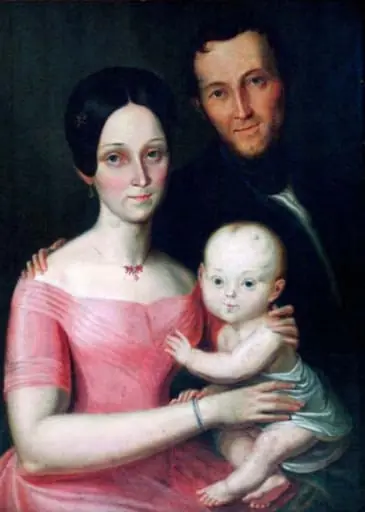 Familie cu copil
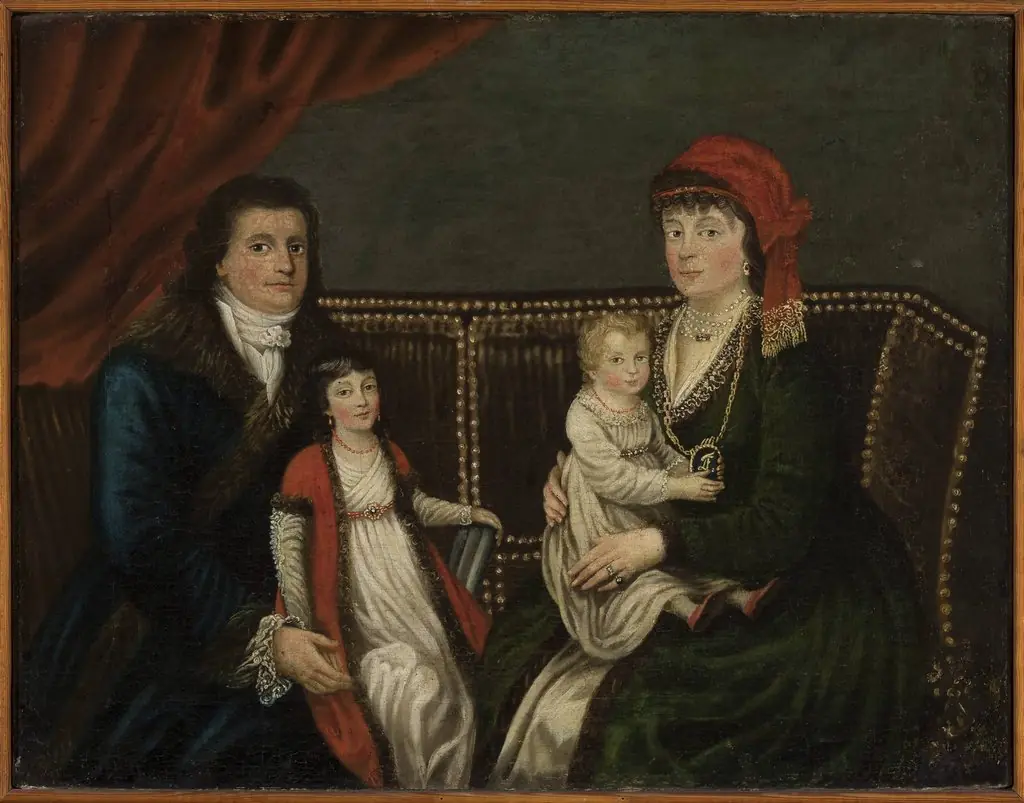 Portrait of the Lafontaine family, Leopold (1756–1812), surgeon, with his wife Teresa née Korneli (1768–1827) and daughters, Zofia (?–1831) and Wiktoria (1800–1849)
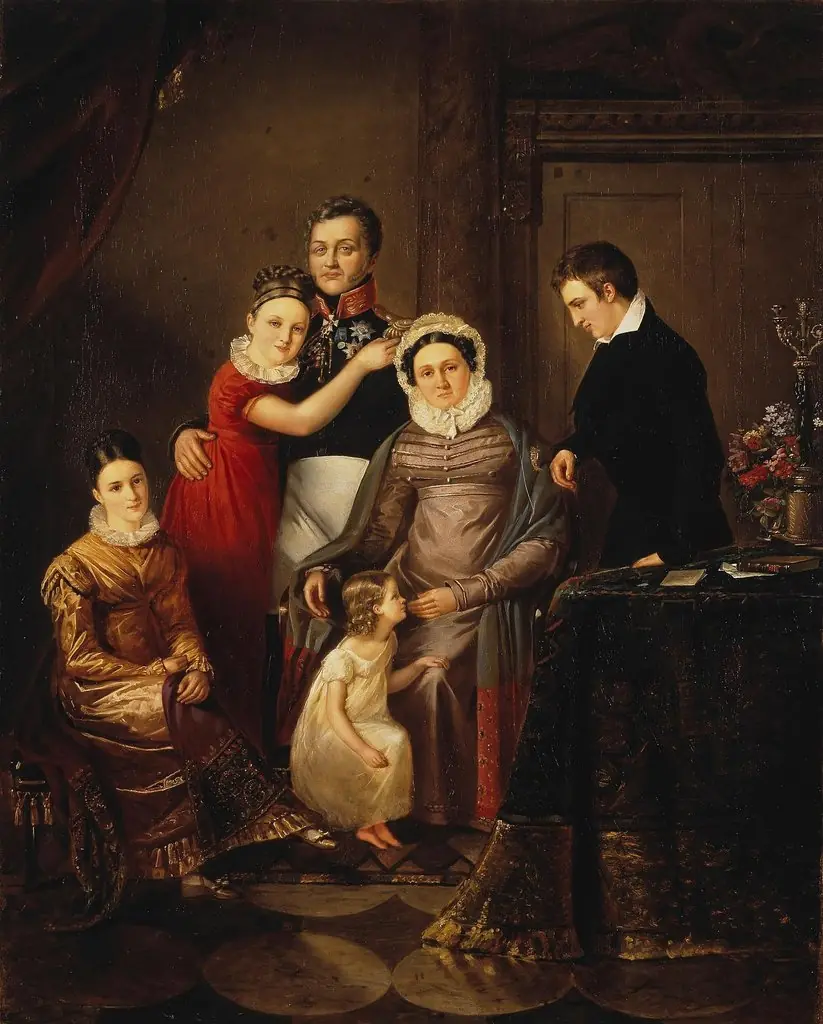 Portrait of Count Nikolai Repnin-Volkonsky with His Family
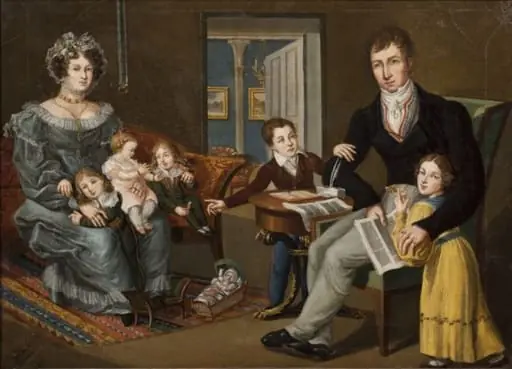 Familia unui librar sas în interior Biedermeier
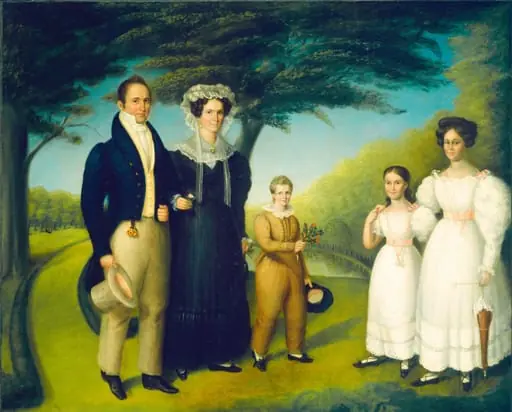 Dr. John Safford and Family
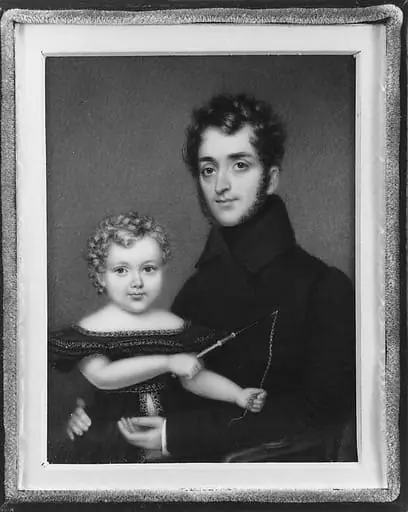 Ferdinand Sands and his Son Joseph
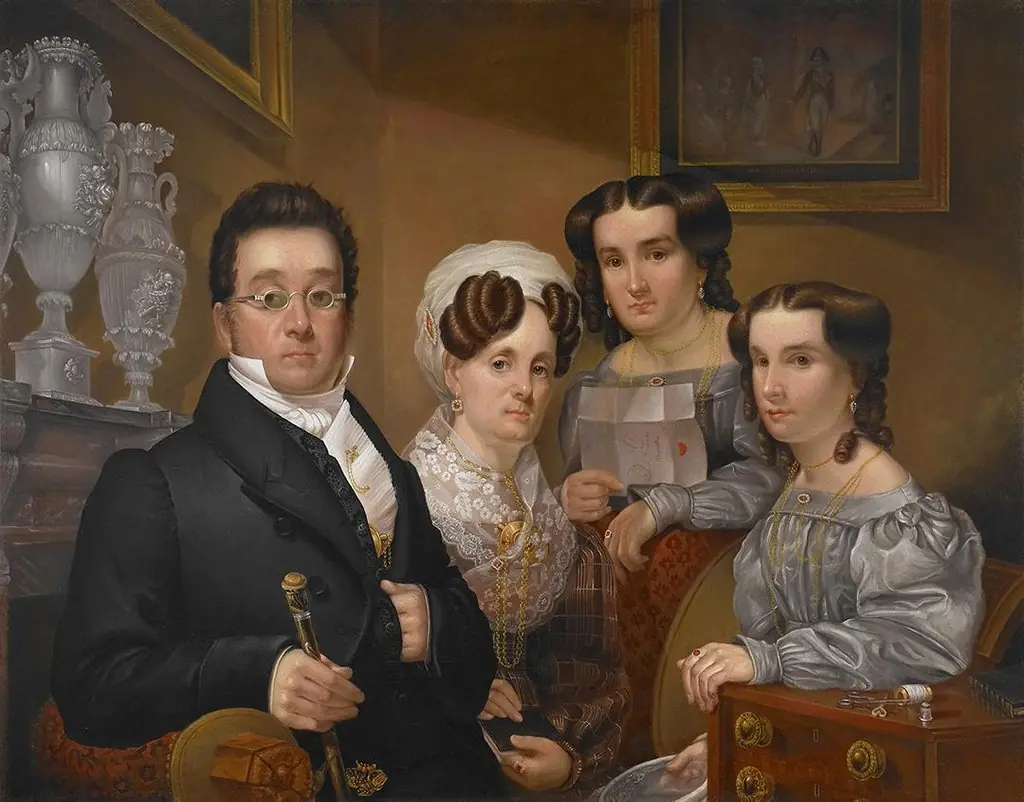 Samuel Beals Thomas, with His Wife, Sarah Kellogg Thomas, and Their Two Daughters, Abigail and Pauline
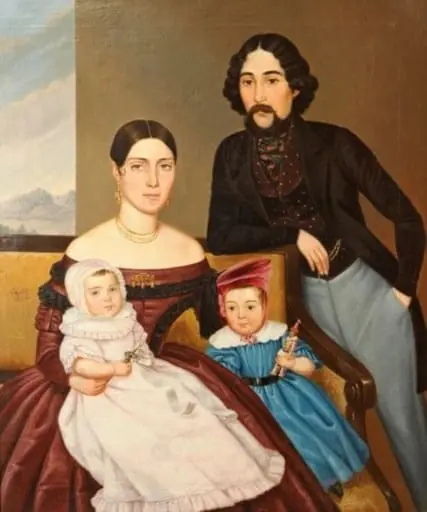 Portret de familie