Artwork
Familie cu copil
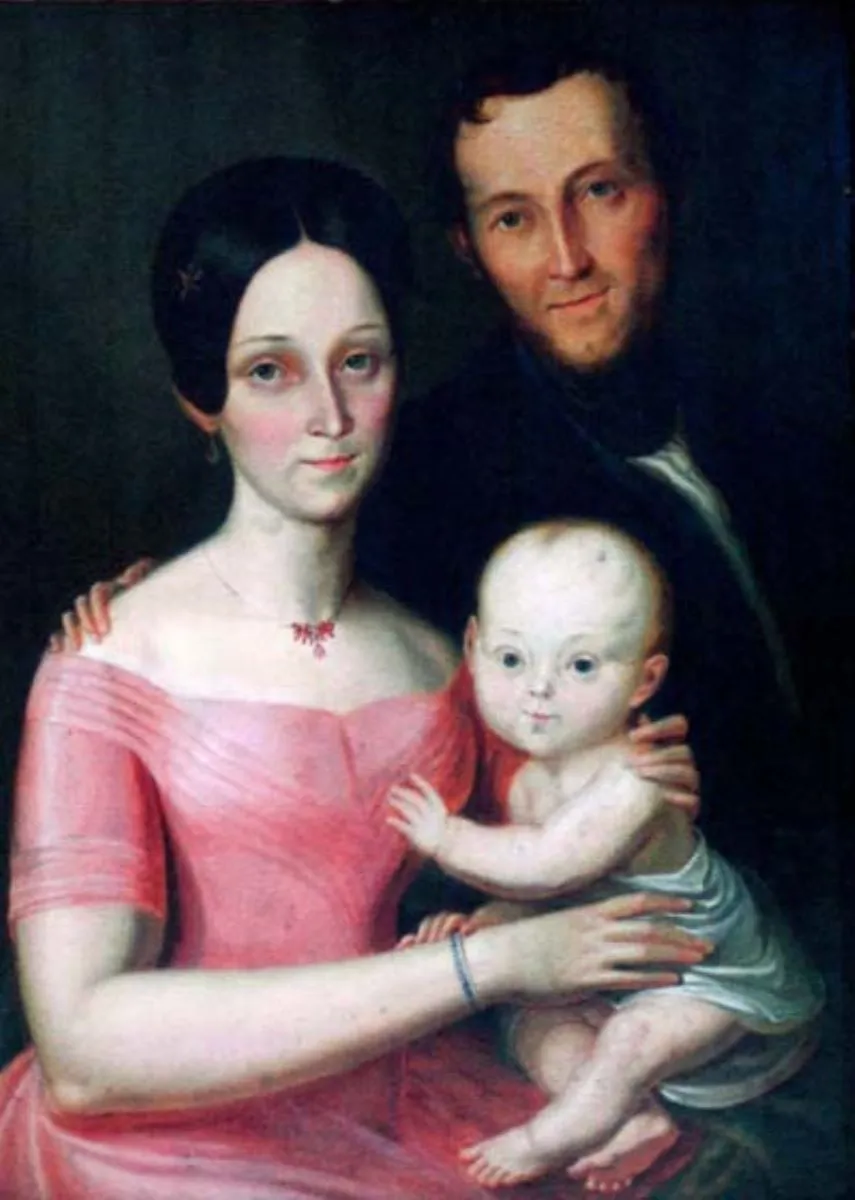
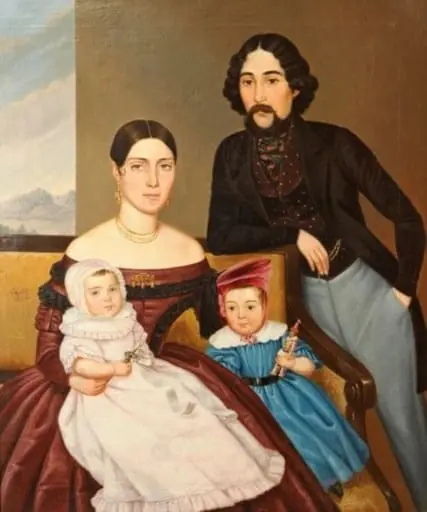
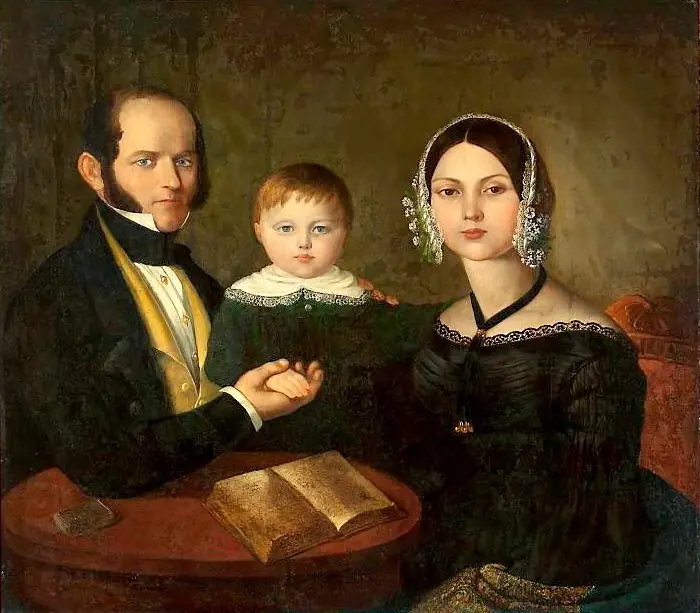
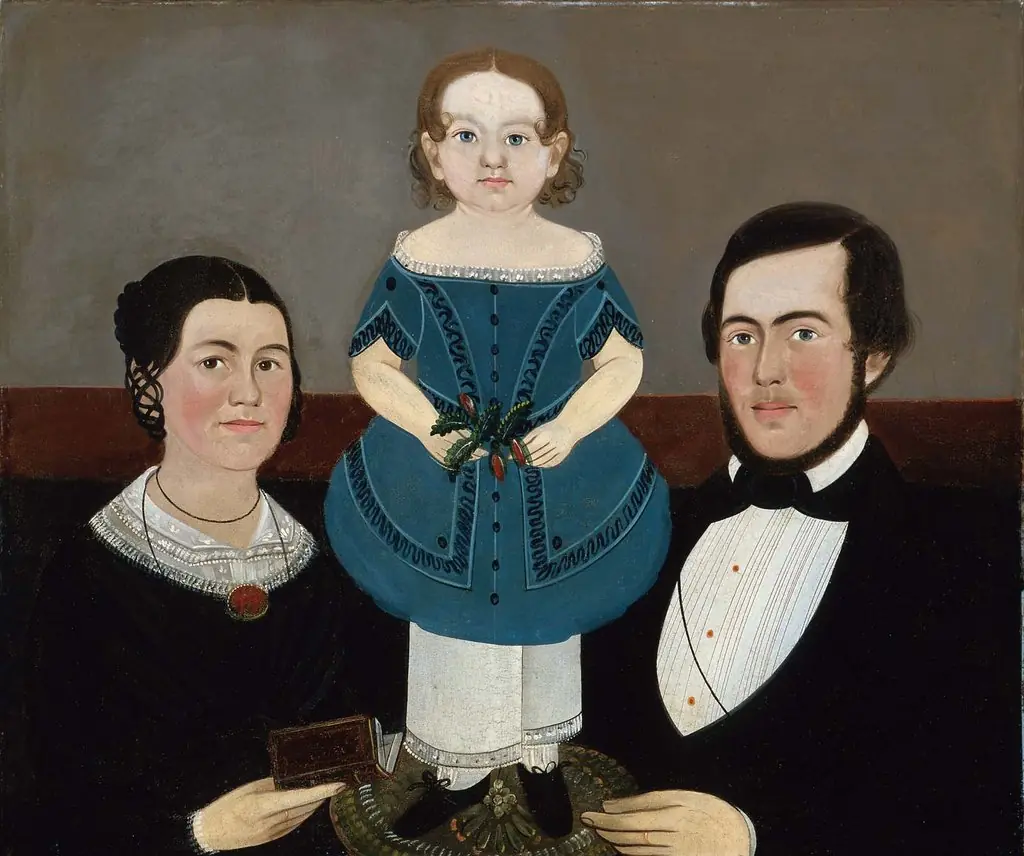
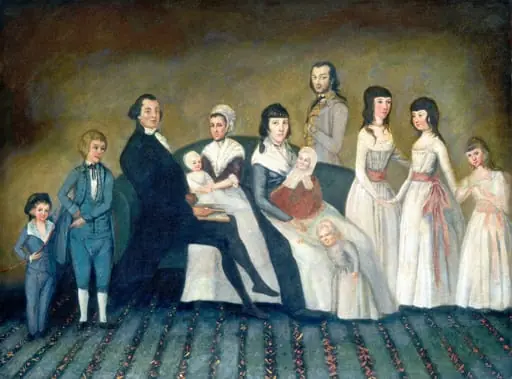
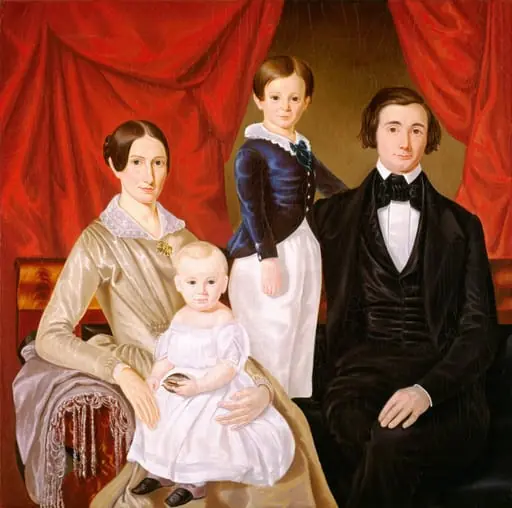
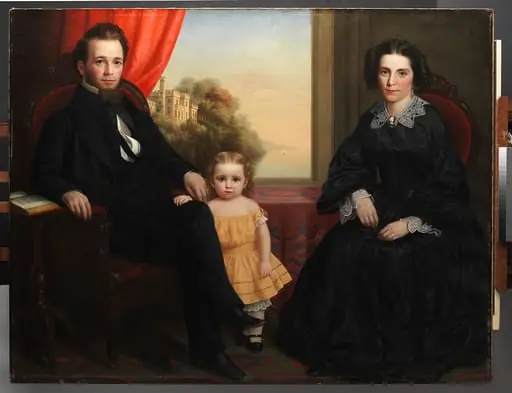
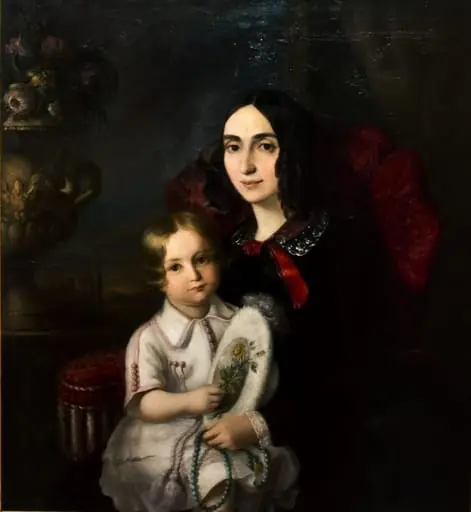
Familie cu copil is an unspecified painting by Unknown. It dates from 1850 and is held in the collection of the Romanian Academy in Bucharest. This intimate portrait depicts a mother holding her infant, with the father standing behind them in a protective gesture.
About this work
Overview
This intimate portrait depicts a mother holding her infant, with the father standing behind them in a protective gesture. The composition is tightly framed, focusing on the three figures against a deep, unbroken background. The absence of contextual details emphasizes the quiet closeness of the moment, drawing attention to the physical and emotional connection between the family members.
Subject & Meaning
The scene captures a private, domestic moment rather than a formal portrait. The mother’s gentle hold and the father’s restrained touch suggest tenderness and stability. The child’s vulnerability, emphasized by bare arms and smooth skin, contrasts with the adults’ composed postures, implying care and continuity within the family unit without overt symbolism.
Technique & Style
The artist employs subtle chiaroscuro to model the figures, using soft transitions between light and shadow to define form without harsh contrasts. The woman’s pale complexion and the baby’s rounded limbs are rendered with delicate gradations, while the dark background enhances their presence. Clothing and hair are simplified, prioritizing emotional resonance over ornamental detail.
History & Provenance
The work’s origin and early ownership remain undocumented. Its style suggests a late 19th or early 20th-century European domestic portrait, possibly created by an artist working outside major academic circles. The lack of signature or inscription has limited tracing its path through collections, though its preservation indicates it was valued within a private context.
Context
During the period when this work likely originated, intimate family scenes gained popularity among middle-class patrons seeking personal, rather than heroic or religious, imagery. Artists often turned to quiet domesticity as a counterpoint to industrialization, valuing emotional authenticity over grand narrative — this piece reflects that shift in cultural priorities.
Legacy
Though not widely exhibited or reproduced, the painting contributes to a broader tradition of unadorned familial representation in Western art. Its quiet dignity and restrained technique resonate with later 20th-century realist works that prioritize emotional truth over spectacle, offering a quiet counterpoint to more dramatic portrayals of family life.
Artist & collection
 Domestic Scene
 Giacomo and Cardinal Marco, investing Andrea, Abbot of San Zeno, with his Benefice
 The Nymph of Fontainebleau
 Portrait of a Woman
 Madonna and Child with Saints in the Enclosed Garden
 Venus and Minerva
 Family Group of Four on Sofa
 Wall painting from Room H of the Villa of P. Fannius Synistor at Boscoreale