Artwork
After the Wedding
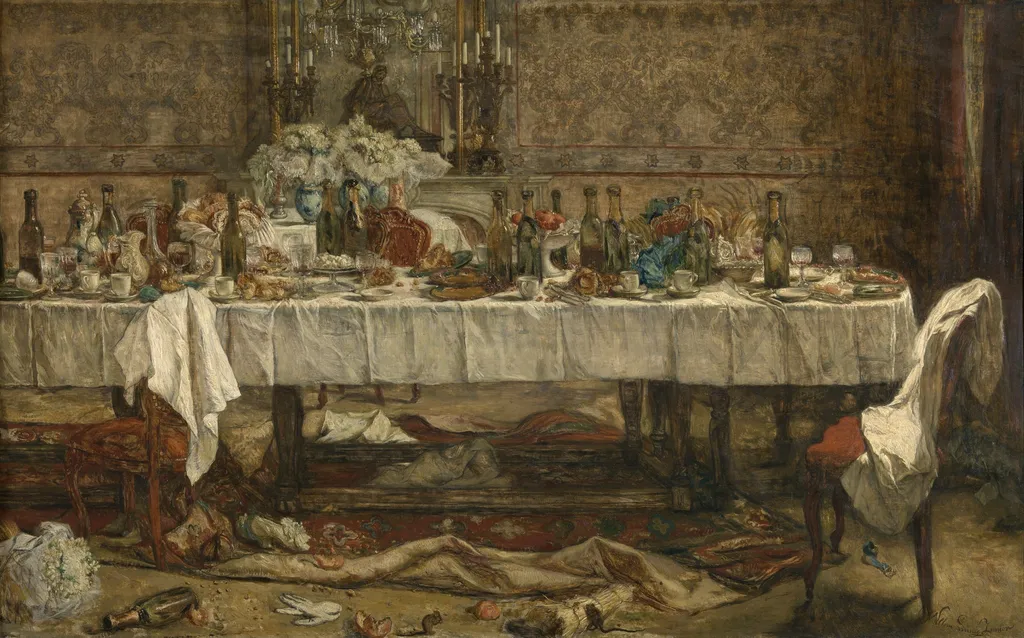
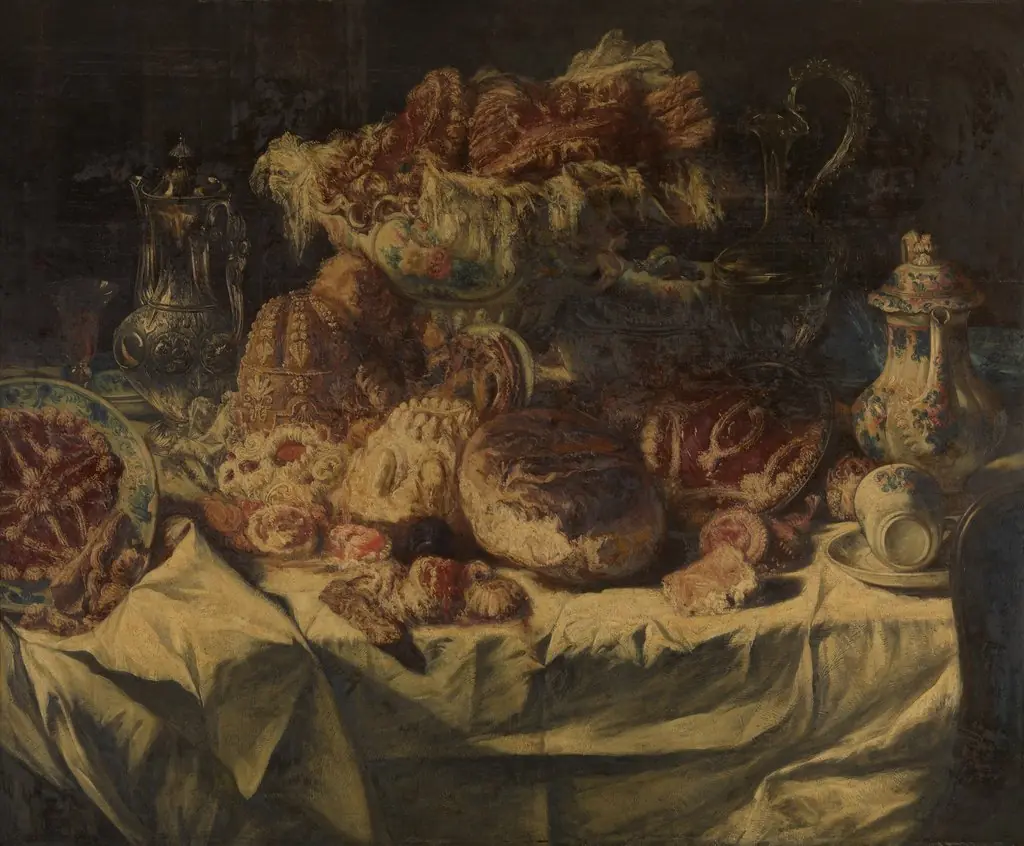
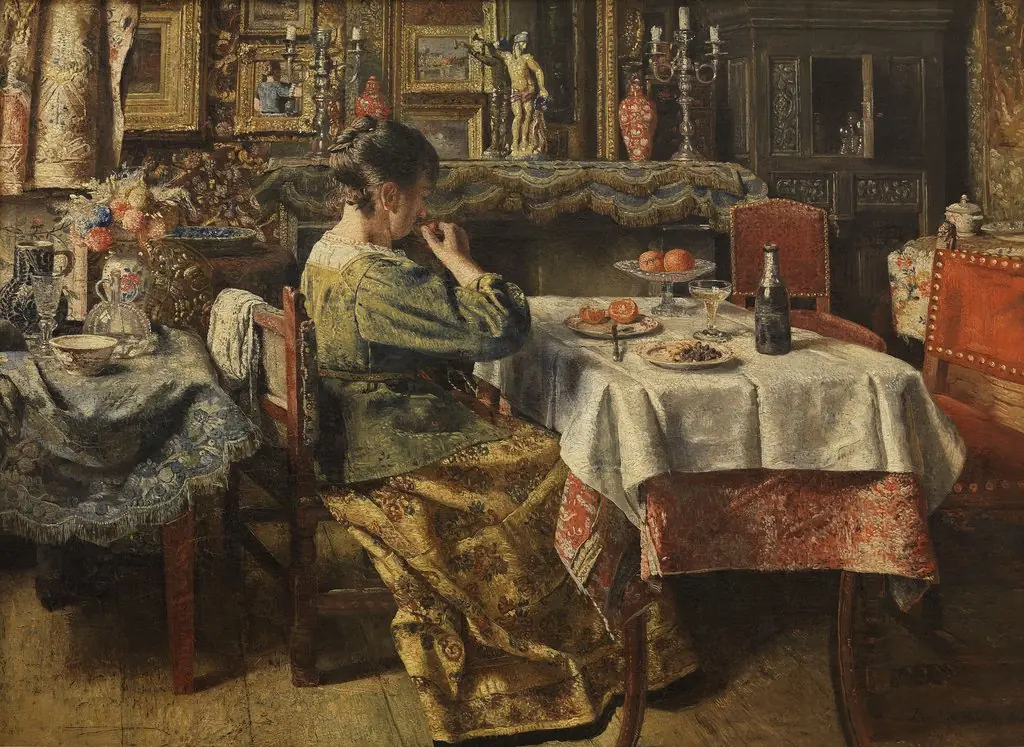
After the Wedding is an oil painting by the Impressionist artist Willem Linnig Junior. It dates from 1875 and is held in the collection of the Royal Museum of Fine Arts Antwerp.
About this work
There's a long table with a white tablecloth, and it's covered in empty bottles, dirty dishes, and food scraps.
You're looking at a painting of a messy room after a big party. There's a long table with a white tablecloth, and it's covered in empty bottles, dirty dishes, and food scraps. There are chairs around the table, and some of them are knocked over. The floor is dirty, and there are more bottles and food scraps all over it.
The painting is very detailed, and you can see all the different textures of the things in the room. The tablecloth is wrinkled, and the bottles are shiny. The food scraps on the floor look like they've been trampled on.
The painting is called "After the Wedding" by Willem Linnig Junior. It's an oil painting from 1875, and it's held at the Royal Museum of Fine Arts Antwerp. If you want to see more paintings like this, you should check out the work of Willem Linnig Junior.
Overview
After the Wedding is a 19th-century oil painting depicting a scene of post-celebratory disarray. Created in 1875, it is held in the Royal Museum of Fine Arts Antwerp.
Subject & Meaning
The painting shows a cluttered room, with a long table covered in remnants of a feast, surrounded by overturned chairs, and a floor littered with debris. The scene is suggestive of a recent wedding celebration, capturing the aftermath rather than the event itself.
Technique & Style
Executed in oil paint, the work showcases Willem Linnig the Younger's attention to detail and texture, rendering the wrinkled tablecloth, shiny bottles, and trampled food scraps with realism. While associated with the Impressionist movement, the painting's focus on detail aligns with its realist tendencies.
History & Provenance
Willem Linnig the Younger, a Belgian painter and engraver, created After the Wedding in 1875. Linnig was known for his versatility in history and genre scenes, landscapes, and still lifes, and also taught at the Fine Arts School of Weimar.
Own this work as a print
Artist & collection
Artist
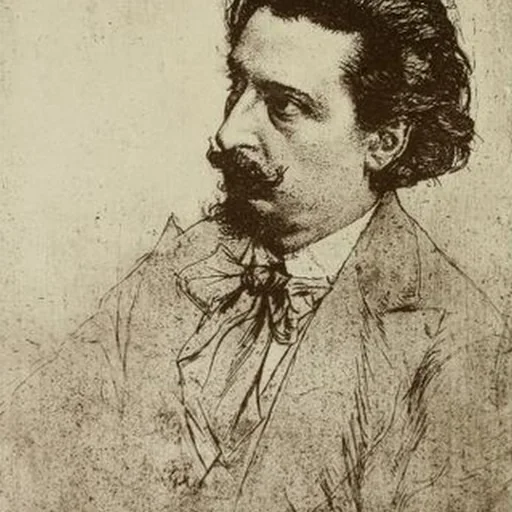
Willem Linnig the Younger (20 August 1842 in Antwerp – 3 September 1890 in Antwerp) was a Belgian painter and engraver who is best known for his history and genre scenes, landscapes and still lifes.

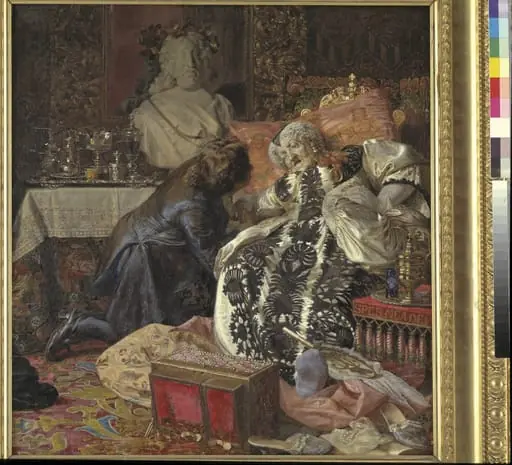 The Death of Queen Sophie Amalie
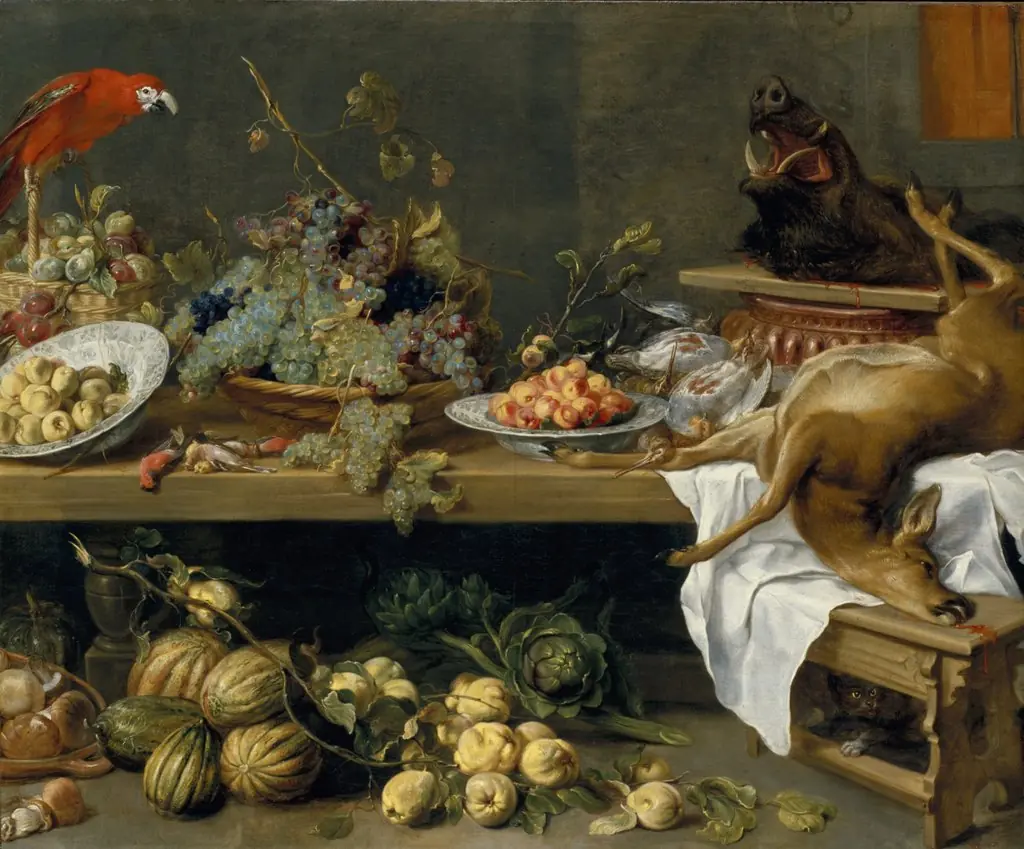 Still Life with Fruit, Vegetables and Dead Game
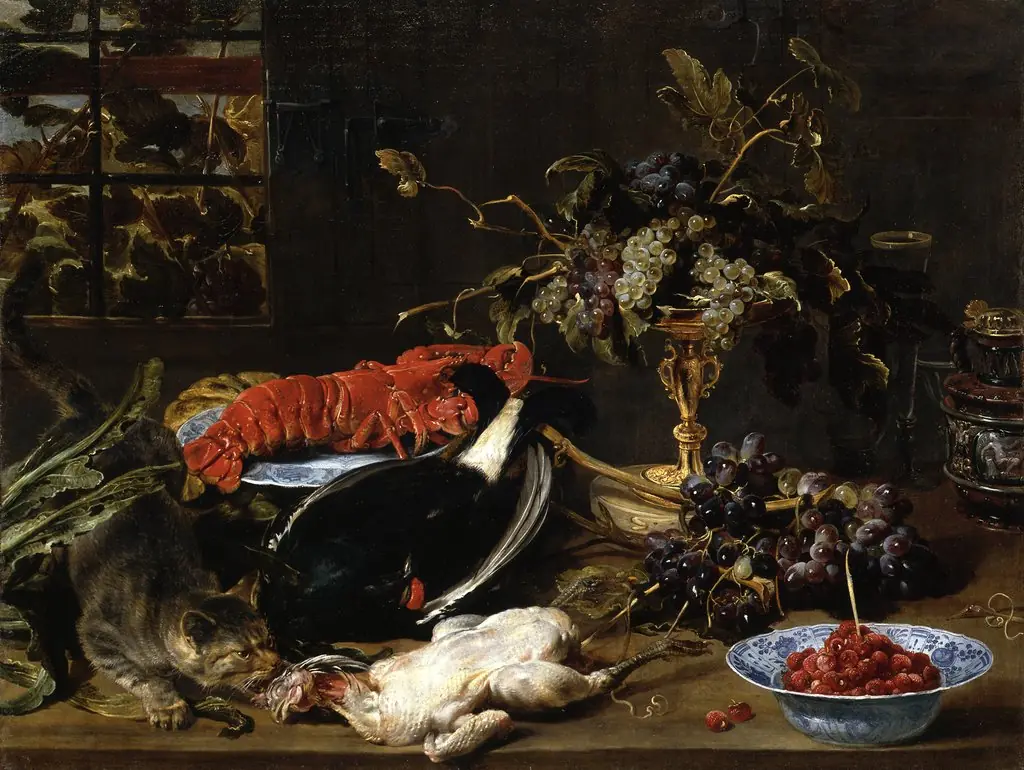 Still Life with Lobster and Fruits
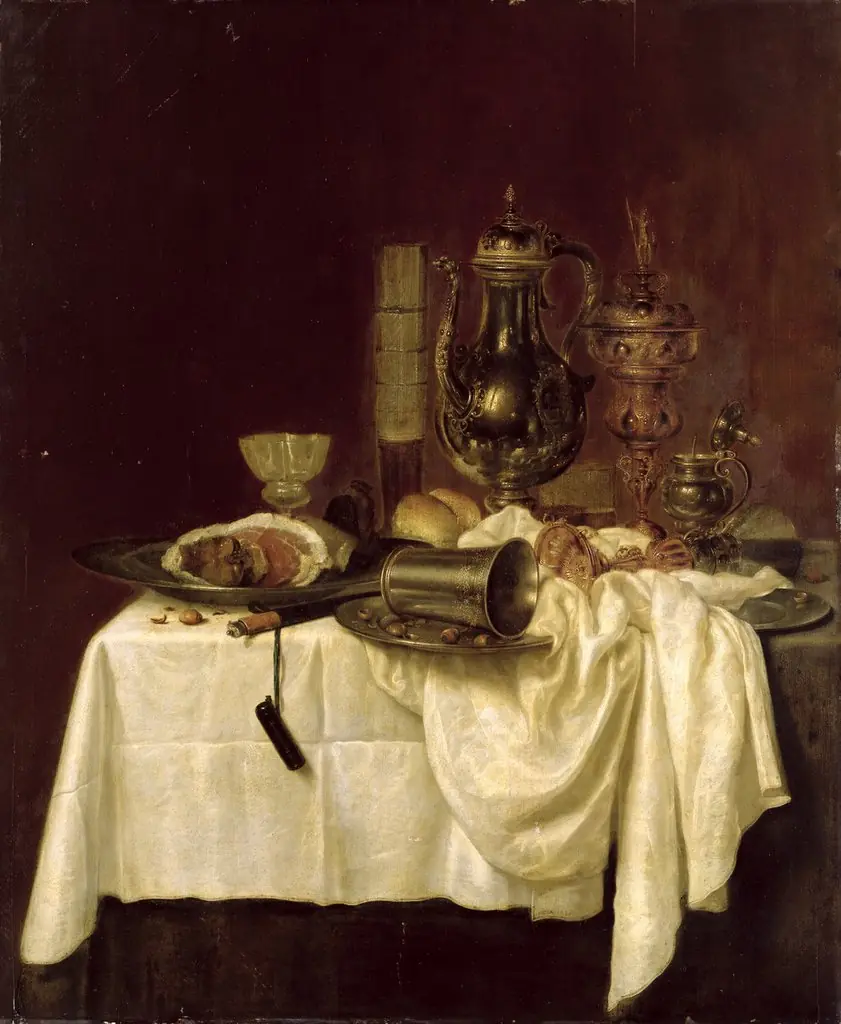 Still life with ham, decanter, columbine cup and passglass on a laid table
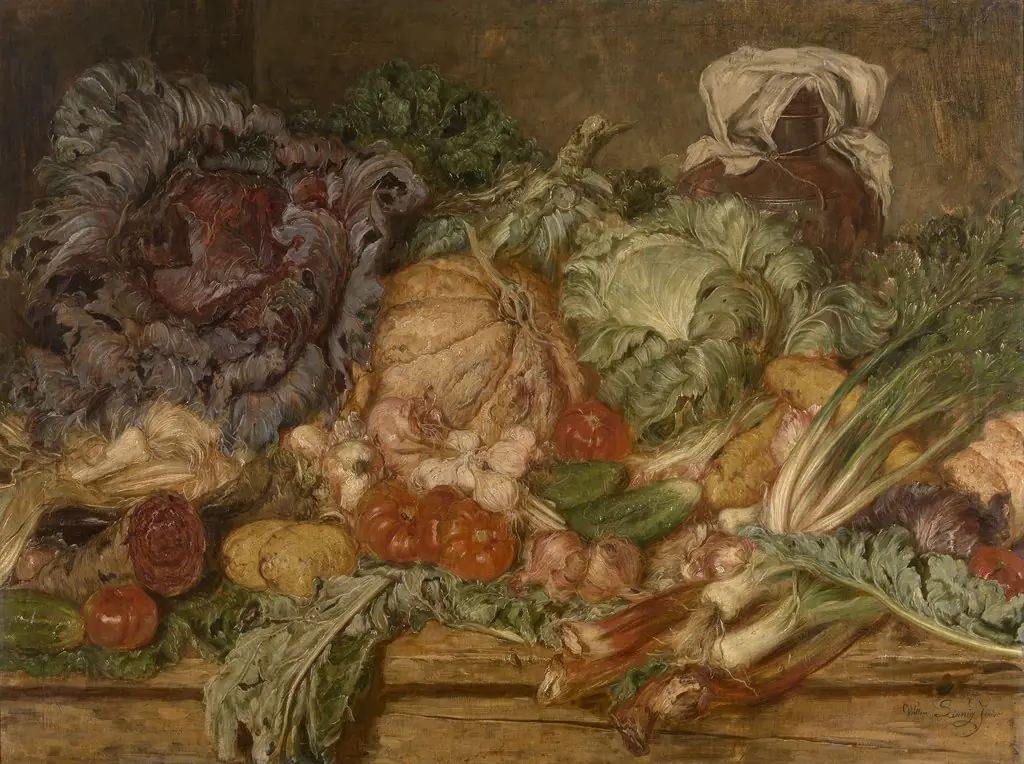 Vegetables
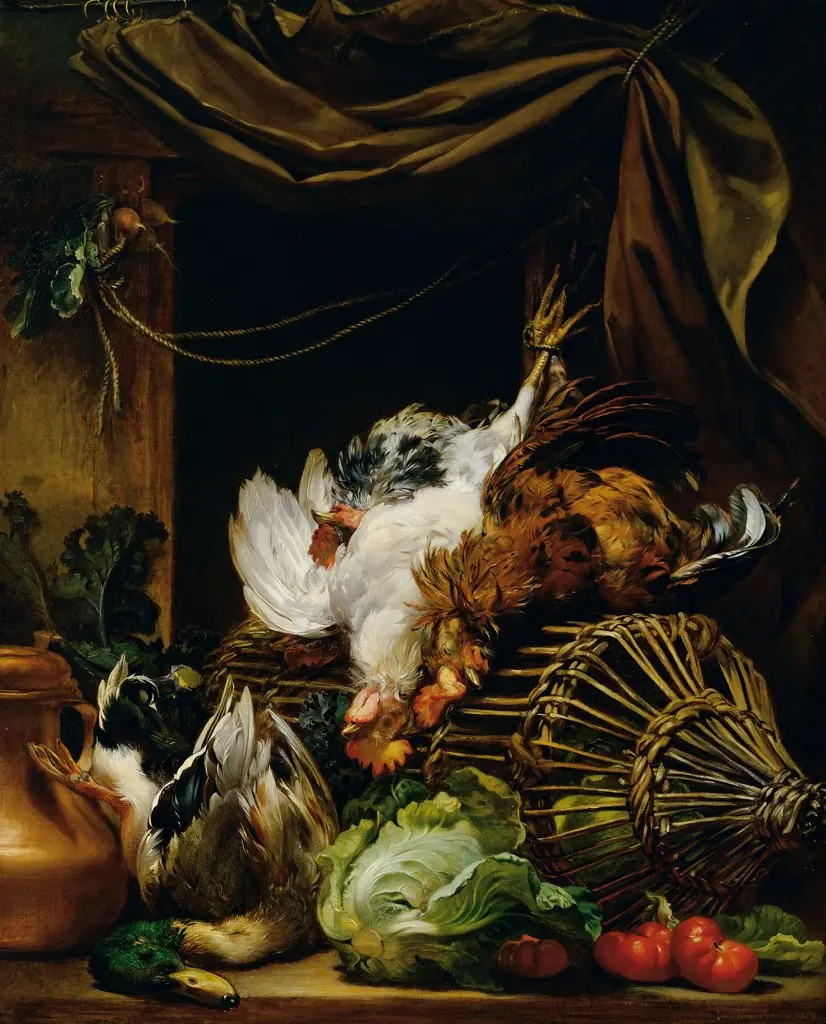 Still Life
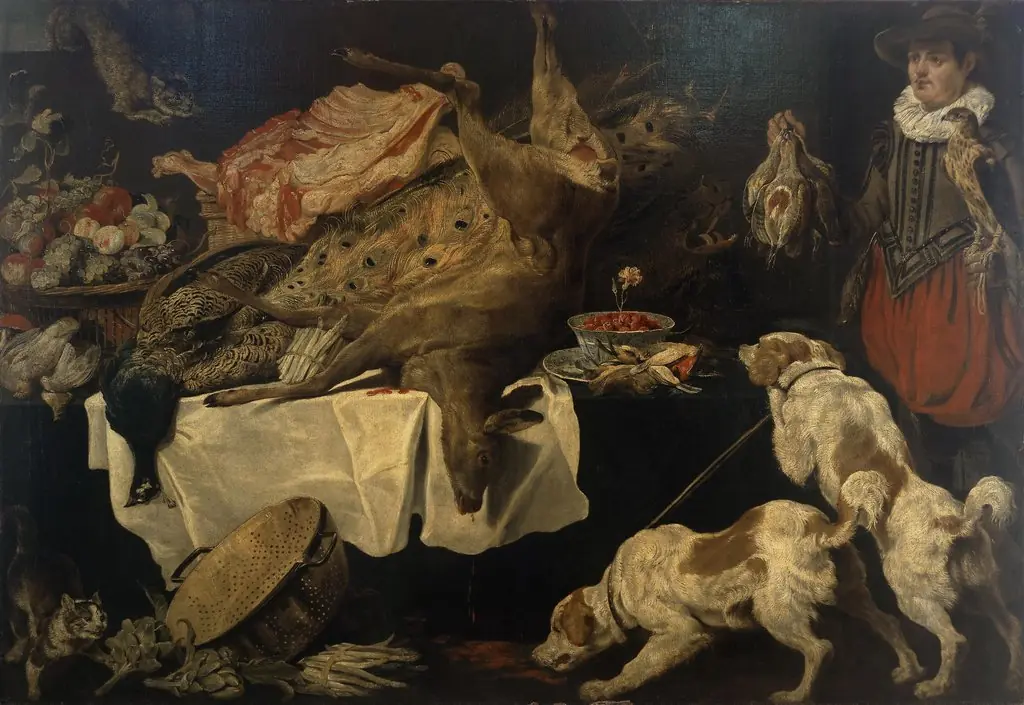 Hunter and Dogs by a Table with Dead Game and Fruit
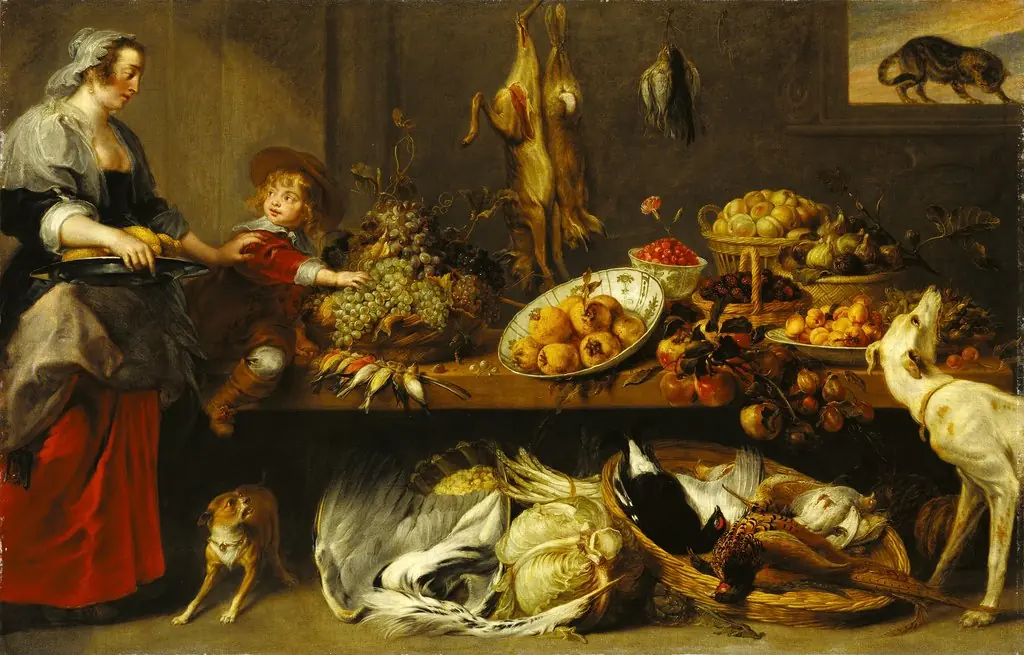 Kitchen Still Life with a Maid and Young Boy
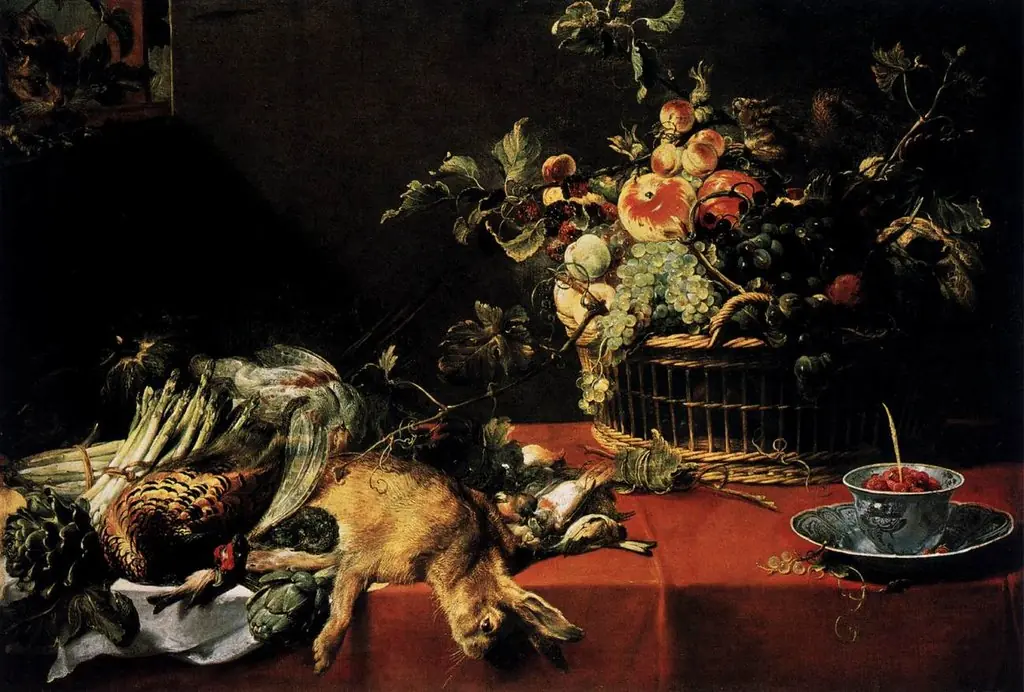 A still life with game, vegetables, fruit and a squirrel on a table. with a cat in a window upper left
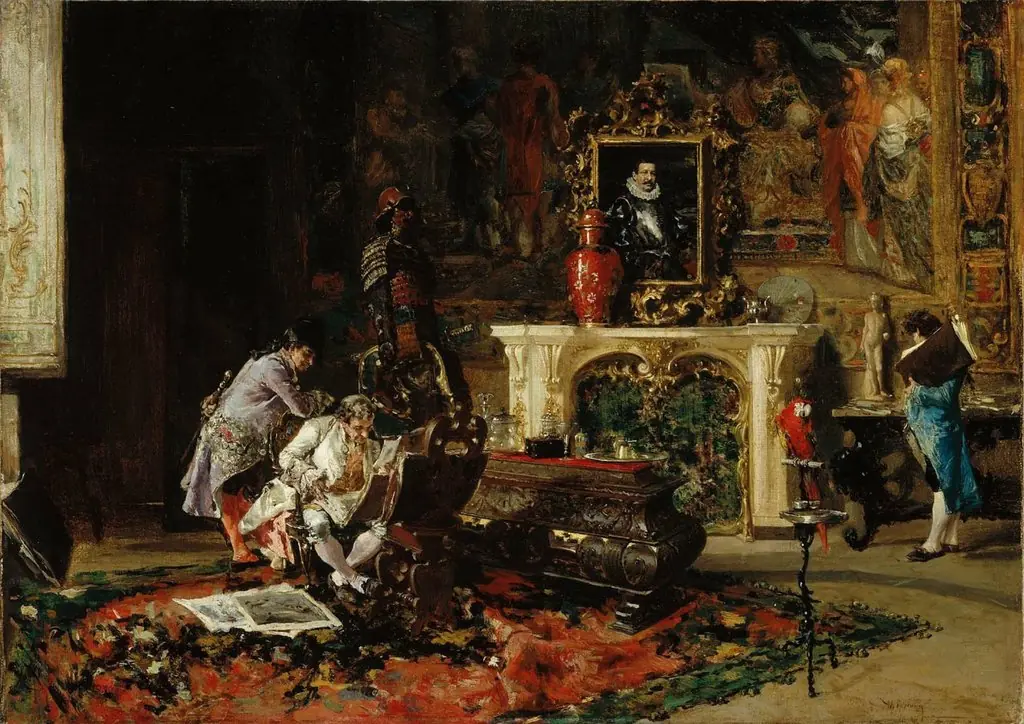 Antiquaries
 The Meal