Artwork
Still Life with Fish
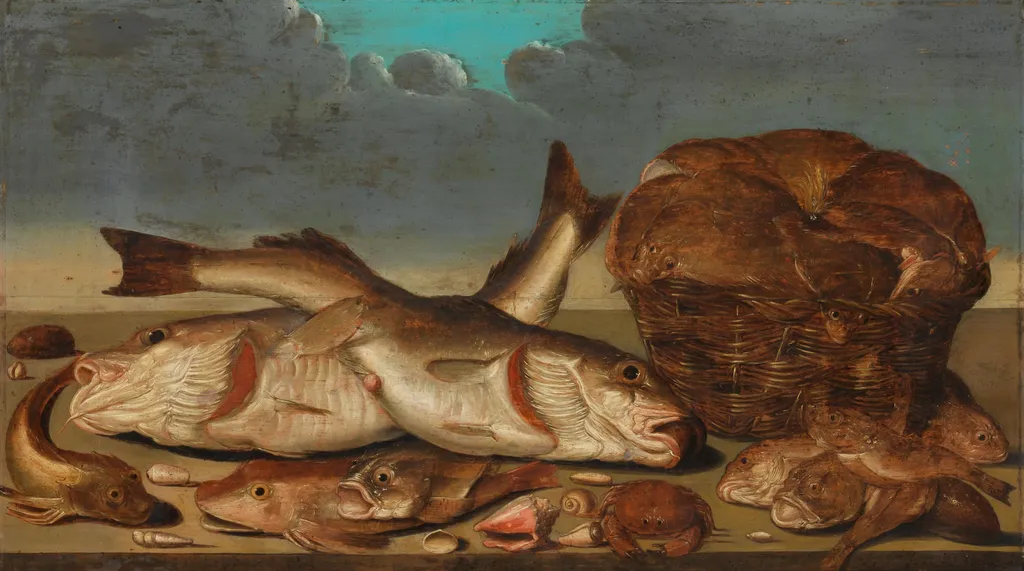
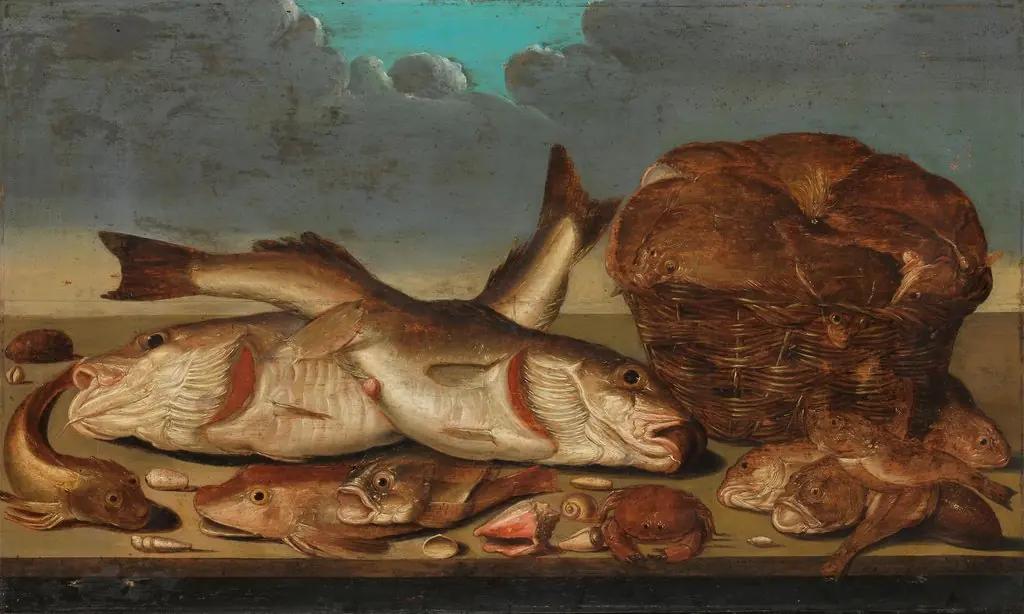
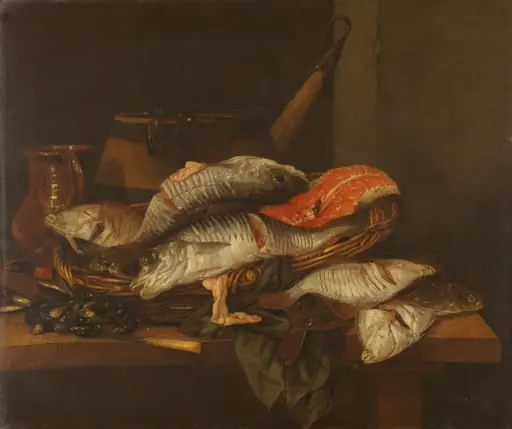
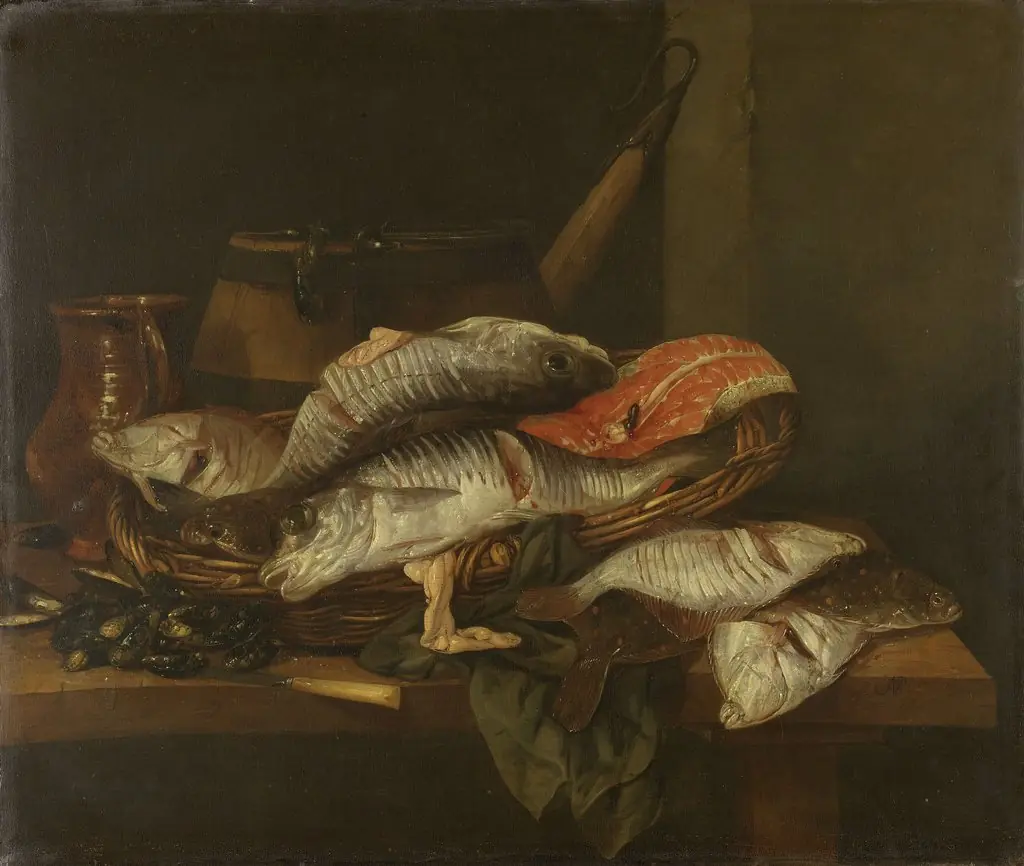
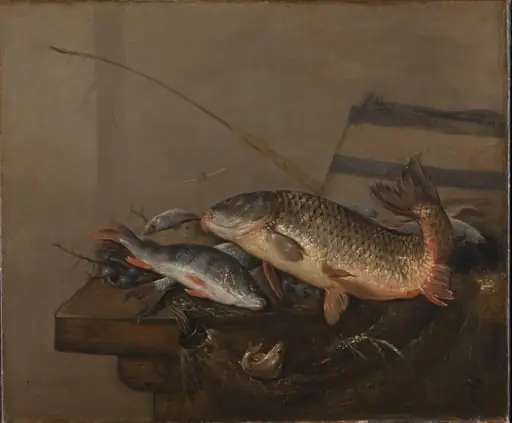
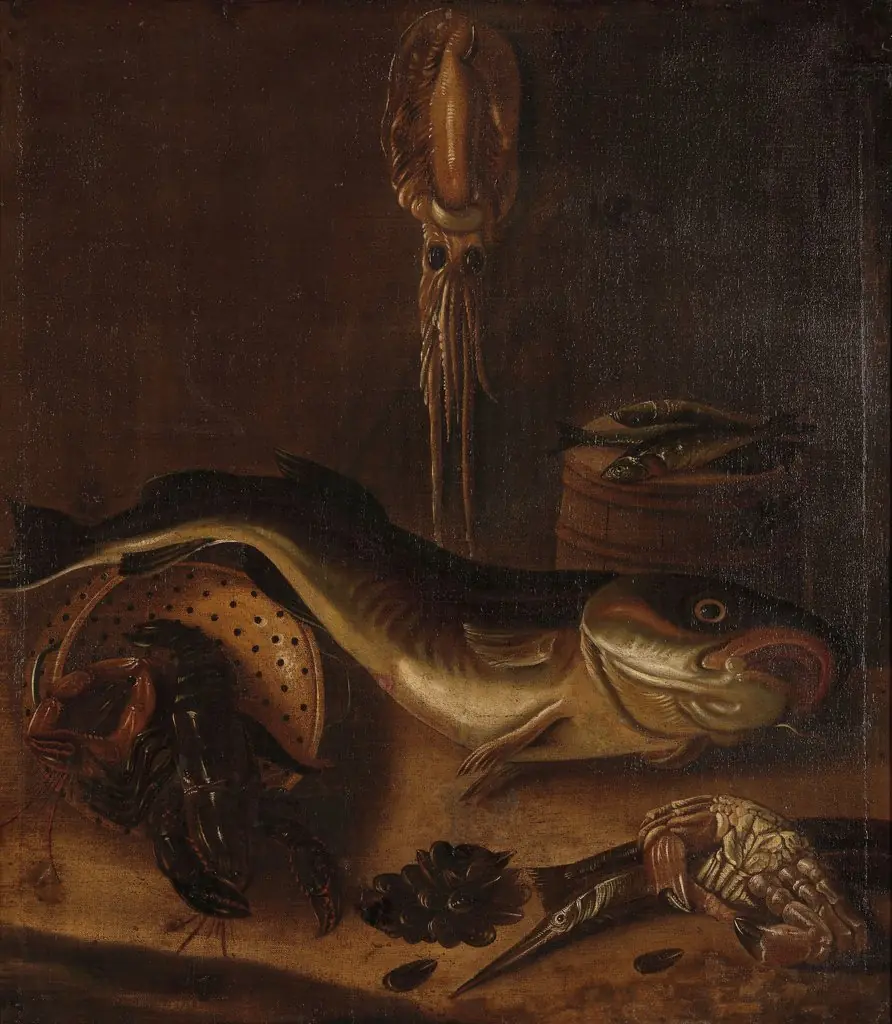
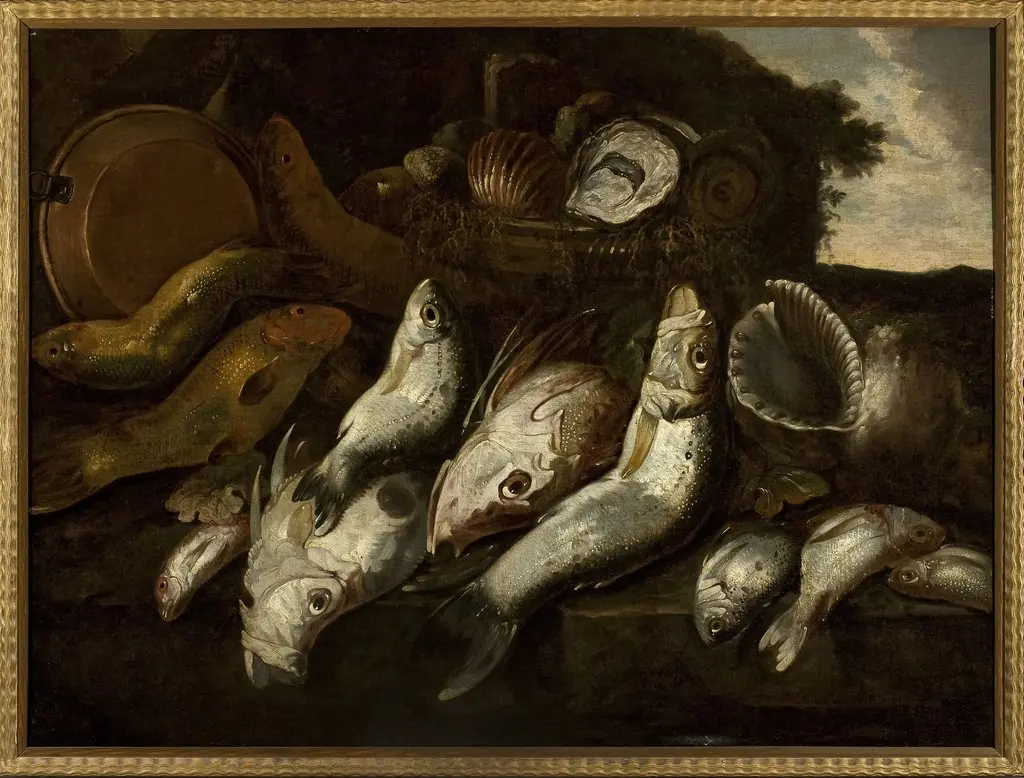
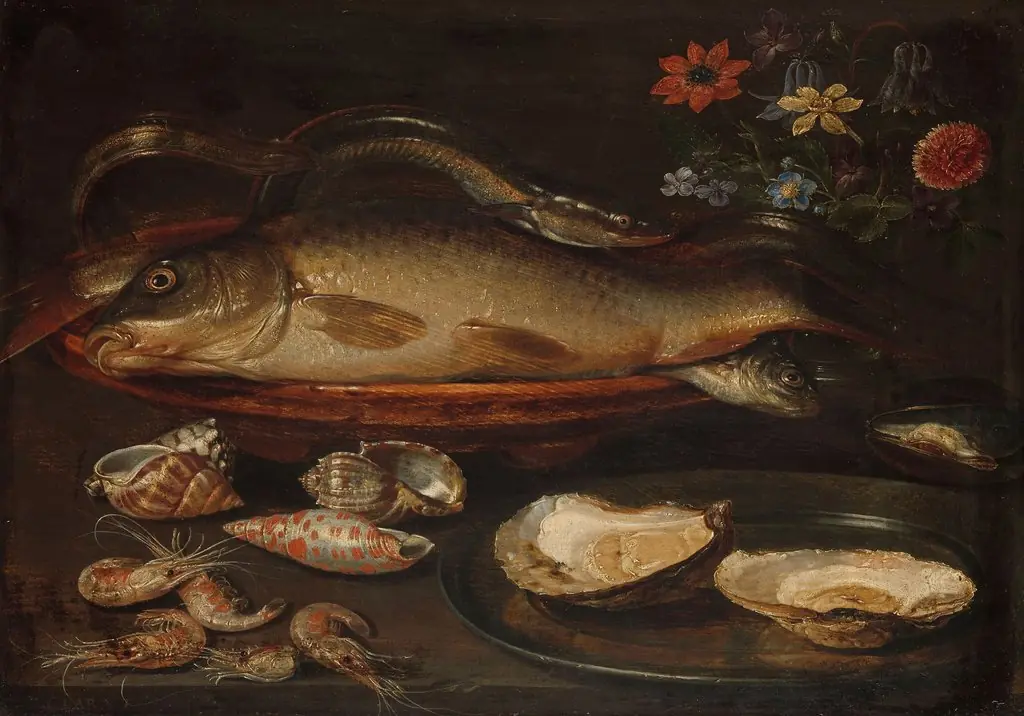
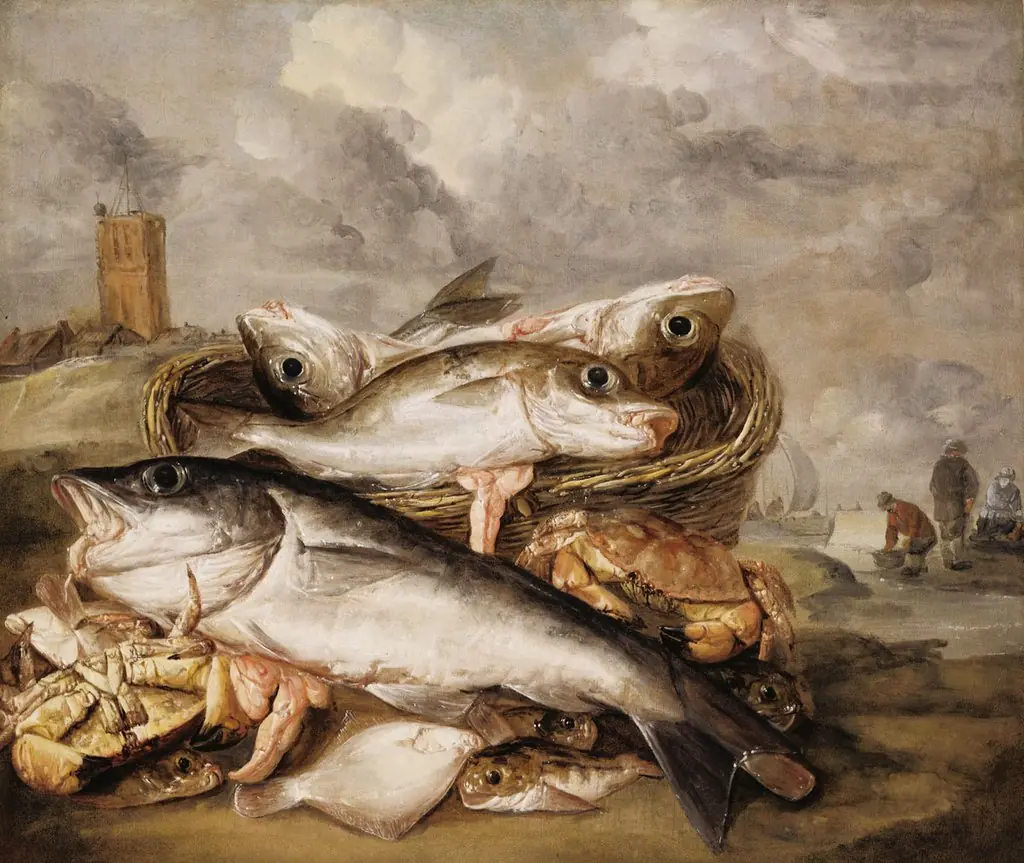
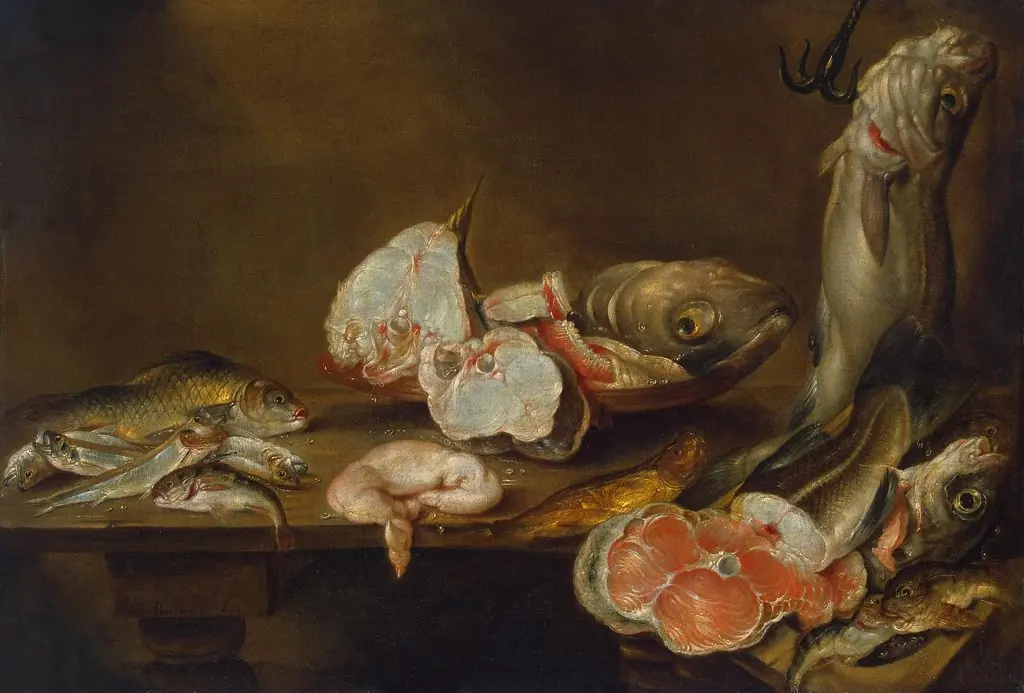
Still Life with Fish is an unspecified painting by the Dutch Golden Age artist Willem Ormea. It dates from 1638 and is held in the collection of the Rijksmuseum. This early Dutch still life depicts a wooden tray arranged with fresh fish, shells, and a crab, alongside a basket of flatfish to the right.
About this work
Overview
Painted during the formative years of the genre, it reflects a shift from religious or mythological themes to the quiet observation of domestic fare.
This early Dutch still life depicts a wooden tray arranged with fresh fish, shells, and a crab, alongside a basket of flatfish to the right. The background features softly rendered clouds, creating a subtle tension between the tangible objects and the ethereal sky. Painted during the formative years of the genre, it reflects a shift from religious or mythological themes to the quiet observation of domestic fare.
Subject & Meaning
The composition centers on seafood gathered from the coast, suggesting themes of abundance and transience. The inclusion of shells and crab implies maritime trade and regional identity. The clouds above may hint at impermanence or divine oversight, common in Dutch moralizing still lifes. The arrangement avoids grandeur, instead honoring the ordinary as worthy of contemplation.
Technique & Style
The fish and shells are rendered with precise detail, capturing scales, textures, and wet surfaces through careful brushwork. In contrast, the background clouds are loosely painted, creating a hazy, atmospheric effect. This contrast between sharp foreground and soft background suggests an experimental approach to spatial depth and light, predating the full development of chiaroscuro in Dutch painting.
History & Provenance
Created in the late 16th or early 17th century, this work belongs to the earliest phase of Dutch still-life painting. It likely originated in a coastal city such as Haarlem or Amsterdam, where fishermen and markets provided abundant subject matter. Its survival is notable, as many early works of this type were lost or repainted over time.
Context
At the time, Dutch artists began turning away from religious iconography toward secular subjects, influenced by rising merchant class tastes and scientific curiosity about nature. This painting reflects a broader cultural shift: everyday objects gained artistic legitimacy, and the act of observation became a form of quiet reverence for the material world.
Legacy
As one of the pioneering Dutch still lifes, it helped establish the genre’s visual language—precise rendering of textures, careful composition, and symbolic undertones. Later artists built on its balance of realism and atmosphere, though few retained its delicate ambiguity between earth and sky. It remains a quiet milestone in the evolution of Northern European painting.
Artist & collection