Artwork
Pescados y marina
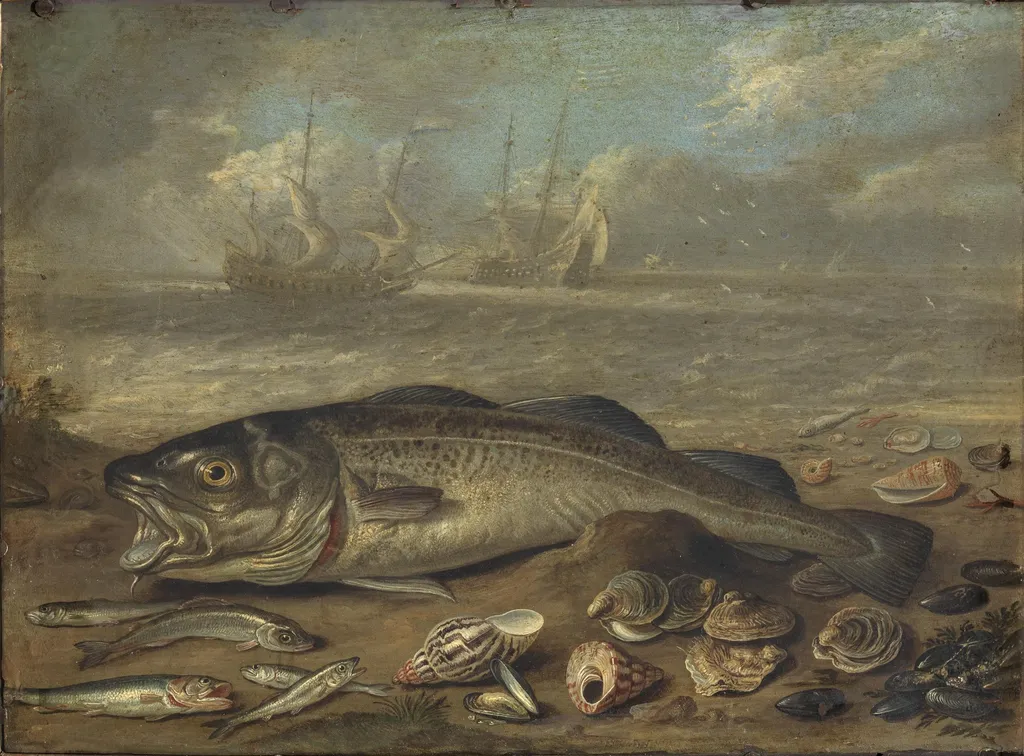
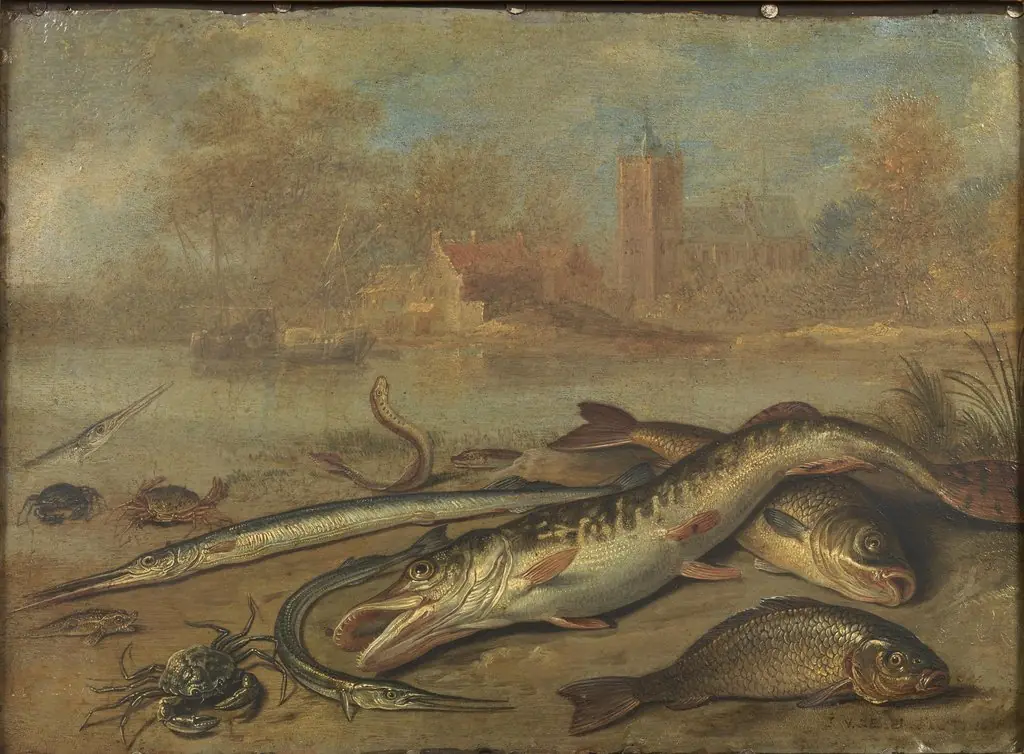
Pescados y marina is an oil painting by the Flemish Baroque painting artist Jan van Kessel the Elder. It dates from 1656 and is held in the collection of the Museo del Prado.
About this work
Overview
Created in Antwerp during the height of the Flemish Baroque period, the work exemplifies van Kessel’s skill in rendering natural subjects with precision.
Painted in 1656 by Jan van Kessel the Elder, *Pescados y marina* is an oil-on-canvas still life depicting marine life arranged on a shoreline. Created in Antwerp during the height of the Flemish Baroque period, the work exemplifies van Kessel’s skill in rendering natural subjects with precision. It combines elements of still life and landscape, reflecting the period’s fascination with observed nature and the technical mastery of surface detail.
Subject & Meaning
The painting presents a haul of fish, including a large central specimen, alongside scattered seashells and smaller sea creatures on a damp sandbank. Behind them, two vessels navigate a turbulent sea beneath a brooding sky. The composition suggests the transient nature of marine bounty and the sea’s dual role as provider and force of nature. No symbolic allegory is overt; instead, the focus lies in the quiet documentation of marine life as encountered on the coast.
Technique & Style
Van Kessel employed fine brushwork and layered glazes to achieve lifelike textures: the glistening scales of the fish, the brittle sheen of shells, and the rough grain of wet sand are rendered with meticulous care. His approach echoes the tradition of his grandfather, Jan Brueghel the Elder, emphasizing observational accuracy over idealization. The subdued palette and controlled lighting enhance the sense of realism, aligning with Flemish still-life conventions of the mid-seventeenth century.
History & Provenance
The painting has remained in the collection of the Museo del Prado since at least the early 19th century, likely acquired during the Spanish Crown’s broader patronage of Flemish art. Its presence in Madrid reflects the cultural exchange between the Spanish Habsburgs and the Southern Netherlands. No significant alterations or reattributions are recorded, and its condition remains consistent with careful preservation over centuries.
Context
In mid-17th century Antwerp, still lifes of marine subjects were popular among collectors interested in natural history and trade. Van Kessel’s work fits within a broader trend of artists documenting the natural world with scientific precision, influenced by the rise of empirical observation. The inclusion of distant ships hints at the region’s maritime economy, linking the painting to Antwerp’s commercial networks despite its inland location.
Legacy
Though not widely exhibited outside Spain, *Pescados y marina* stands as a representative example of Flemish still-life painting’s commitment to detail and naturalism. Van Kessel’s approach influenced later generations of Dutch and Flemish painters who pursued similar themes. The work remains a quiet testament to the artistic value placed on close observation of the natural world during the Baroque era.
Artist & collection
Artist
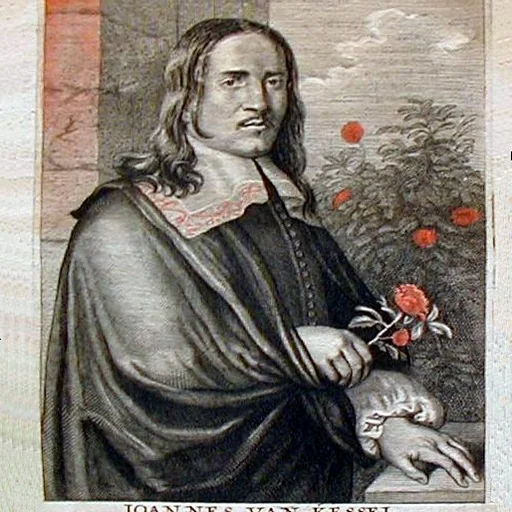
Jan van Kessel the Elder or Jan van Kessel (I) (baptized 5 April 1626, Antwerp – 17 April 1679, Antwerp) was a Flemish painter active in Antwerp in the mid-17th century.

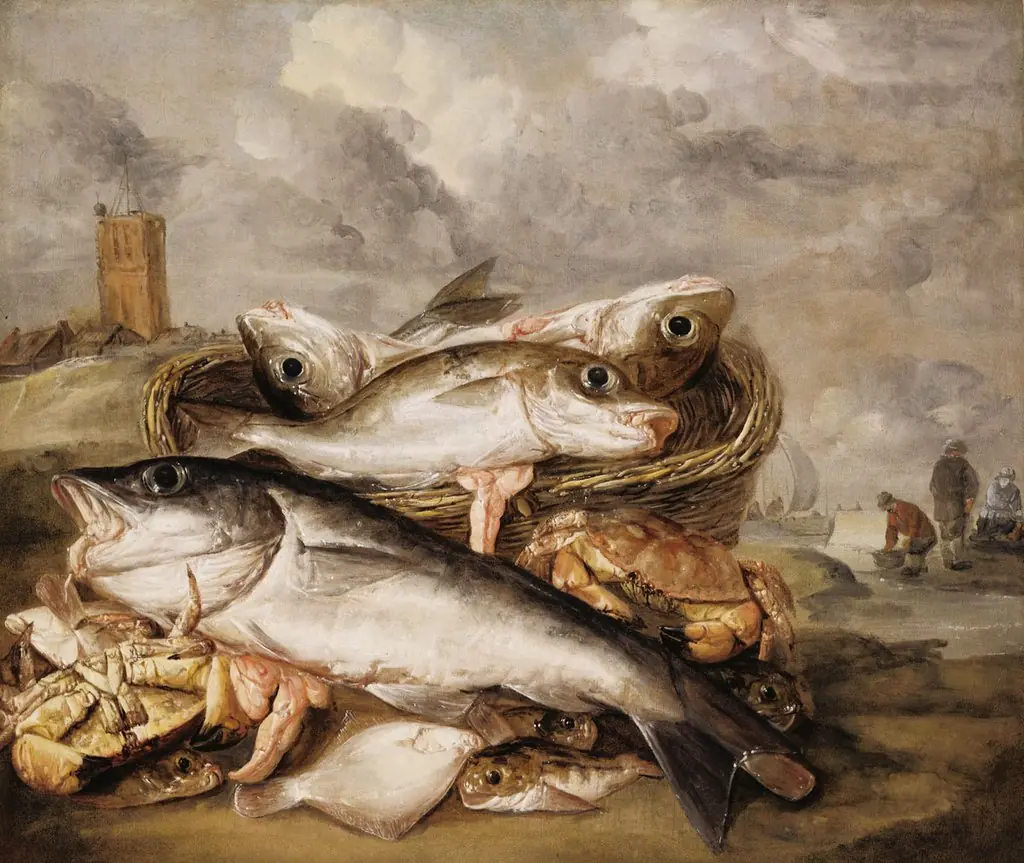 Still Life of Fish on the Shore at Egmond aan Zee
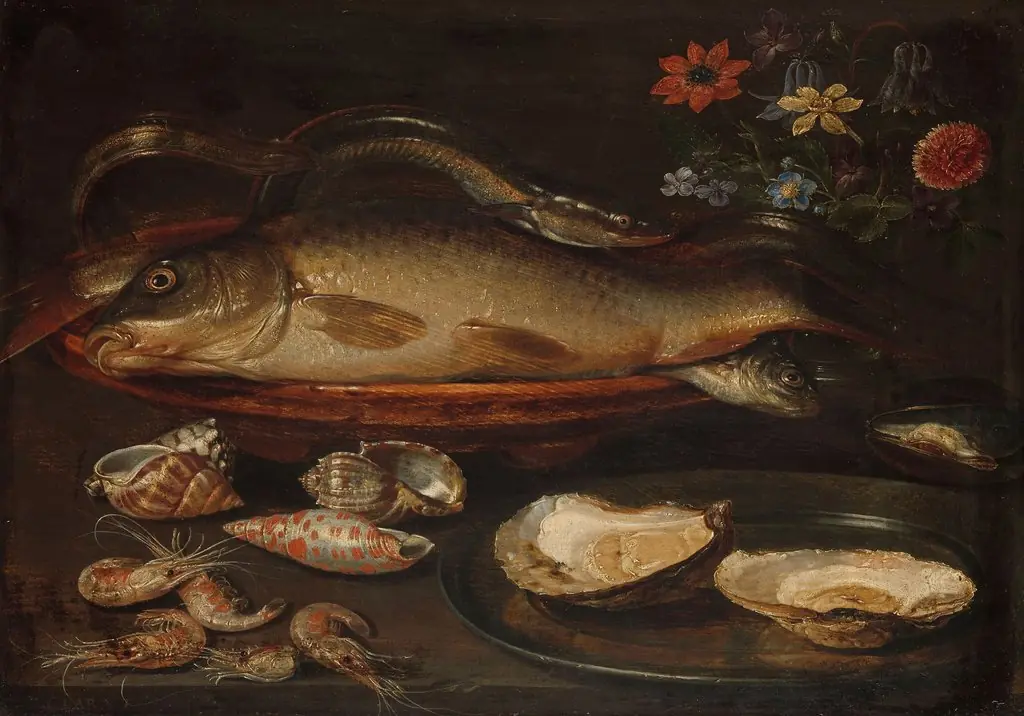 Still life with fish, oysters and shrimps
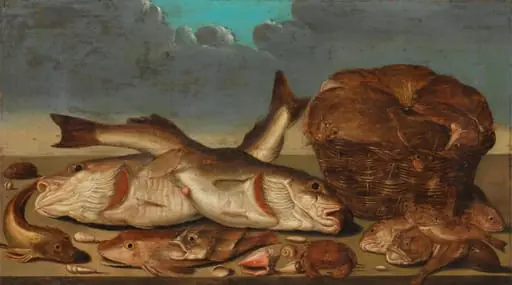 Still Life with Fish
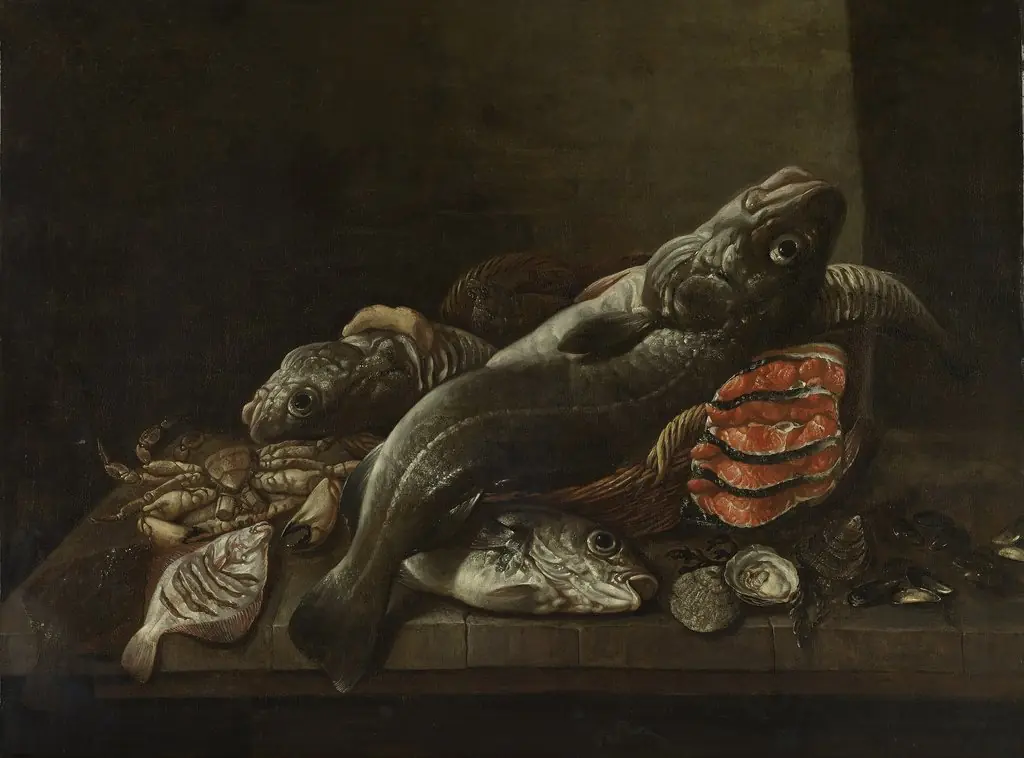 Still Life with Fish
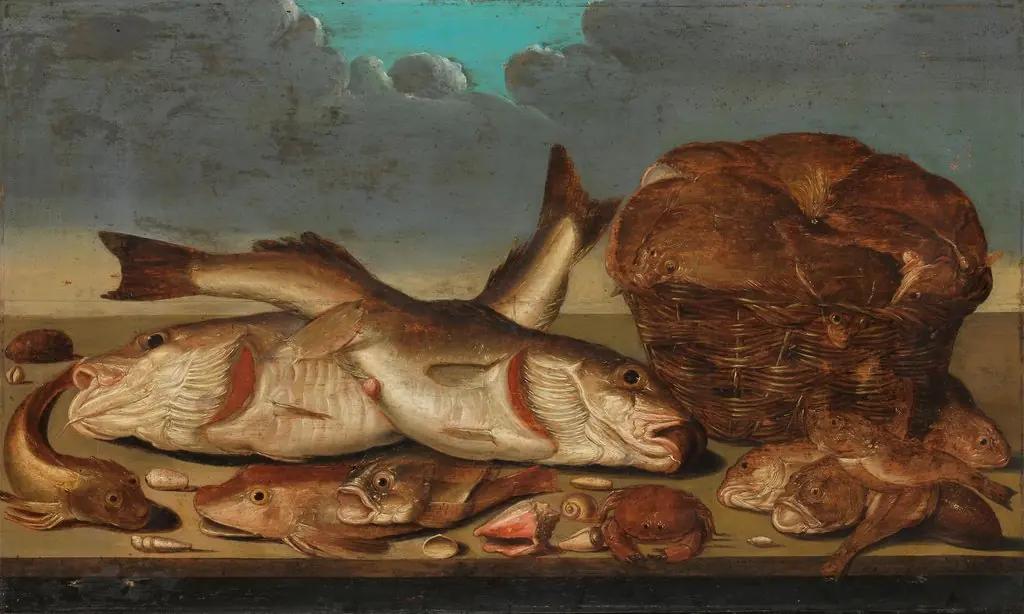 Still Life with Fish
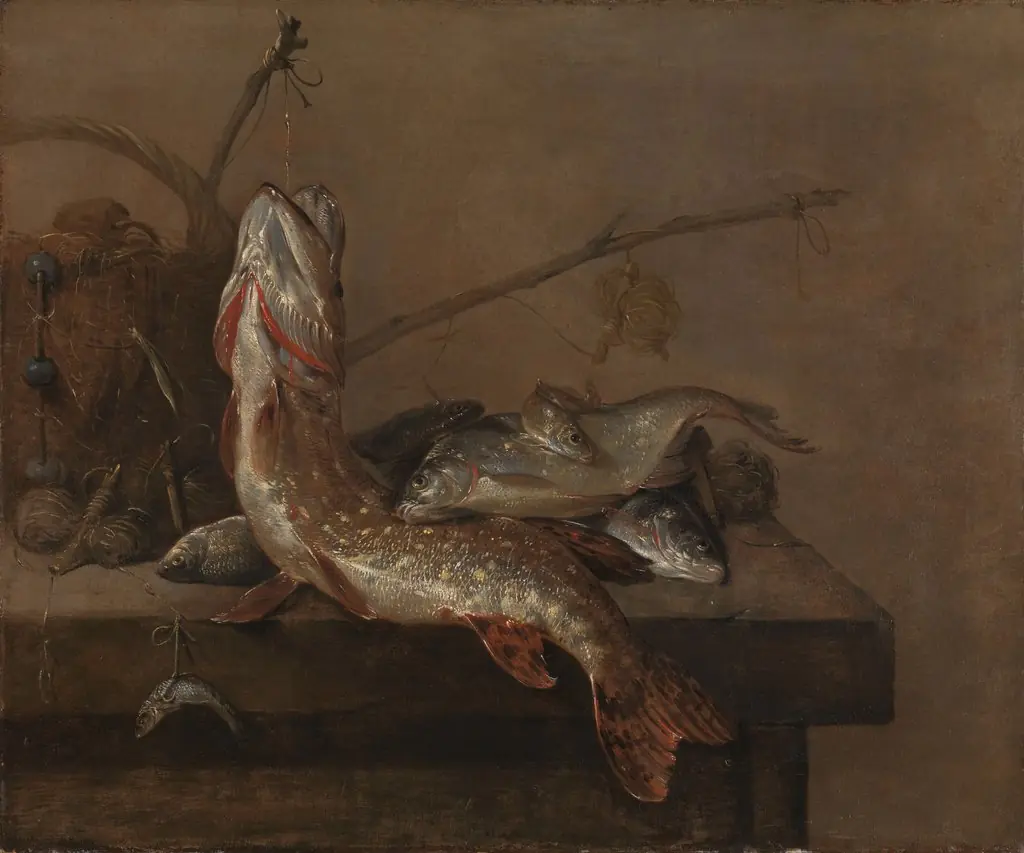 Still life with fish
 Pescados y paisaje
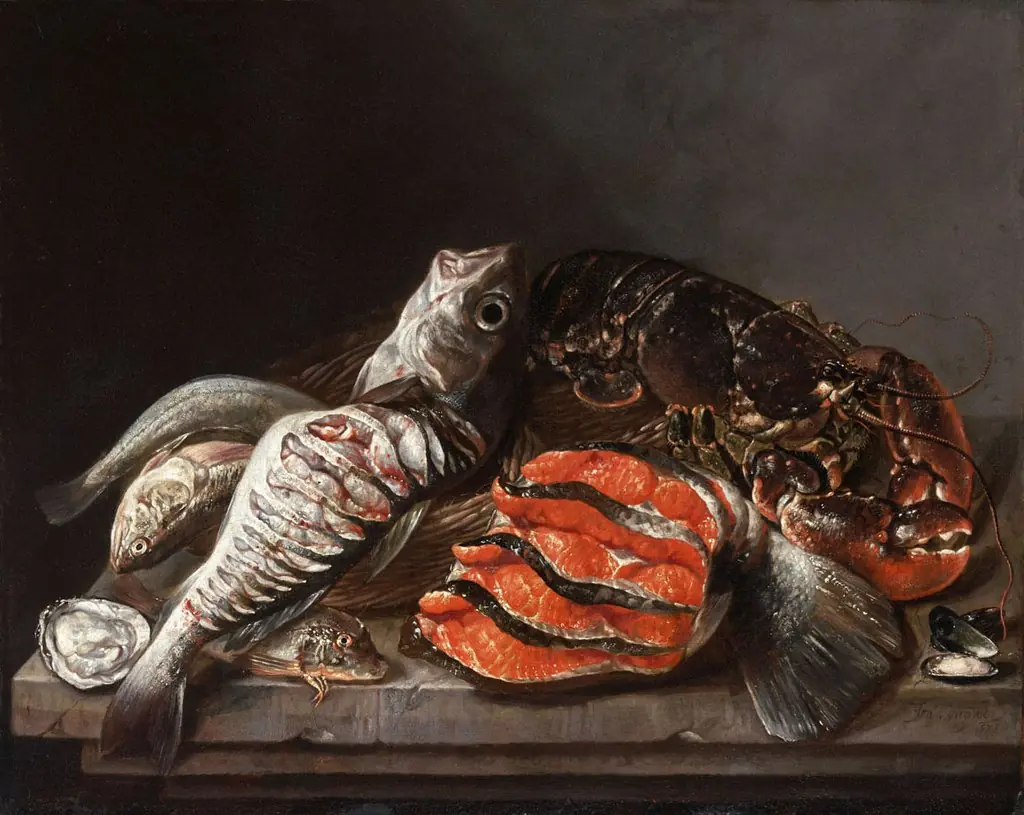 Fish (Still Life)
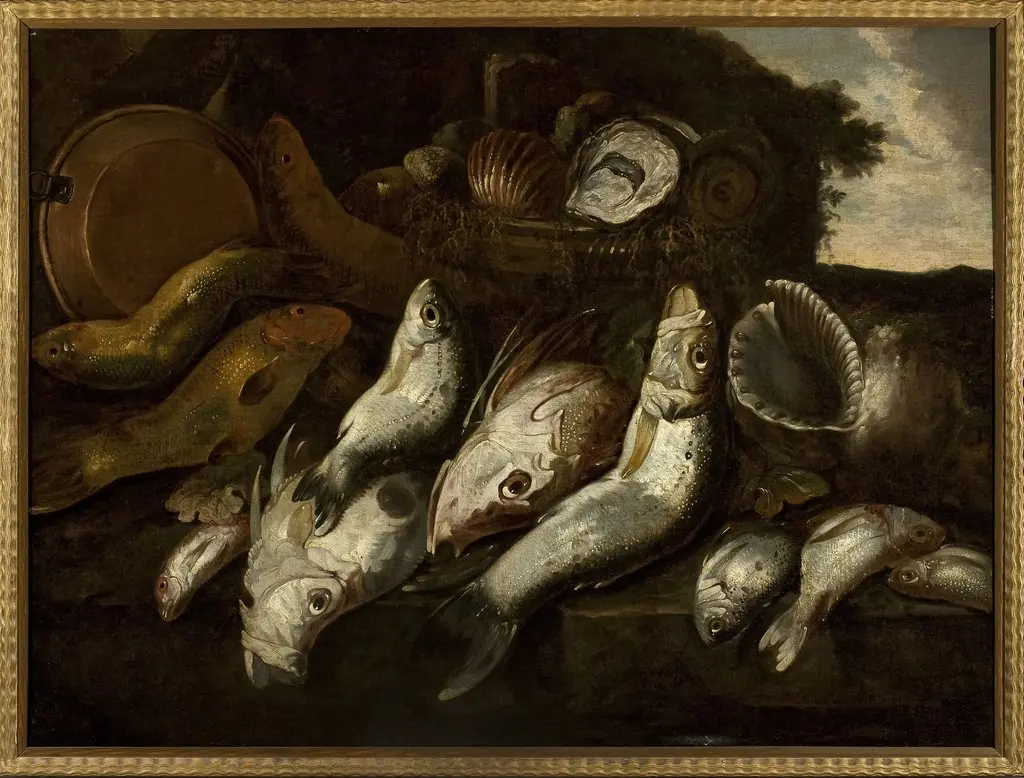 Fish
Fish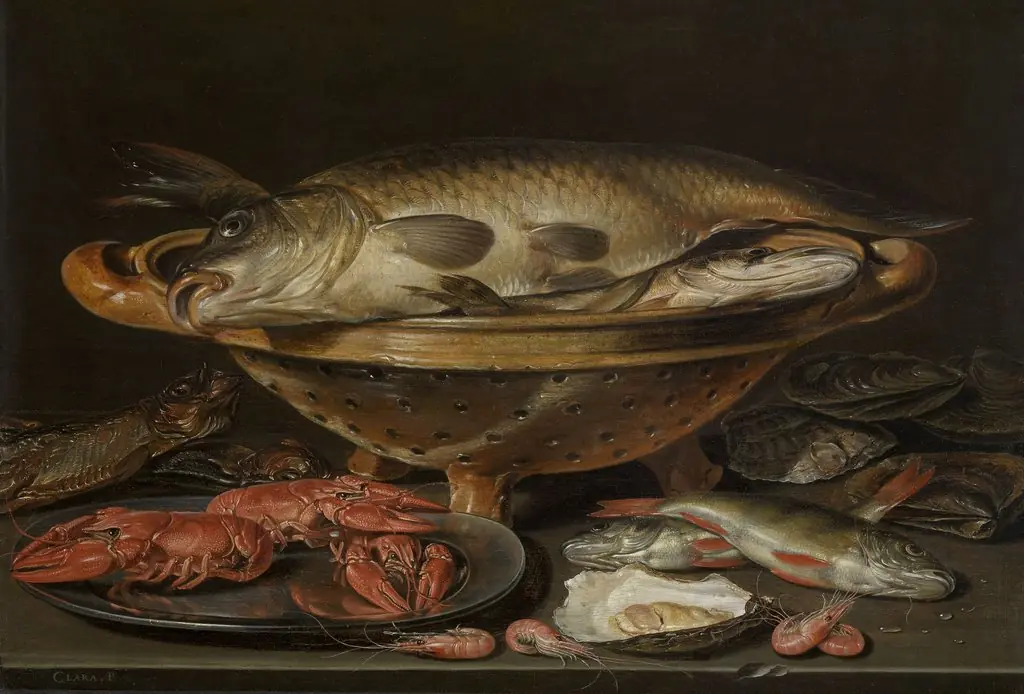 Still Life with Fish
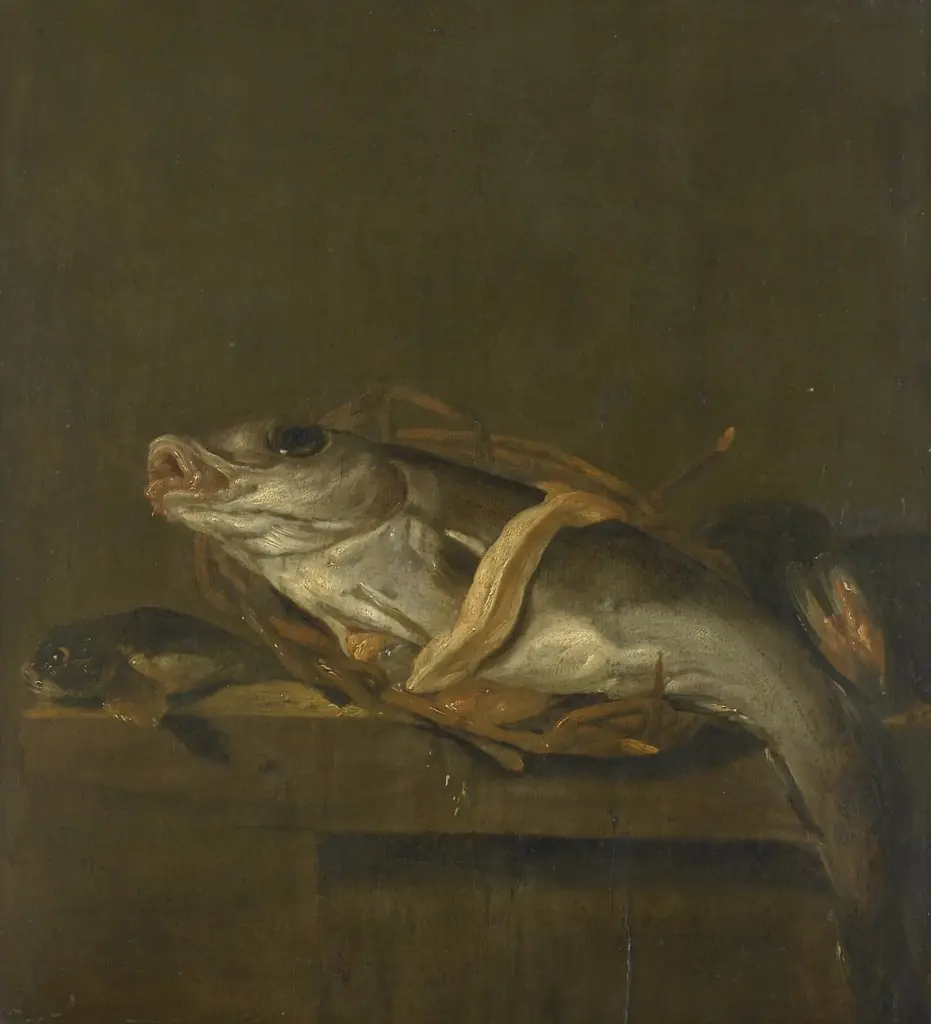 Still life with a haddock and a gurnard
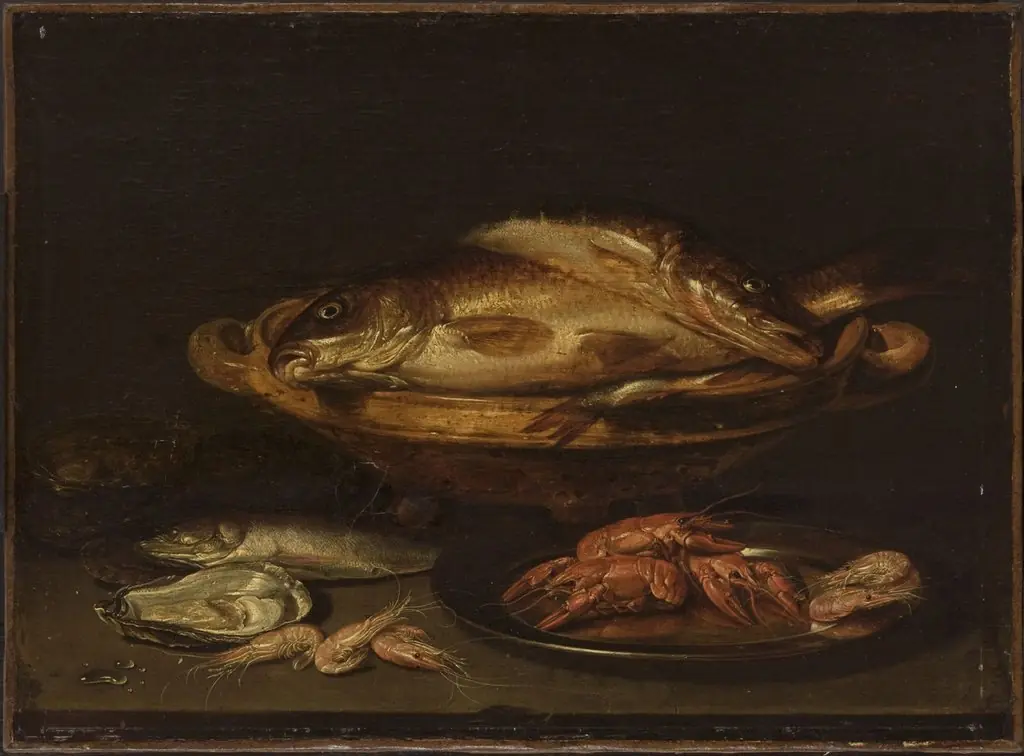 Still Life with Fish and Shellfish