Artwork
Stilleben mit Rebhuhn, Ente und Goldammer
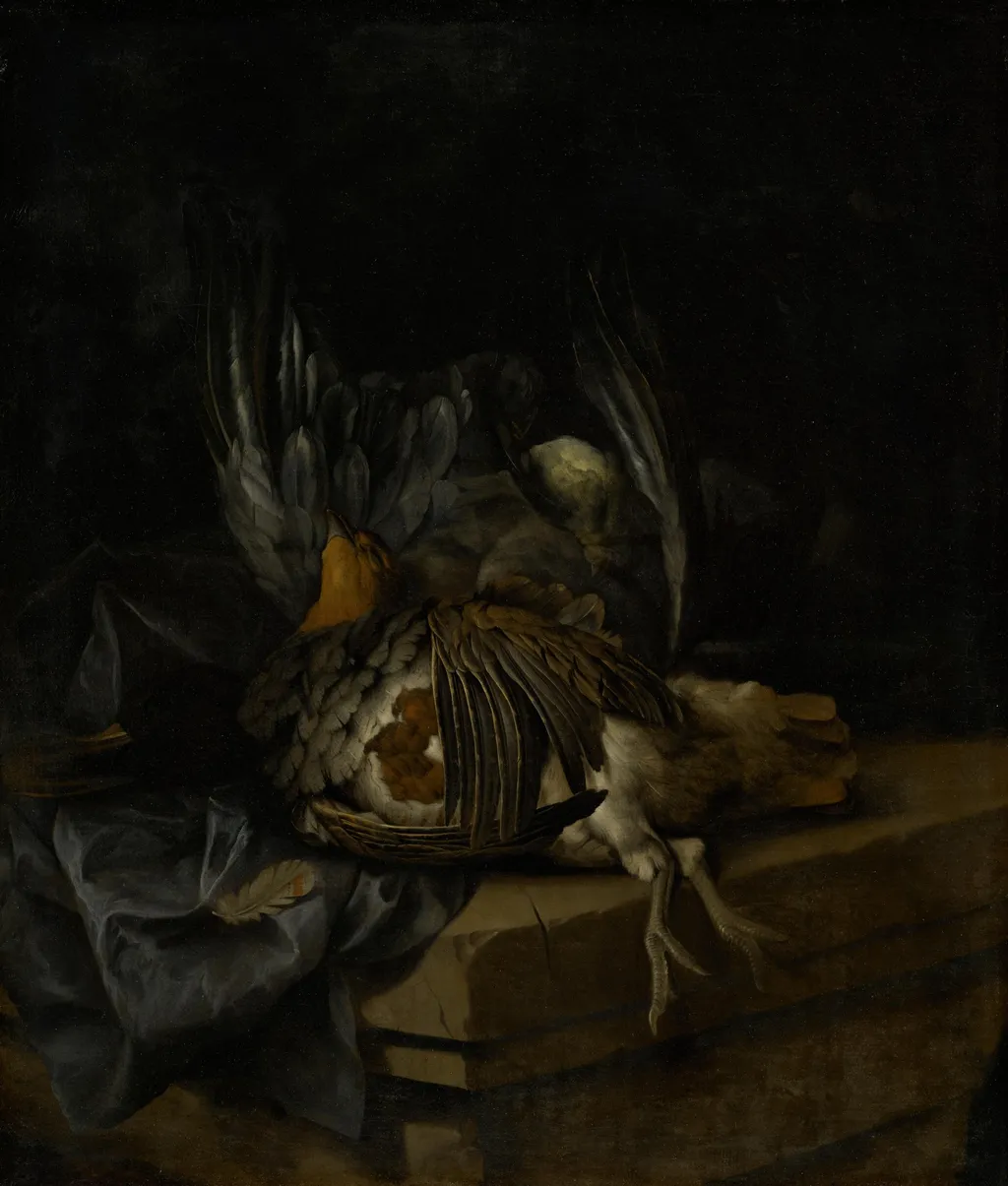
Stilleben mit Rebhuhn, Ente und Goldammer is a paint painting by the Dutch Golden Age artist Willem van Aelst. It dates from 1650 and is held in the collection of the Gemäldegalerie Berlin.
About this work
Overview
Stilleben mit Rebhuhn, Ente und Goldammer is a 17th-century still-life painting attributed to Willem van Aelst, a prominent Dutch Golden Age painter. Created circa 1650, the work features a composition of hunted birds.
Subject & Meaning
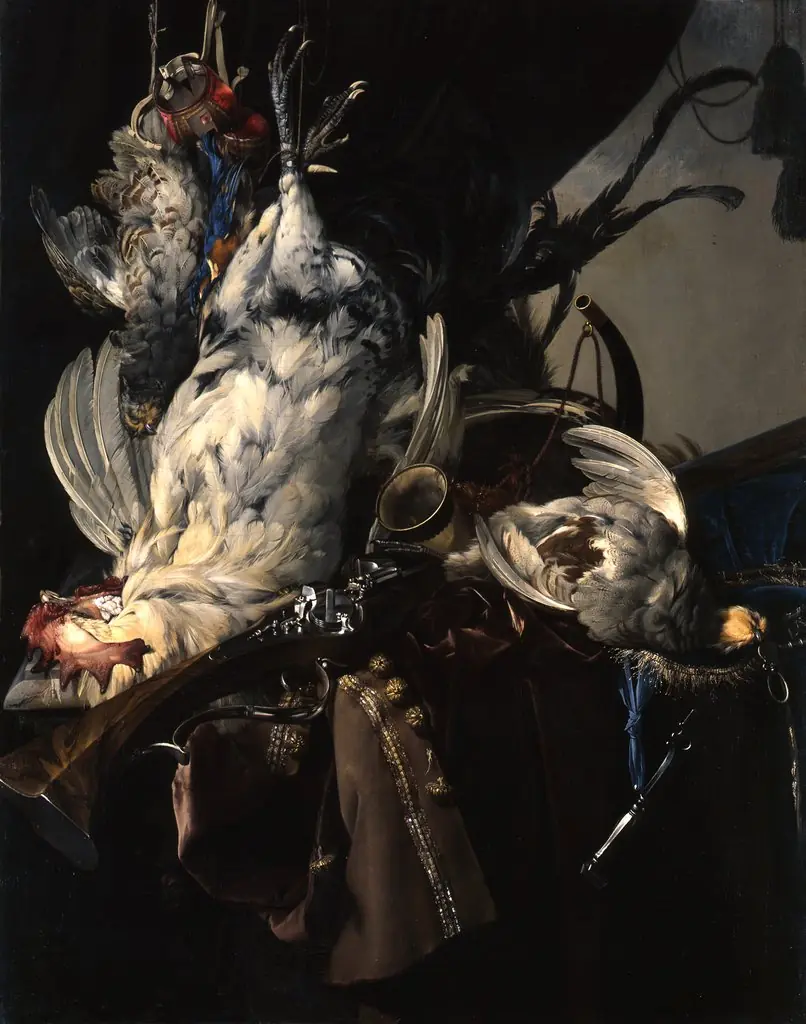
The painting depicts a lifeless bird, identified as a partridge, duck, and goldfinch in the title, though visually resembling a pheasant, laid on a table with outstretched wings. The arrangement and realistic depiction may symbolize the transience of life, a common theme in Dutch still-life art.
Technique & Style
Executed in a realistic style, the painting showcases meticulous attention to detail in capturing the textures of feathers and a draped blue cloth. A dark background, potentially employing chiaroscuro, focuses the viewer's attention on the central subject.
History & Provenance
Stilleben mit Rebhuhn, Ente und Goldammer is housed in the Gemäldegalerie Berlin, part of its Dutch Golden Age collection. The exact provenance before its acquisition by the museum is not detailed here.
Own this work as a print
Artist & collection
Artist
Willem van Aelst (16 May 1627 – buried 22 May 1683) was a Dutch Golden Age artist who specialized in still-life painting with flowers or game.

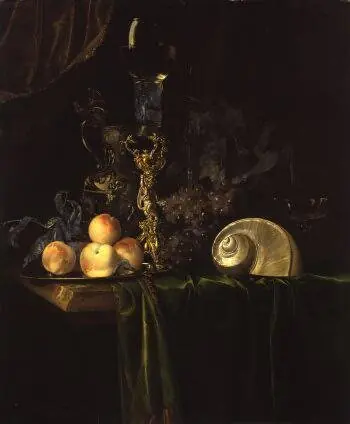
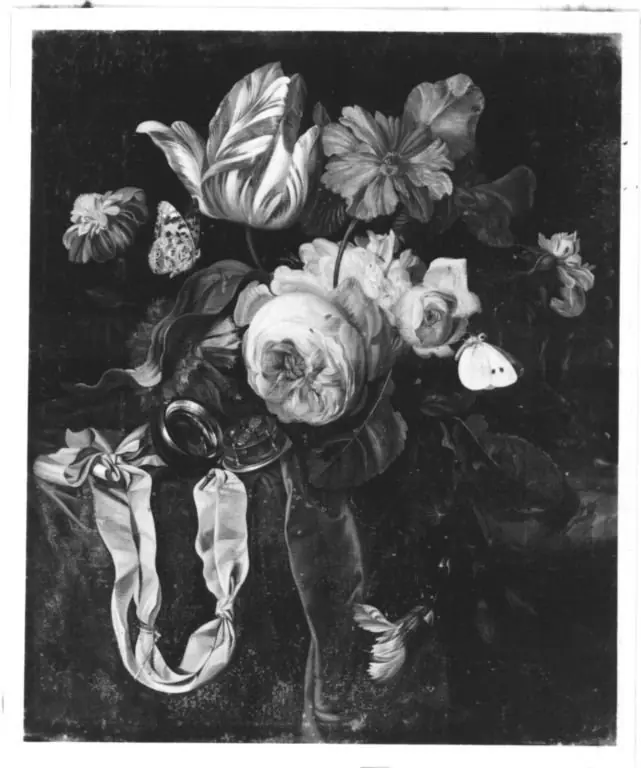
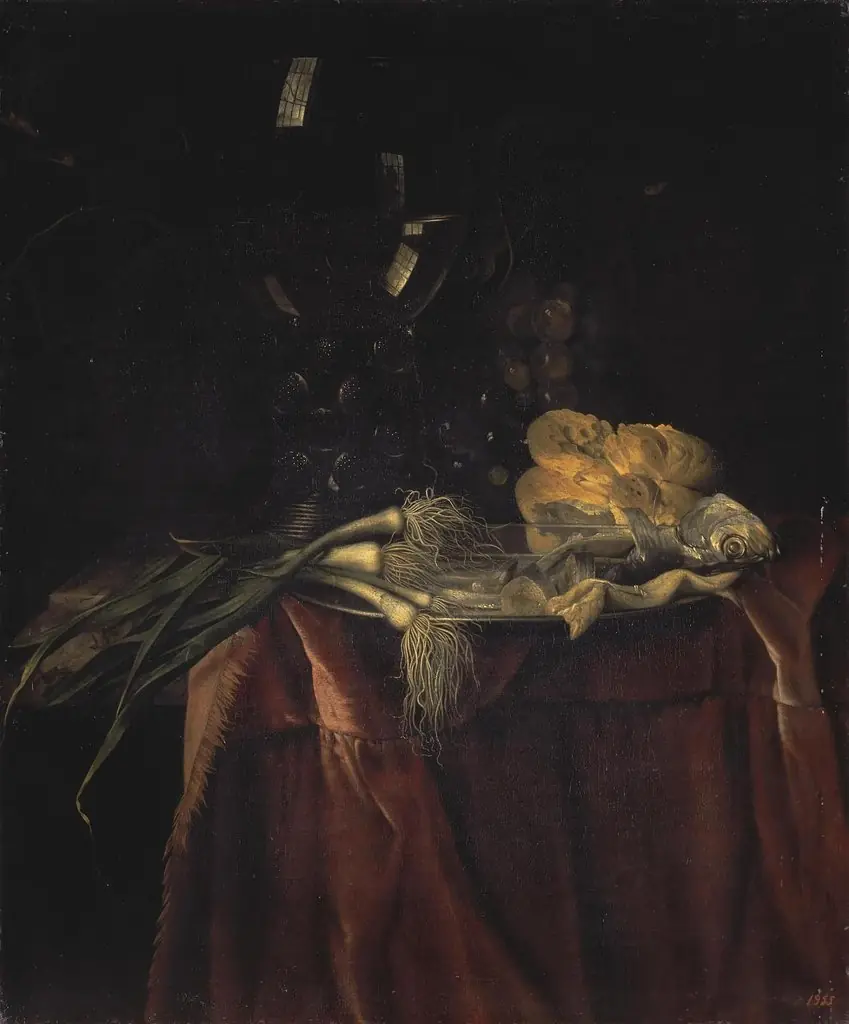
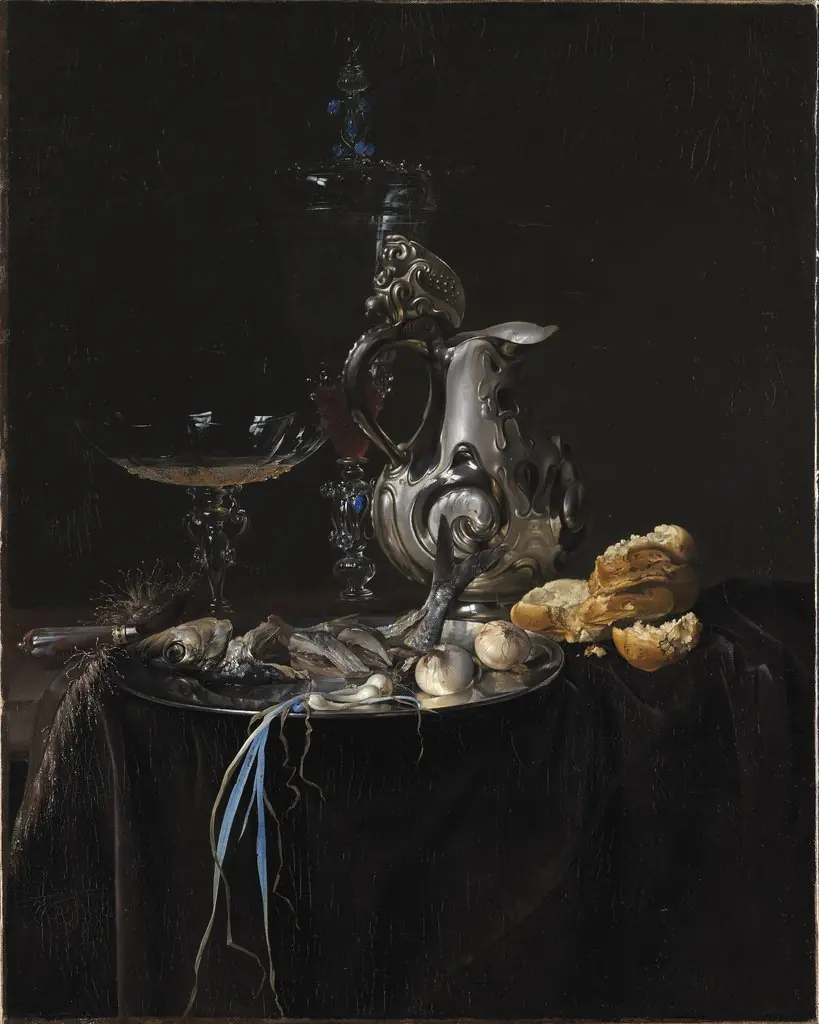
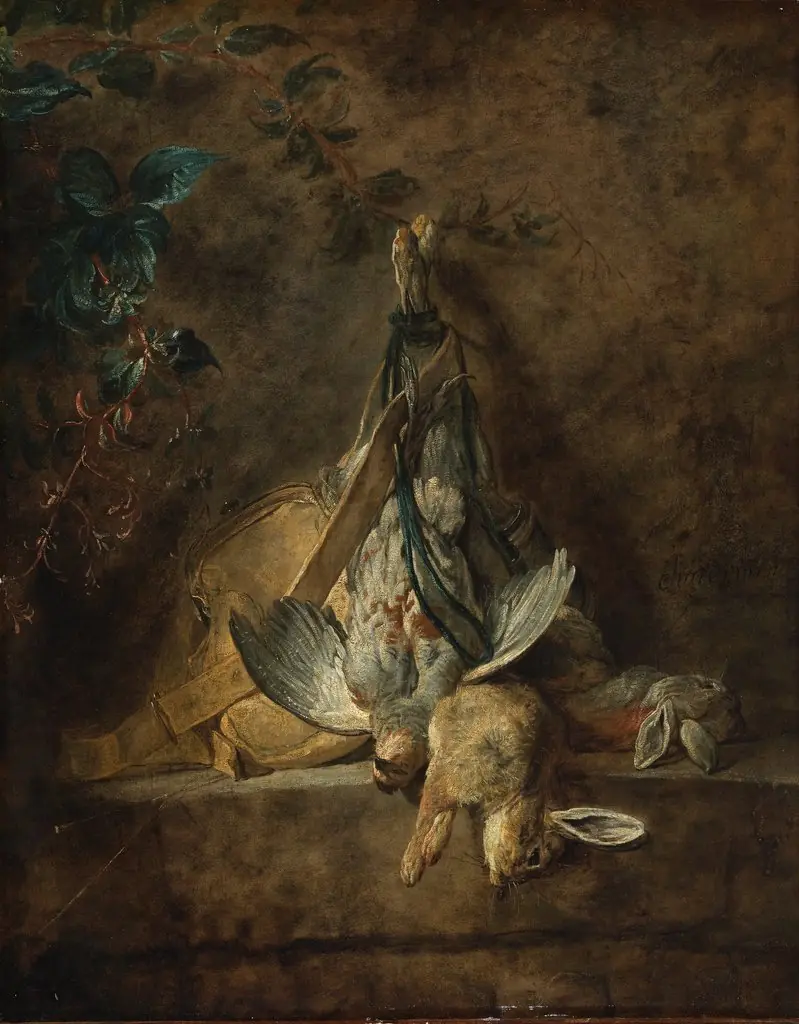 A Still Life: Two Rabbits, a Grey Partridge, Game Bag and a Powder Flask
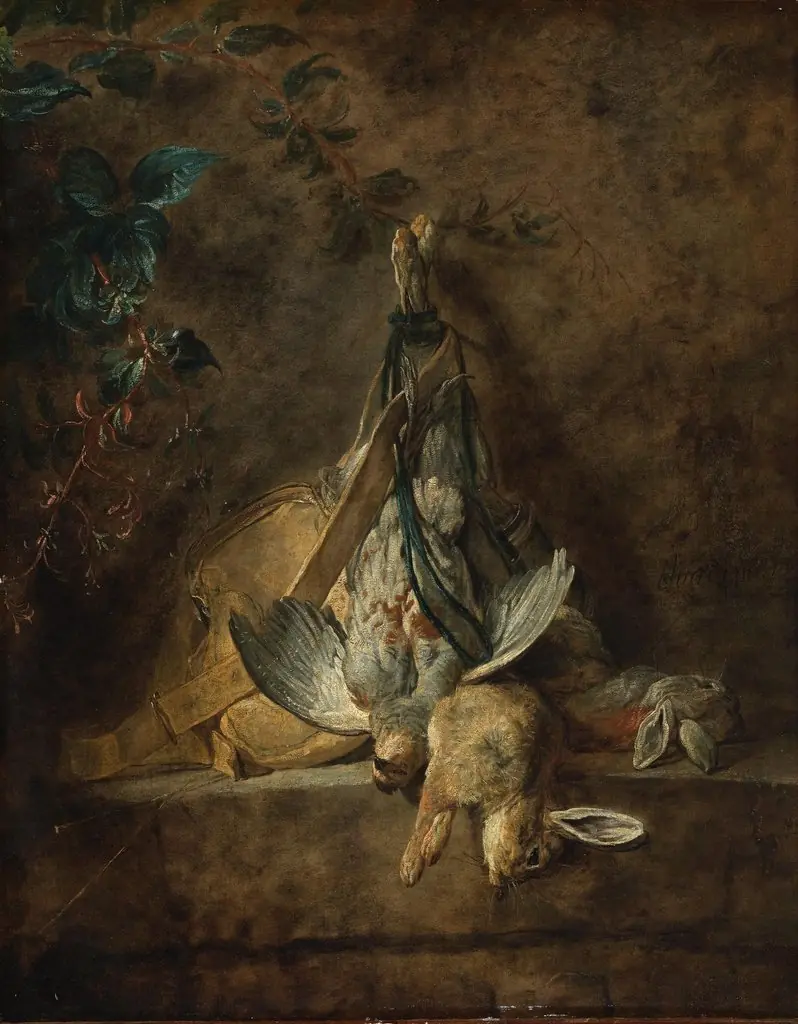 A Still Life Two Rabbits, a Grey Partridge, Game Bag and a Powder Flask
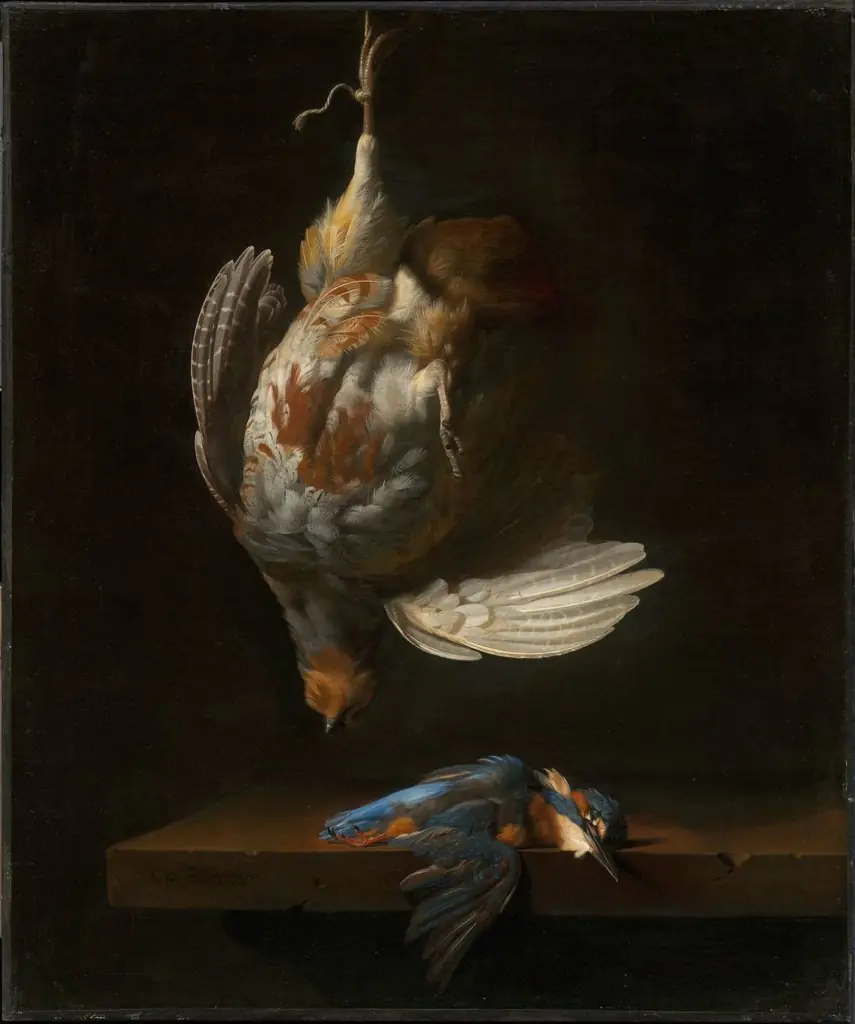 Still Life with Dead Partridge and Kingfisher
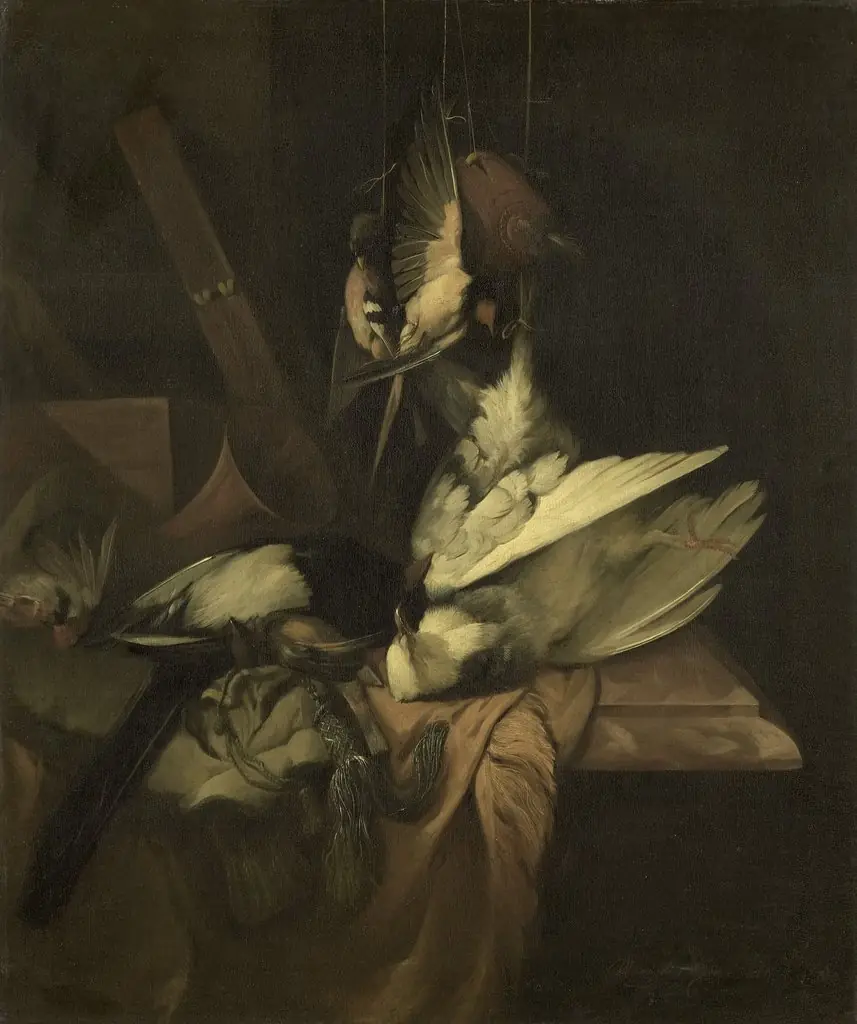 Still life with birds and hunting implements
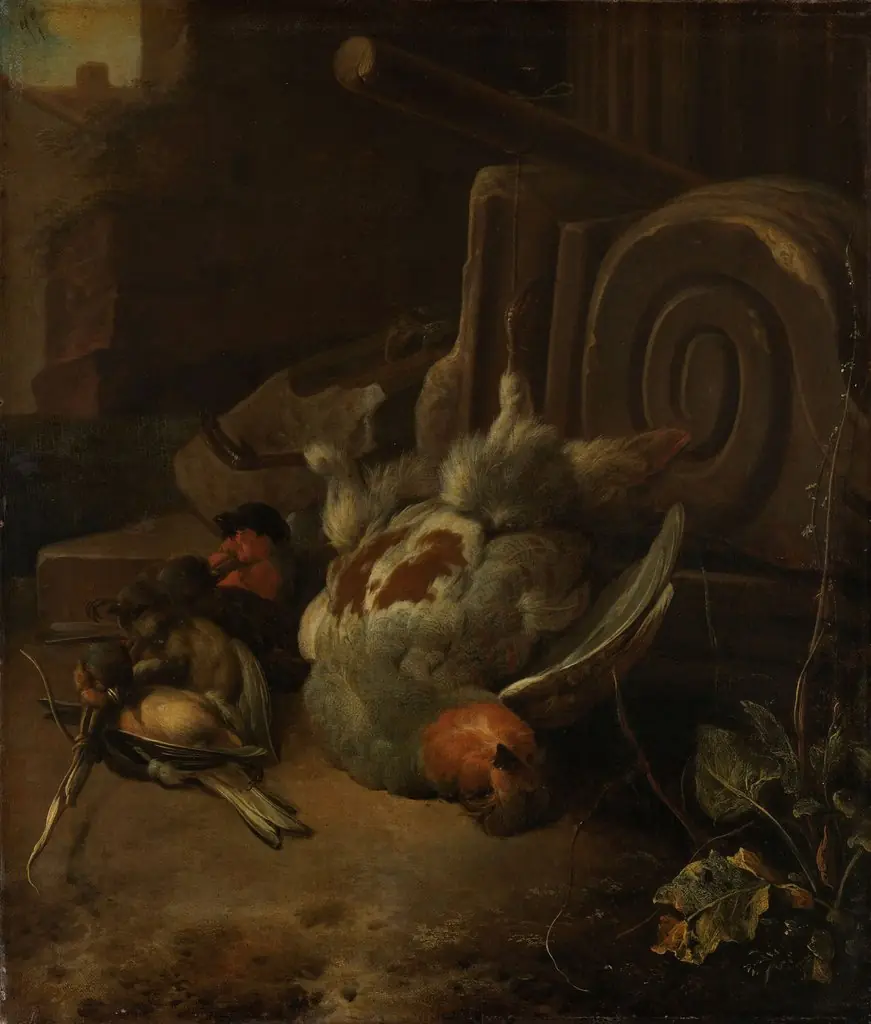 Dead birds
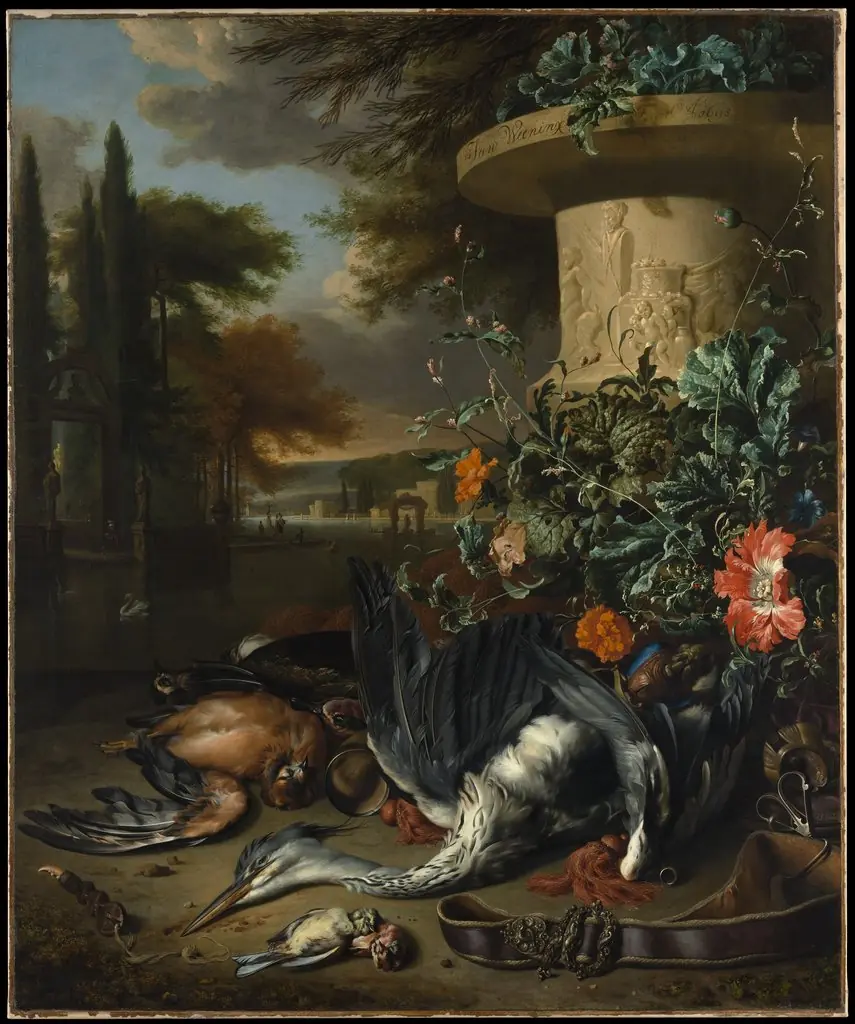 Gamepiece with a Dead Heron ("Falconer's Bag")
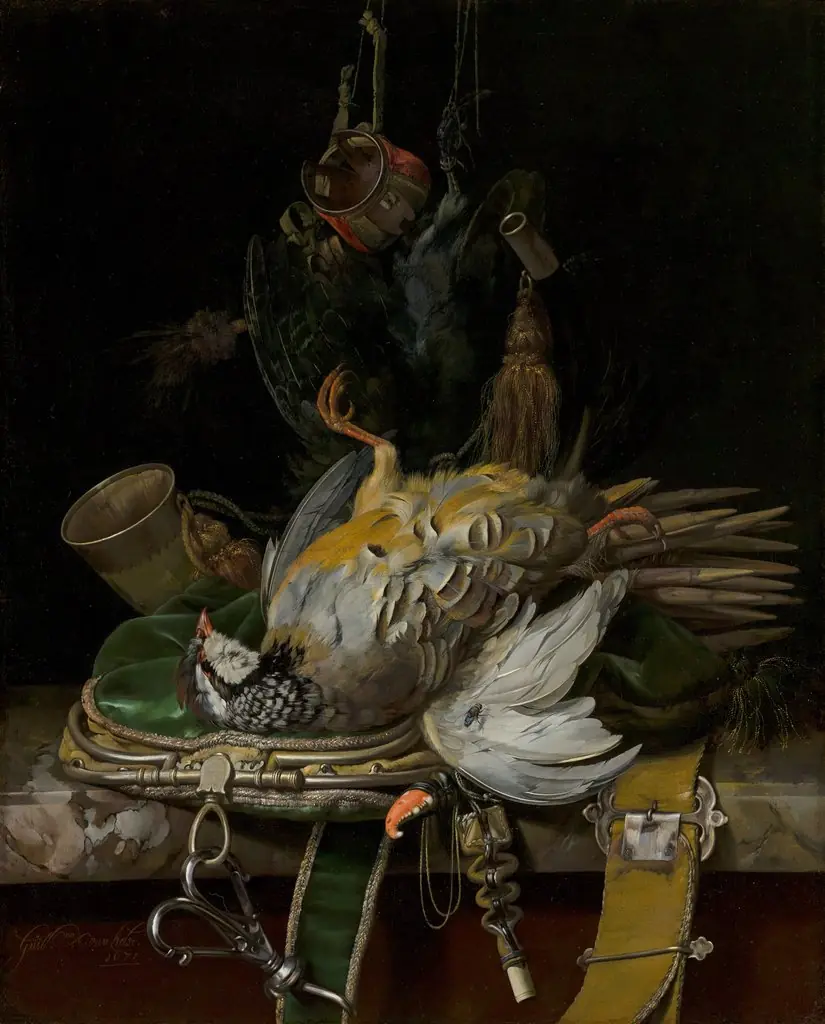 Still Life with Partridges
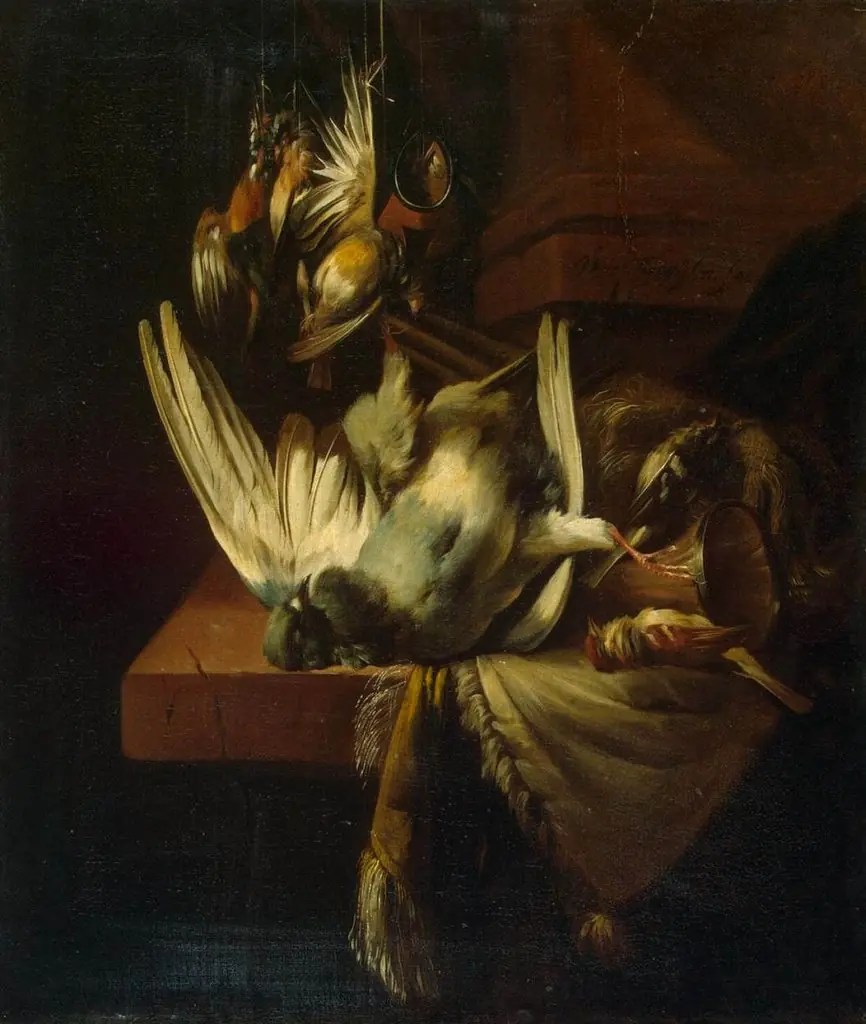 Still Life with Dead Game
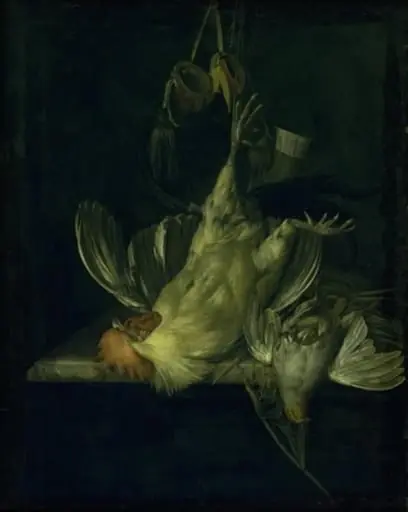 A Dead White Cock
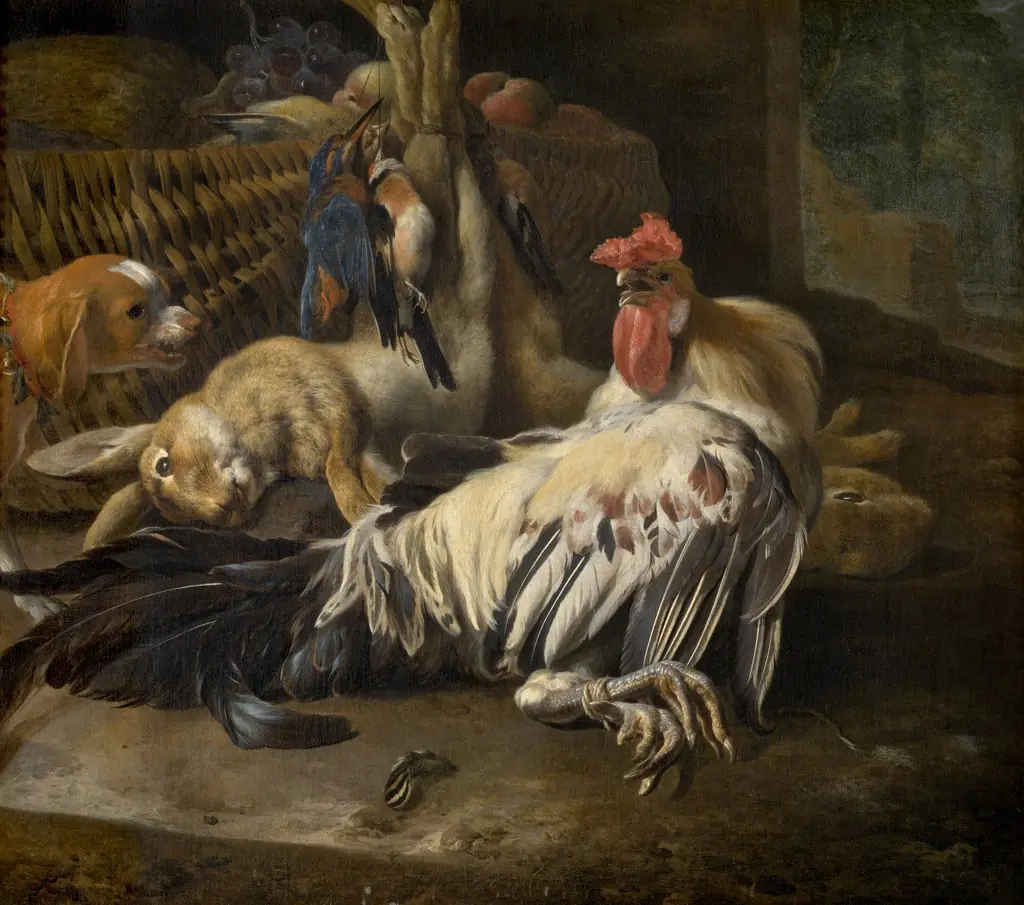 Still Life with Cock
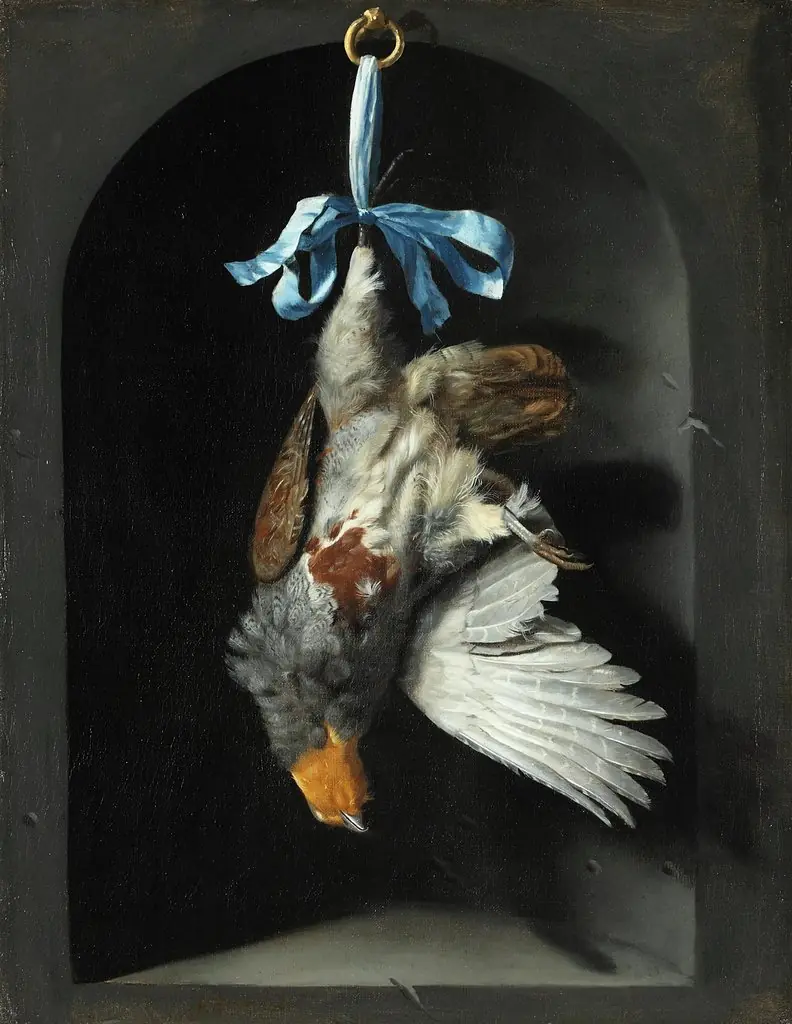 Stilleben mit Rebhuhn