Artwork
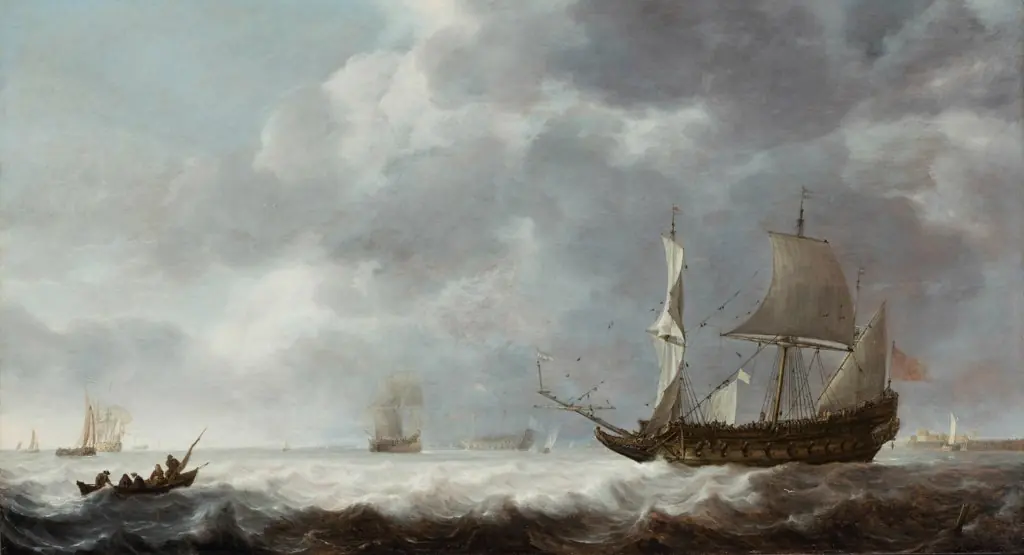
A Dutch Warship on a Rough Sea
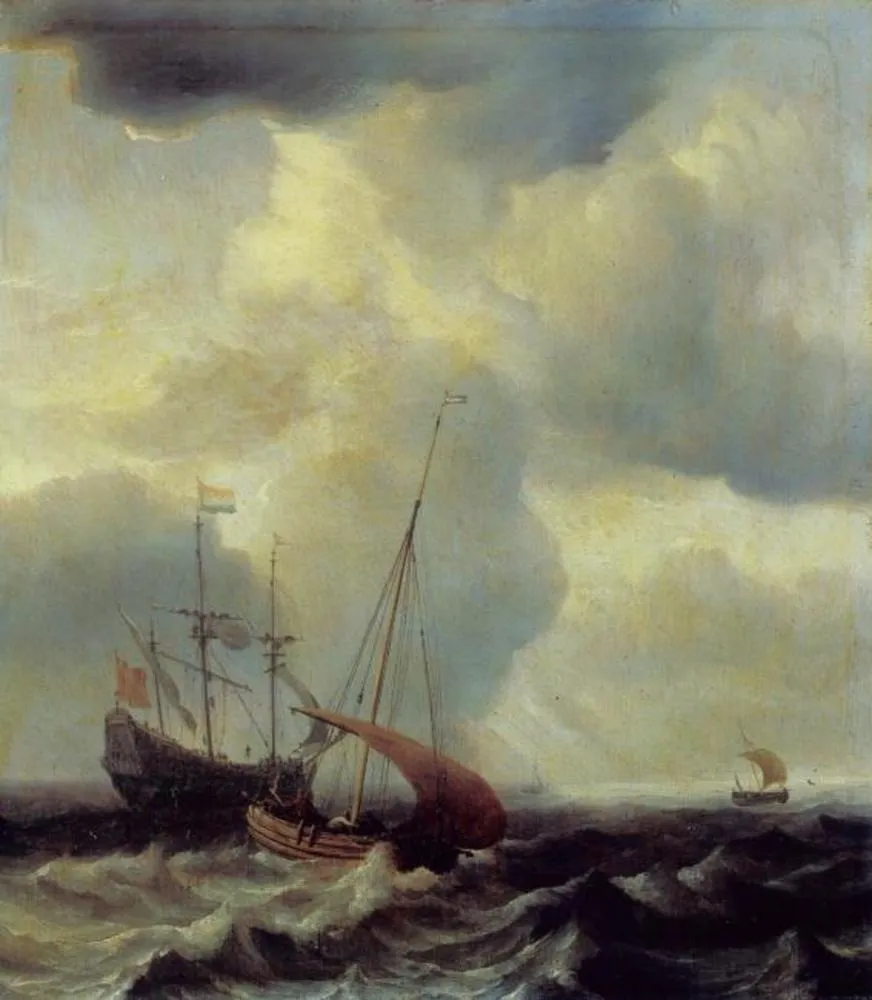
A Dutch Warship on a Rough Sea is an oil painting by the Dutch Golden Age artist Willem van de Velde the Younger. It dates from 1670 and is held in the collection of the Städel Museum.
About this work
Overview
The composition centers the vessel amid chaotic waves and a brooding sky, conveying the vulnerability of human engineering against nature’s force.
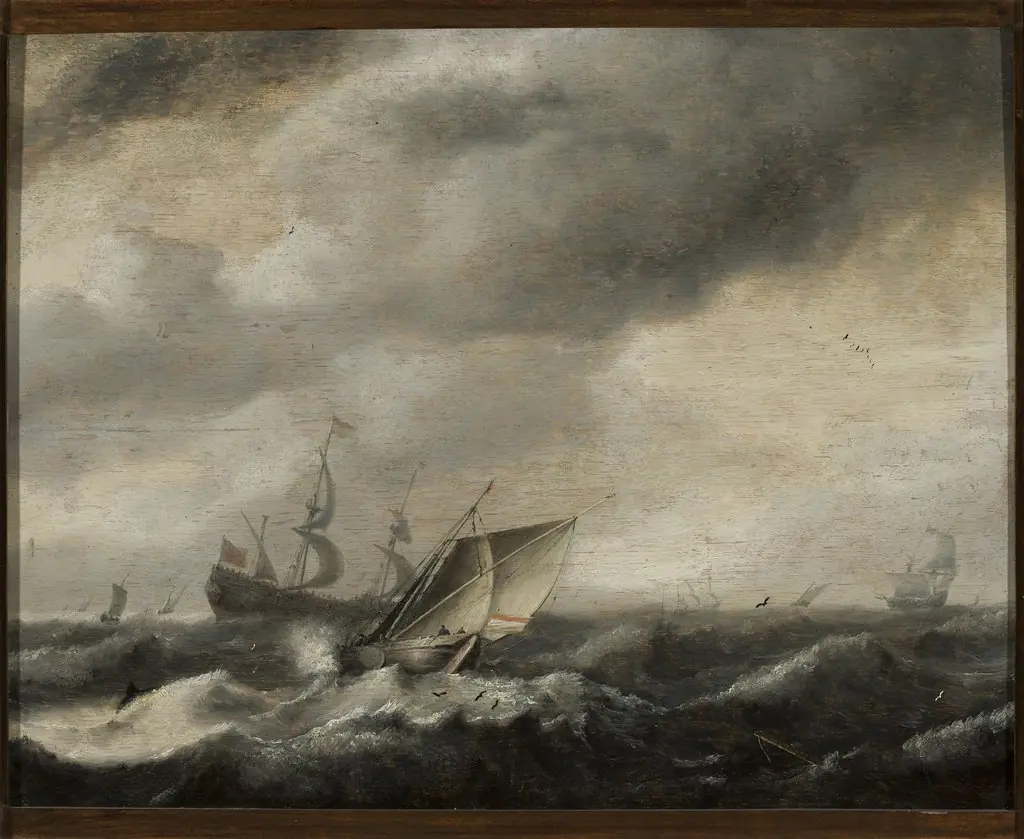
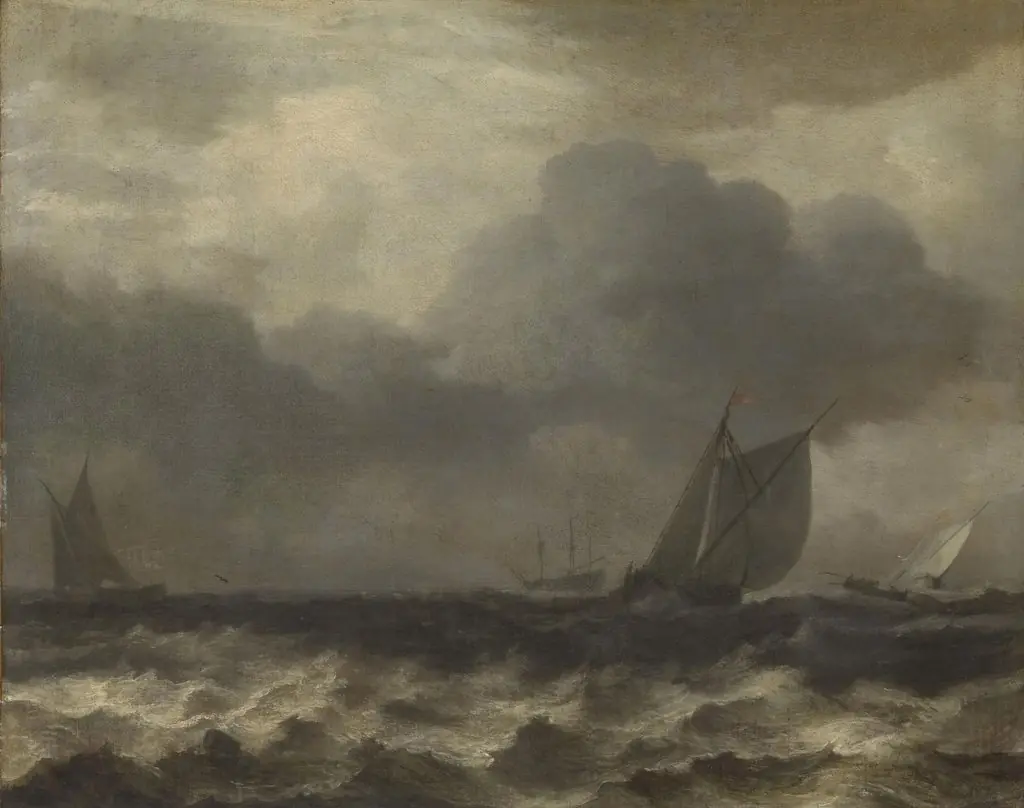
Painted in 1670, this oil-on-canvas work by Willem van de Velde the Younger captures a Dutch warship battling heavy seas. It exemplifies the maritime focus of Dutch Golden Age painting, reflecting the nation’s naval prominence. The composition centers the vessel amid chaotic waves and a brooding sky, conveying the vulnerability of human engineering against nature’s force. The painting resides today in the Städel Museum in Frankfurt.
Subject & Meaning
The warship, likely a frigate or ship-of-the-line, represents Dutch naval power during a period of global trade and conflict. Its struggle against the storm suggests both resilience and peril, themes resonant in a seafaring republic dependent on maritime dominance. The absence of human figures underscores nature’s indifference to human endeavor, reinforcing a quiet, observational realism rather than heroic narrative.
Technique & Style
Van de Velde employed precise brushwork to render the ship’s intricate rigging and hull details, demonstrating his technical mastery. Chiaroscuro is used subtly to model the waves and clouds, enhancing depth without theatricality. The palette favors muted grays, blues, and browns, with occasional highlights on foam and sailcloth to suggest fleeting sunlight breaking through storm clouds, grounding the scene in observed reality.
History & Provenance
Created during the height of the Dutch Golden Age, the painting reflects the artist’s lifelong engagement with maritime subjects, honed through direct observation and family influence. Willem the Younger, son of marine painter Willem the Elder, often worked alongside him, refining his skills through study of actual vessels. The painting entered the Städel collection in the 19th century, where it remains part of its core Dutch holdings.
Context
In 17th-century Holland, naval strength ensured economic survival and imperial reach. Marine painting flourished as both documentation and cultural expression, with artists like Van de Velde serving as visual chroniclers of the fleet. Unlike Italian or French contemporaries, Dutch painters avoided mythological grandeur, favoring accurate depictions of ships and sea conditions as reflections of national identity.
Legacy
Van de Velde’s work influenced later marine artists through its commitment to accuracy and atmospheric nuance. His ability to convey the physicality of wind, water, and wood without sentimentality set a standard for maritime art. Though less celebrated than some contemporaries, his oeuvre remains a vital record of Dutch naval life and the quiet dignity of seafaring labor in the early modern era.
Artist & collection
Artist
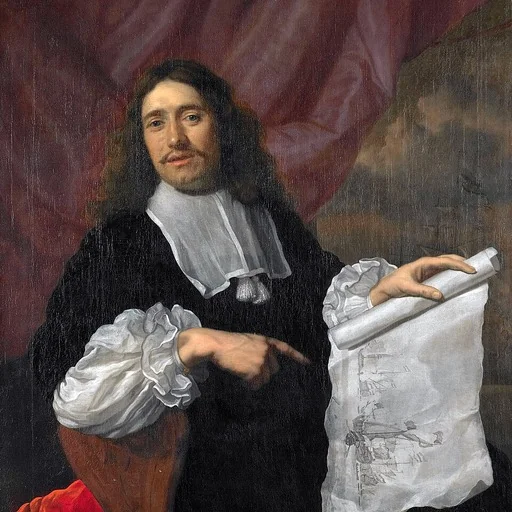
Willem van de Velde the Younger
Willem van de Velde the Younger (18 December 1633 (baptised) – 6 April 1707) was a Dutch painter who specialised in marine art.

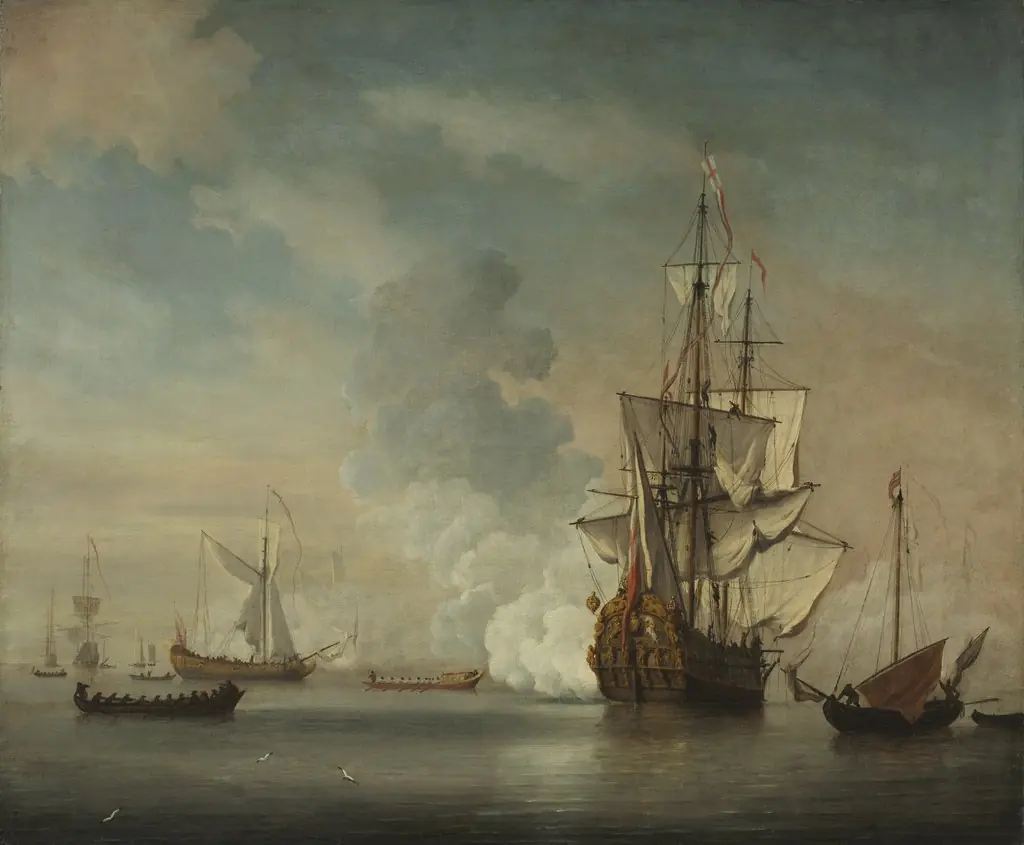 English Warship Firing a Salute
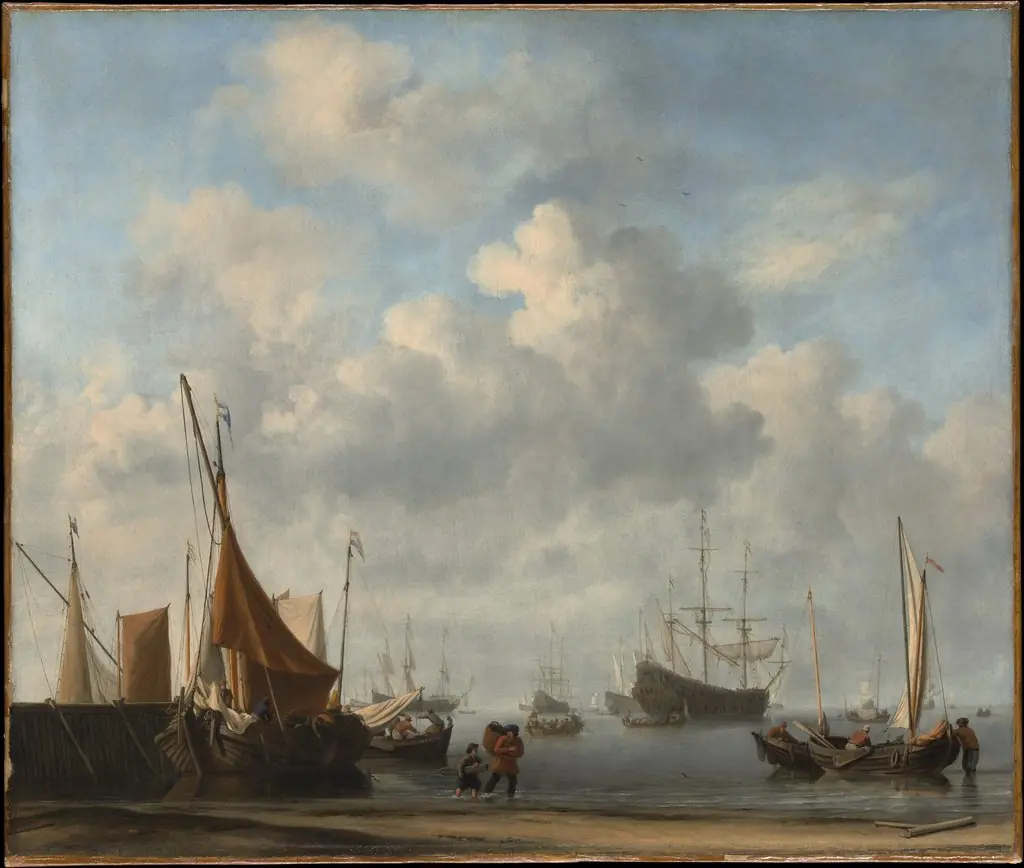 Entrance to a Dutch Port
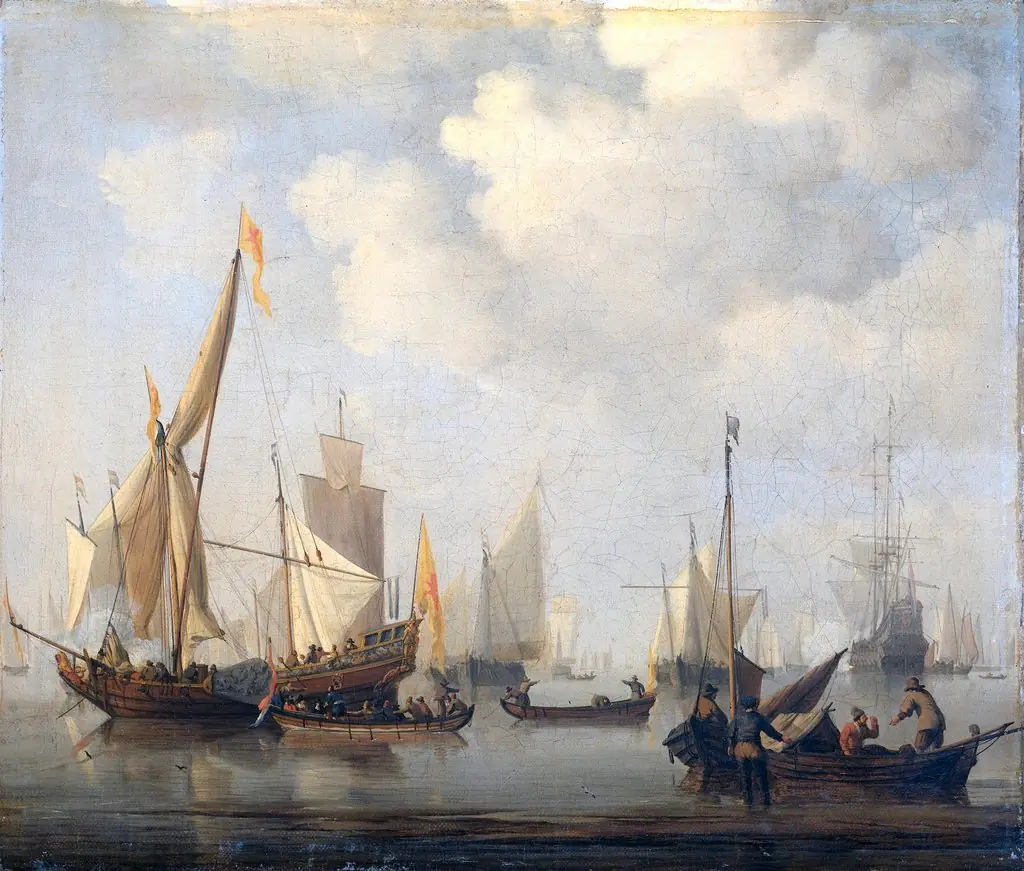 Ships in a calm
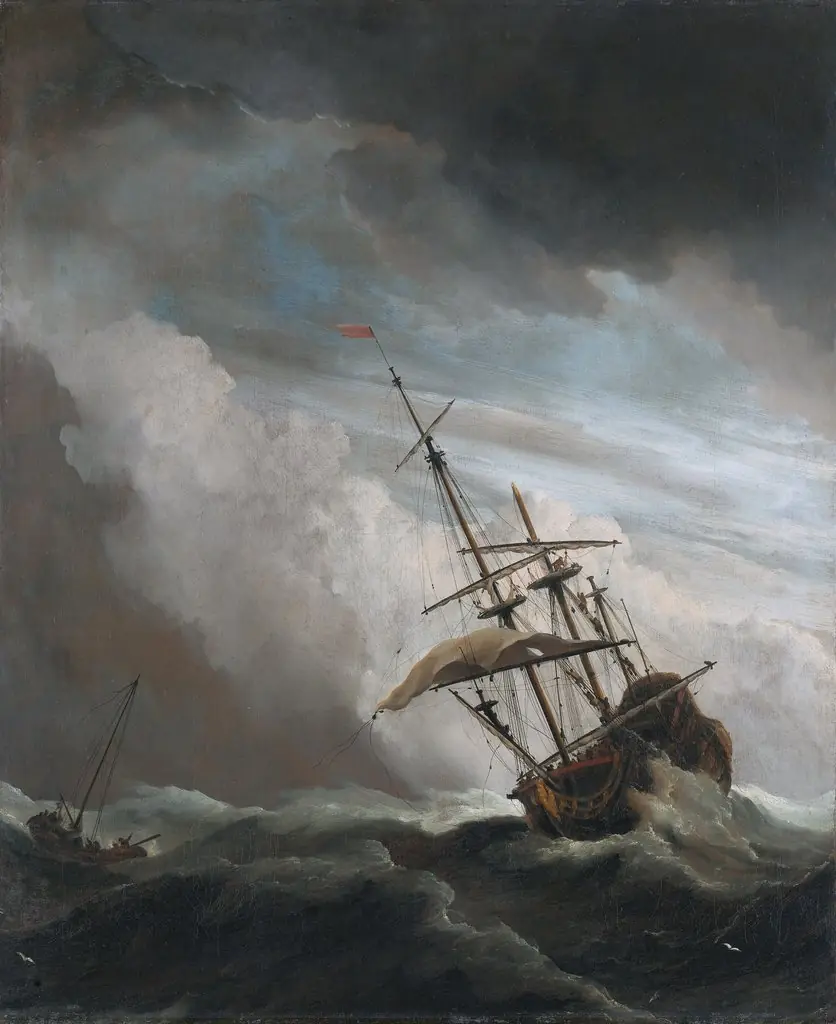 A Ship on the High Seas Caught by a Squall, Known as ‘The Gust’
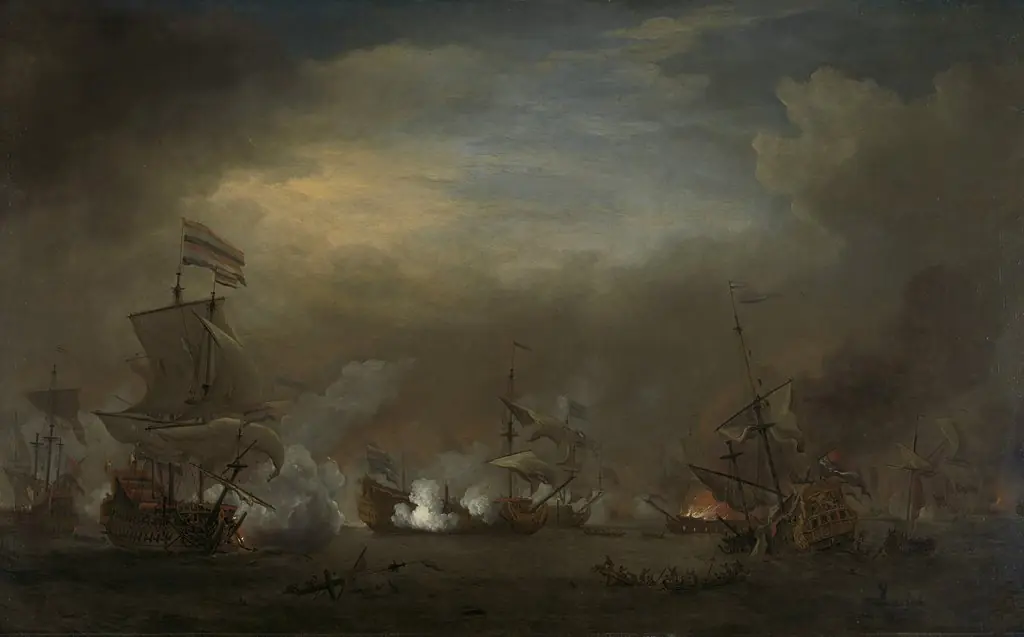 Encounter during the Battle of Kijkduin
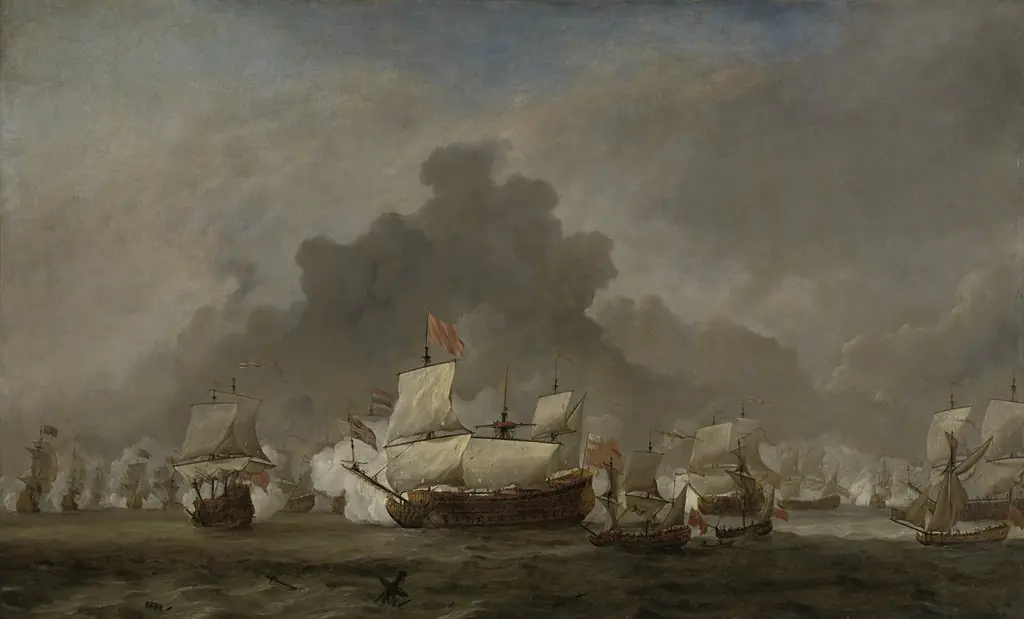 The skirmish of Michiel Adriaensz de Ruyter against the duke of York, commanding the 'Royal Prince'during the Battle of Solebay, 7 June 1672: episode from the Third Anglo-Dutch War (1672-74)
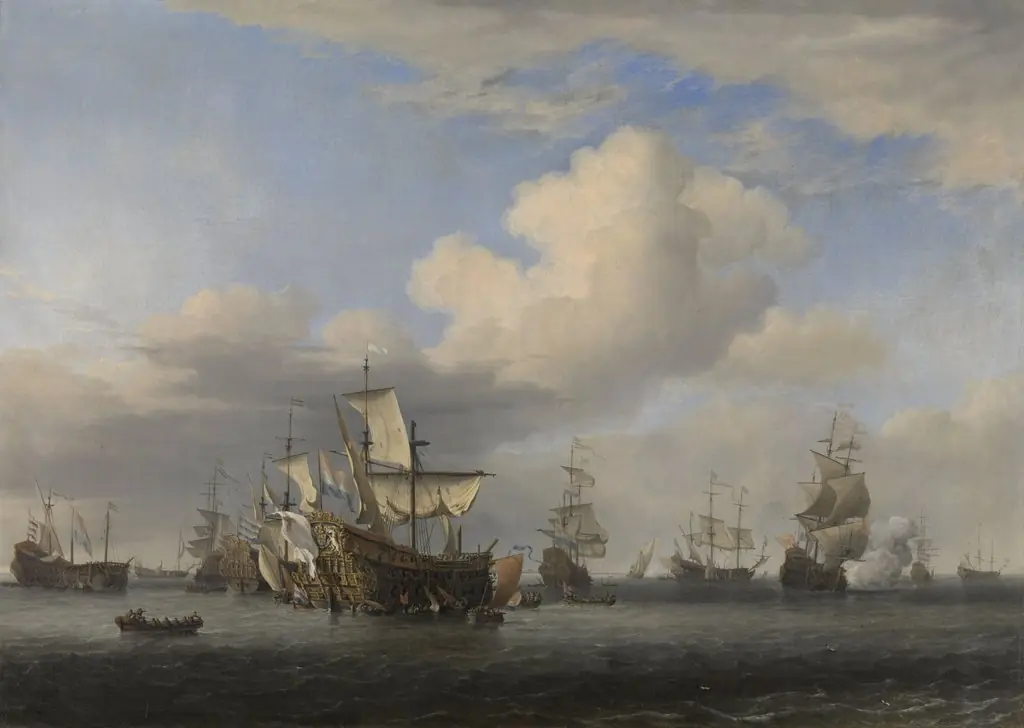 Captured English Ships after the Four Days’ Battle
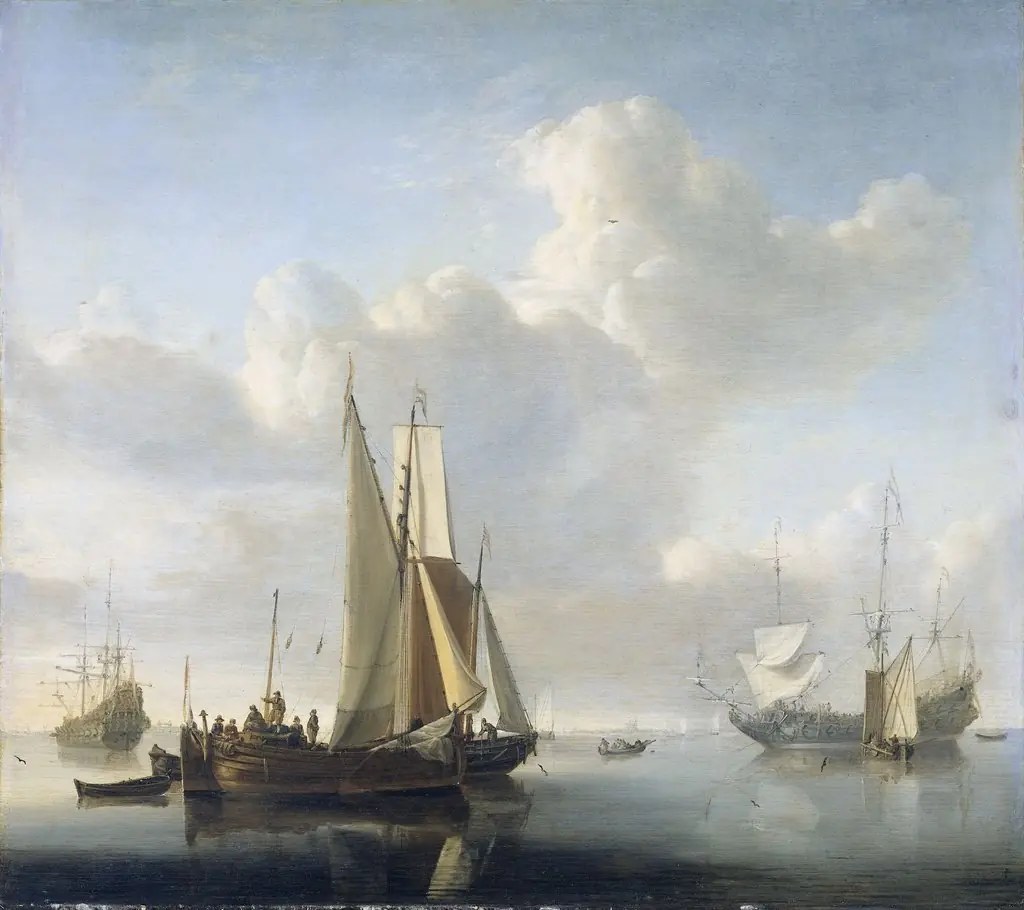 Ships off the coast