Artwork
Portrait of a man
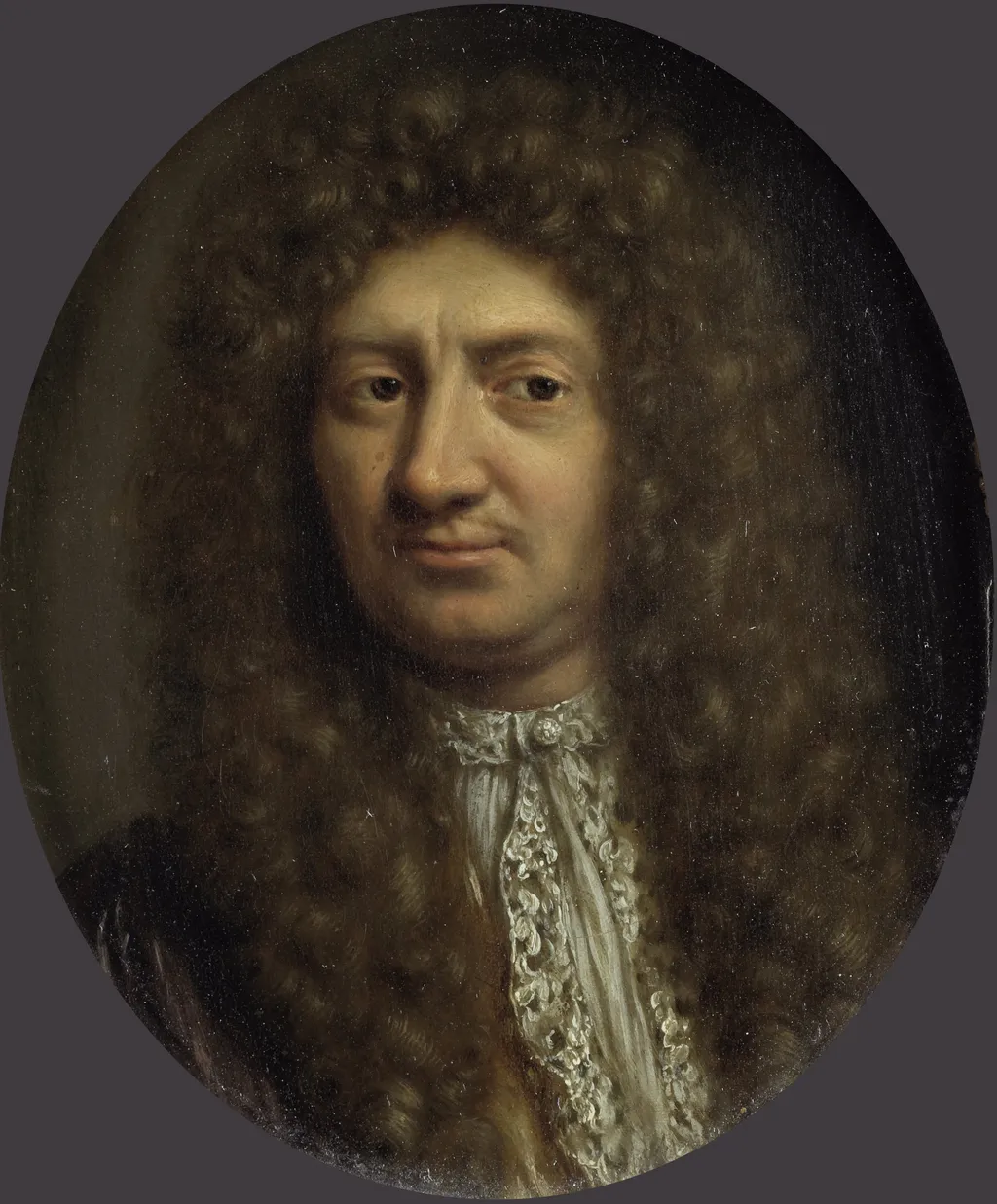
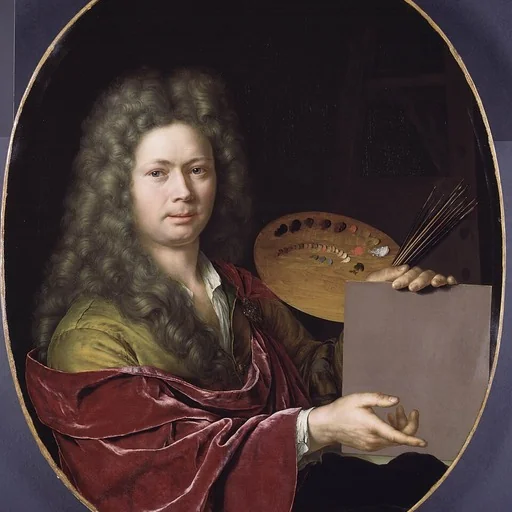
Portrait of a man is an oil painting by the Dutch Golden Age artist Willem van Mieris. It dates from 1670 and is held in the collection of the Rijksmuseum.
About this work
Overview
Willem van Mieris’s 1670 portrait of an unnamed gentleman is executed on a copper plate, giving the work a compact, round format reminiscent of a medallion. The figure is presented against a stark black background, his face illuminated by a soft light that isolates him from the surrounding darkness. The painting resides in the collection of the Rijksmuseum in Amsterdam.
Subject & Meaning
The sitter, a man with tightly curled hair and a solemn expression, is dressed in a dark coat trimmed with fur and a white lace collar. The direct gaze and restrained demeanor suggest a formal commission, likely intended to convey the subject’s social standing and personal gravitas without overt narrative elements.
Technique & Style
A subtle chiaroscuro modelled the face, using gentle illumination to accentuate the contours of the features while the deep black ground heightens the contrast.
Rendered on copper, the artist exploits the metal’s smooth surface to achieve fine detail, particularly in the rendering of the lace collar and fur trim. A subtle chiaroscuro modelled the face, using gentle illumination to accentuate the contours of the features while the deep black ground heightens the contrast. The brushwork remains refined and controlled, typical of van Mieris’s late‑Dutch classicism.
History & Provenance
Created in 1670, the portrait entered the Rijksmuseum’s holdings through acquisition in the early twentieth century, though earlier ownership records are sparse. Its presence in the museum’s Dutch Golden Age collection underscores van Mieris’s role as a prominent portraitist working in the tradition of his father, Frans van Mieris the Elder.
Context
The work reflects the Dutch Republic’s mid‑seventeenth‑century taste for intimate, finely finished portraits that emphasized individual character and material wealth. The use of copper as a support, while less common than canvas, was favored for its durability and capacity for luminous detail, aligning the piece with contemporary practices among elite portrait painters.
Artist & collection