Artwork
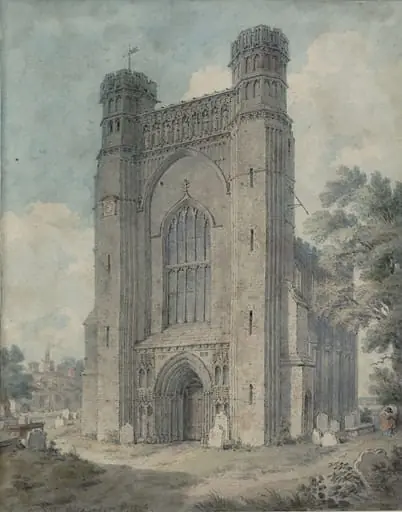
Higham Abbey near Rochester
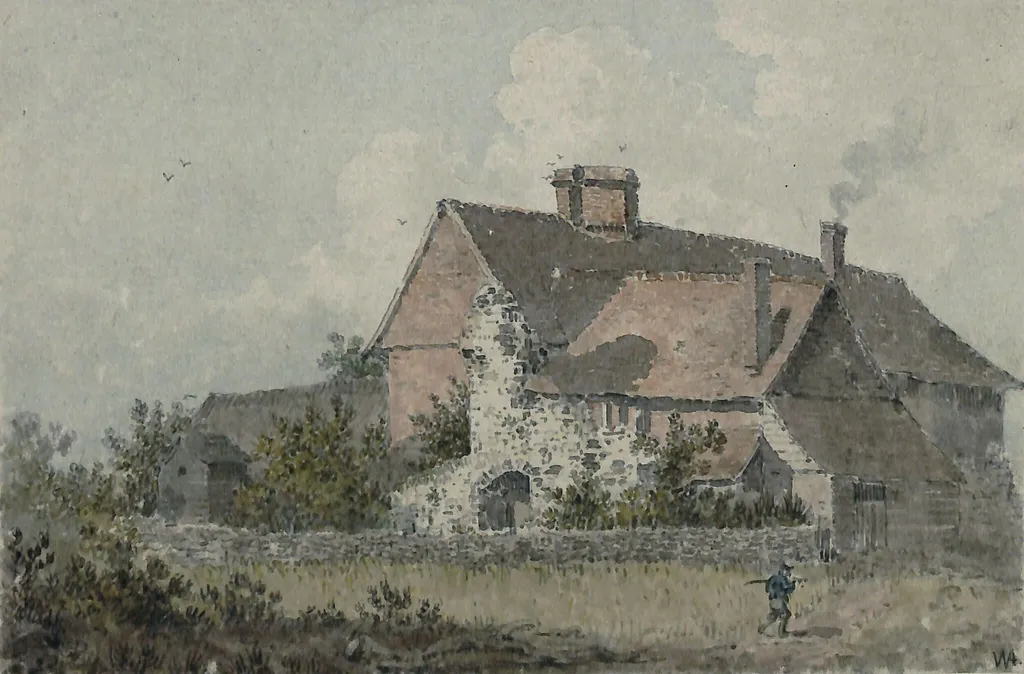
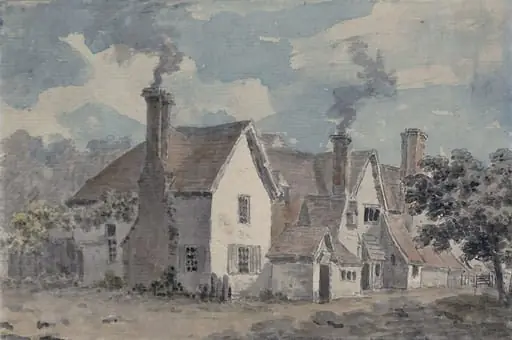
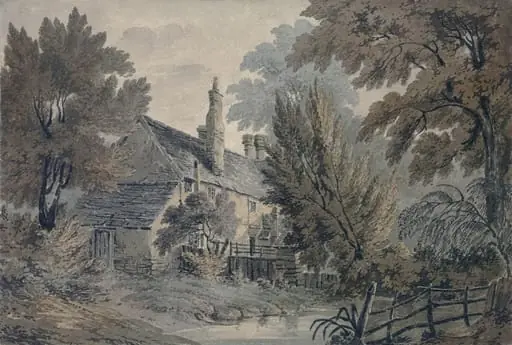
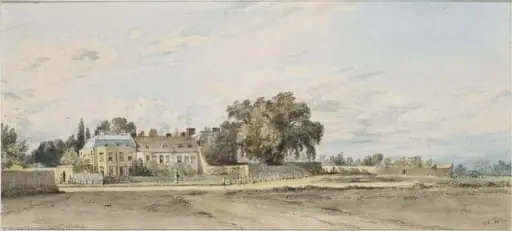
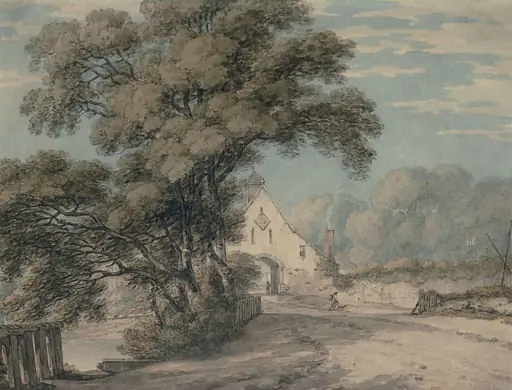
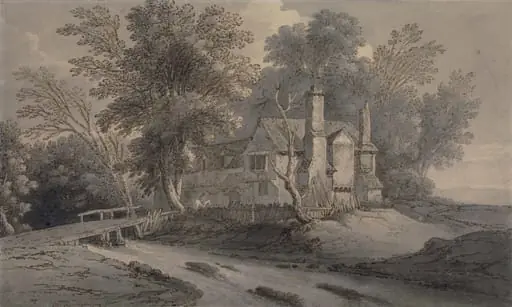
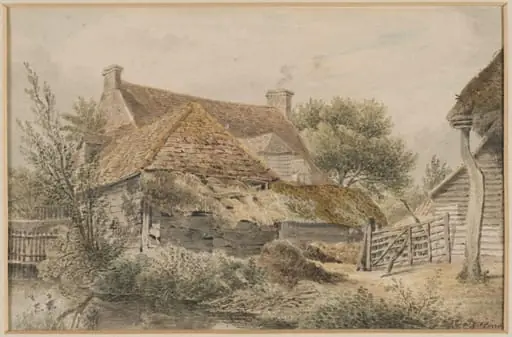
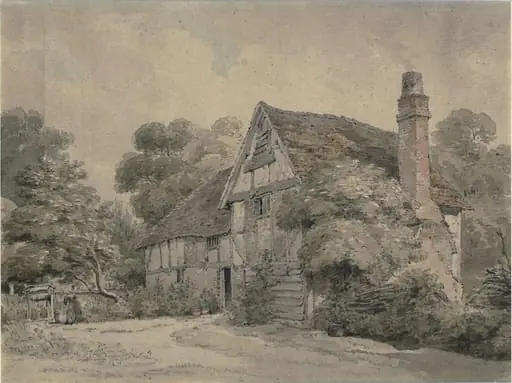
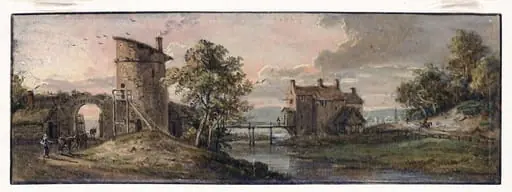
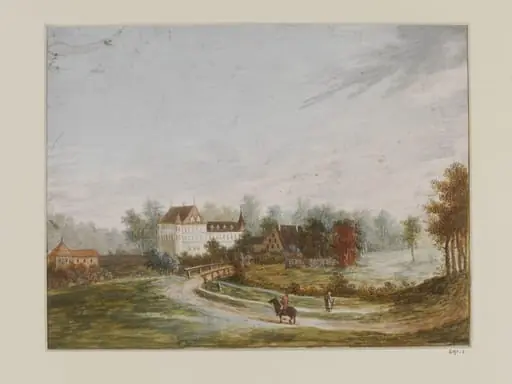
Higham Abbey near Rochester is a watercolor work on paper by the Biedermeier artist William Alexander. It dates from 1795 and is held in the collection of the Victoria and Albert Museum.
About this work
Overview
Painted in 1795 by William Alexander, this watercolour depicts Higham Abbey, a ruined structure near Rochester.
Painted in 1795 by William Alexander, this watercolour depicts Higham Abbey, a ruined structure near Rochester. The work is signed, initialled, and dated by the artist, confirming its origin and authorship. Rendered in delicate washes, the piece captures the quiet decay of a once-significant building, emphasizing its solitude and the passage of time through subtle tonal shifts rather than dramatic detail.
Subject & Meaning
The subject is the remnants of Higham Abbey, a medieval religious site reduced to partial ruins. A solitary figure in the foreground suggests human presence against the backdrop of abandonment. The composition conveys a sense of stillness and neglect, not as a tragedy but as a natural outcome of history. The building’s weathered form becomes a quiet monument to time’s erosion of institutional power and sacred space.
Technique & Style
Alexander employed transparent watercolour washes to suggest texture and atmosphere without heavy detail. The uneven stonework and broken roof are rendered with loose, uneven strokes, while the pale, overcast sky is built from soft gradients. Light is diffused, casting gentle shadows that enhance the building’s worn surfaces. The technique avoids sentimentality, favoring observational restraint and atmospheric harmony.
History & Provenance
Created during Alexander’s travels in southeastern England, the work reflects his interest in antiquarian subjects. It remained in private hands until entering the collection of the Victoria and Albert Museum, where it is preserved as part of a broader archive of British topographical watercolours. Its survival and documentation offer insight into late 18th-century artistic engagement with ruins.
Context
In the 1790s, British artists increasingly turned to ruins as subjects, influenced by Romantic sensibilities and growing interest in national heritage. Higham Abbey, though modest in scale, aligned with this trend — not as a grand monument but as an intimate, everyday relic. Alexander’s approach contrasts with grander antiquarian studies, focusing instead on quiet, unassuming decay within the landscape.
Legacy
The painting contributes to a body of work documenting England’s architectural past with quiet precision. While not widely exhibited, it remains a representative example of topographical watercolour from the period. Its preservation in a major museum ensures its continued role as a reference for understanding how artists of the time engaged with historical remnants through subtle, contemplative observation.
Artist & collection
Artist
William Alexander, known as Bill Alexander on his TV show, was a German painter, art instructor, and television host.