Artwork
Waltham Cross in 1812
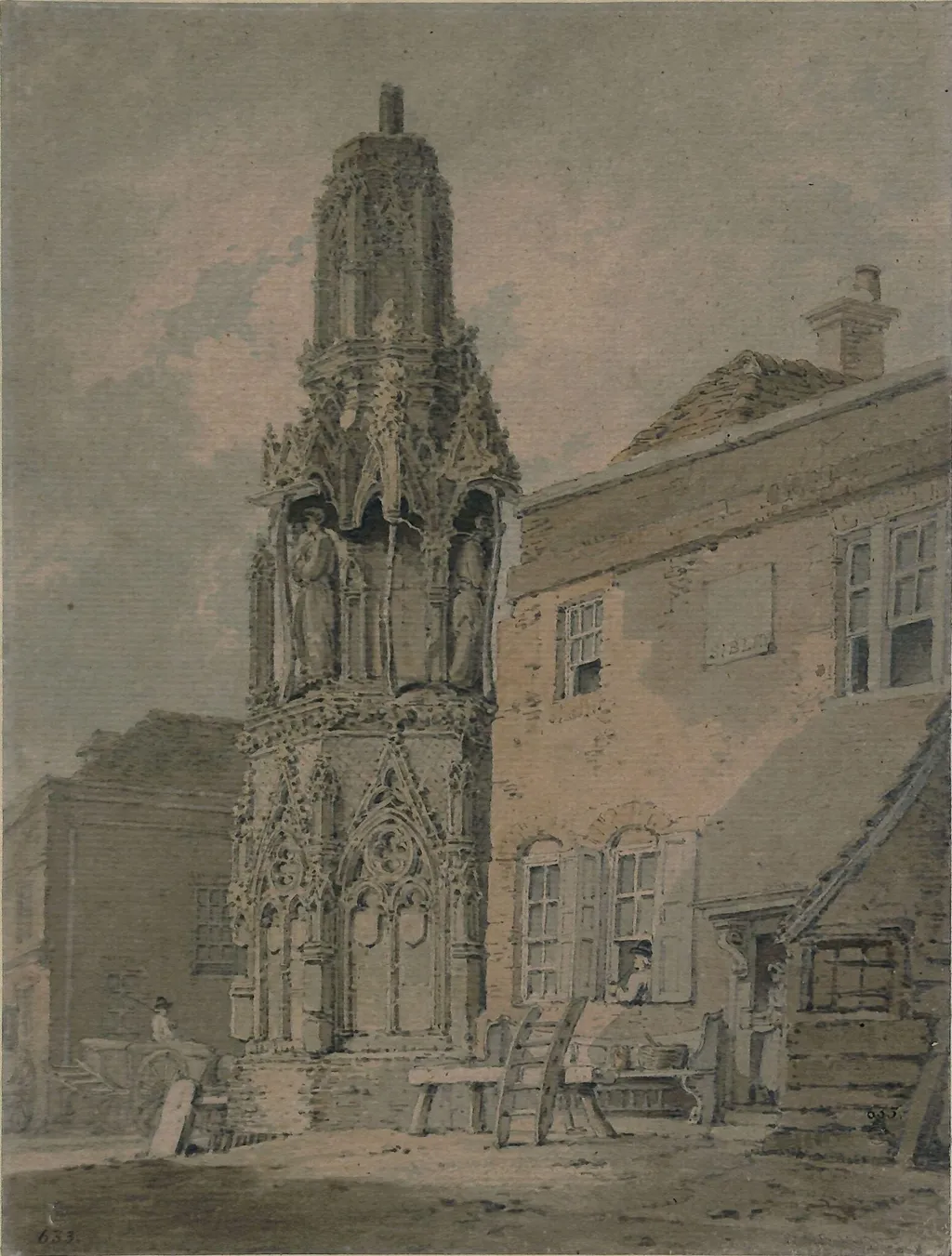
Waltham Cross in 1812 is a watercolor work on paper by the Romanticist artist William Alexander. It dates from 1812 and is held in the collection of the Victoria and Albert Museum.
About this work
Overview
William Alexander’s 1812 watercolour presents a view of Waltham Cross, a historic monument set within a modest urban landscape. The composition centers on the tall, elaborately carved cross, flanked by weathered brick buildings with wooden shutters. Rendered in a muted palette, the work balances the monument’s stone detail against a soft gray sky, inviting quiet observation of the scene.
Subject & Meaning
The focal point of the painting is the ornate cross, a memorial structure whose intricate carvings and statues convey its commemorative purpose. The surrounding architecture, showing signs of age and wear, frames the monument and suggests a continuity between the historic symbol and the everyday life of the town’s residents.
Technique & Style
Alexander employs a restrained range of earth tones for the buildings and monument, contrasting with a gentle gray wash for the sky. The watercolour medium allows for delicate layering that creates atmospheric depth, while fine brushwork captures the texture of brickwork and the detailed relief work of the cross.
History & Provenance
Signed by the artist, the work dates to 1812, situating it within the early nineteenth‑century British watercolour tradition. Its documentation links it directly to Alexander’s oeuvre, though further details of its ownership history remain limited.
Artist & collection
Artist
William Alexander, known as Bill Alexander on his TV show, was a German painter, art instructor, and television host.


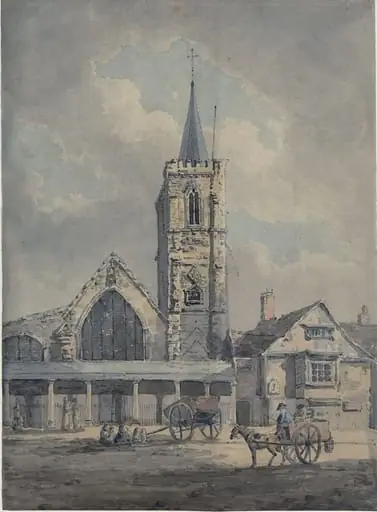 A Church in a Market Place
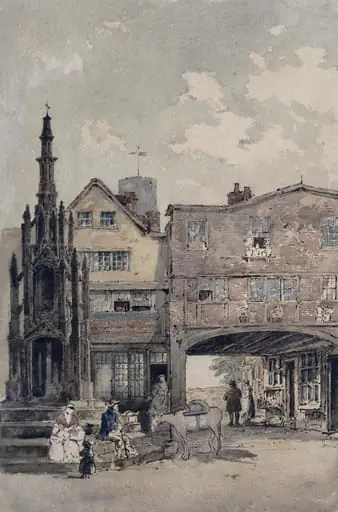 The Butter-Cross, Winchester
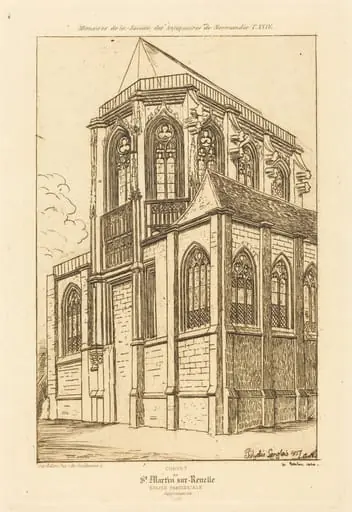 Chevet de St. Martin-sur-Renelle (The Apsis of the Church of St. Martin-sur-Renelle)
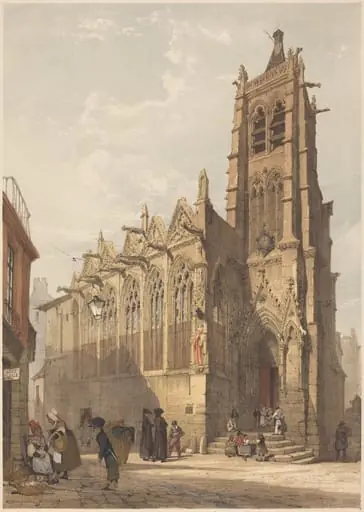 St. Séverin, Paris
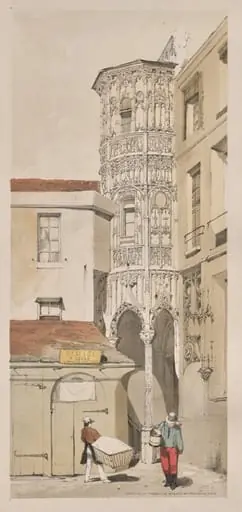 Picturesque Architecture in Paris, Ghent, Antwerp, Rouen: Hôtel de la Tremouille, Rue des Bourbonnois, Paris
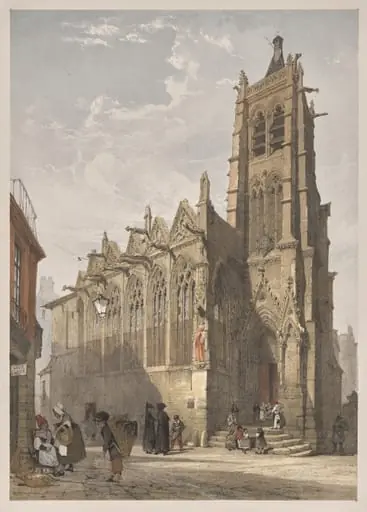 Picturesque Architecture in Paris, Ghent, Antwerp, Rouen: St. Severin, Paris
 Street View, Mortagne, Normandy
 Priory church, Elstow, Bedfordshire