Artwork
Little Marlow, Buckinghamshire
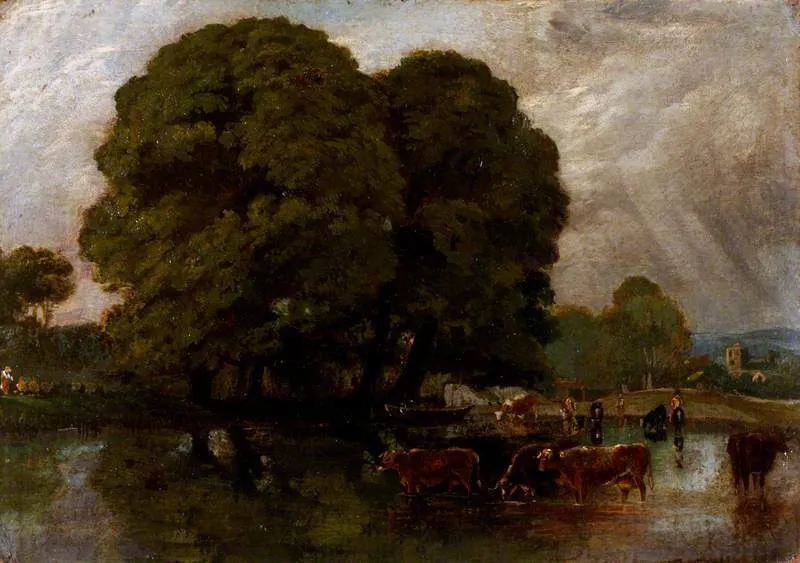
Little Marlow, Buckinghamshire is an unspecified painting by the British Romanticist artist William Alfred Delamotte. It dates from 1810 and is held in the collection of the Victoria and Albert Museum.
About this work
Overview
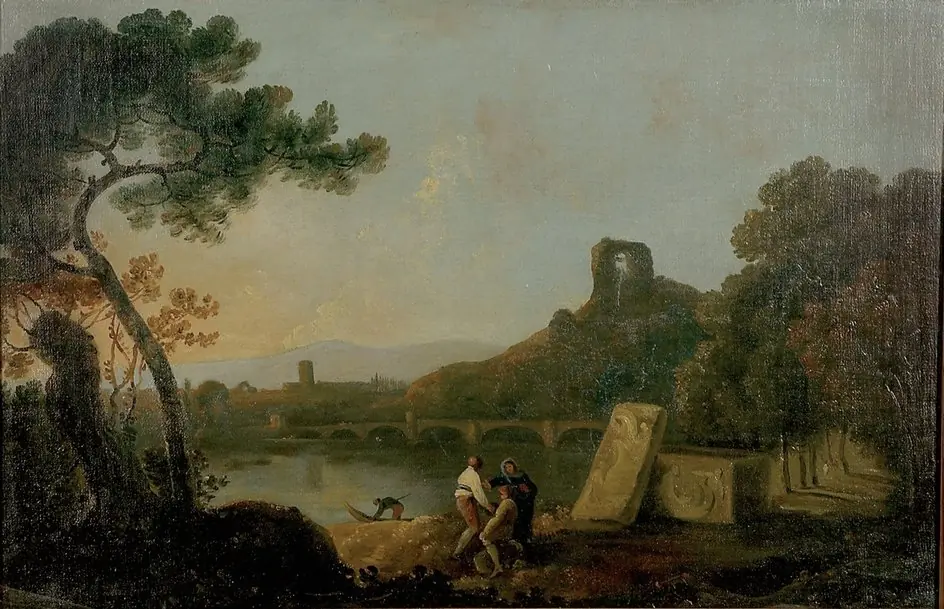
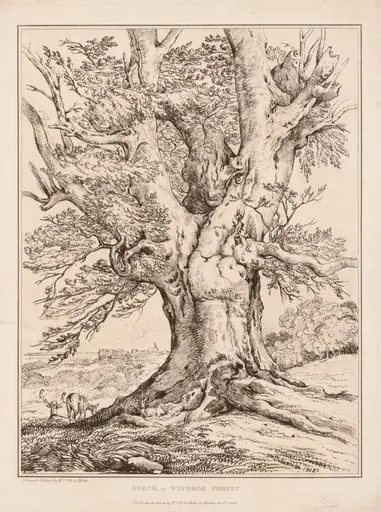
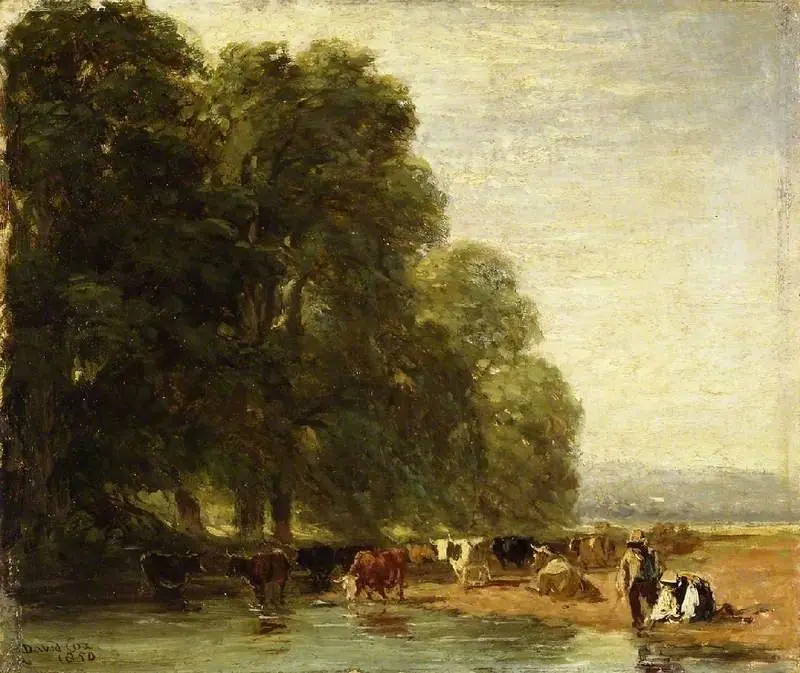
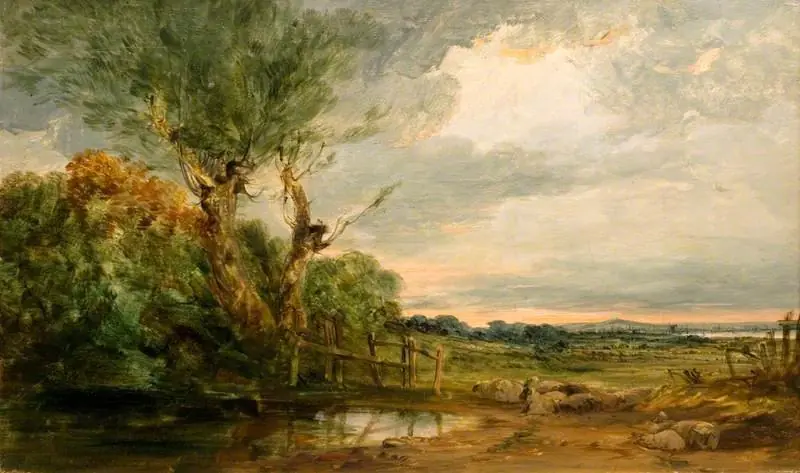
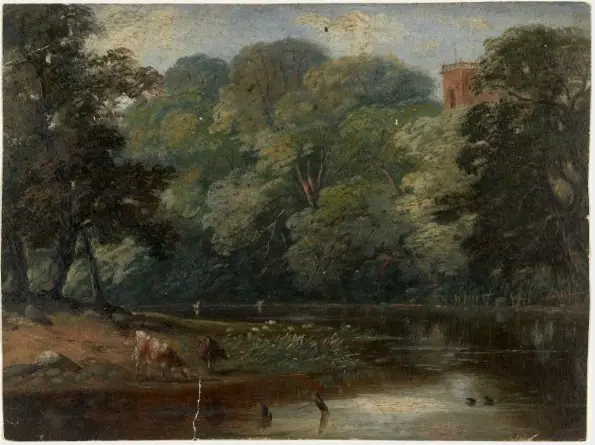
The composition centers on a broad, ancient tree whose limbs arch over still water, framing a group of cattle wading in the shallows.
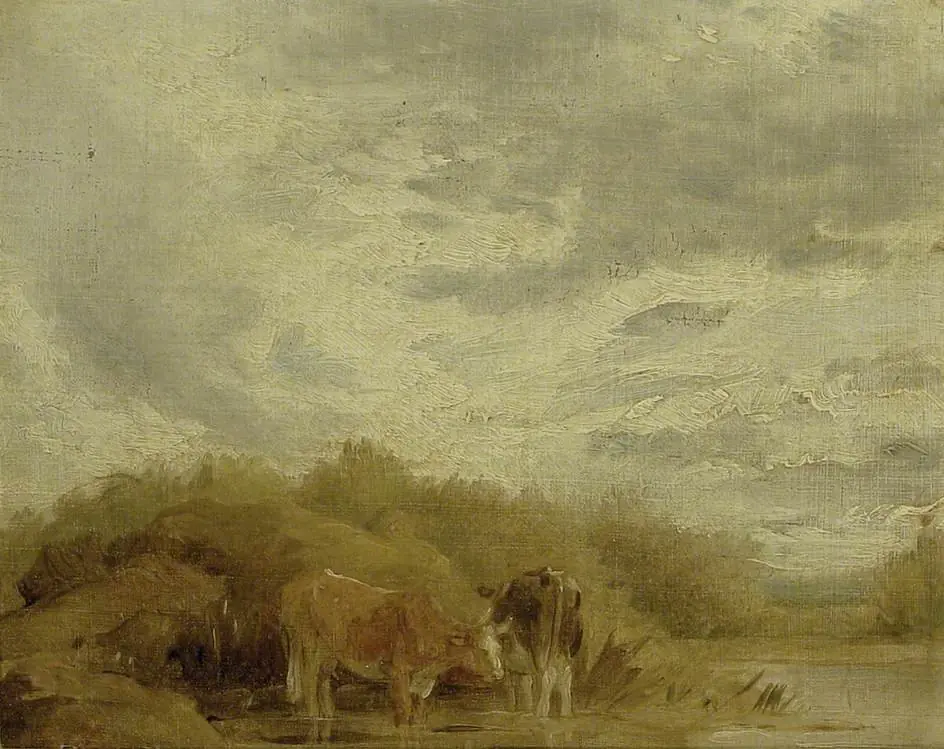
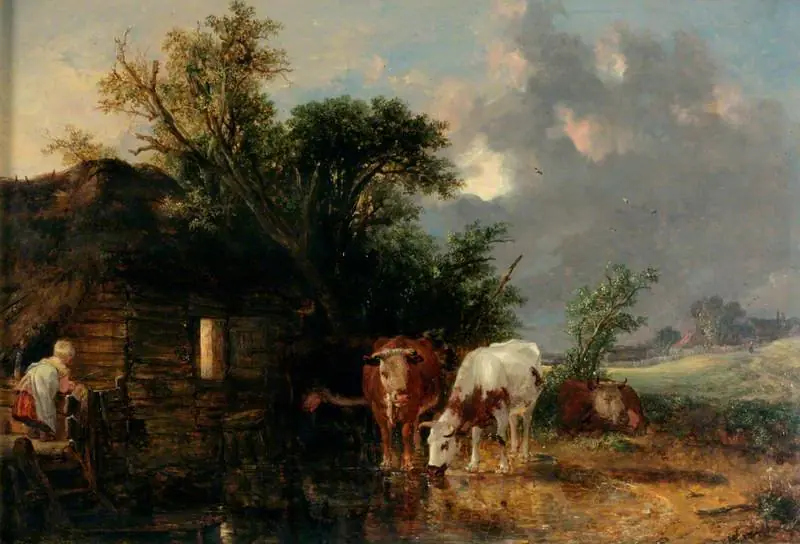
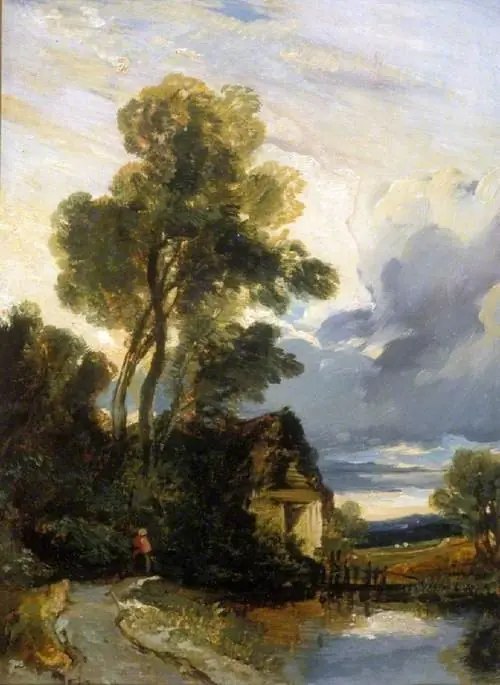
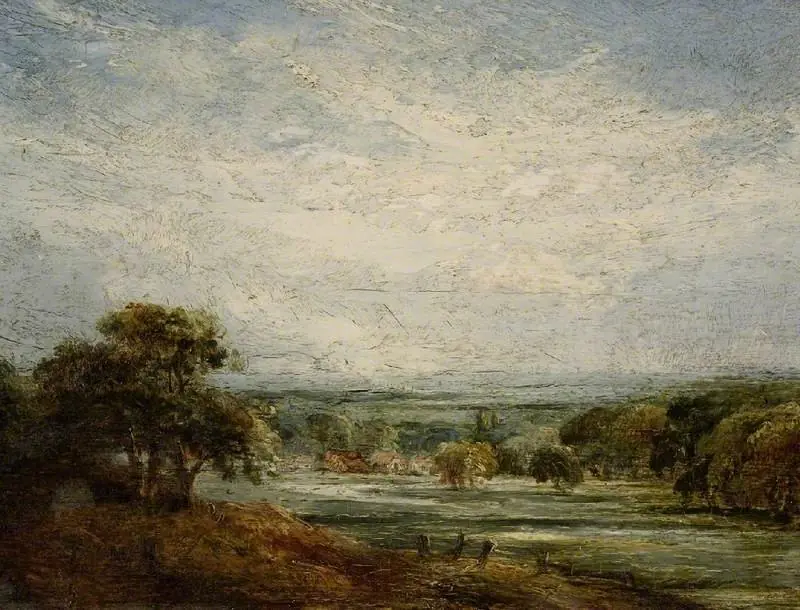
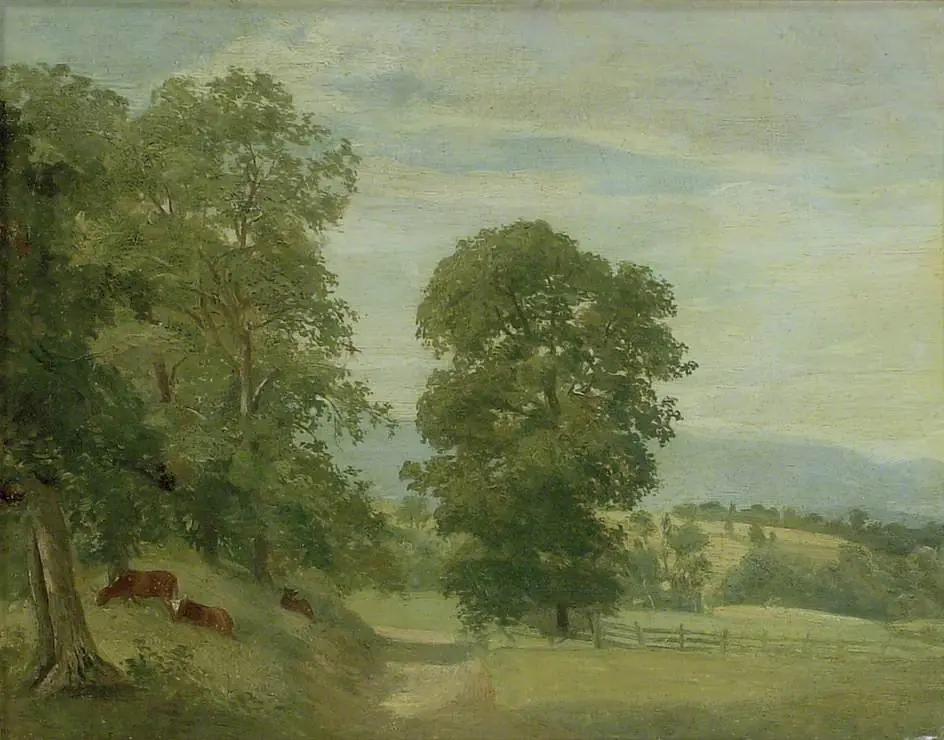
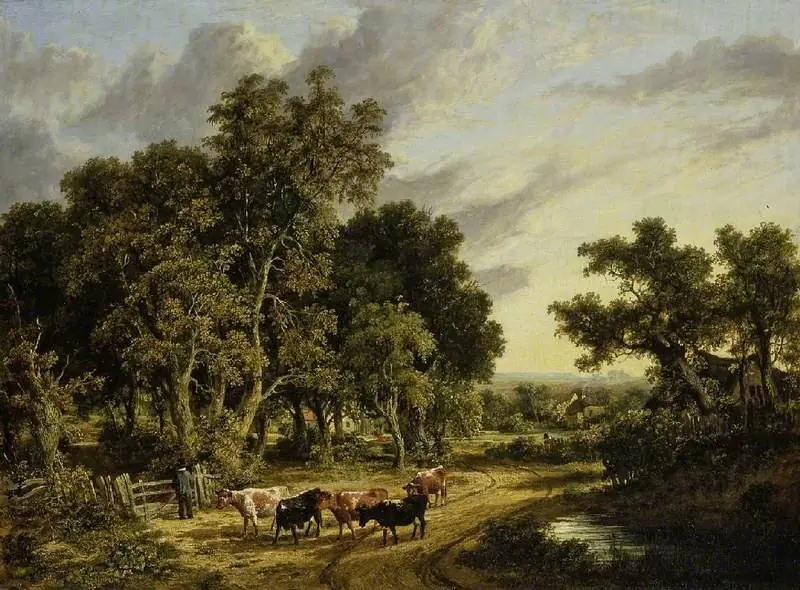
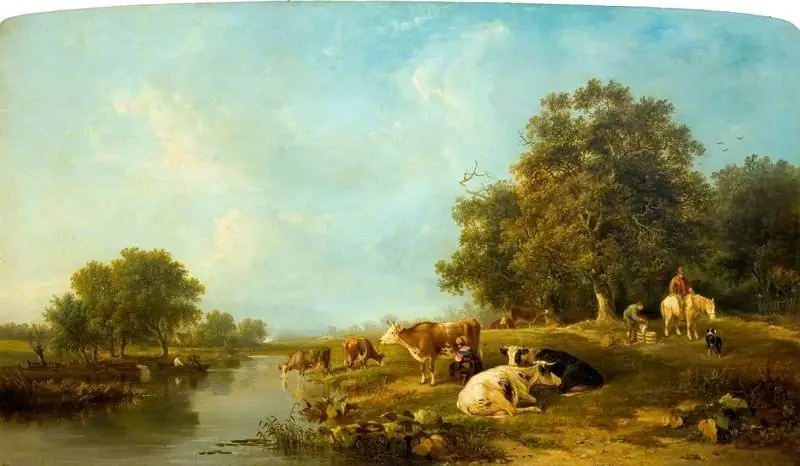
Painted in 1810 by William Alfred Delamotte, Little Marlow, Buckinghamshire depicts a quiet rural scene along the River Thames. The composition centers on a broad, ancient tree whose limbs arch over still water, framing a group of cattle wading in the shallows. Distant figures on the bank and rolling hills beyond suggest a peaceful, unremarkable moment in country life, rendered with careful observation rather than dramatic flourish.
Subject & Meaning
The painting presents an unidealized view of rural Buckinghamshire, focusing on everyday activity: cattle drinking, people walking, and the quiet interplay between land and water. There is no narrative or symbolic intent; instead, the work values the dignity of ordinary rural existence. The absence of human grandeur or pastoral myth reinforces a quiet realism, grounded in the rhythms of local life.
Technique & Style
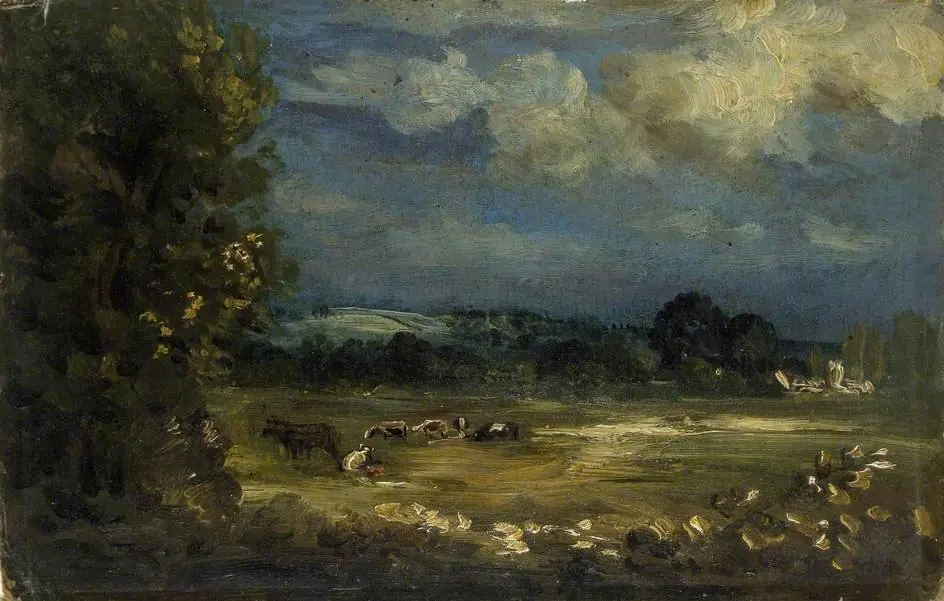
Delamotte employs soft tonal transitions to model form and suggest atmospheric depth. The bark of the central tree is rendered with textured brushwork, while the water’s surface captures subtle reflections through delicate strokes. Light filters through the clouds, casting gentle shadows that anchor the scene in natural time. The palette remains muted, favoring earth tones and pale blues, enhancing the calm, overcast mood.
History & Provenance
The painting entered the collection of the Victoria and Albert Museum in the 19th century, likely acquired as part of the museum’s broader effort to document British artistic responses to landscape. Its provenance before that is undocumented, but its preservation suggests it was valued by contemporaries for its quiet fidelity to place. It has remained in the museum’s holdings since, without significant public exhibition history.
Context
Created during a period when British landscape painting was shifting from idealized compositions toward direct observation, Delamotte’s work aligns with emerging topographical traditions. While not part of the Romantic movement’s grandeur, it reflects a growing interest in local scenery and everyday rural life, paralleling the rise of amateur topographical art and regional documentation in early 19th-century England.
Legacy
Little Marlow, Buckinghamshire stands as a modest but enduring example of early 19th-century British landscape observation. It contributes to the understanding of how artists outside the academic mainstream recorded their surroundings with quiet precision. Though not widely known, it remains a representative work of its time, valued for its sincerity and restrained technique.
Artist & collection
Artist
William Alfred Delamotte (1775–1863) was an English artist, born in Weymouth.