Artwork
Liege: the Bridge of Arches
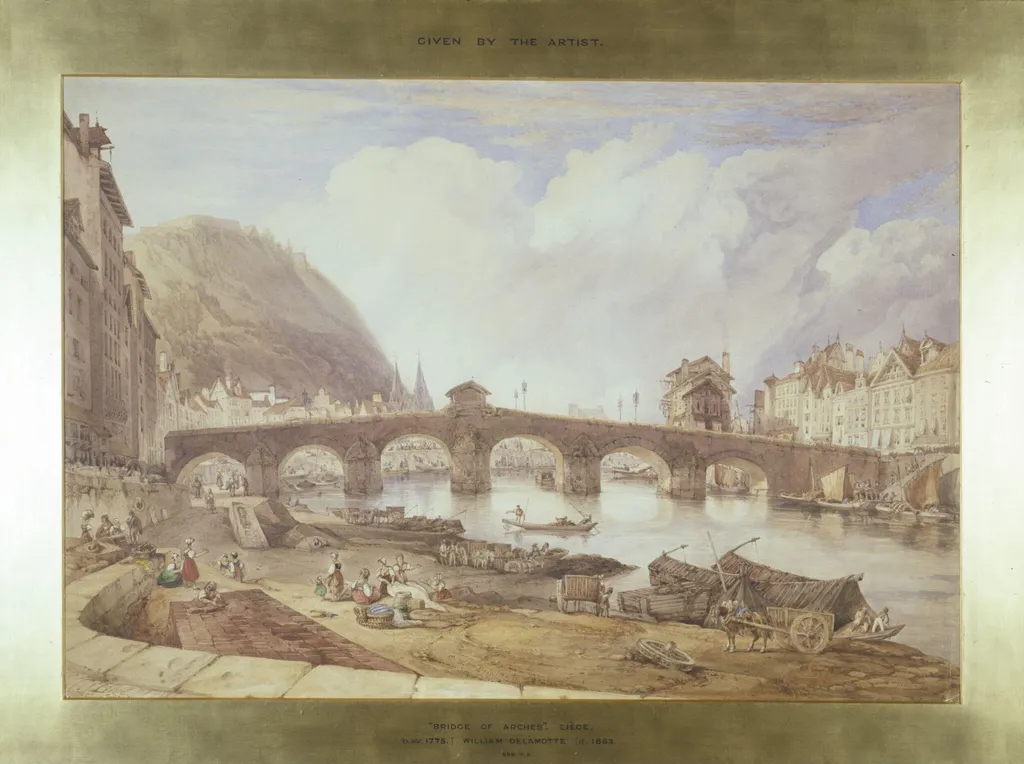
Liege: the Bridge of Arches is a watercolor work on paper by the Romanticist artist William Alfred Delamotte. It dates from 1837 and is held in the collection of the Victoria and Albert Museum. Painted in 1837, this watercolour by William Delamotte captures a view of Liège’s stone bridge with five arches spanning the Meuse River.
About this work
Overview
Painted in 1837, this watercolour by William Delamotte captures a view of Liège’s stone bridge with five arches spanning the Meuse River. The work is signed and dated, confirming its origin in the early 19th century. Rendered in delicate washes, it presents a quiet, observational moment rather than a grand spectacle, emphasizing the rhythm of everyday activity along the water's edge.
Subject & Meaning
The architecture—tall urban buildings on one side, a distant church steeple on the other—frames the river as both a functional artery and a social space.
The scene centers on the bridge as a hub of communal labor: women scrubbing laundry, laborers loading vessels, and pedestrians moving along the banks. The architecture—tall urban buildings on one side, a distant church steeple on the other—frames the river as both a functional artery and a social space. No single figure dominates; instead, the painting suggests a collective, unremarkable routine that defined urban life in Liège at the time.
Technique & Style
Delamotte employed transparent watercolour with loose, fluid brushwork to suggest movement and atmosphere. Soft gradients in the sky and water create a hazy, diffused light, while muted tones ground the scene in realism. Details like clothing folds and boat hulls are hinted at rather than meticulously rendered, reinforcing the work’s intimate, spontaneous quality.
History & Provenance
The painting was completed during Delamotte’s travels in the Low Countries, a period when British artists frequently documented continental landscapes. It entered the Victoria and Albert Museum’s collection in the 19th century, likely through acquisition or donation, and has remained part of its watercolour holdings since.
Context
In the 1830s, Liège was an industrializing city where the Meuse supported trade and domestic labor. Watercolours like this served as visual records for travelers and collectors interested in European urban life. Delamotte’s focus on ordinary activity aligns with a broader trend among British artists to depict scenes of daily existence over idealized vistas.
Legacy
The work remains a quiet example of 19th-century topographical watercolour, valued for its unembellished observation. It contributes to the historical record of Liège’s riverside infrastructure and the social habits tied to it. Though not widely exhibited, it continues to inform studies of European urban life and the watercolour tradition.
Own this work as a print
Artist & collection
Artist
William Alfred Delamotte (1775–1863) was an English artist, born in Weymouth.

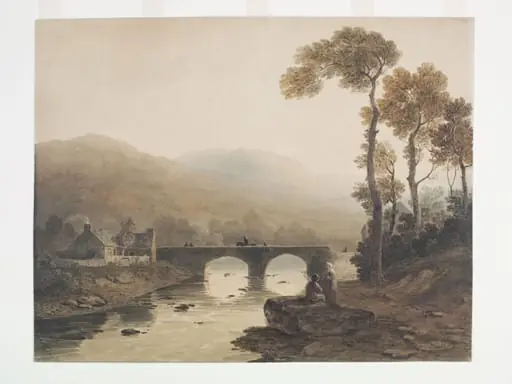 Beddgelert Bridge
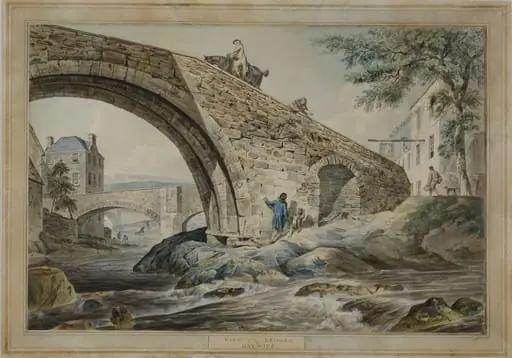 View of the Bridges at Hawick
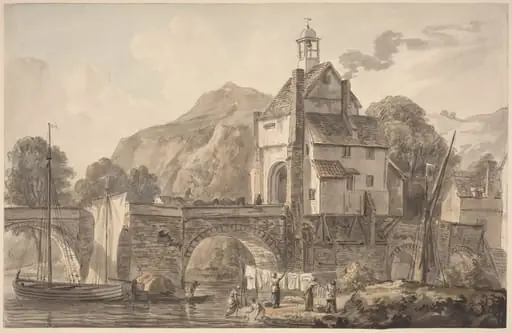 The Bridge at Bridgnorth in Shropshire
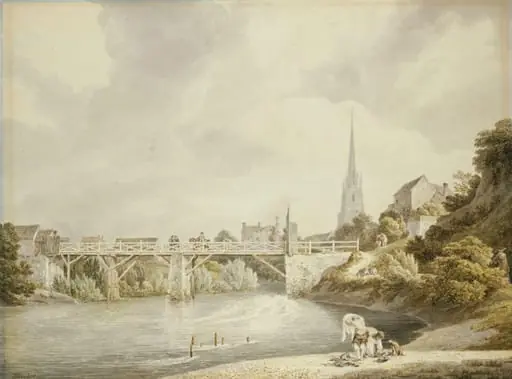 Bridge at Monmouth, with St. Mary's Church in the background
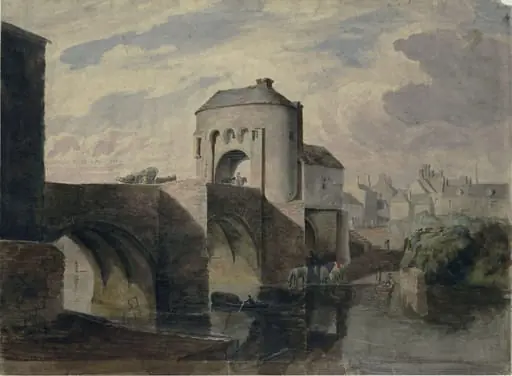 Bridge over the River Monmow, Monmouth
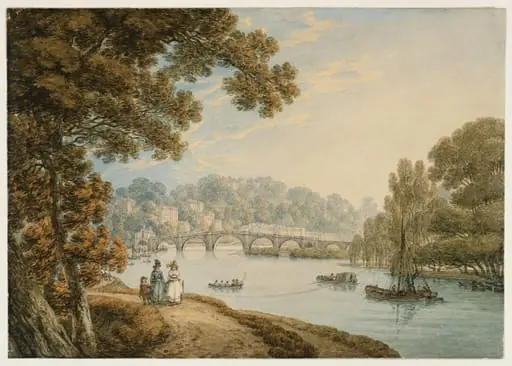 Richmond, Surrey
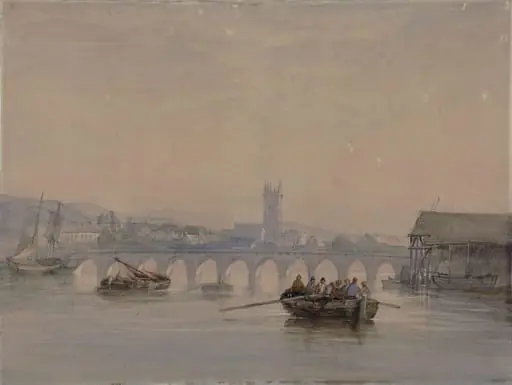 Barnstaple, Devon
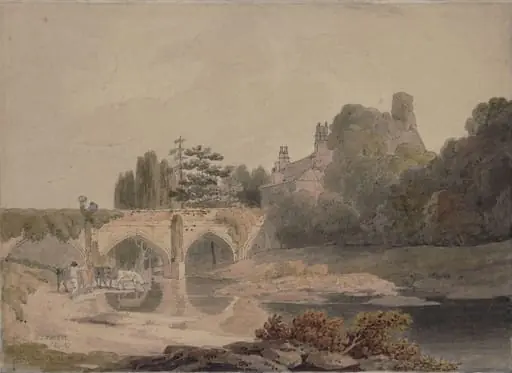 Eltham bridge, Kent
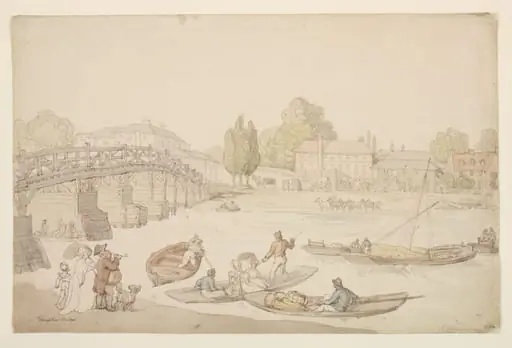 Untitled
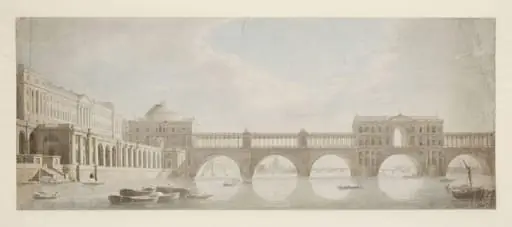 Perspective view of a Bridge of Magnificence over the Thames at Somerset House