Artwork
St. Matthew
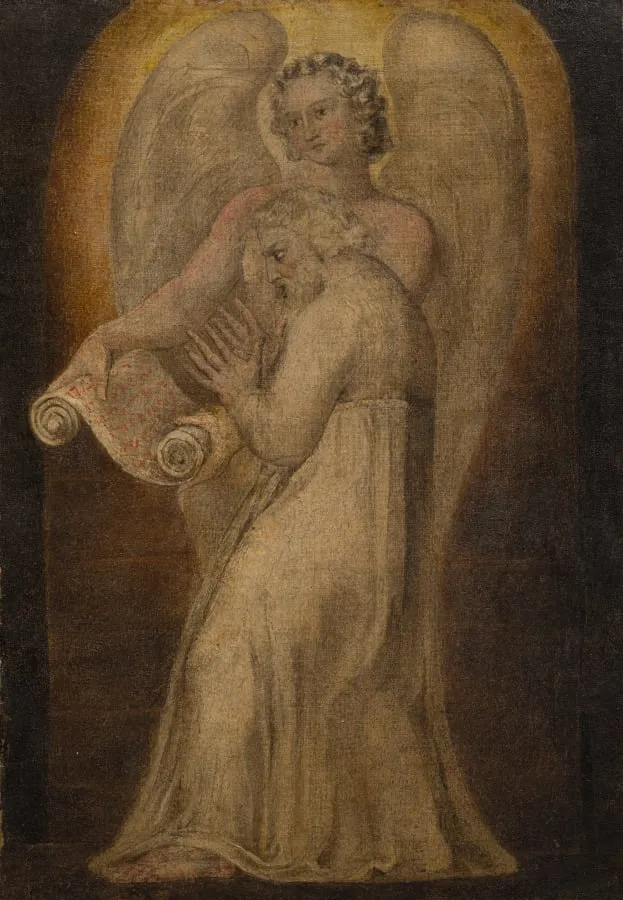
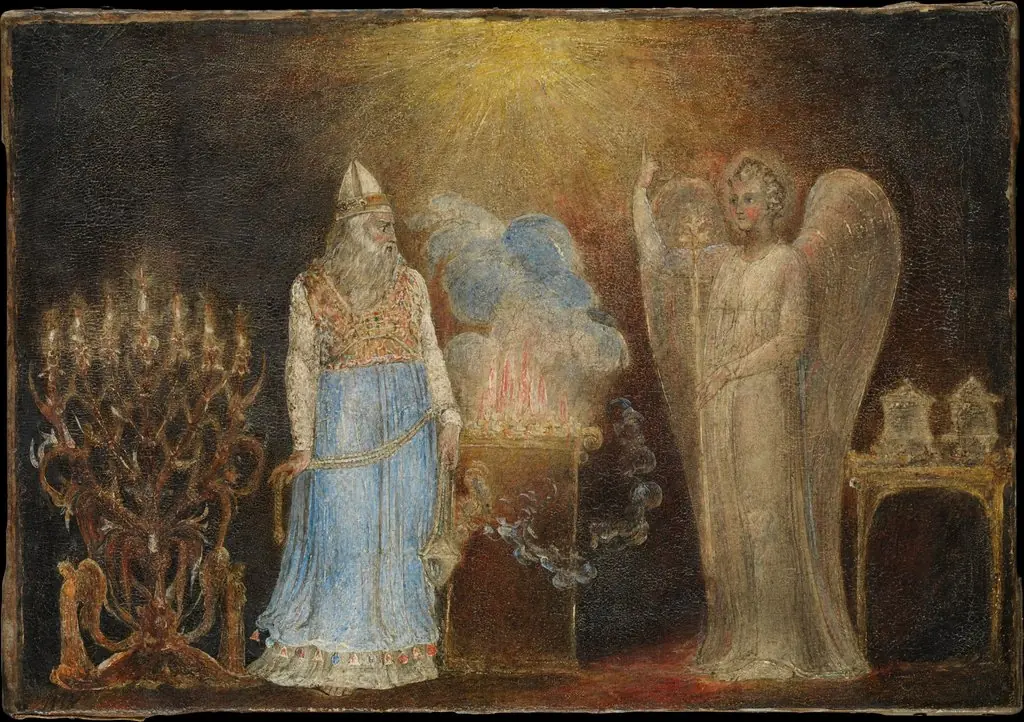
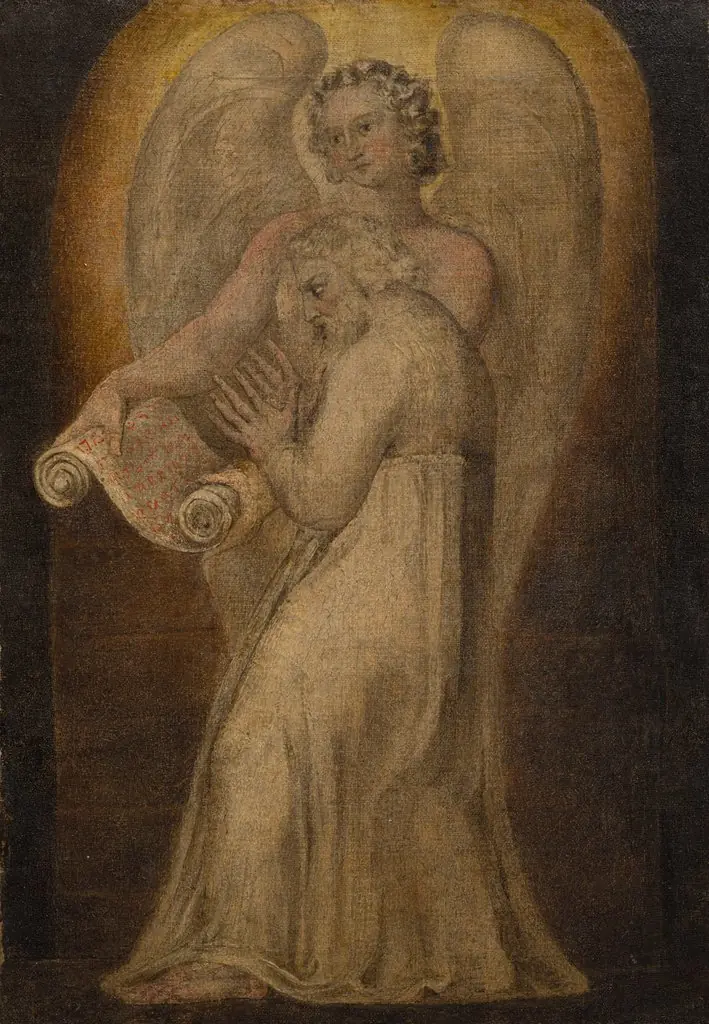
St. Matthew is an unspecified painting by the British Romanticist artist William Blake. It dates from 1799 and is held in the collection of the Cleveland Museum of Art. This painting depicts Saint Matthew, one of the four evangelists, receiving divine inspiration from an angel.
About this work
Most artists of his time ignored his work, but a few collectors paid him to paint exactly what he saw in his mind.
A man in a red robe clutches a book while an angel leans over his shoulder, pointing at the pages. The figures glow against a dark, swirling background, as if lit from within.
Blake painted this after seeing visions—he claimed angels and prophets visited him. Most artists of his time ignored his work, but a few collectors paid him to paint exactly what he saw in his mind.
To see more of Blake’s strange, glowing figures, look up *William Blake (British, 1757–1827)*.
Overview
This painting depicts Saint Matthew, one of the four evangelists, receiving divine inspiration from an angel. Rendered in a luminous, ethereal style, the scene unfolds against a dark, turbulent backdrop that seems to absorb light rather than reflect it. The figures appear to emit their own glow, suggesting an inner spiritual radiance. The work reflects William Blake’s personal mystical experiences, which he claimed were real visions rather than imaginative constructs.
Subject & Meaning
The moment captured shows Saint Matthew, dressed in red, clutching a book as an angel leans over him, guiding his hand. The angel’s presence signifies divine communication, not mere instruction. Blake interpreted such encounters as literal spiritual events, aligning the evangelist’s reception of scripture with his own experiences of angelic visitations. The scene conveys inspiration as an intimate, overwhelming encounter with the sacred, not a passive act of writing.
Technique & Style
Blake employed a highly personal visual language: figures emerge from deep shadows with internal luminescence, their forms outlined with delicate precision. The swirling, indeterminate background contrasts with the clarity of the central figures, heightening their otherworldly presence. His method combined watercolor and ink with hand-printed relief etching, allowing him full control over composition and tone, bypassing conventional academic techniques of his time.
History & Provenance
Created in the early 19th century, this work was part of a series Blake produced for a small circle of patrons who supported his visionary art. Unlike mainstream artists, Blake did not rely on public exhibitions or royal commissions. Instead, a handful of collectors, recognizing the uniqueness of his vision, commissioned him to illustrate biblical and literary subjects exactly as he perceived them in his visions.
Context
During Blake’s lifetime, the art world favored neoclassical ideals of order and realism. His symbolic, emotionally charged imagery and rejection of academic norms led to marginalization. Yet his work resonated with a few intellectuals and collectors drawn to Romanticism’s emphasis on imagination and spiritual experience, creating a niche audience that sustained his output despite broader indifference.
Legacy
Though largely overlooked in his own era, Blake’s integration of personal mysticism with visual art laid groundwork for later symbolic and expressionist movements. His insistence on artistic autonomy and the validity of inner vision influenced 20th-century artists and writers who valued subjective experience over institutional authority. Today, his works are studied as pivotal expressions of spiritual individualism in Western art.
Artist & collection
Artist
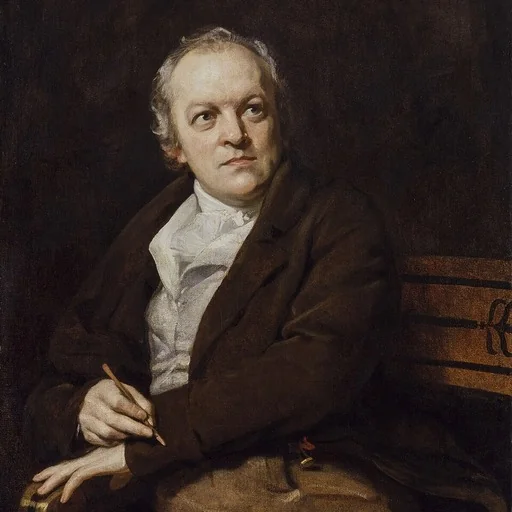
William Blake (28 November 1757 – 12 August 1827) was an English poet, painter and printmaker.