Artwork
Assumption of the Virgin
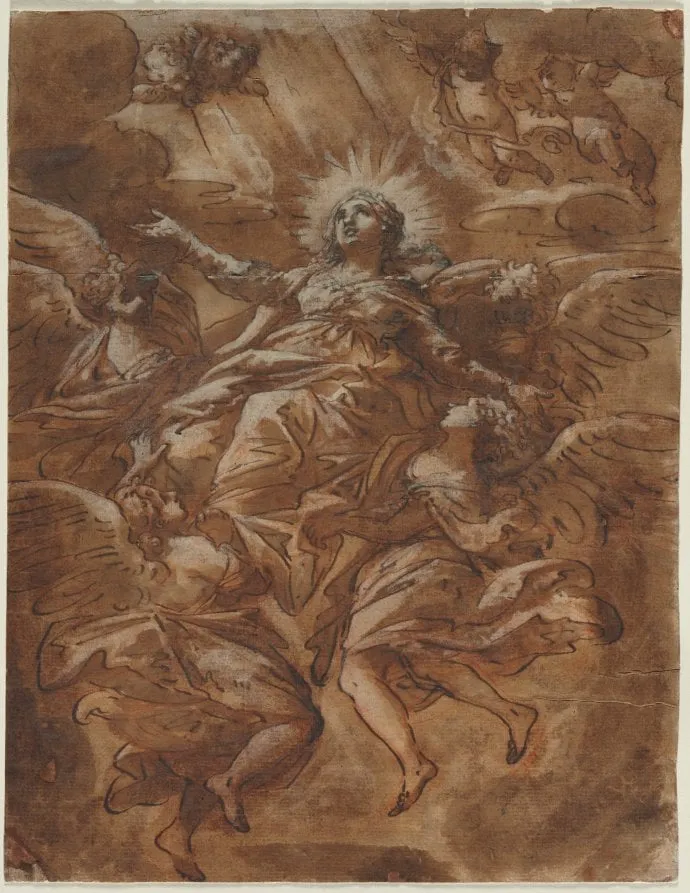
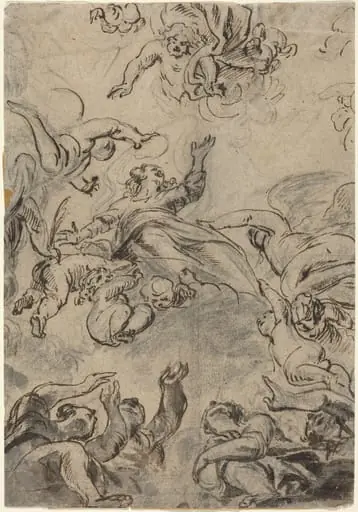
Assumption of the Virgin is a drawing by the Baroque artist Unknown. It dates from 1604 and is held in the collection of the Cleveland Museum of Art. This drawing depicts the Virgin Mary ascending to heaven, surrounded by angels in dynamic poses.
About this work
Overview
This drawing depicts the Virgin Mary ascending to heaven, surrounded by angels in dynamic poses. Her outstretched arms and flowing robe suggest motion, while a soft halo encircles her head. The figures emerge from a dark, undefined background, emphasizing their upward trajectory. The composition focuses on vertical movement, with light guiding the viewer’s eye toward the heavens.
Subject & Meaning
The scene illustrates the theological belief in Mary’s bodily assumption into heaven, a doctrine central to Catholic tradition. The angels, some in prayer and others in flight, serve as divine attendants, reinforcing her sacred status. Their varied gestures convey reverence and celestial harmony, transforming the moment into a visual affirmation of spiritual transcendence.
Technique & Style
The artist employs chiaroscuro to model forms with strong contrasts between light and shadow, lending volume and drama to the figures. The dark background isolates the subjects, heightening their luminous presence. Fluid lines and layered hatching suggest movement in fabric and wings, capturing the ethereal quality of the ascent without relying on color.
History & Provenance
The drawing’s origin is tied to a larger devotional context, likely created as a preparatory study for a painted altarpiece or fresco. Its intimate scale suggests it was intended for private contemplation or workshop use. No definitive record of early ownership exists, but its style aligns with early 17th-century Italian draftsmanship.
Context
Produced during the Baroque era, the work reflects the Counter-Reformation Church’s emphasis on emotional, accessible religious imagery. Artists used dramatic lighting and dynamic compositions to inspire devotion. This drawing fits within a broader tradition of depicting Marian ascensions, common in Catholic regions where visual theology reinforced faith.
Legacy
Though not widely exhibited, the drawing exemplifies how draftsmanship conveyed theological narratives with precision and emotional force. Its use of chiaroscuro influenced later religious illustrations, preserving the Baroque aesthetic in smaller, portable formats. It remains a testament to the role of preparatory works in shaping devotional art.
Artist & collection

 Domestic Scene
 Giacomo and Cardinal Marco, investing Andrea, Abbot of San Zeno, with his Benefice
 The Nymph of Fontainebleau
 Portrait of a Woman
 Madonna and Child with Saints in the Enclosed Garden
 Venus and Minerva
 Family Group of Four on Sofa
 Wall painting from Room H of the Villa of P. Fannius Synistor at Boscoreale
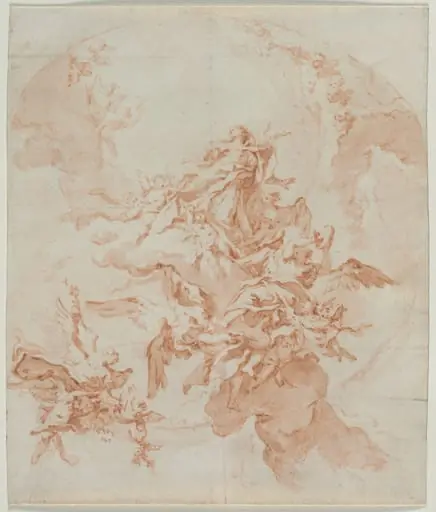 The Assumption of the Virgin
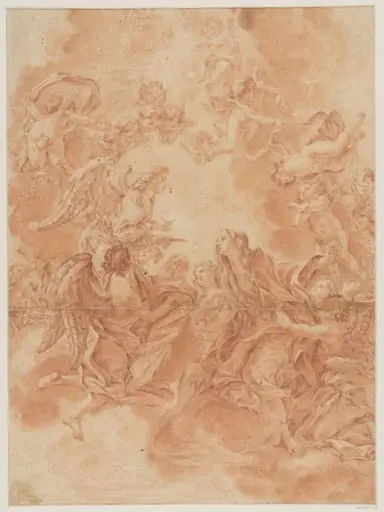 The Communion of St Mary Magdalene
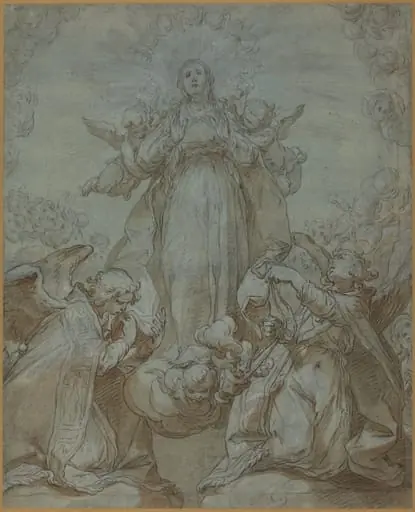 The Virgin in Glory
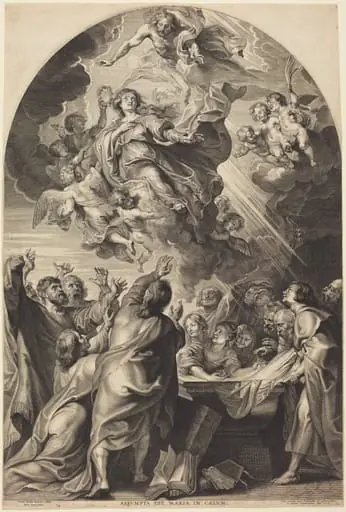 The Assumption of the Virgin
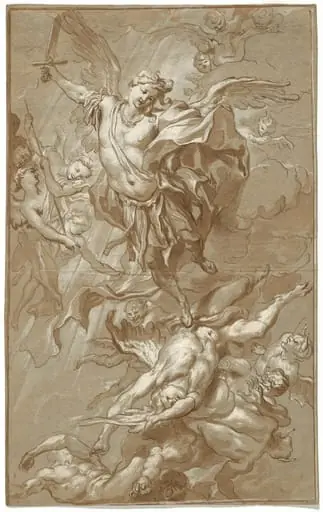 Saint Michael and the Rebel Angels
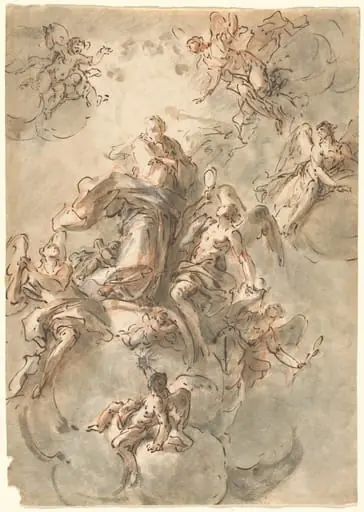 Virgin of the Immaculate Conception
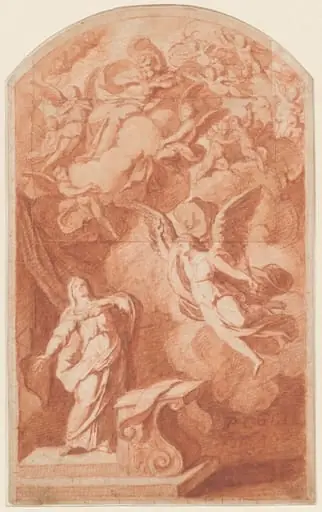 The Annunciation
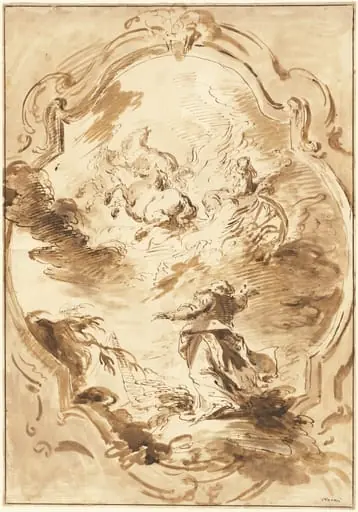 Elisha Watching Elijah Ascend in the Fiery Chariot
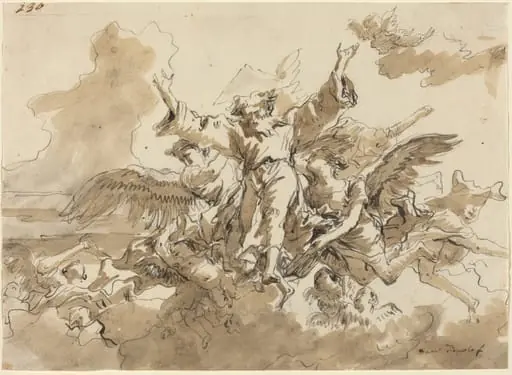 Creation of the Universe
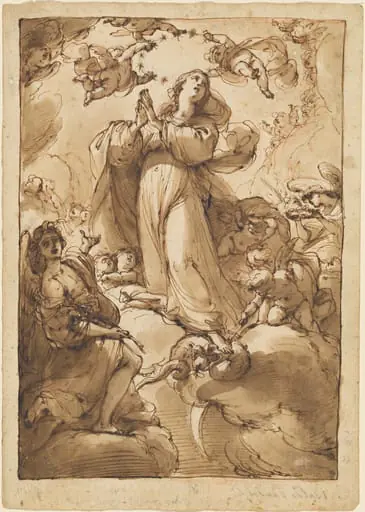 The Virgin of the Immaculate Conception
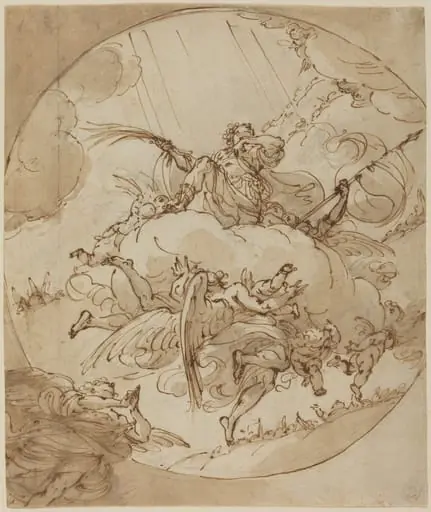 The Apotheosis of San Vitale
 The Assumption of the Virgin