Artwork
Drawings of architectural details in the abbey at Royaumont
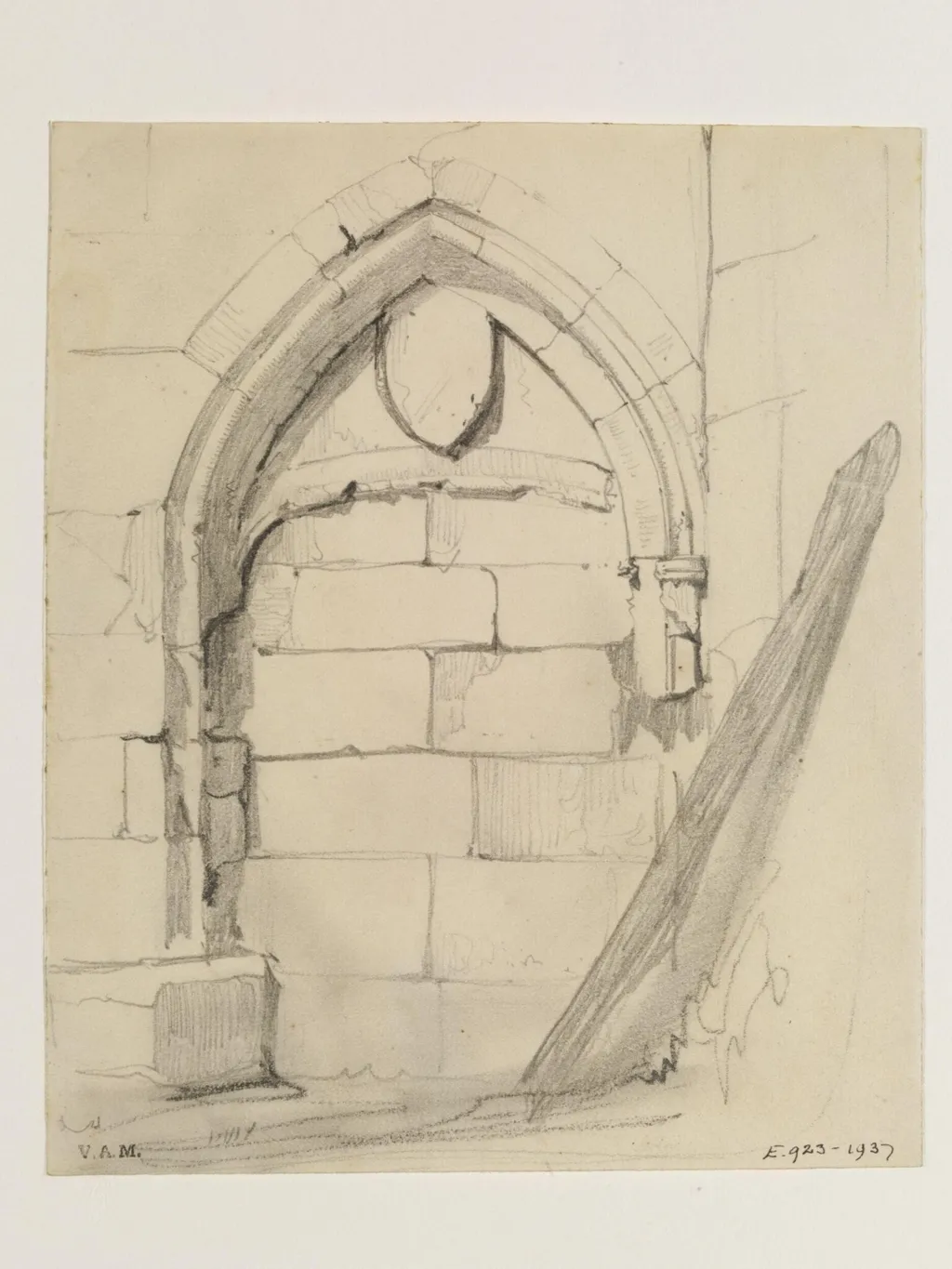
Drawings of architectural details in the abbey at Royaumont is a drawing by the Romanticist artist William Callow. It dates from 1833 and is held in the collection of the Victoria and Albert Museum.
About this work
Overview
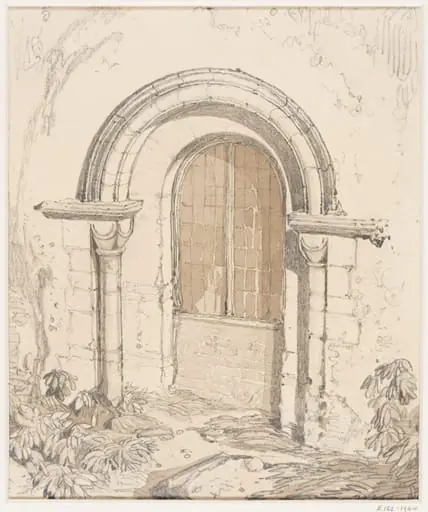
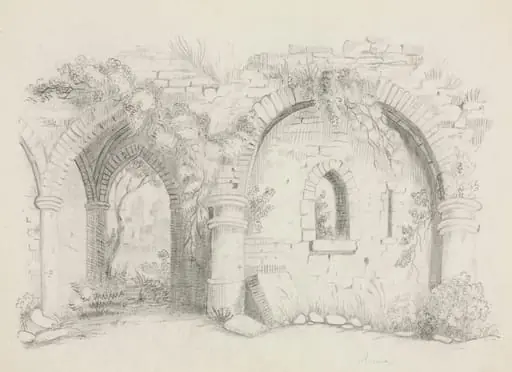
Executed with minimal detail, the drawing focuses on a single stone archway crowned by a circular window.
This 1833 pencil sketch by William Callow captures fragments of the medieval abbey at Royaumont, France. Executed with minimal detail, the drawing focuses on a single stone archway crowned by a circular window. The artist’s hand is deliberate yet unhurried, recording structural elements without embellishment. The work belongs to a series of observational studies made during Callow’s travels, reflecting a practice rooted in documentation rather than finished composition.
Subject & Meaning
The drawing isolates an arch and window, emphasizing the abbey’s Romanesque masonry and the play of natural light across its surfaces. The leaning wooden fragment to the right suggests the presence of tools or scaffolding, hinting at the site’s ongoing use or repair. Rather than depicting grandeur, Callow privileges quiet, everyday architectural details—offering a quiet meditation on decay, function, and the passage of time.
Technique & Style
Rendered in soft pencil, the sketch employs light, fluid lines to suggest texture and shadow without heavy definition. The rough stone blocks are indicated by sparse hatching, while the arch’s curvature is conveyed through subtle tonal shifts. The absence of strong outlines and the presence of erased or faint marks reveal a working process—this is not a polished illustration but a rapid, attentive record of form and light.
History & Provenance
Created during Callow’s travels in France in the early 1830s, this drawing was likely part of a personal portfolio used to study Gothic and Romanesque architecture. It entered the collection of the Victoria and Albert Museum, where it remains among hundreds of similar studies by 19th-century British artists documenting continental ruins. Its preservation reflects the period’s scholarly interest in architectural heritage.
Context
In the 1830s, British artists and architects increasingly traveled to France to study medieval structures, often driven by the Gothic Revival’s influence. Royaumont Abbey, partially ruined since the French Revolution, offered a compelling subject for such studies. Callow’s sketch aligns with this trend—its focus on fragmentary details mirrors the era’s fascination with authenticity and the aesthetic of decay.
Legacy
Though not widely exhibited, this drawing contributes to a broader archive of 19th-century architectural observation. It exemplifies how artists served as visual recorders of heritage before photography became common. Its modest scale and unadorned technique continue to inform how we understand the relationship between drawing, memory, and the preservation of historical structures.
Artist & collection