Artwork
Window in the Foscari Palace, Venice
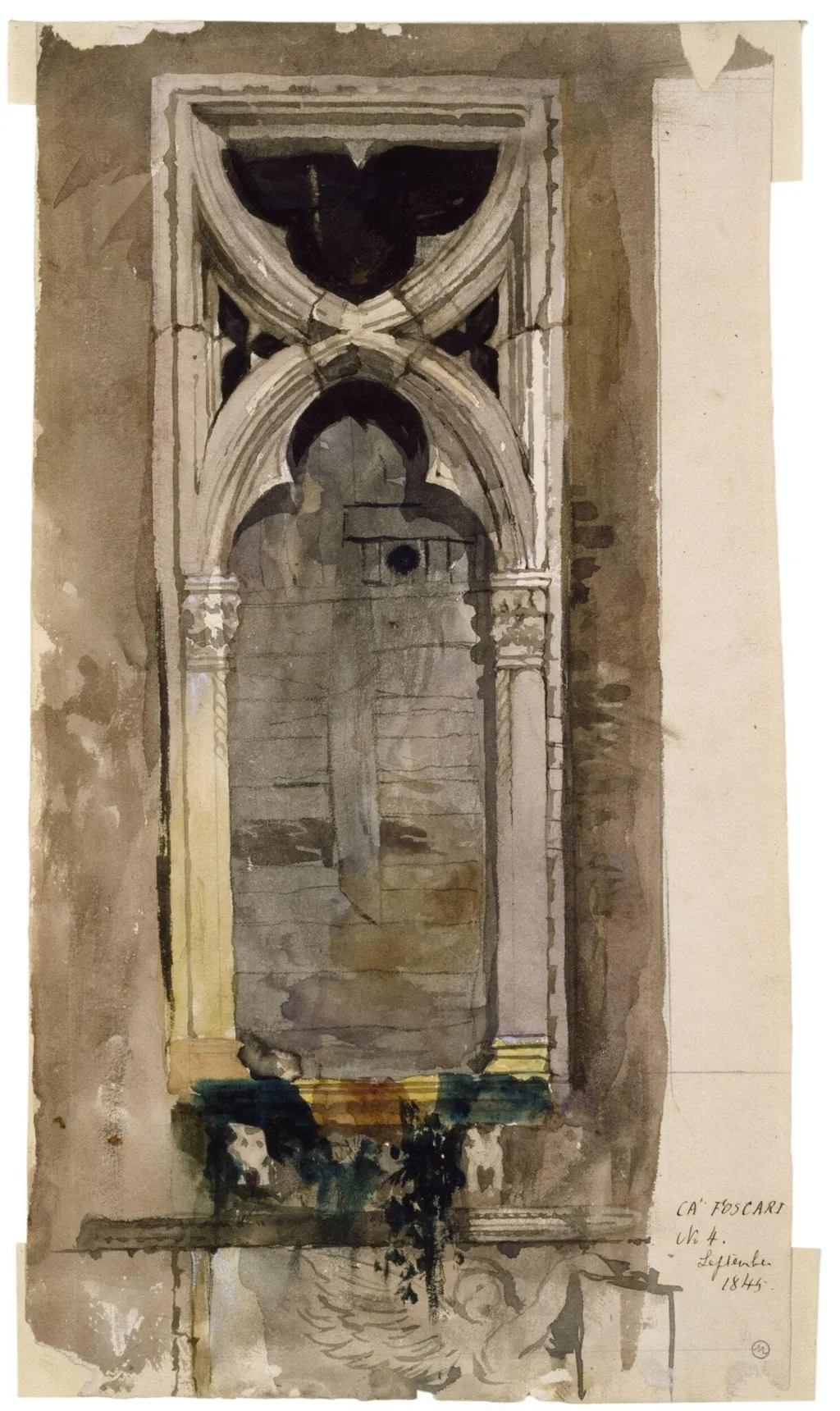
Window in the Foscari Palace, Venice is a watercolor work on paper by the Romanticist artist John Ruskin. It dates from 1845 and is held in the collection of the Victoria and Albert Museum.
About this work
Overview
This watercolour sketch depicts a window in the Foscari Palace, Venice, created by John Ruskin in 1845 as a preliminary stage for a potential book illustration.
Subject & Meaning
The sketch focuses on architectural detail, reflecting Ruskin's advocacy for Venetian Gothic as an exemplar of cultural unity. The window's intricate design embodies his argument for the beauty of medieval craftsmanship.
Technique & Style
Executed in highly coloured watercolour, the sketch showcases Ruskin's draughtsmanship skills, honed under Copley Fielding and James Duffield Harding. The vibrant colours, despite the potential for black and white reproduction, highlight Ruskin's emphasis on capturing the essence of the subject.
History & Provenance
Created during Ruskin's 1845 Venetian sketching trip, this work was not ultimately reproduced in his seminal work 'The Stones of Venice' (1851-1853), unlike many of his other architectural sketches from the period.
Context
Part of Ruskin's broader effort to document and promote Venetian Gothic architecture, the sketch aligns with the themes of 'The Stones of Venice', advocating for the preservation and appreciation of medieval architectural heritage.
Legacy
While not directly published in 'The Stones of Venice', the sketch contributes to Ruskin's influential body of work promoting Gothic Revival and the detailed study of architectural beauty, impacting 19th-century art, architecture, and criticism.
Artist & collection


 Pier of Choir, Ely Cathedral
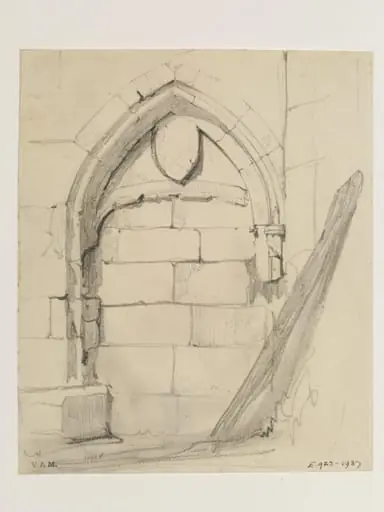 Drawings of architectural details in the abbey at Royaumont
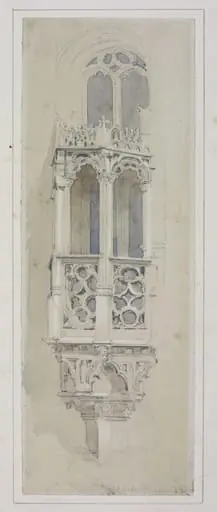 Sketch of a window and balcony, Hotel de Ville, Brussels
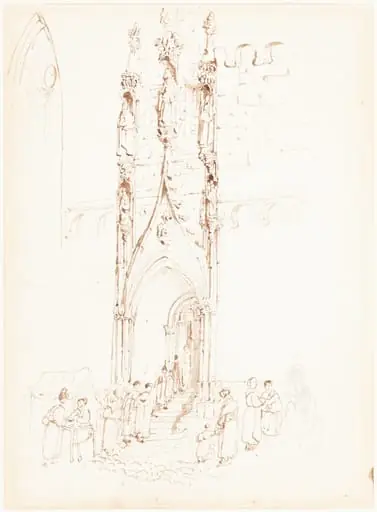 A Gothic Arch
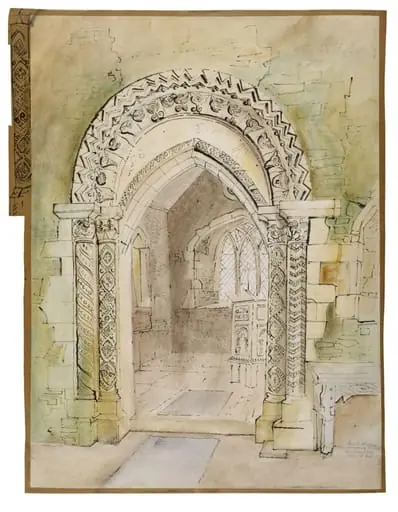 Chancel Arch, St. Peter's, Stanton Low, Buckinghamshire
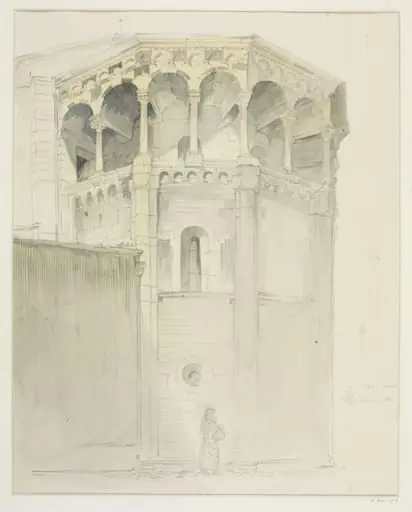 Architectural drawing
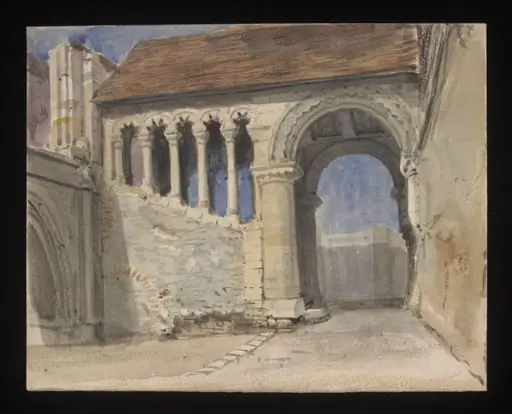 Watercolour drawing by the Grieve family, probably by Thomas Grieve, showing a Norman building at Canterbury
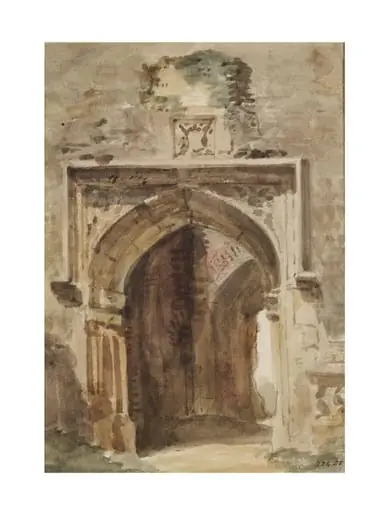 East Bergholt Church: south archway of the ruined tower
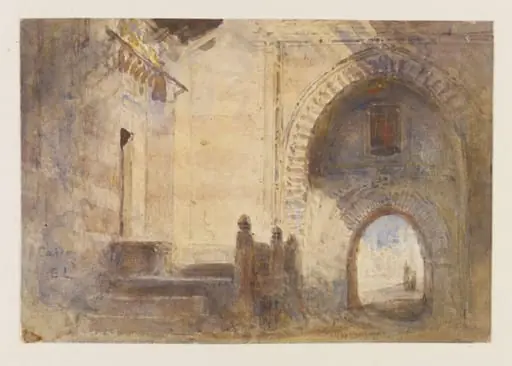 A Gateway in Cairo
![Interior of the Mosque of Aya Sofya, Istanbul [Interior of Hagia Sophia, Constantinople], by John Frederick Lewis](https://artifactworldgallery.com/img/john-frederick-lewis--interior-of-the-mosque-of-aya-sofya-istanbul-interior-of-hag--f81f7cc6554fed68-w320.webp) Interior of the Mosque of Aya Sofya, Istanbul [Interior of Hagia Sophia, Constantinople]
Interior of the Mosque of Aya Sofya, Istanbul [Interior of Hagia Sophia, Constantinople] Prague Cathedral
 Untitled