Artwork
The Avon Gorge and Hotwell
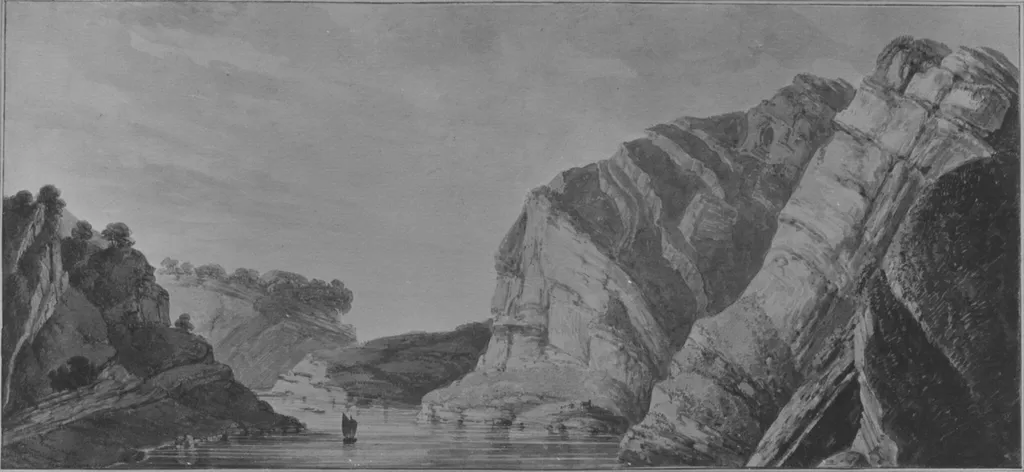
The Avon Gorge and Hotwell is a watercolor work on paper by the British Romanticist artist William Daniell. It dates from 1790 and is held in the collection of the Victoria and Albert Museum.
About this work
Overview
Executed in transparent washes, the work records a quiet, unidealized stretch of the River Avon, where steep limestone cliffs descend to the water’s edge.
Created in 1790, this watercolour by William Daniell captures the Avon Gorge and the nearby Hotwell district in Bristol. Executed in transparent washes, the work records a quiet, unidealized stretch of the River Avon, where steep limestone cliffs descend to the water’s edge. The composition emphasizes natural topography over human activity, reflecting a growing interest in landscape as a subject in its own right.
Subject & Meaning
The scene centers on the rugged geology of the gorge, with cliffs rising abruptly from the river. A solitary boat near the shore suggests human presence without disrupting the solitude of the setting. Sparse vegetation clings to rocky ledges, reinforcing the sense of nature’s resilience. The painting conveys no narrative or symbolism, instead inviting contemplation of the land’s quiet, enduring form.
Technique & Style
Daniell employed delicate watercolour washes to model the cliffs’ contours, using layered tints to suggest depth and texture. Soft transitions between light and shadow give the rock faces a sculptural quality, while minimal detail in the sky and water preserves atmospheric unity. The technique avoids sharp outlines, favoring subtle gradations that enhance the sense of natural light and spatial recession.
History & Provenance
Painted during Daniell’s early travels through southern England, this work belongs to a series of topographical studies he made before his later, more ambitious aquatint projects. It was likely created on-site, as part of his practice of documenting landscapes with precision. The piece remained in private hands until entering a public collection in the 20th century, where it is now preserved as an example of late 18th-century British watercolour practice.
Context
In the 1790s, British artists increasingly turned to local landscapes as subjects worthy of serious attention, moving away from idealized classical scenes. Daniell’s focus on the Avon Gorge reflects this shift, aligning with emerging interests in geological detail and regional identity. His approach, though restrained, anticipates the Romantic emphasis on nature’s emotional resonance, even without overt dramatic effect.
Legacy
Though less celebrated than his later aquatints, this watercolour exemplifies Daniell’s skill in capturing topographical accuracy with quiet aesthetic sensitivity. It contributes to the broader development of British watercolour as a medium for observational art, influencing later topographers and landscape painters who valued fidelity to natural form over theatrical composition.
Artist & collection
Artist
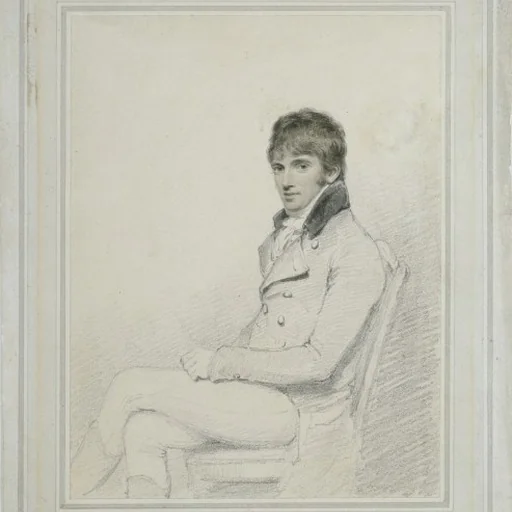
William Daniell (1769 – 16 August 1837) was an English painter and printmaker who specialised in landscape painting and marine art.

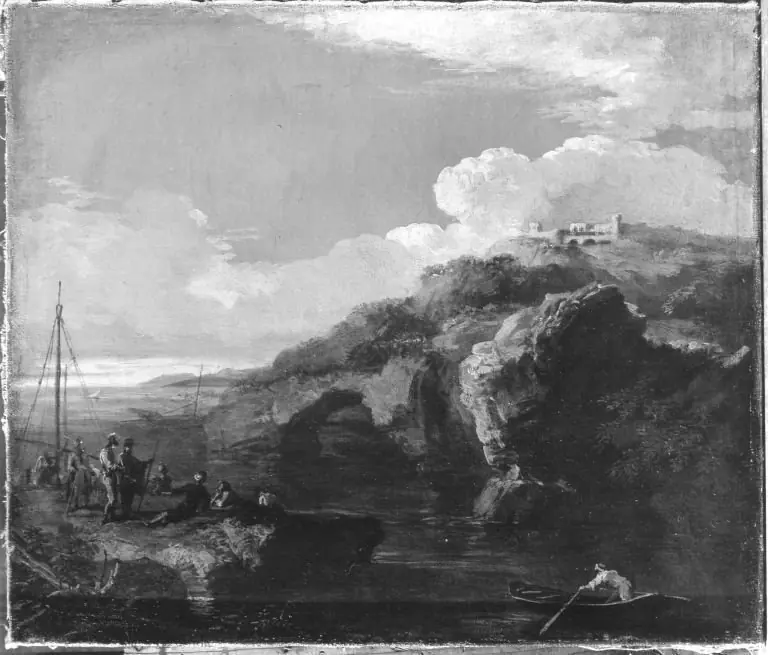 Coastal Landscape with Castle
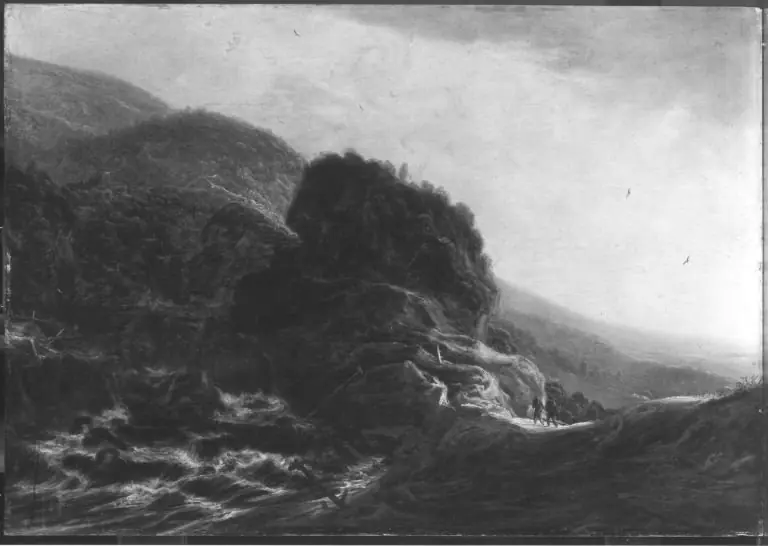 Abendlandschaft (zugeschrieben)
 Flusslandschaft
 Wildnislandschaft mit Wasserfall
 Moutainous landscape with four riders and two beggars
 Cliffs along the Normandy Coast
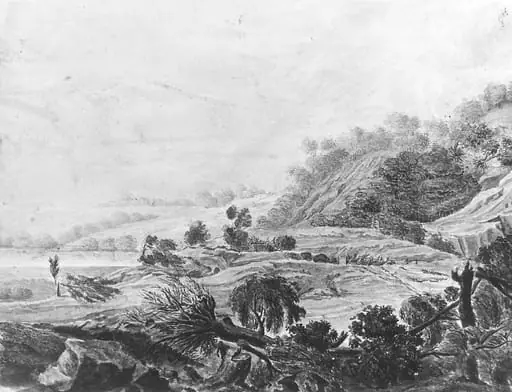 After the Tornado
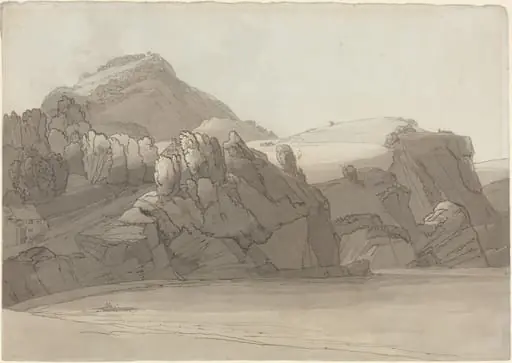 A Rocky Shore at Coombmartin, Devon (Combe Martin Bay)
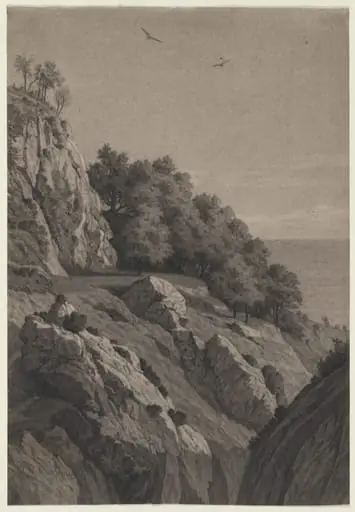 Rocky Cliff on a Coast
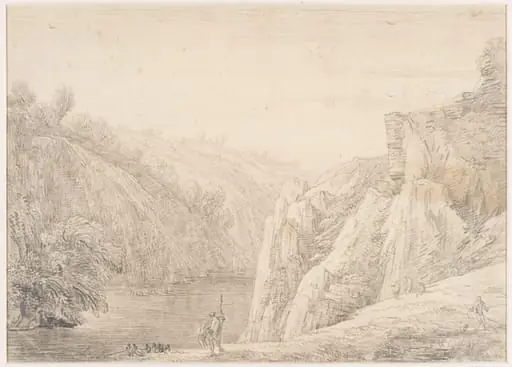 Untitled
 Snowdon with Llanberis Lake
 Castellammare