Artwork
John Flaxman
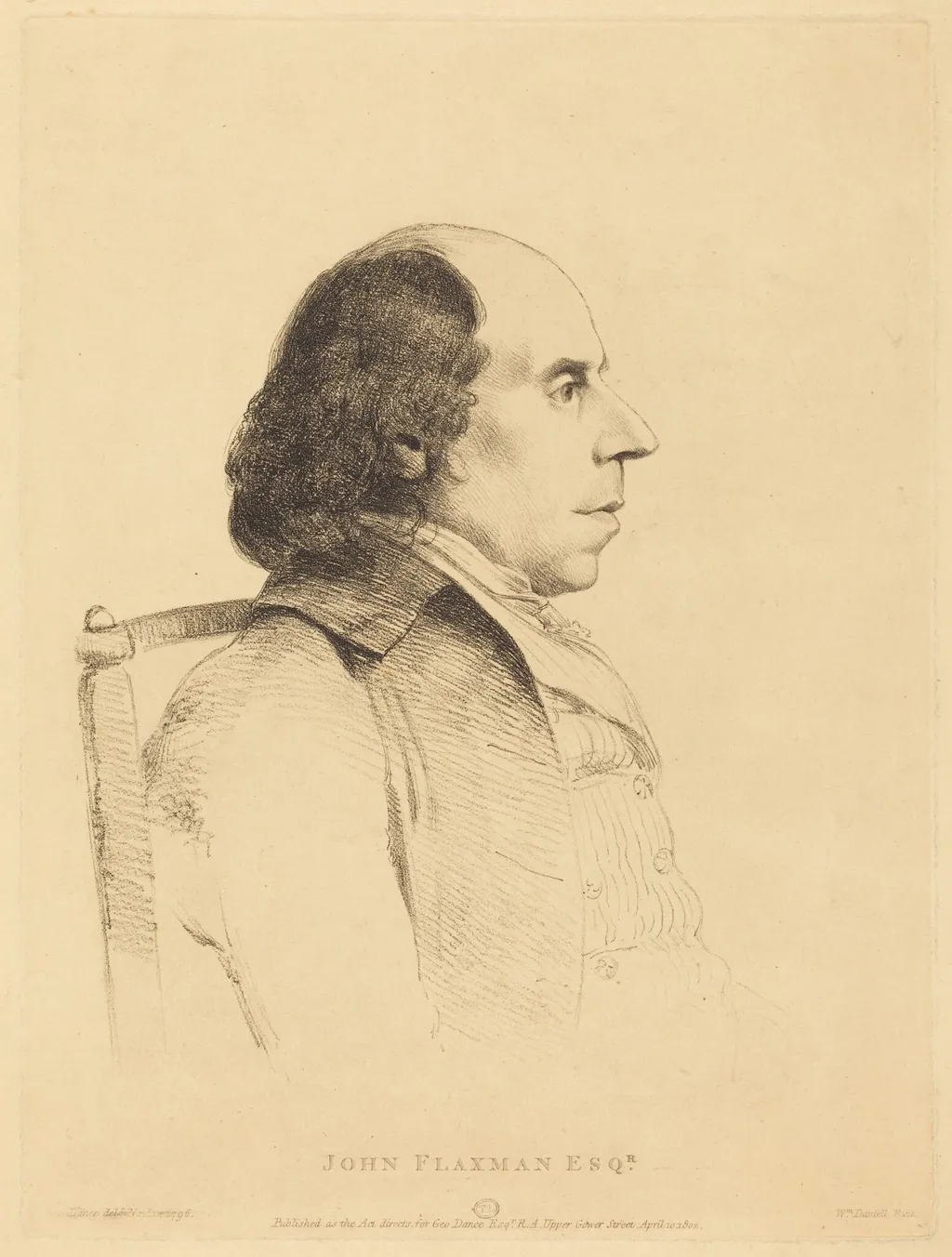
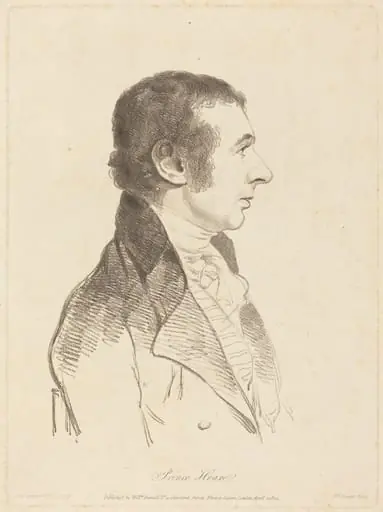
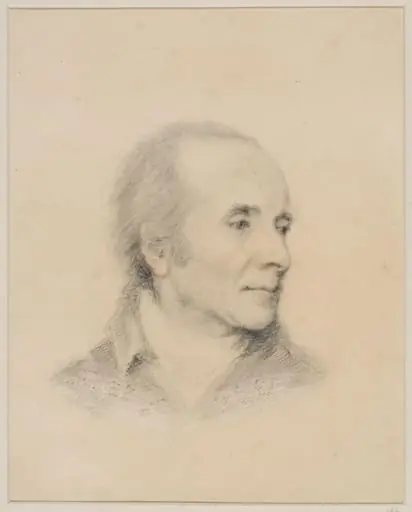
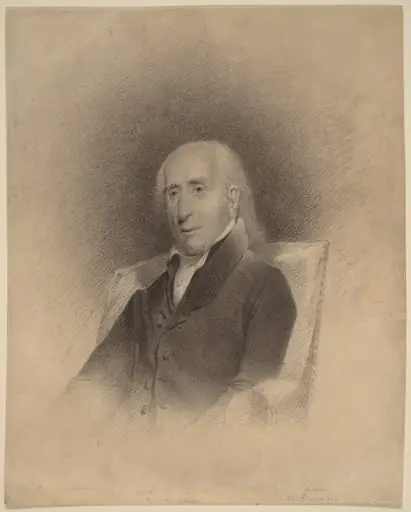
John Flaxman is an ink print by the Romanticist artist William Daniell. It dates from 1796 and is held in the collection of the National Gallery of Art.
About this work
Overview
Executed in the early years of lithography, the work captures Flaxman in profile with minimal detail, emphasizing line over finish.
This lithographic print, created by William Daniell in 1796, presents a portrait of the English artist John Flaxman. Executed in the early years of lithography, the work captures Flaxman in profile with minimal detail, emphasizing line over finish. Daniell, primarily known for landscape and marine subjects, applied his printmaking skills to produce this intimate likeness, reflecting the medium’s emerging role in documenting cultural figures.
Subject & Meaning
John Flaxman was a leading neoclassical sculptor and illustrator, renowned for his linear designs inspired by ancient Greek art. The portrait, though sketchlike, conveys his intellectual demeanor and disciplined aesthetic. The inscription 'John Flaxman Esq.' affirms his social standing and professional identity, aligning the image with the era’s tradition of honoring artists through dignified, restrained representation.
Technique & Style
Lithography allowed Daniell to translate the spontaneity of drawing onto stone, resulting in a loose, gestural quality. The faint, sketchy lines mimic pencil work, avoiding heavy shading or texture. This approach suited the medium’s early experimental phase, where artists valued immediacy over polished finish. The high collar and neatly tied hair are rendered with economical strokes, suggesting character without detail.
History & Provenance
Daniell, who exhibited at the Royal Academy and became a Royal Academician in 1822, produced this print during a period when he was expanding his practice beyond landscape. The portrait likely served as a personal or professional record, possibly intended for circulation among artistic circles. Its survival reflects the growing interest in documenting British cultural figures through print in the late 18th century.
Context
In the 1790s, lithography was a new technique in Britain, introduced from Germany. Artists like Daniell explored its potential for reproducing drawings with minimal equipment. Flaxman’s prominence as a designer of book illustrations made him a natural subject for such a portrait. The image aligns with broader trends of intellectual portraiture, where clarity and restraint signaled moral and artistic seriousness.
Legacy
This print stands as an early British example of lithographic portraiture, demonstrating the medium’s capacity for expressive simplicity. Though not widely reproduced, it contributes to the historical record of Flaxman’s public image and Daniell’s versatility as a printmaker. Its informal style foreshadows later 19th-century shifts toward capturing personality over formal grandeur.
Artist & collection
Artist
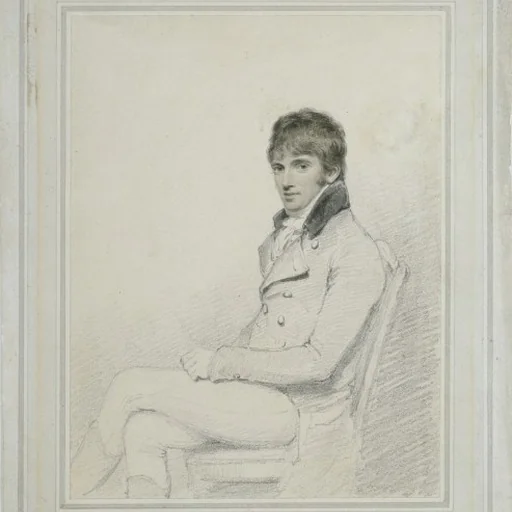
William Daniell (1769 – 16 August 1837) was an English painter and printmaker who specialised in landscape painting and marine art.