Artwork
The Caravan
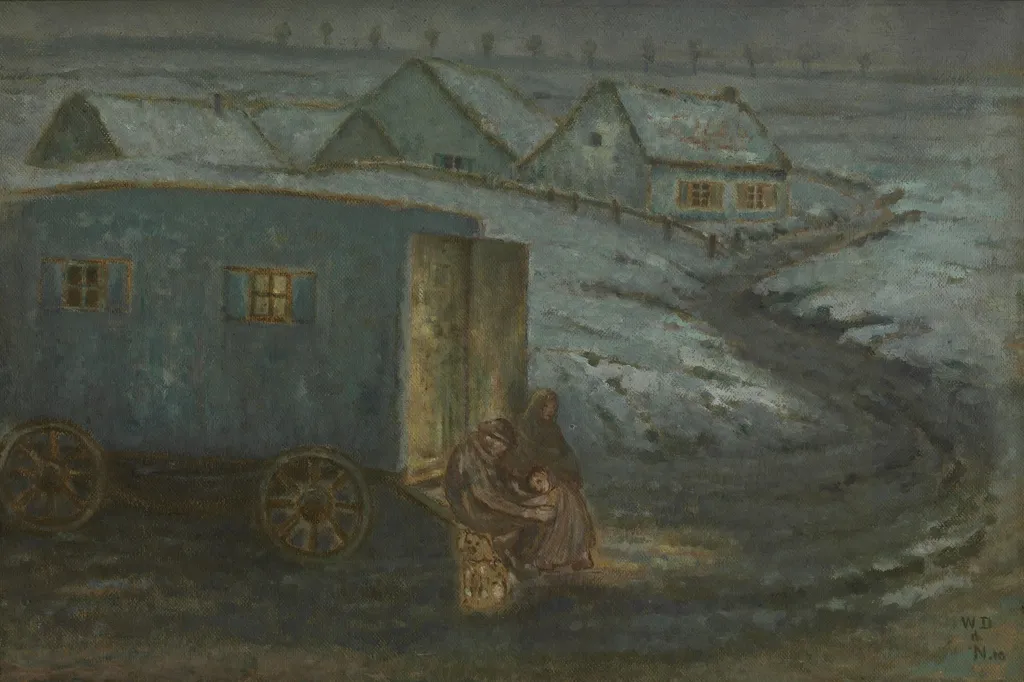
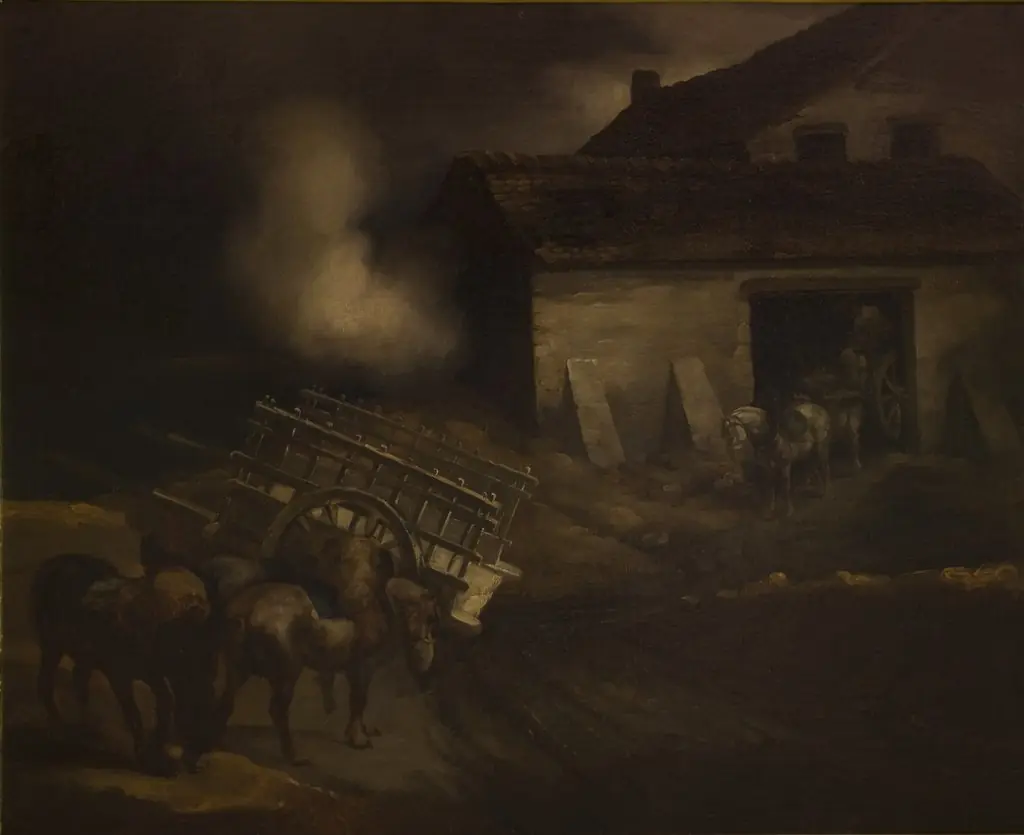
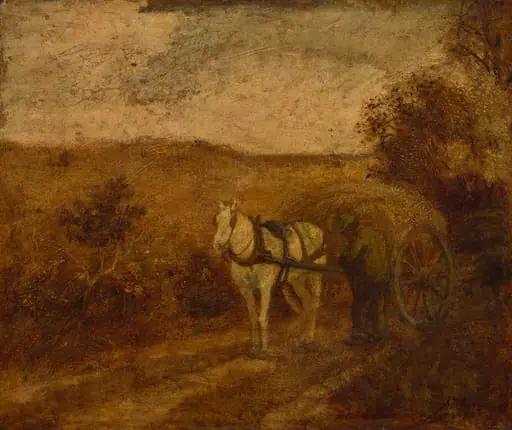
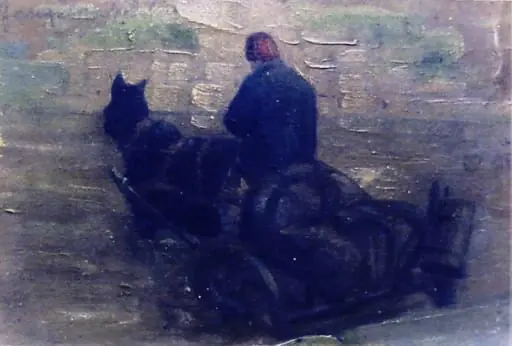
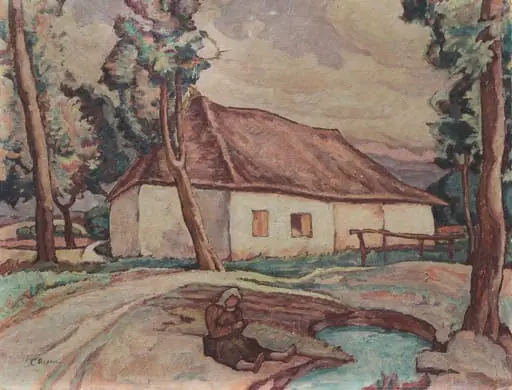
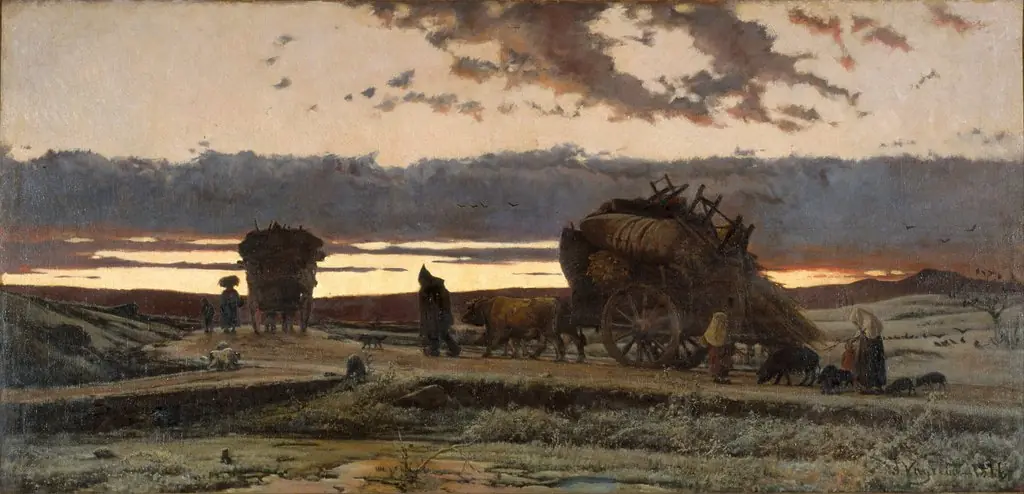
The Caravan is an oil painting by the Post-Impressionist artist William Degouve de Nuncques. It dates from 1910 and is held in the collection of the Royal Museum of Fine Arts Antwerp.
About this work
Overview
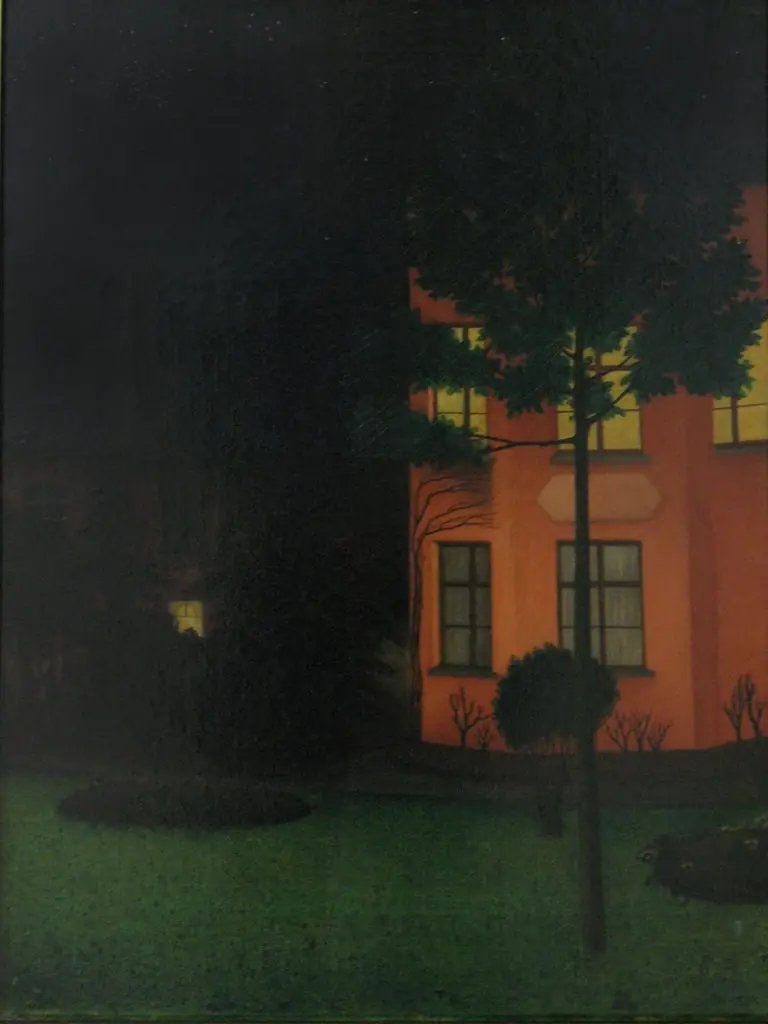
The Caravan, painted in 1910 by Belgian Symbolist William Degouve de Nuncques, is an oil painting characterized by its nocturnal landscape and subdued color palette, blending post-impressionist elements with the artist's signature atmospheric depth.
Subject & Meaning
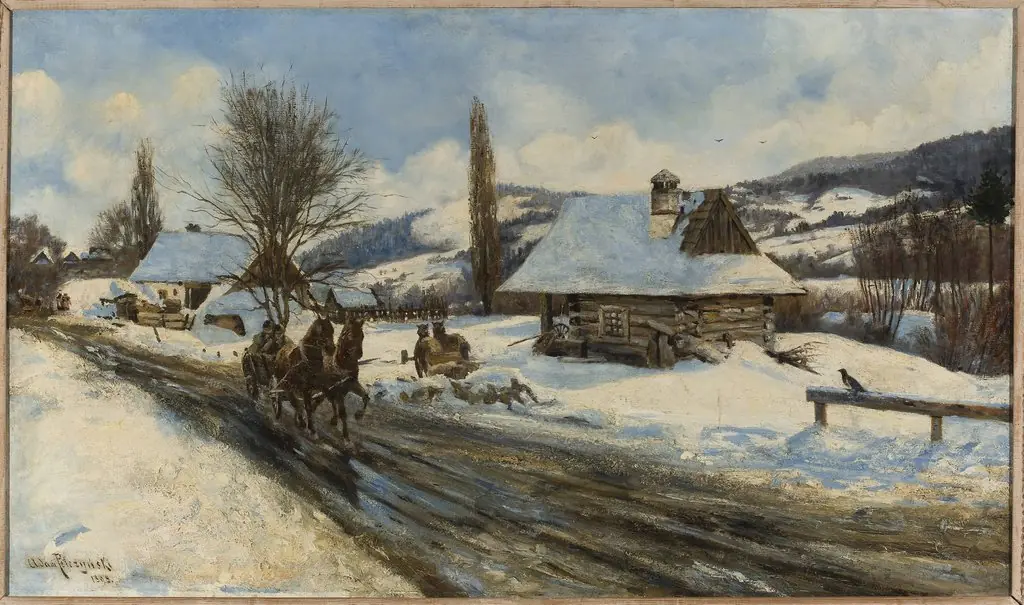
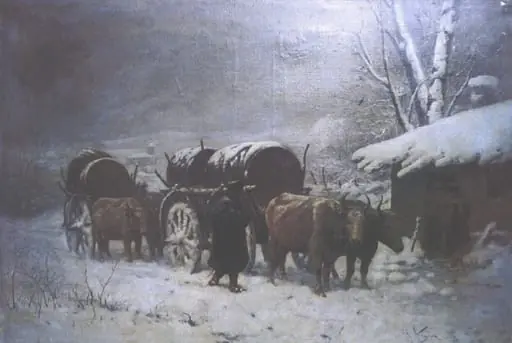
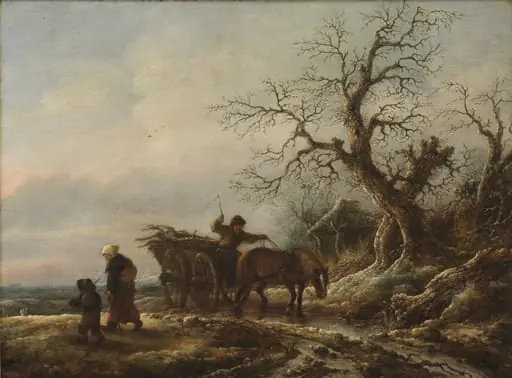
The painting depicts a serene, snowy night scene with a prominent blue caravan in the foreground, alongside a family group (man, woman, and infant) seated in contemplative poses, set against a backdrop of snow-capped houses under a grey, cloudy sky.
Technique & Style
Degouve de Nuncques employs chiaroscuro, leveraging strong light-dark contrasts to imbue the composition with depth and volume, while the muted, evocative palette reinforces the nocturnal ambiance and emotional intimacy of the scene.
History & Provenance
The Caravan is part of the permanent collection at the Royal Museum of Fine Arts in Antwerp, reflecting the institution's interest in early 20th-century Belgian art movements, including Symbolism and its intersections with post-impressionism.
Context
Created during a period of experimentation in European art, The Caravan situates Degouve de Nuncques within the broader context of early 20th-century artistic innovations, balancing the mystical undertones of Symbolism with the expressive brushwork of post-impressionism.
Legacy
While specific legacy details of The Caravan are not prominently highlighted, the work contributes to Degouve de Nuncques' reputation for capturing nocturnal serenity and emotional depth, influencing subsequent generations of artists exploring similar thematic and technical territories.
Own this work as a print
Artist & collection
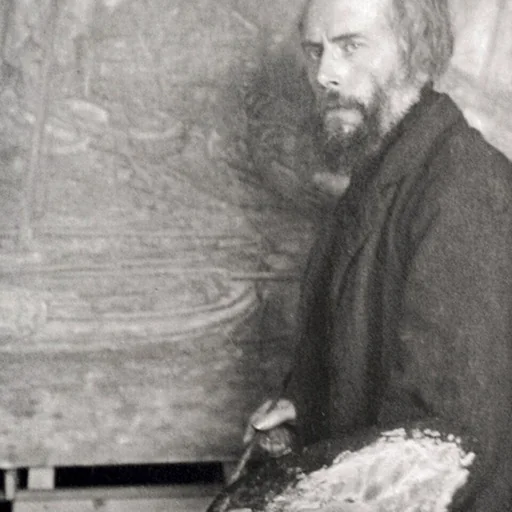
Artist
William Degouve de Nuncques (28 February 1867 – 1 March 1935) was a Belgian painter who was associated with the symbolist movement, although he is occasionally referred to as a postimpressionist.