Artwork
Standing Female Nude
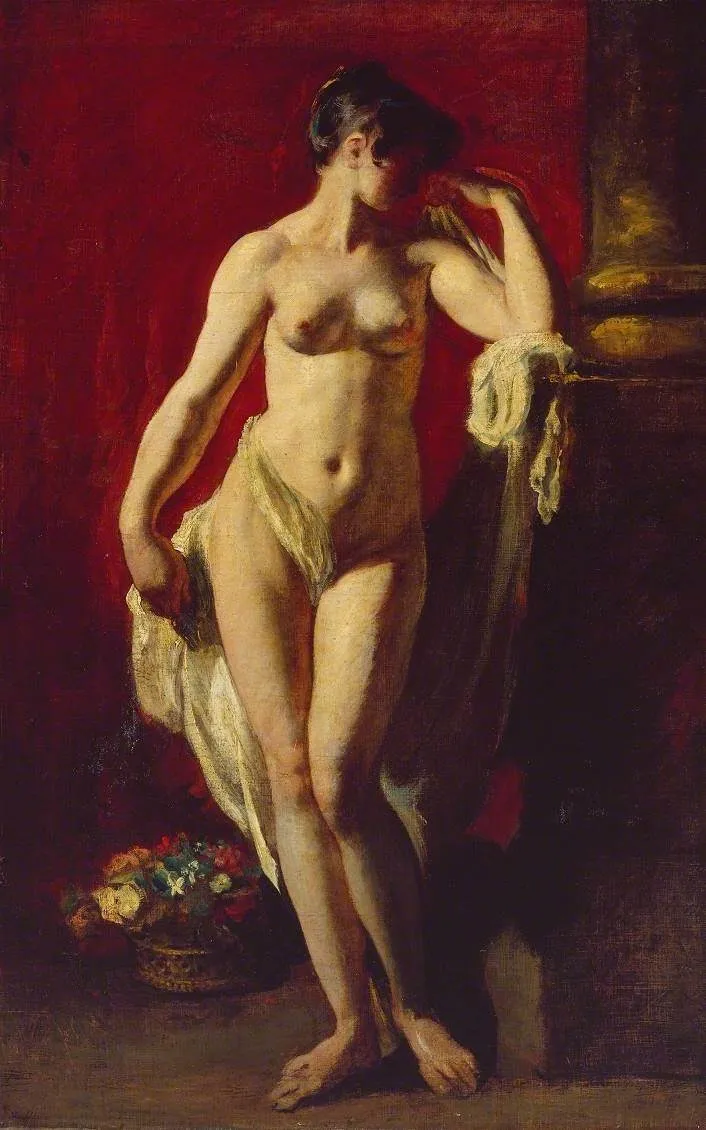
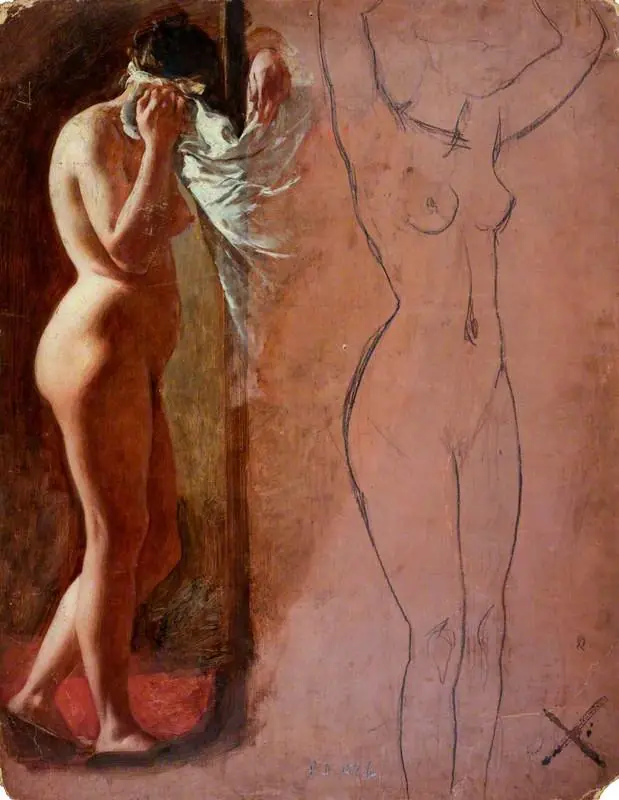
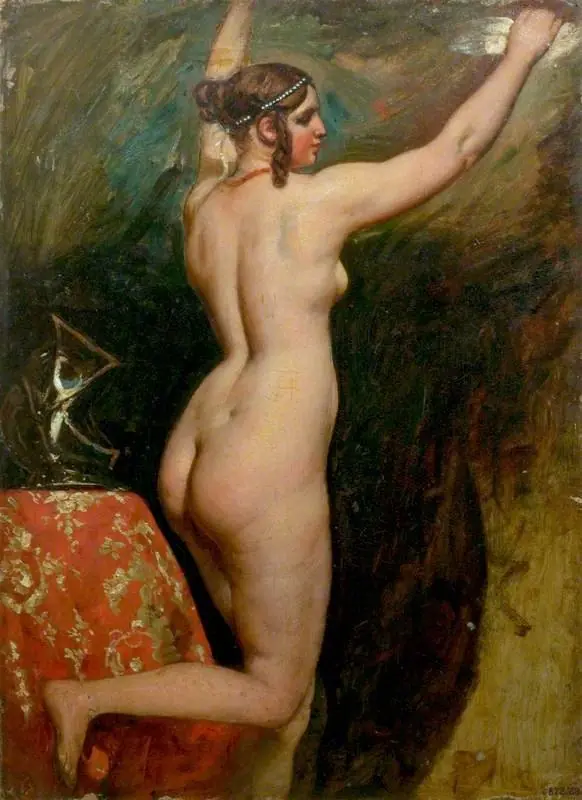
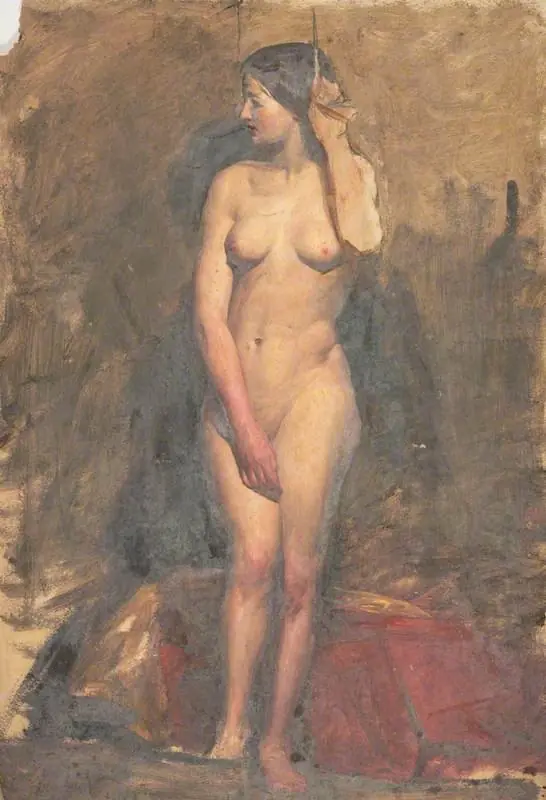
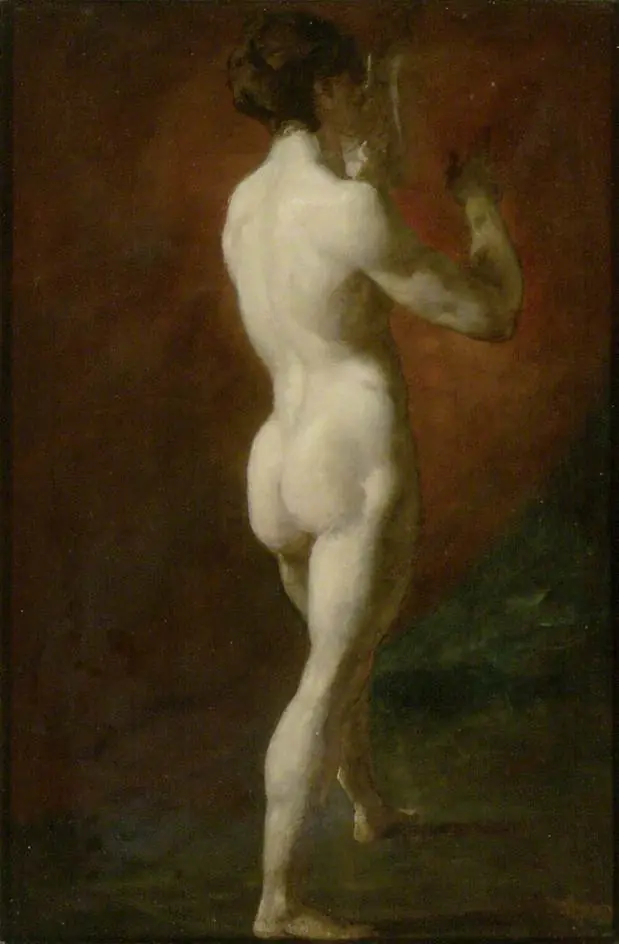
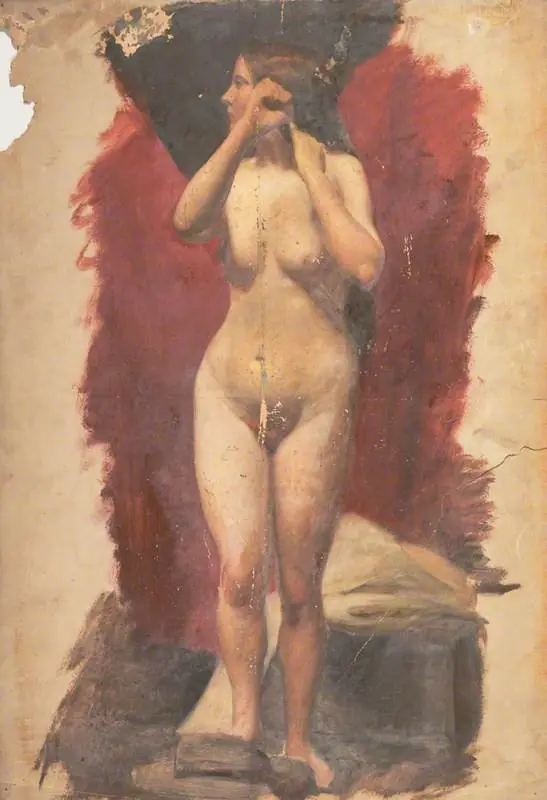
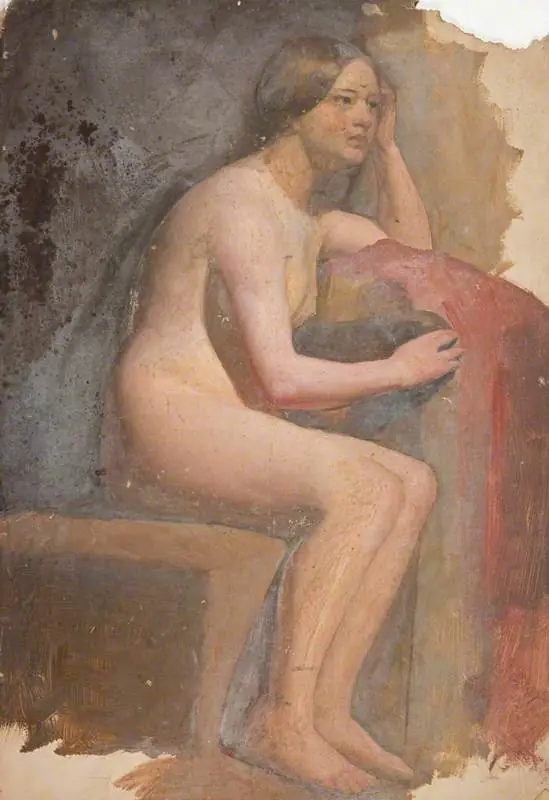
Standing Female Nude is an oil painting by the British Romanticist artist William Etty. It dates from 1825 and is held in the collection of the Tate.
About this work
Overview
Created in 1825, *Standing Female Nude* is an oil painting by English artist William Etty. Executed during the height of British Romanticism, the work presents a solitary, unclothed woman rendered with careful attention to flesh tones and spatial modeling. The canvas is part of the Tate Britain collection, where it exemplifies Etty’s dedication to the nude as a central subject.
Subject & Meaning
The composition shows a woman poised in a slight contrapposto, her torso turned gently to the viewer’s right. One arm lifts above her head while the other rests on her cheek, conveying a calm, introspective mood. The muted expression and tranquil pose suggest a study of idealized beauty rather than narrative, inviting contemplation of the human form in isolation.
Technique & Style
Etty employs chiaroscuro to model the figure, using a deep red backdrop to heighten the contrast between the luminous skin and surrounding darkness. Subtle gradations of light across the body generate a sense of volume, while the smooth brushwork captures the softness of flesh. The painter’s handling reflects the Romantic interest in emotional resonance through controlled realism.
History & Provenance
Born in York in 1787, Etty trained at the Royal Academy Schools under Thomas Lawrence before establishing a reputation for historic and nude subjects. *Standing Female Nude* entered the Tate Britain collection, where it remains on display as part of the museum’s holdings of early‑19th‑century British art, illustrating the artist’s pivotal role in reintroducing the nude to British painting.
Artist & collection
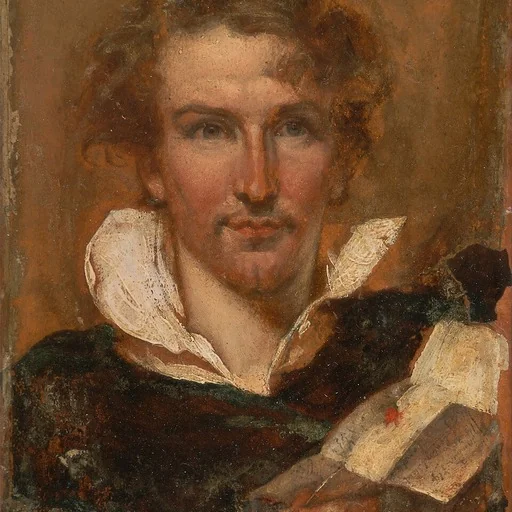
Artist
William Etty (10 March 1787 – 13 November 1849) was an English artist best known for his historical paintings containing nude figures.