Artwork
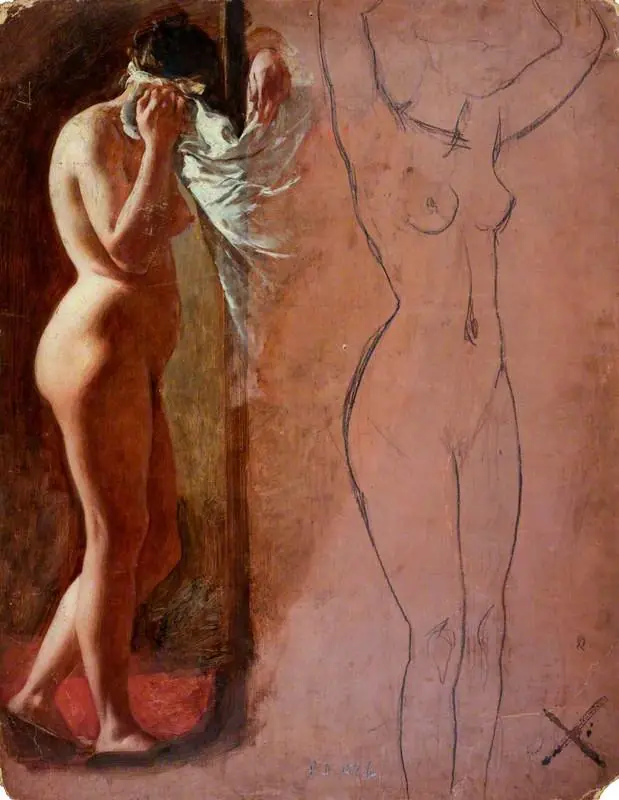
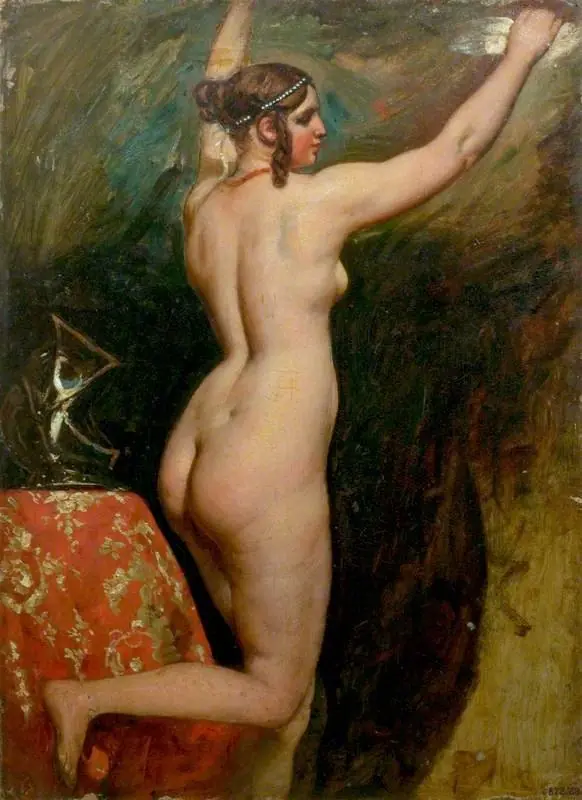
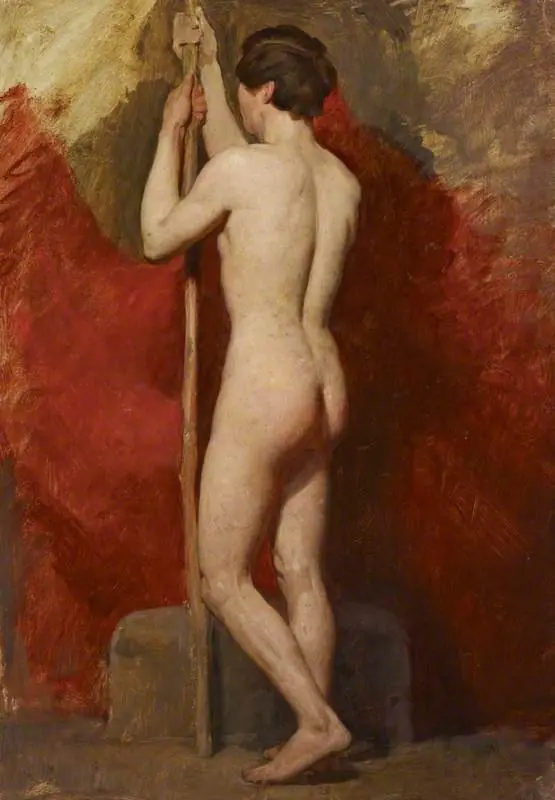
Standing female Nude seen from behind
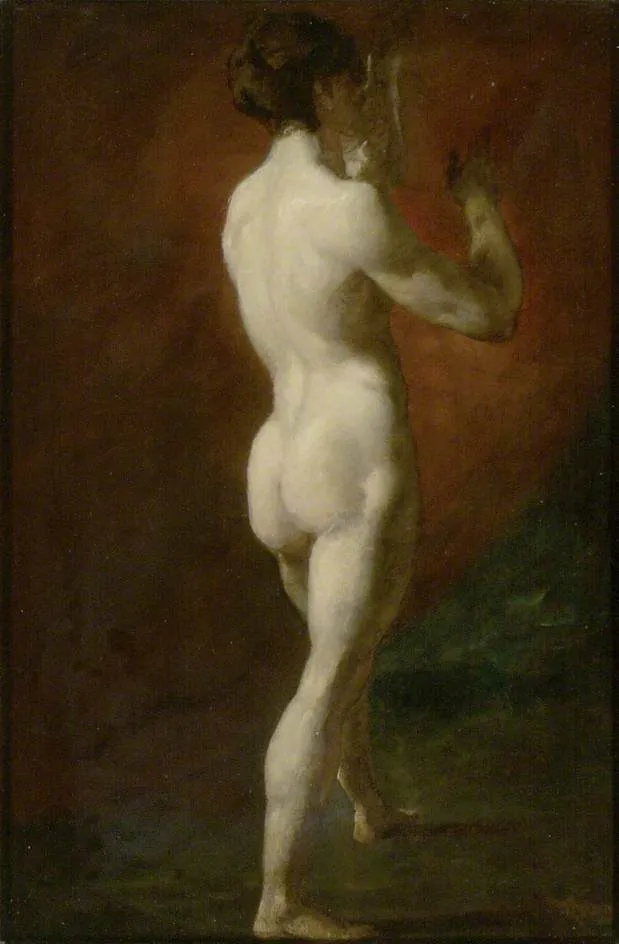
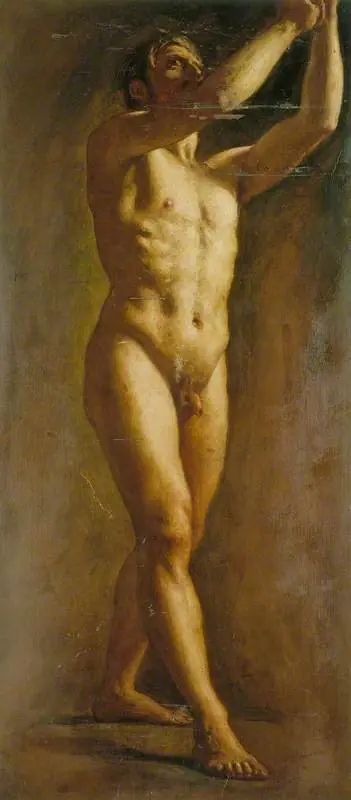
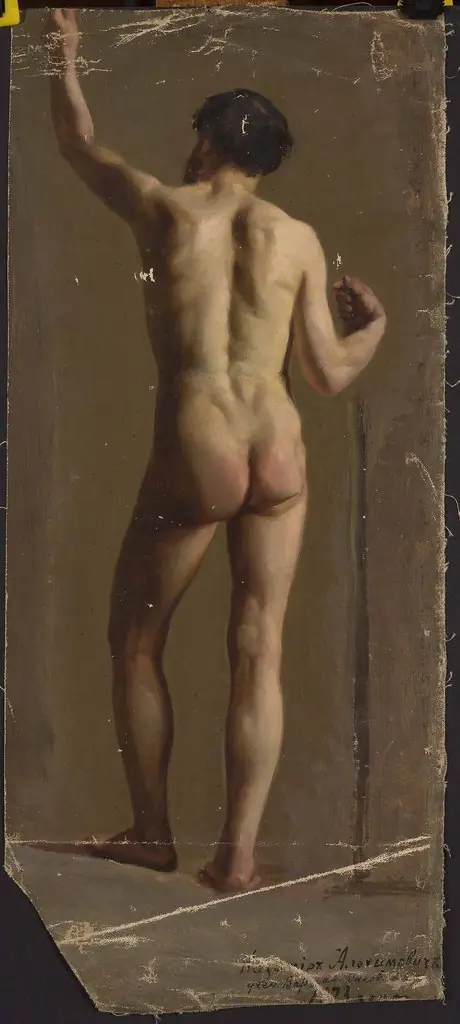
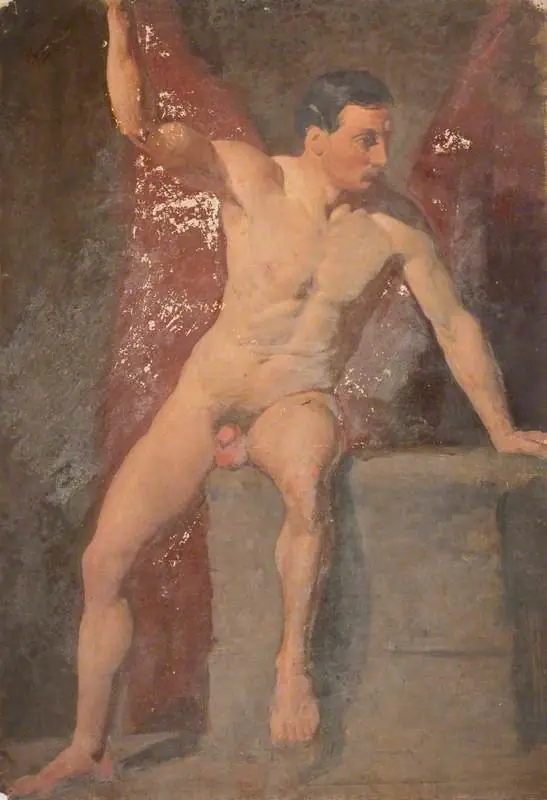
Standing female Nude seen from behind is an unspecified painting by the British Romanticist artist William Etty. It dates from 1837 and is held in the collection of the Ashmolean Museum.
About this work
Overview
Created in 1837, *Standing Female Nude Seen from Behind* is an oil painting by English artist William Etty, now part of the Ashmolean Museum’s collection. The work belongs to the Romantic period and presents a solitary female figure viewed from the rear, set against a muted brown backdrop that emphasizes the sculptural quality of the body.
Subject & Meaning
The composition shows a nude woman standing with her weight shifted onto one leg, the opposite leg gently bent. Her arms are raised, hands near her face, suggesting a moment of private contemplation. The pose, rendered from behind, invites the viewer to consider the form itself rather than narrative detail, aligning with Etty’s interest in the aesthetic study of the human figure.
Technique & Style
Etty applies a refined chiaroscuro, contrasting illuminated flesh tones with deep shadows to model the body’s curvature and create a sense of three‑dimensionality. The subtle gradations of skin color reflect his training at the Royal Academy Schools, where he honed the ability to render lifelike flesh. The limited palette and restrained background focus attention on the figure’s volume.
History & Provenance
William Etty, born in York in 1787, was among the first British painters to specialize in the nude as a primary subject. After studying under Sir Thomas Lawrence at the Royal Academy, he produced this work during a mature phase of his career. The painting entered the Ashmolean Museum’s holdings in the 20th century, where it remains on display as part of the museum’s British art collection.
Context
Etty’s dedication to the nude placed him at the forefront of a genre that was still controversial in early‑19th‑century Britain.
Etty’s dedication to the nude placed him at the forefront of a genre that was still controversial in early‑19th‑century Britain. By integrating Romantic sensibilities—emphasis on emotion, individual experience, and the sublime—into his study of the human form, he helped broaden the acceptance of figure painting in the United Kingdom. This piece exemplifies his contribution to the evolution of British academic art.
Artist & collection
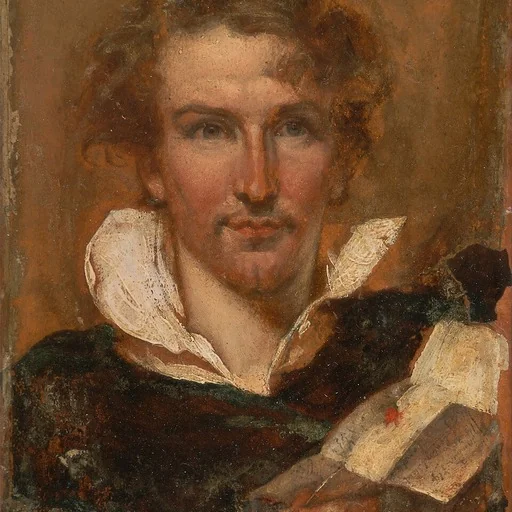
Artist
William Etty (10 March 1787 – 13 November 1849) was an English artist best known for his historical paintings containing nude figures.