Artwork
The penitent Magdalen
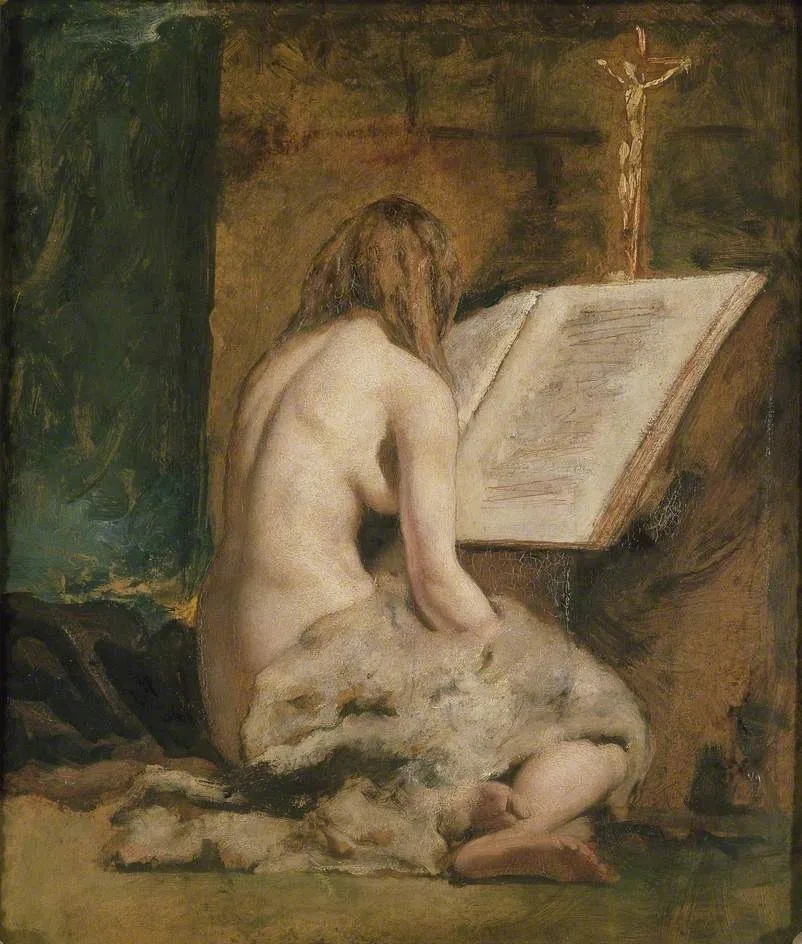
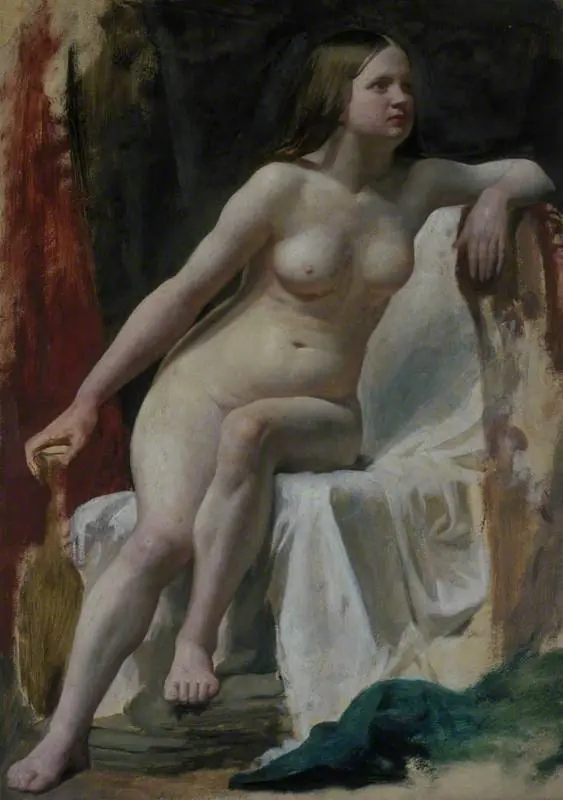
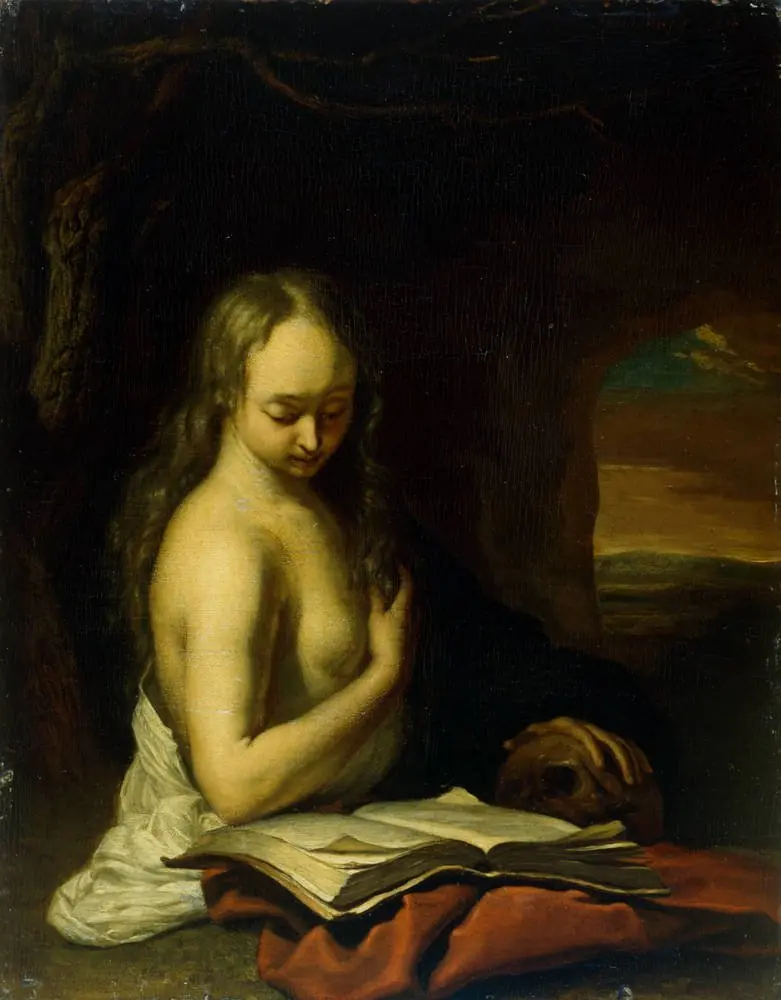
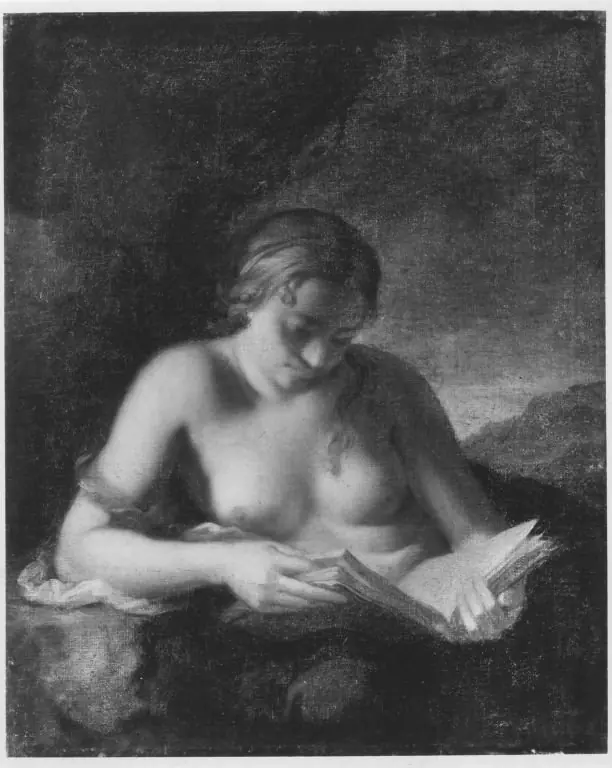
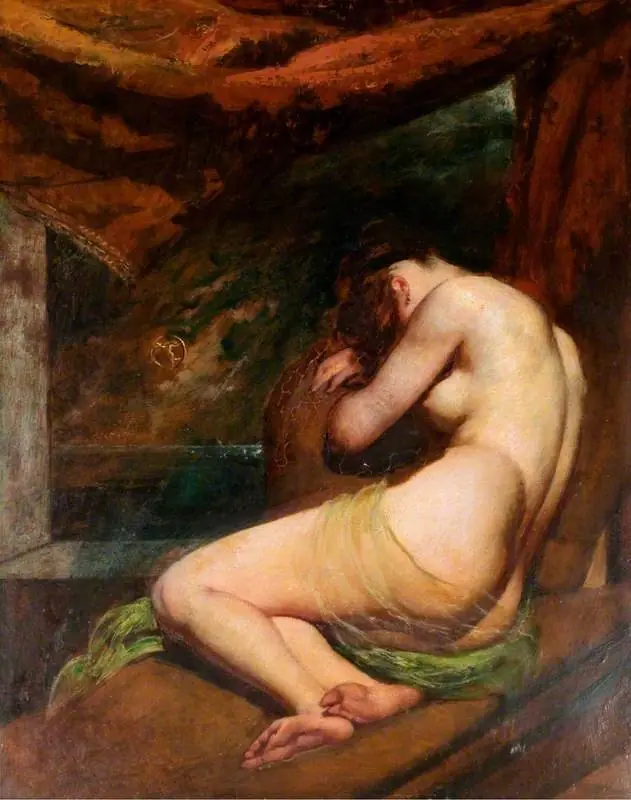
The penitent Magdalen is an oil painting by the British Romanticist artist William Etty. It dates from 1835 and is held in the collection of the Ashmolean Museum.
About this work
Overview
Created in 1835 by the Yorkshire‑born artist William Etty, *The Penitent Magdalen* is an oil painting now held by the Ashmolean Museum. Executed during the height of British Romanticism, the work belongs to Etty’s series of religious genre pieces that contrast his more widely known historical nudes.
Subject & Meaning
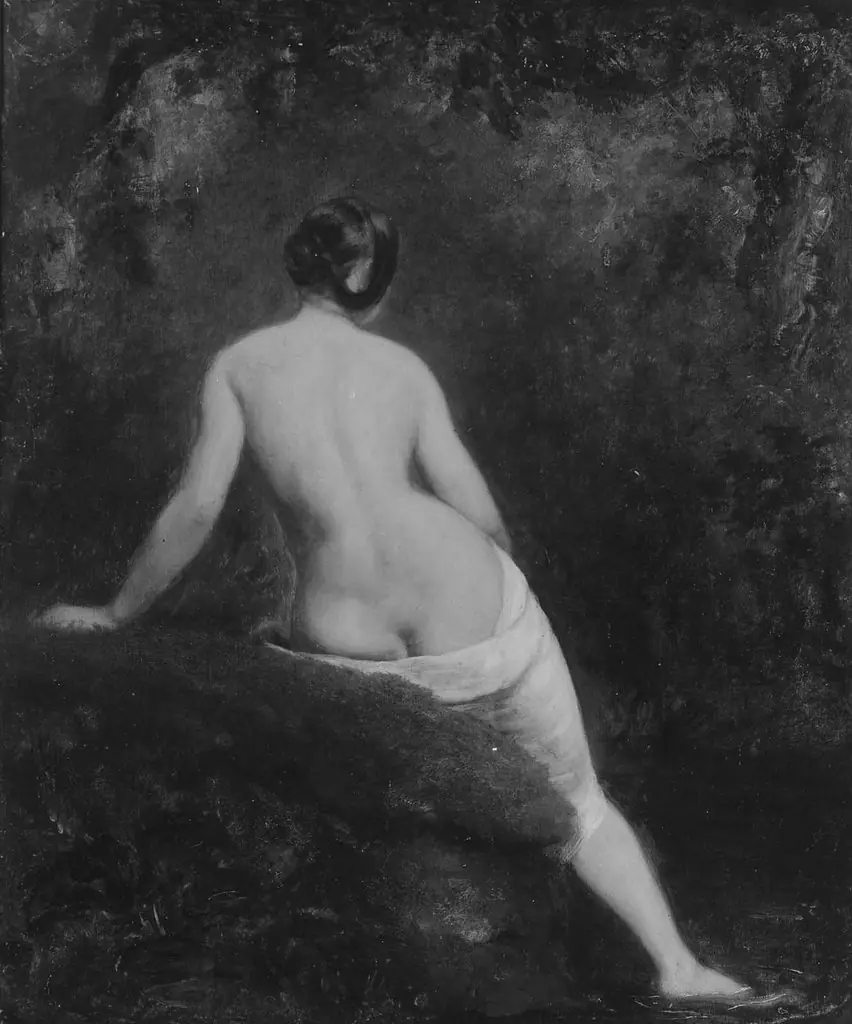
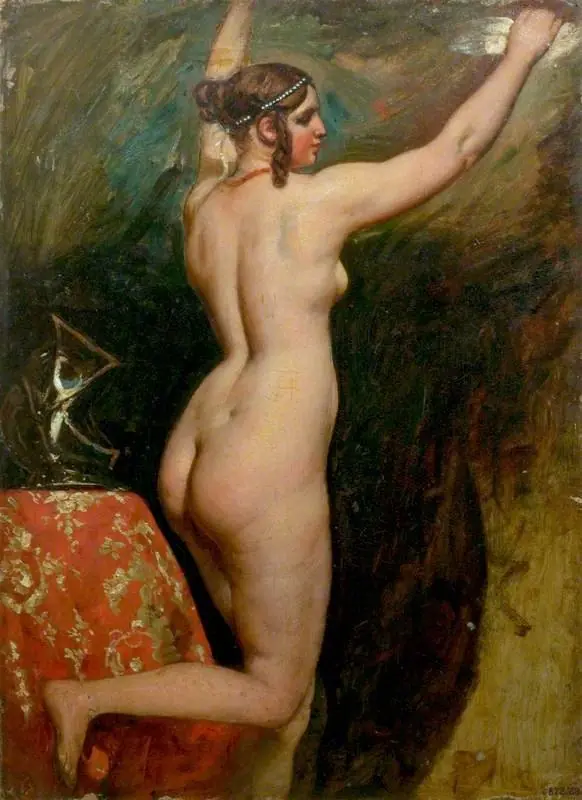
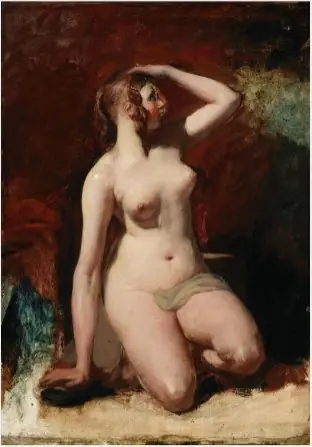
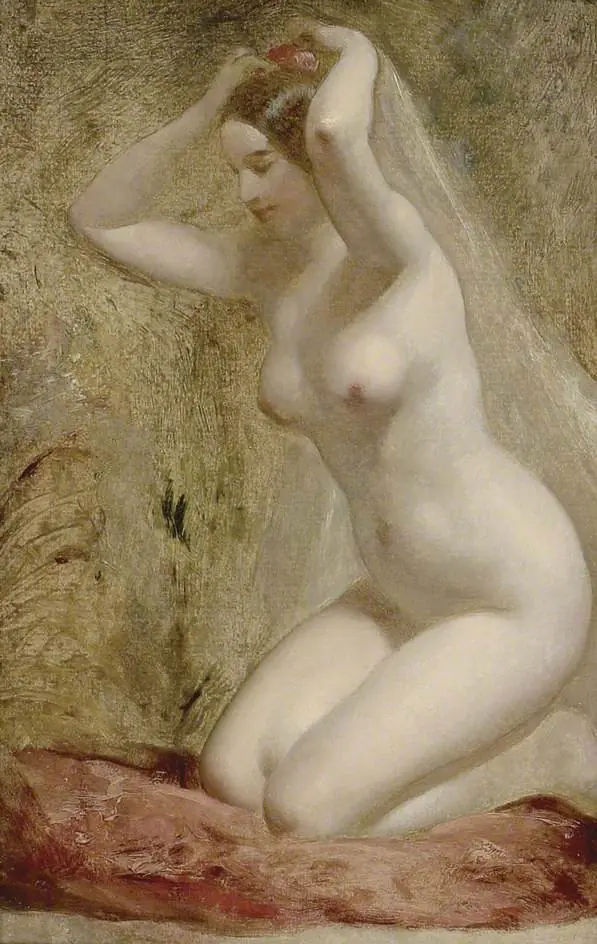
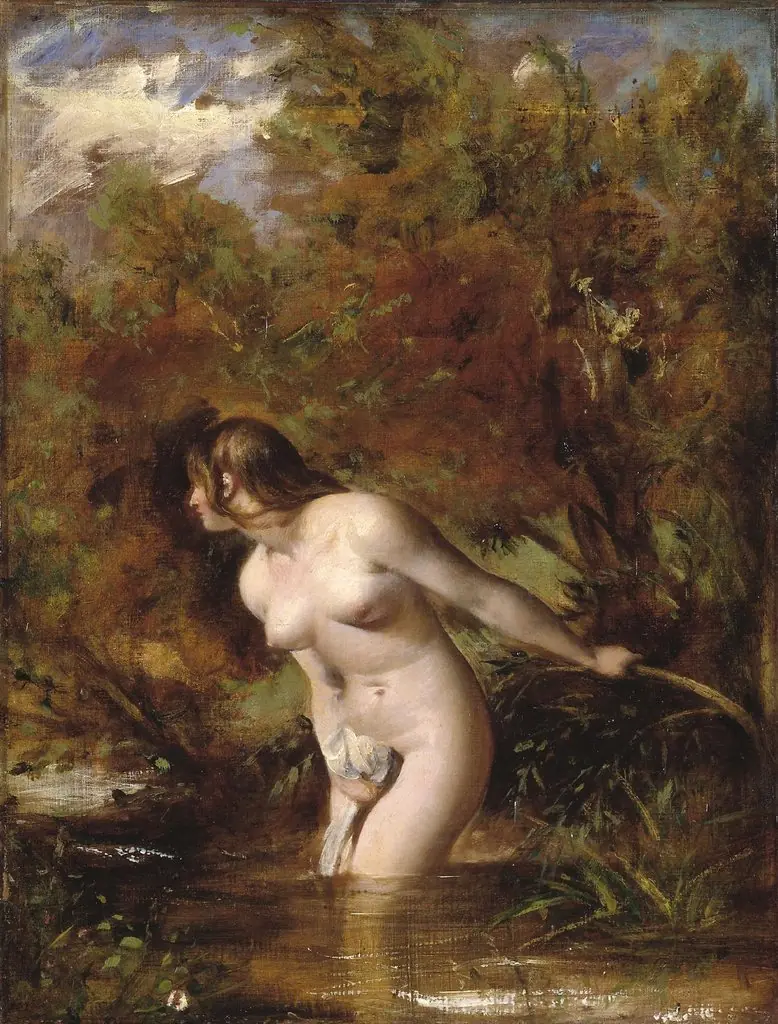
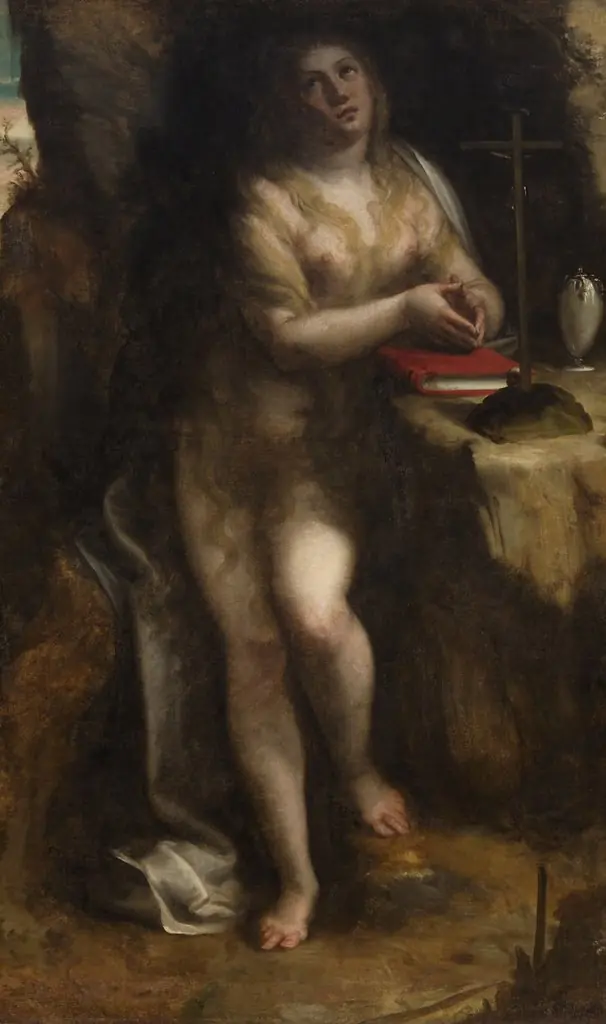
The composition presents a solitary female figure, identified as Mary Magdalene, seated on the floor with her back turned toward the viewer. She is unclothed except for a fur mantle draped across her lap, and she studies an open book placed on a nearby table, a crucifix perched atop the volume, suggesting devotional contemplation.
Technique & Style
Etty employs a pronounced chiaroscuro, allowing stark light to illuminate the flesh and the book while the surrounding space recedes into deep shadow. This contrast heightens the sense of intimacy and introspection, while the rendering of skin tones reflects the artist’s reputation for realistic flesh modeling.
History & Provenance
Trained at the Royal Academy Schools under Sir Thomas Lawrence, Etty gained early acclaim for his ability to depict the human body. *The Penitent Magdalen* entered the Ashmolean’s collection in the 20th century, joining a broader assemblage of his religious works that illustrate his engagement with moral subjects alongside his celebrated nudes.
Artist & collection
Artist
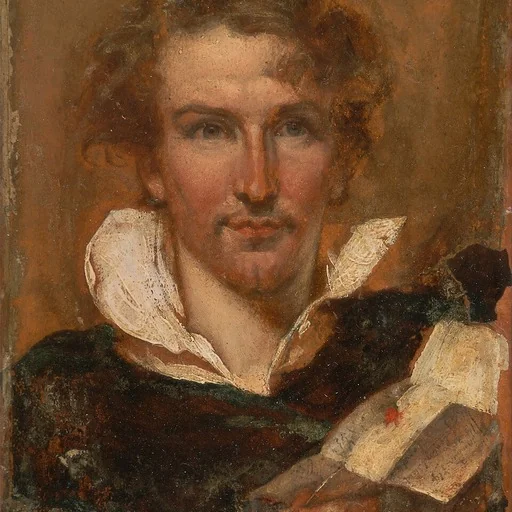
William Etty (10 March 1787 – 13 November 1849) was an English artist best known for his historical paintings containing nude figures.