Artwork
Bric-a-brac

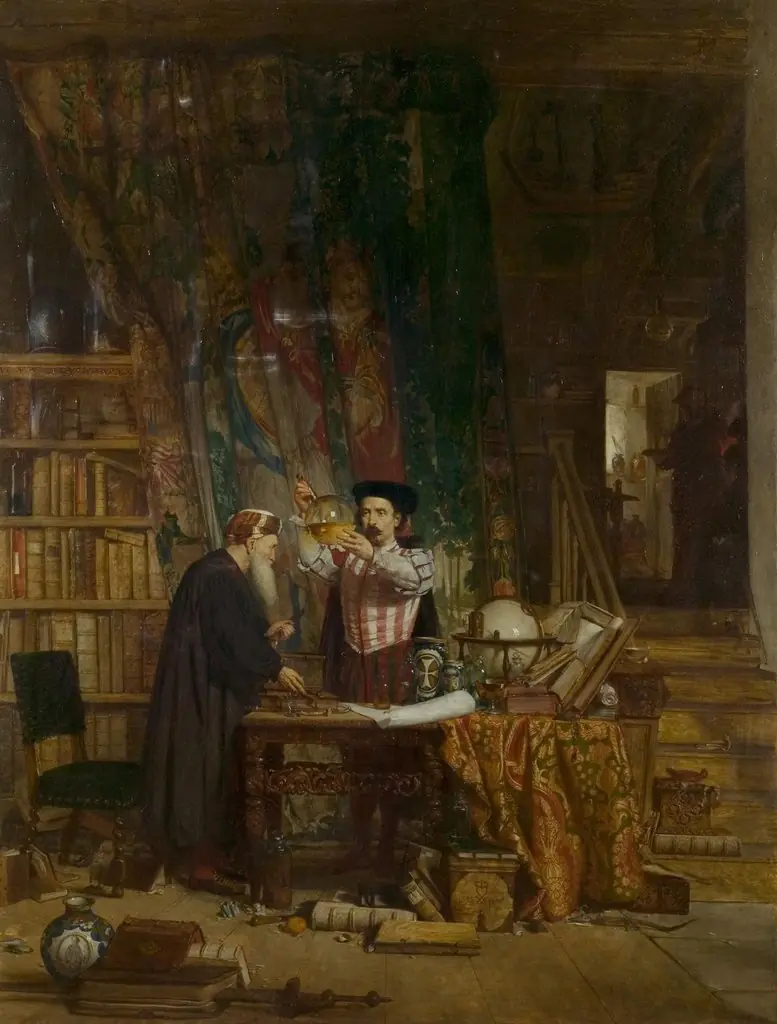
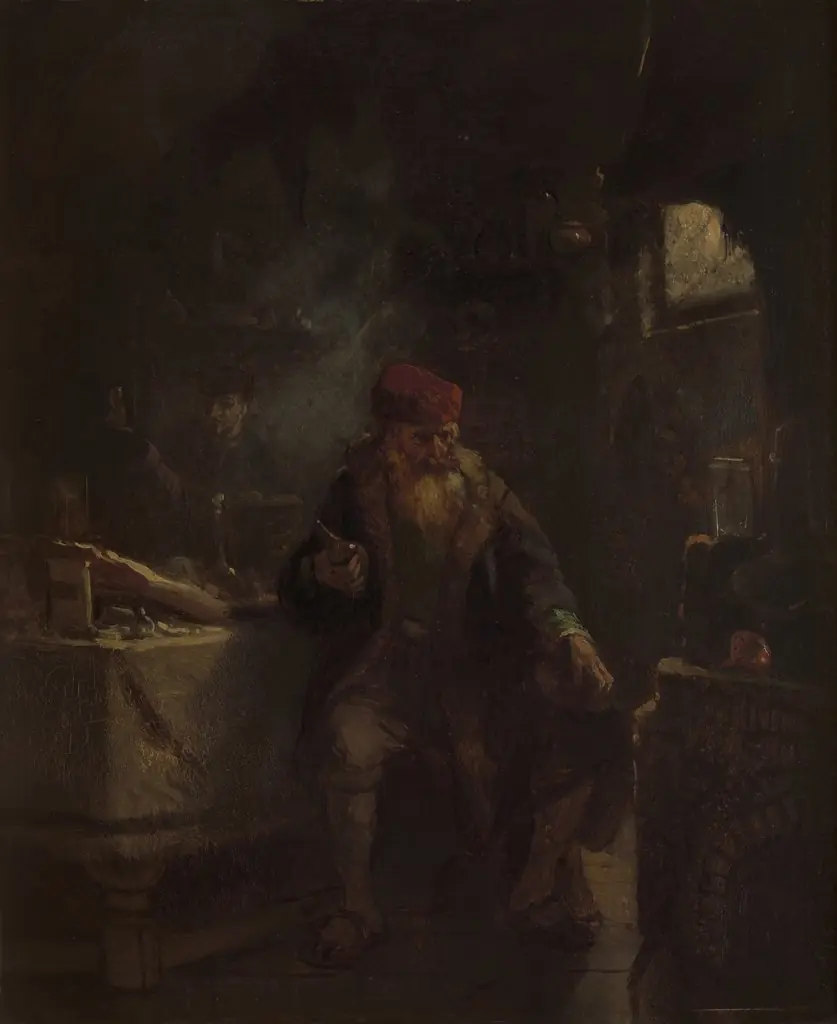
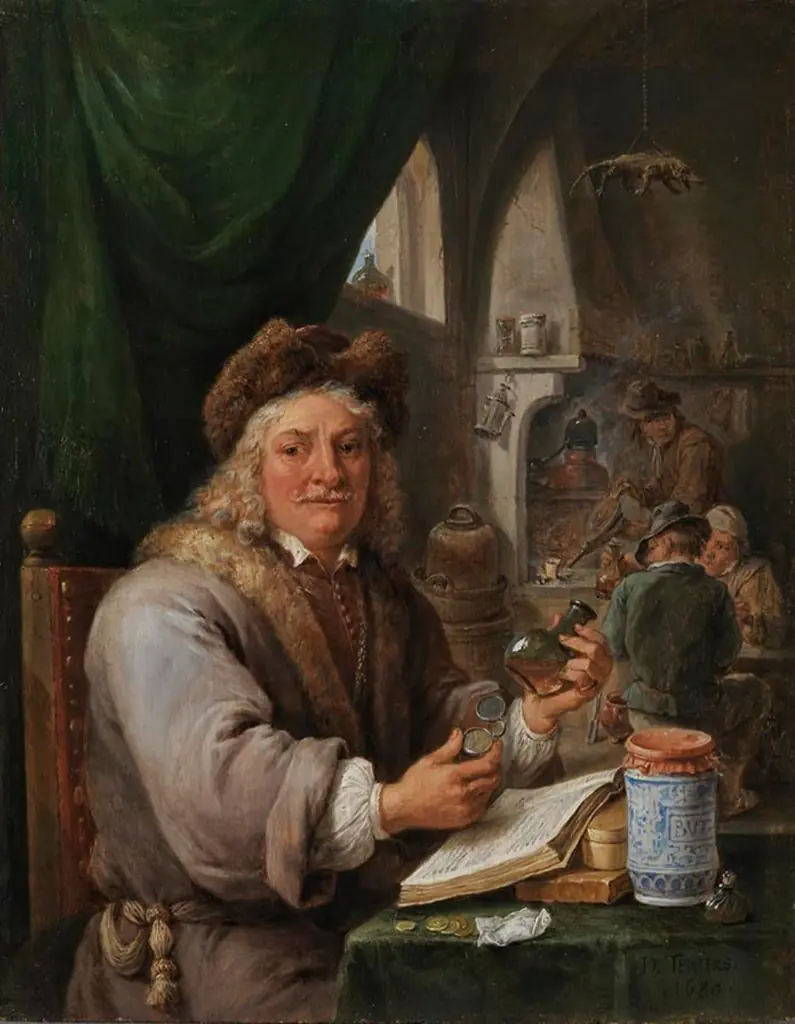
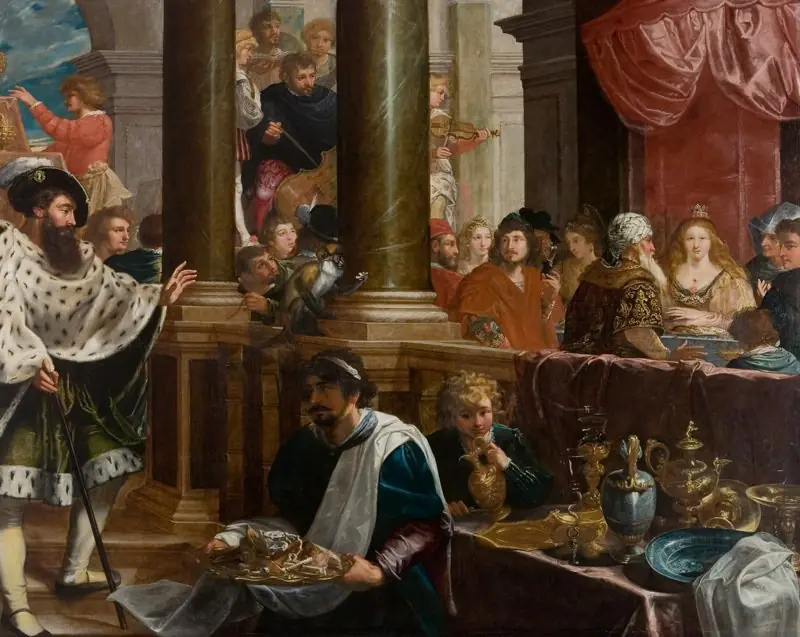
Bric-a-brac is an oil painting by the Biedermeier artist William Fettes Douglas. It dates from 1862 and is held in the collection of the National Galleries Scotland.
About this work
Overview
The painting resides in the Scottish National Gallery, where it exemplifies 19th-century British interest in domestic introspection and material culture.
Painted in 1862 by Scottish artist William Fettes Douglas, *Bric-a-brac* is an oil on canvas work that captures a quiet moment of contemplation. Douglas, who later led the Royal Scottish Academy, focused on intimate, detail-rich scenes influenced by Biedermeier traditions. The painting resides in the Scottish National Gallery, where it exemplifies 19th-century British interest in domestic introspection and material culture.
Subject & Meaning
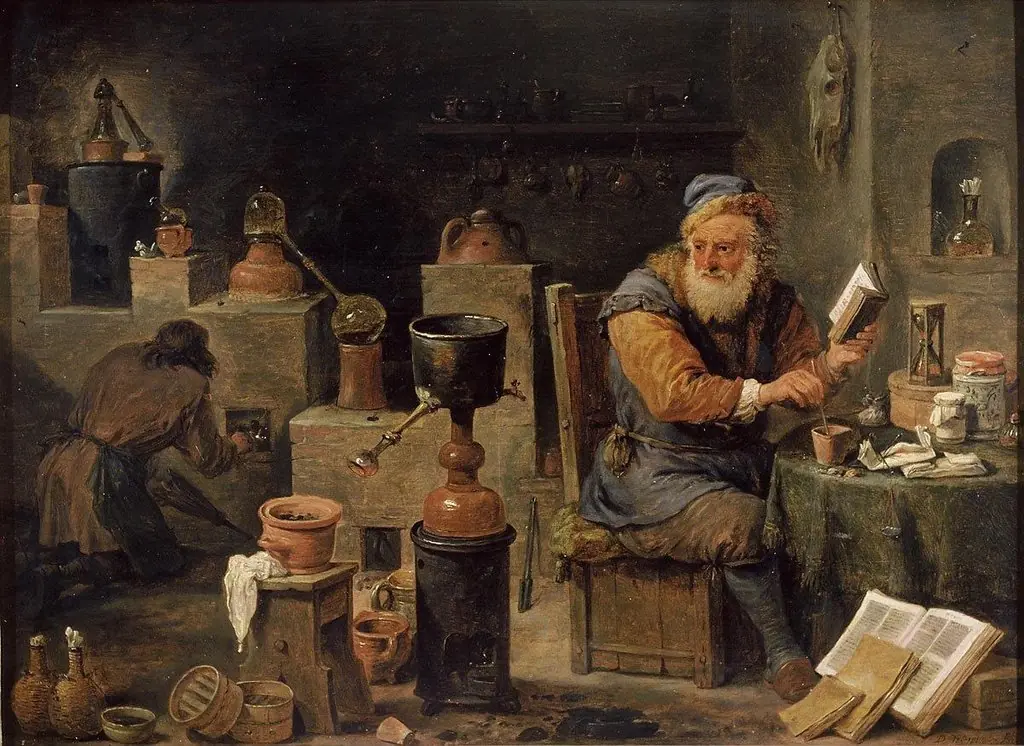
The painting depicts a man seated at a cluttered desk, absorbed in examining a small golden object. His attire—a red hat and white shirt—suggests a scholar or collector, while his obscured face emphasizes concentration over identity. The scattered papers, coins, and trinkets imply a private ritual of curation or appraisal, reflecting a broader cultural fascination with ownership, memory, and the significance of everyday artifacts.
Technique & Style
Douglas employs chiaroscuro to model form and direct attention toward the central figure and objects. The dark, muted background isolates the desk’s contents, enhancing their tactile presence. Brushwork is precise yet unobtrusive, rendering textures of metal, paper, and fabric with quiet realism. The composition avoids theatricality, favoring stillness and subtle lighting to evoke a sense of quiet inquiry rather than narrative drama.
History & Provenance
Completed in 1862, *Bric-a-brac* entered the collection of the Scottish National Gallery shortly after its creation. It remained within the artist’s circle before being acquired by the institution, where it has been consistently displayed as an example of mid-Victorian domestic genre painting. No significant changes in ownership or restoration are recorded, preserving its original condition and intent.
Context
The painting reflects the Biedermeier aesthetic’s emphasis on domestic tranquility and material detail, adapted within a Scottish context. During the 1860s, middle-class collectors in Britain increasingly valued personal artifacts, and artists responded with scenes of private study and accumulation. Douglas’s work aligns with this trend, offering a restrained meditation on possession and attention in an era of growing consumer culture.
Legacy
Though not widely reproduced, *Bric-a-brac* remains a representative example of Scottish genre painting from the mid-19th century. It contributes to the understanding of how artists engaged with everyday life beyond grand historical or romantic themes. Its quiet focus on materiality and introspection continues to inform interpretations of Victorian visual culture and the role of objects in personal identity.
Artist & collection
Artist
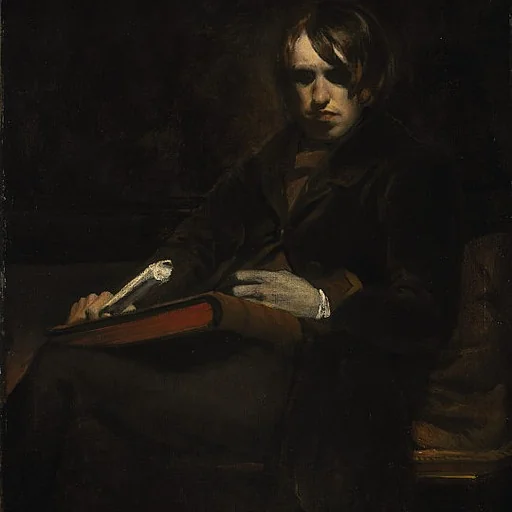
Sir William Fettes Douglas (1822–1891) was a Scottish painter and art connoisseur, rising to be President of the Royal Scottish Academy.